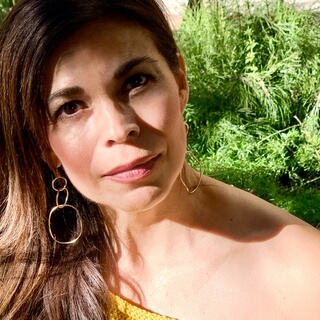
Hi everyone,
Thank you for joining me for another Nora Speakman podcast.
Today I get to sit down with not only my friend and my family,
He is somebody I call my kindred spirit because sometimes we need no words to talk.
But that is Mr.
Alexander John Shaya.
Alexander say hello to everyone.
Hello sister and hello everyone.
We miss you.
I am in Spain,
Which is this amazing place.
I know my family is so concerned because I'm here,
But I actually feel very secure and safe and I'm in a beautiful,
Lovely little village in the mountains.
How beautiful.
It is a difference though being in a beautiful little village in the mountains from us in the US in the middle of what many would call civilization compared to that,
Although I would rather probably be hunkered down with you in the middle of the village.
Speak to the tone real quick of what you're experiencing there compared to here.
It's amazing and it is absolutely the best of humanity.
We are in this very small village.
I think maybe 35 people live in this village and we can't go outside our front doors.
Even here in this village,
Our military out in the streets and they will stop you if you go outside and they want to know where you're going and if you're going to the pharmacy or to the food store,
You have to come back with a receipt or you'll get fined.
But here,
The most amazing,
Beautiful thing is happening every night at eight o'clock.
People open their windows and they go out on their balconies and they applaud and they sing and they express their gratitude to the health workers who are keeping them safe.
It brings tears to my eyes.
The sense of community here is just truly amazing.
The Basha and Berthron,
This is their retreat center where I am,
They had to go to the food store this morning and they were telling me that you line up outside the food store.
But if you're an older person,
You immediately don't have to stand in line.
They let you in and that people are so willing.
There's no pushing,
There's no shoving,
There's no panic buying.
People are just,
They have this community spirit about working together,
Young and old.
How beautiful.
How beautiful.
I love that.
And just to explain,
Because here where we are sort of on lockdown as well,
We still go to Target and we don't have to wait for one person to go in and out.
We practice social distancing to the degree that we do.
But where you are in Spain,
Is it one person per that goes in the store?
Depends on how large the store is.
If it's the pharmacy,
It's one person at a time in the store.
With Basha and Berthron today,
When they went to the food store,
Which is quite large,
It's not like food stores in the States,
But nevertheless,
It is quite large.
And I think they were letting about five to seven people in at once.
But it very much is modulated and you can't just walk in and out of a store.
Well it's definitely a different time and it is a time of world history.
I don't know that any of us could have penned going through a global pandemic in our lifetime.
No,
I mean,
For me,
10 days ago,
I was in England and I was sitting in the seminar with a hundred people and just,
And it's like,
And then the next day I flew here and I walked into a whole new world where I don't know how long it'll be before I'm with 10 people,
Much less a hundred.
It's amazing transformation.
It is.
And I think what's interesting as I watch this,
And I know that you are similar in this vein is that we do watch and we sort of observe and we want to sort of feel the collective spirit as it's moving through this.
What are we doing?
Where are we responding?
And it seems as though in whether we're in Spain or the US as a culture,
When crisis hits,
It tends to as much as it's uncomfortable,
It also brings us together in a beautiful oneness.
So I thought of you,
Especially with your amazing work,
Radical Transformation,
Because your work becomes a manual for our lives,
Regardless if it's a global pandemic or it's a personal event,
Whether it's joy or pain.
And so I wanted to just spend this time walking us through,
So to speak,
Holding hands with everyone.
Let's walk through this and talk about that together.
I would love that.
I don't have the direct quote in front of me,
But one of the authors that I loved back in the 1970s and 80s was a Roman Catholic priest by the name of John Shea,
S-H-E-A.
And he wrote this beautiful book called Stories of God.
And the opening of that book is that in a time of chaos and crisis,
We tell the story of God to hold our hearts and make meaning in the moment.
He says it much more powerfully than I do,
But story is the way that we hold ourselves together and that we come together in this moment.
Yes.
And isn't it amazing,
I think it is,
When we think of the power of story so often,
We tend to gravitate toward what we didn't do,
The failure,
Sometimes covered in shame.
I don't think any one of us would want to read a book or go to a one-dimensional movie where there's only one thing.
Story happens because of the story,
Where there are highs and lows and a zenith.
And it's the power that pulls us through it is remembering all of these folks that have gone before us.
So this might be a moment for me to relay that climatic crisis moment in the great city of Jerusalem in the year 70 and the story that came out of that moment.
Yes.
Would you like me to do that?
I would love that.
Okay.
So in the year 70,
Not 1970,
But 71st century,
The Roman emperor,
The Roman empire had just gone through three different emperors in two years and things were very unstable.
And this new emperor came to power,
Vespasian,
And Vespasian decided that he was going to make a show of his authority to solidify the empire under him.
And he chose as this horrible moment,
What he was going to do was he was going to send the centurion soldiers against the great city of Jerusalem to end the Jewish religion.
Now he did not want to end the Jewish people.
He just wanted to end the Jewish religion because they had this festival every springtime that said that they had overthrown Pharaoh and that they were the one people in the whole Roman empire who kept agitating for their independence.
And so he sent the centurions into the great city to destroy the temple,
Annihilate it.
He wanted them to take every stone out of the great city and to scatter it in the desert.
But that's not the great horror,
The even greater horror was he wanted to kill every member of the Levite and the Cohens who were the priestly tribe because he knew that if the Jewish people no longer had the temple and no longer had the priests,
He believed that they would no longer have access to their God and that therefore their religion would die.
And so he accomplishes this.
He destroys the temple,
Annihilates the temple,
And then reduces the tribe of the Levite and the Cohens to a few children who are able to be secreted out of Jerusalem in the midst of this Holocaust.
But when the Jewish people wake up from this moment of horror,
The great city is desolate,
The temple is gone,
And the priesthood has been ended by massacre.
And a couple of things happened to them in this moment,
Which we need to remember because their story,
Though it's not our story in the concrete particulars,
Their inner story is the same as ours.
And now as a storyteller and as a clinical psychologist,
I want people to know that whenever you're in a moment like we're in now,
Like the Jewish people were in then,
You're going to have these universal voices inside you and you're also going to hear these voices outside in the culture.
And we're hearing them.
And the first voice is,
This is the apocalypse.
This is the end moment.
God is angry,
And God is going to destroy the world.
And some of the Jewish people were being told that at that moment back in 70 that,
Get ready,
That God had ripped up the covenant with Abraham,
Which was the covenant of faithfulness,
And that now God was going to destroy the world either by fire or water.
Get ready.
And that we are going to hear that voice in our culture.
I know I'm already hearing some people,
And I hate to say it,
Some people coming out of my Christian tradition are saying that this is the end time.
Every time you are in a moment of great change like we are,
There's going to be that apocalyptic voice.
But what I would like us to know is that apocalyptic voice is an inner voice.
And it's not about an end time.
It's about that we have changed eras.
The era that was before is now.
Can I point out something really quickly?
Which is beautiful,
But there is more than symmetry.
We are in that time frame.
We are getting ready for what we call here Easter,
Resurrection Sunday.
We are preparing for that glorious moment.
And we are living through this time of wonder and awe as we are moving through this.
We're going through the same thing that you're talking about.
Absolutely.
And Christians are getting ready for Easter,
And our Jewish brothers and sisters are getting ready for Passover.
This is the moment.
And one of the things that I know from my work on rituals around the world is that many traditions have a ritual or a story about the crisis of springtime.
We tend to think about the springtime only as,
Which is I'm looking out the window right now at the courtyard,
Where the apple and the pear trees are blossoming.
And we think about the beautiful springtime blossoms.
But do you also realize that oftentimes the springtime has the most dangerous weather?
Yes.
As the hot and cold air masses collide and create tornadoes and other very dangerous weather systems.
I love that analogy.
And I also love the visual that these beautiful flowering trees don't wonder if they're going to blossom.
What is the season going to look like?
They just trust that it is.
And that is the other part of this.
I was telling Alexander before we began recording,
I love to keep myself moving.
If I move,
I'm healthy is how I believe it.
And there are so many wonderful things happening right now.
Like Nike is offering a free training camp premium edition.
So you can work out with a trainer at home.
So the trainer yesterday kept saying,
It's all about the resistance.
And if you fight the resistance,
Then you won't receive the benefit.
But if you learn to move through the resistance,
Then you feed your body.
Well,
There is no difference between feeding the resistance physically and feeding ourselves,
Allowing ourselves to move through the resistance from this perspective as well.
And choosing,
It's almost like for me,
If I'm along a rushing river and I'm trying to gather my arms around it,
It's impossible.
But if I jump in with the confluence,
Then I get to see where it goes.
Yeah,
Yes.
That really matches the second voice that you often hear in this time of great change.
And for our Jewish brothers and sisters back in the year 70,
There were voices,
Some voices were saying it was the end time.
And other religious leaders were saying,
This has happened because you're bad.
This has happened because you've gone away from the Spirit of God.
I mean,
It was the voice of shame.
And it's not the voice of shame.
I don't know why difficult things happen,
But I do know that these moments don't happen because of God's anger or because of what we've done.
They happen because they are a call to growth.
Yes.
They're a call to embrace the resistance and move through it.
There's a larger,
More vital life that is waiting for you.
It's amazing.
As a clinical psychologist,
I'm going to ask that question because people,
Myself included,
I have to be mindfully aware that when there is whatever calamity that comes before me,
That voice,
As you say,
Immediately goes to the checklist.
What haven't I done?
What did I do?
Why is this happening rather than,
As I like to talk about,
Who is the visitor that has come to teach us?
And that was something I learned,
Of course,
From you,
My great mentor.
And I think of Jesus,
Of course,
With Judas saying,
Friend,
Do what you have to do.
Yes.
I want to get there in just a moment,
But I also want to talk about the third voice.
Yes.
Jesus and Judas is the fourth voice,
Which is the most healthy voice.
But the third voice that was going on amongst the Jewish people after the temple and the massacre of the priests,
And really,
It's not just that the temple was destroyed.
It's the massacre of the priests,
Which was the utter horror.
Yes.
And it was this voice of,
Whatever is happening is too big.
I can't handle it.
And so the upside is,
I'm just going to focus on what I've got to get done today,
Which is an upside.
But the downside of it often is that we start using all manner of things which are not healthy.
We overuse food,
We overuse drugs,
We overuse gambling,
We overuse sex,
Whatever it is,
We overuse it as a way to not face what's going on.
That's powerful.
That's powerful.
Why do you think that is,
Alexander?
Do we tend to,
Do we move toward that so that it sort of mutes the voice?
We get lost in sort of the ecstasy of what that provides us in the moment?
Yeah,
And we fall down into thinking of ourselves as little,
Rather than realizing the great energy and power that lives with each one of us,
That we can handle this.
Yes,
There are going to be some difficult feelings,
There are going to be some difficult moments.
I can move through this.
I will move through this.
There is a power that is with us,
That is wanting us to move through this.
We've got to open the door and begin this really courageous walk,
Which brings me to the fourth voice,
The voice that we see in the Gospel of Matthew,
And we see in this beautiful story of Jesus and Judas.
I would really like any Christian who's hearing this,
Or anybody who thinks Judas is some awful person,
No,
No,
No,
No,
No.
Judas in this story is just the face of a voice who's inside each one of us.
It's the face of a trembling voice who feels like one of the other three aspects,
Whether it's the calamity,
The end time,
The I can't handle this,
Chooses to run away.
In this scene,
Very late in the Gospel,
Jesus says to the disciples,
Look,
The quote unquote betrayer is at hand,
And then the betrayer comes and stands in front of Jesus and the betrayer kisses Jesus and Jesus allows the kiss.
In the Gospel of Matthew,
It's only in the Gospel of Matthew that Jesus says to the betrayer,
Says to the betrayal,
Says to this difficult moment,
Friend,
Friend,
Do what you have come to do.
And this is,
We're all in this moment right now,
The virus,
Whatever that virus means to us,
It in some ways feels like a betrayal of life.
It feels like it's taken away our life.
And I love what immediately happens after this moment with Jesus and Jesus says,
Friend,
And then the text says,
And the soldiers come and they arrest Jesus.
And all of us right now are in an arrest situation.
We feel arrested.
We feel like our life has been taken away from us.
We feel confined to our homes,
Especially here in Spain,
We feel confined to our homes.
And yet,
The great liberating prayer is for us to turn around and say back to the virus,
Back to the confinement,
You have come so that we might have more life.
Powerful and so true.
I mean,
I think,
I know for me,
At first,
I thought,
Is everyone overreacting?
Is this,
What are we even talking about?
Because we had so much information coming at us from so many different sources.
And I think it's interesting that we speak to,
Especially here in the US,
Because of the divisiveness that was before us in our culture,
We didn't know who to trust.
We didn't know who to believe.
And when you have leadership,
Unfortunately,
In whatever form,
Whether it's in your company,
Your family,
Or your country,
And you don't trust it,
You have a harder time developing a synergy to move through whatever it is that's before you.
It's true.
It is so true.
So what happens- I noticed the difference and I hate,
I don't mean to disparage any other place,
But here in Spain,
People love their leaders.
And they love each other.
Yes.
And they've moved into this moment of caring for each other.
Yes,
Yes.
Well,
That's what for me became sort of the next phase,
If you will.
And it's interesting how this has taken,
In my opinion,
Community that was very,
Especially in our country where we are very instantaneous and individual,
From a me-centric perspective too,
We are all in this together.
And suddenly we are aware of other.
I know even going to Target yesterday,
It was refreshing because people are actually being more courteous.
They're aware of the cashier.
They're not speeding through the checkout,
Getting onto our day.
Oh,
Sweet.
It's beautiful.
There's more of a sense.
And I'll tell you what happened.
I asked the little guy that was helping me,
How are you?
And I had this happen where he looked at me with just tears in his eyes and he said,
Thank you for asking.
And he said,
They're actually taking really good care of us.
We all got a temporary raise for 30 days,
Longer if we need it.
Yes.
And for those who are their older employees that feel so vulnerable to this virus,
They're giving them 30 days with pay.
So there is this beautiful,
I'm aware of you.
I see you.
I hear you.
And I'm addressing you.
Well,
You got me in tears.
I'm telling you,
It's like,
If we need something to interrupt business as usual,
Then so be it.
Then so be it.
Because we're becoming and we will emerge more cohesive in humanity.
And I promise you that when we sense an inkling,
This story will be remembered.
Yeah.
Yeah.
I mean,
This is for the first time.
Well,
I would say actually say for the second time in my life,
The whole planet is focused together on this moment.
Yes.
And the other moment in my life was when we turned to the year 2000,
The new year of January 1,
2000.
And all around the globe,
Everybody was celebrating that moment.
Yes.
And it feels now 20 years later that we've come back to really do the work of being one,
To take another step in the work of being one.
Yes.
Beautiful.
So beautiful.
I'm wondering,
Is there any for you,
Like a personal memory or a saying?
I know in my family,
I can think of my grandmother encouraging me with certain sayings that we would say sometimes in Spanish,
Sometimes in English.
But do you remember something that you would hear from a familial source or somebody that was a great mentor for you for times like this that gets you through it?
Yes.
I remember the simple phrase by my sitho,
My Lebanese grandmother,
Who in the days after her house had been firebombed by the KKK in Birmingham,
Alabama in the late 1950s.
And a few days after that terrible moment,
We were all together as we always were on Sundays,
But we were no longer at her house.
And before we began to eat,
After she said grace,
She looked around the room at all of us,
Just for a second,
Caught our eye,
Went to the next person,
The next person,
The next person.
And then she said very quietly,
Very insistently,
And yet with great love,
No hate,
No hate,
No hate.
You feel the reverberation of how powerful that is.
Yeah.
And even though it's sort of phrased in the negative,
The power of the love in that moment just has held me my whole life.
Yes,
Yes.
It's beautiful.
I think that we forget,
Especially when we're among younger family or even friends who are younger who watch us.
Sometimes we're teaching without speaking.
Sometimes people are learning without being in a formal situation,
But our lives are always speaking,
Aren't they?
It's so true.
Like it wasn't just that my sit though said those words in that moment.
What made those words so powerful was her life,
The way she lived her life.
Our lives become the poem of the great story.
Yeah.
I love it.
Her whole life made those words true so that she wasn't just saying something.
She lived that.
Yes,
Yes.
I think that's so important.
I think it's so important because I think,
My goodness,
What will we remember of this time?
And that's up to us to create what we will remember by joining all of the people that have gone before us.
We've been talking a lot here in the States about the great generation during the wars and how this feels very wartime like and how we need to celebrate and remember the resiliency when we all come together.
That is the great movement that can happen when we have been fragmented and cut each other off,
So to speak,
Because of hate,
Because of not seeing ourselves in other people.
When we fail to embrace that momentum that can carry us forward in the strongest way possible.
There's never been a challenge like this.
Again,
There was that upside beautiful moment when we all turned to the year 2000,
But this is the moment where we do the deep work of oneness.
Yes,
Yes.
And we will get through it.
It seems it's funny.
I keep telling people,
We can't focus on just what is right in front of us,
But we have to dare to dream still.
We do.
I know that I use this quote a lot.
It was something that I heard as a child and I have returned to it as an adult,
But it's the words of Martin Luther King Jr.
Again,
As somebody who stood outside my grandmother's house when it had been firebombed by the KKK.
He said these words and I say them over and over again to inspire myself to live them.
He said,
Send your hooded perpetrators into our neighborhoods at the midnight hour.
Burn our homes,
Beat our children,
And break our bones.
And we will not hate you.
We cannot in good conscience obey unjust laws.
And we will win our freedom.
But we will so appeal to your heart and to your conscience by our ability to suffer that when we win our freedom,
The victory will be twofold.
For we will have won yours as well.
Now I'm saying that these days to the virus who has come unbidden and seemingly has come to break us.
But if we can,
Through whatever spiritual power you pray to or know,
Or however you name that source which is beyond yourself,
If we can meet this moment with love,
We are going to take a step towards that great new future that we hope.
Yes.
Yes.
Yes.
And what a beautiful way of putting that.
It's interesting.
It's what we long for when we're living busy lives.
It's what we have spoken to needing as we have taken timeouts from social media and things like that.
Well,
Here is the invitation and the opportunity and it may have come as you said,
Not as we wanted,
But the opportunity is upon us and it's up to us what we're going to do with that.
And it is only love that is the golden thread that will weave us all together.
How beautiful.
And if I can go back to the Gospel of Matthew for a moment.
Yes.
And what is so powerful about this text is this is not about those outer people.
This is about voices inside of us.
And Matthew uses the figure of Peter and the figure of Judas as the human drama that's going on inside of us.
And Judas,
That Judas figure inside of us,
Despairs.
Yes.
Tragically despairs and stops the journey.
And the Peter voice inside forgets but comes back,
Wakes back up again and starts the journey again.
And the thing I love about Peter is,
Peter is the lovable hero who keeps forgetting.
But he reminds us that our life is not about perfection.
Yes.
Our life is about waking up one more time than we forget.
Yes.
And remembering the courage in each of us.
Remembering.
Remembering.
Yes.
Do it every moment.
We are going to forget,
But we can start again.
And we can start again.
And we can start again.
Yes.
Yes.
Beautiful.
Can we take a moment to celebrate what we are about to launch so that if people want to read the collections that we've been speaking of in Radical Transformation,
They will have even a greater opportunity.
Absolutely.
I'm so energized and excited about this moment.
It's a new moment for all of us.
And my great book is about to come out in a new edition.
And it's going to be the inaugural book of our publishing house,
The Shias Beekman House.
Yay.
And yay,
I know we're just a couple of weeks away from having it in hand now.
It is going to be a gorgeous representation of your seminal work.
And it is going to be,
For those that have,
Like myself,
The paperback and the Kindle,
Speak to how this one is going to present in a different way.
Well,
First of all,
It's going to be a hardback.
We have totally re-edited it again.
We have added beautiful illustrations to each of the chapters.
I am absolutely convinced that this will be the book of record.
I have been working on this book now for 20 years.
I started working on this book in the year 2000,
In November of 2000.
And I am so excited and honored to be able to offer people this hardbound edition.
Because as good as the paperback has been,
People have said,
My book's falling apart.
I use it so much.
And then along with the hardback edition,
We're also going to be able to offer a beautiful notebook,
A hardbound notebook.
As a companion to this book.
And we've slightly changed the title.
So the new title is Radical Transformation,
The four gospel journey for heart and lung.
Beautiful.
It is.
And I'm so excited.
I can't wait.
Just in the last two days,
We have pressed finish on the text.
And now it's going to go to print.
We're going to get a sample and look at it.
And then a couple of weeks from now.
I'd love that by Easter,
We could actually have this ready to put in people's hands.
What a beautiful gift.
And for those that aren't aware of what radical transformation is,
Can you speak to the four gospel journey?
It isn't the four gospel journey as we have known it.
It brings it to life,
Alexander.
And you do such a beautiful job of that.
Can you describe for people that perhaps have not read it what they will find in that work?
First of all,
I want to say I write this work as a devout Christian.
But I write it as a devout Christian who was taught by Joseph Campbell many,
Many,
Many decades ago at the University of Notre Dame.
And I understand in Joseph Campbell's words,
There is a universal journey of transformation that we're all on.
And the other great text of my life is the Exodus story for the Hebrews.
And it's the four noble truths of Buddhism.
And it's the Dine Bahane of the Navajo.
And it's the great story of Inanna from Samaria.
And in each of those stories,
Each of them are simply the costuming,
The cultural costuming on this one great human journey of transformation that at core has got four parts to it or four stages or four paths or four steps.
And I named that first path,
How we face change.
And that is the Gospel of Matthew.
The whole Gospel of Matthew is not just the story of Jesus.
It's Jesus teaching us about how to face the moment that we're all in right now,
How to face the moment of change.
And that what comes next after the moment of change is how we move through a time of great suffering.
And I want to focus on it's how to move through it,
Not how to sit in it.
And then the next moment after that is the moment of joy and union and coming to understand what the meaning of joy and oneness is about.
And then the final and fourth part of the great journey is how do I mature in service?
And so the great journey,
Whether you're Buddhist,
Jewish,
Navajo,
Christian,
The great journey is how we wake up and face the moment of change,
How after having woken up,
We move through the times of great suffering and trial.
That leads us to a moment we could never have expected,
Which is a moment of new insight and giftedness and joy and union.
But then that joy and union has got to be brought to maturity in service.
If it only says the joy and union,
It turns narcissistic and it doesn't serve us.
And the great journey is about the service of us.
So that's it.
So I have written this text,
Which I know that our Christian ancestors fully understood in the second,
Third,
Fourth century that they didn't see four different gospels.
They saw one gospel with four chapters.
And each chapter is the four great questions.
So that Matthew is the chapter about waking up and facing change.
And Mark is the chapter about how you move through suffering and trials.
And John is the chapter of union and joy.
And Luke is the chapter of maturing in service.
And we all go through that in our lives.
How beautiful this has become.
Over and over and over.
It's not linear.
It isn't one and done.
Not one and done.
And the other part is leaving more a little complexity is that different aspects of our life are in the wheel at the same time.
So your personal life might be in John,
But your cultural life right now is in Matthew.
But what excites me so much is that this way of understanding lets us learn from Buddhism,
Lets us learn from the Navajo.
It's like we all know this journey.
The Navajo know aspects of it that the Christians don't.
And the Christians know aspects that the Buddhists don't.
And Judaism knows aspects that we've all forgotten.
And if we can come together and share our own beautiful wisdom about the journey,
We can truly enhance the journey for each one of us.
It's beautiful.
It becomes what I like to call trans faith.
Because we're moving through.
And I have been using that term when people ask me,
Well,
Aren't you Christian?
Sure.
But I'm also this,
This.
I mean,
We have different influences.
And it is a trans faith journey.
Because we get to learn from each one.
And then we move through to the next,
The next beautiful thing.
The next one of my other great professors at Notre Dame in the theology department was a theologian called John Dunn,
Not the famous John Dunn that people know,
But the famous John Dunn to me at Notre Dame.
And he had this,
He taught us about,
He said,
Every person must leave their home tradition and go out to the others and learn about them.
And then come home with new appreciation,
With new insight.
And what I mean by that for me is,
I am always going to be Christian.
I love the Christian tradition.
I know it.
It's my home.
But my understanding and experience with Buddhism,
My understanding with my Jewish brothers and sisters,
My understanding with the Navajo have done nothing but widened and enriched my Christianity.
Absolutely.
Absolutely.
Even in the book that I'll be producing through our wonderful house,
Underdeveloped Love,
I talk about Christianity is my main entree,
But I supplement,
Just like we take vitamins,
With other opportunities to learn.
And I think it's that openness that leads us further down the path and able to share with others in the most beautiful way,
Rather than just a one dimensional source.
Absolutely.
So many times I hear from people who are,
Some people are honestly questioning,
Other people are challenging me and that's all well and good.
How could you come up with this interpretation of the gospel?
And it's because I'm not interpreting the gospel against what only Christian authors have written about the text.
But I'm understanding that the text is part of the universal human story.
And when I understand how Buddhism speaks to this aspect and how the Dinah Bahani of the Navajo speak to this aspect and how our mother tradition Judaism speaks to this aspect,
I've got a much wider wisdom base to understand what the text means than just what the early Christian authors wrote about the text.
Right.
Right.
And what lens they wrote it through.
I mean,
That's the other thing,
Right?
We could have a whole podcast on that,
But it's interesting when I think if we were to be able to,
As we've talked about,
This is the 70 AD,
Not 1970.
And as you have so beautifully given us that invitation to remember,
I wonder if we could go back in time and,
You know,
Say,
What about that great leader Moses?
And I can just hear this beautiful little Jewish grandma saying,
The guy who couldn't speak,
He led this great exodus that we all hold onto in getting home,
So to speak.
And that's how he would probably be remembered,
You know,
The guy who couldn't speak from those who loved him.
Absolutely.
I mean,
I,
Anyway,
Don't get me started on that one.
Our great heroes have clay feet.
They've always had clay feet.
Yes.
And we have clay feet.
And that doesn't take away from our greatness.
It magnifies the greatness that lives inside each of us.
Absolutely.
Absolutely.
What is the word,
A word or a phrase that you want us to remember or you hope that we remember from this time?
Courage.
Courage literally means to take heart.
Yes.
And that I love it.
It's from the lion,
The witch and the wardrobe.
And we're having this conversation last night.
I need to go find my copy.
I think it's Edmund in lion,
The witch and the wardrobe who says,
Courage is doing what you must do with your knees knocking.
Yes.
I have no illusion that what we're called to do right now is easy.
It's not easy.
And it's not simple.
But we can do it because there is a power that is holding us to do it.
Yes.
Courage.
Yes.
And as you have taught me and as you teach many that I think it's interesting.
When I think of you,
Alexander,
I think of oneness.
May all be one.
You have really woven that and reminded us of the tapestry that we can all find ourselves in.
Yes.
But I think the first step or one of the first steps,
I shouldn't say the first step,
Is in taking hold of our hearts,
As you say,
To find the courage to be willing to begin.
To be willing to begin.
And to go back to the very first,
How the Gospel of Matthew opens,
It opens with this long thing that most of us hate to think about or especially to read out loud because it's got all those strange names,
I don't know how to pronounce.
It's called the genealogy.
Yes.
But what that genealogy was to the people who heard this is it was storytelling.
Yes.
And it was saying to them,
Remember your story.
Remember that you are in the line of people where very strange things happen to them.
But because of the power of God,
It turned out all right.
And that's what I always say to people in this moment.
Get your movie library out.
Go to Netflix.
Go to Prime Video.
Go to whatever.
Get those movies that inspire you to act courageously.
Tying in what you have spoken to,
And for me this is so important.
As we spoke to Seventy,
The temple was burned down,
The epicenter for people's lives.
They had to learn to take the temple home.
They had to learn to exist in that epicenter now from a different space.
We are being asked to do the same thing and literally in the West,
And I'm sure everywhere else,
God has left the building.
He's no longer being held or she or it in four walls anymore.
And it is our opportunity and invitation to express that beauty of love in all we do.
Yes.
Yes.
Yes.
There's another image,
Powerful image in the Gospel of John,
Which is the Jesus,
Mary Magdalene at the tomb on quote unquote Easter morning.
And she looks into the tomb and she sees two angels there.
The other texts don't talk about two angels,
But she sees two angels and you have to go back and say,
Now,
Where are the two angels in Judaism?
And there are the two angels that are set at the Garden of Eden to bar the way back into the garden.
Yes.
But then Judaism created in the Holy of Holies.
Apparently there were these two angels that formed a canopy over the Holy of Holies in Solomon.
And Mary Magdalene is standing there with the tomb and she sees the two angels and she sees the burial linens on the floor of the tomb and she's grief stricken.
And the old Holy of Holies is empty.
That's right.
And then she hears a voice from behind her and this is the moment we're in right now.
We have to access exactly what Mary Magdalene did.
She turned away from yesterday's Holy of Holies.
And then she sees the new presence before her.
Which is in each of us.
Yes,
It's gone out into the whole world.
It's gone out into each of us.
Yes.
Yes.
Beautiful.
You're going to laugh.
This is a story I think a lot of our folks will enjoy.
I was emailing with Dr.
Amy Jill Levine,
Who wrote so many books,
But recently she and her colleague wrote the Jewish Annotated New Testament.
Because she is a scholar,
She is Jewish,
But she primarily teaches on the New Testament,
Which is a wonderful balance.
She brings that remembrance of our mother,
Judaism.
But we were trying to coordinate a podcast and she said,
What about this date and this date?
And I said,
Amy Jill,
You'll get this.
I said,
I feel like we're in the new version of Noah's Ark.
We're going to my two because of this calamity.
And I fear that in two weeks will not be the time to send out the dove.
We're waiting for the time to send out the dove.
But in that meantime,
We are living in this time of getting to be the Holy of Holies.
What I also like to remember,
Nora,
Is that Noah first sent out the raven.
Yes,
That's right.
That's right.
I love it.
So beautiful.
And the story is that because the raven is the bird of the sun.
Yes.
And the story is that the raven didn't return because the raven is still going around the earth flapping its wings to dry out new land.
And new land we shall have.
And new land we shall have.
Absolutely.
I mean,
I know that and I know the four gospel journey.
I know the journey across all time,
Across every religion.
New land is at hand if we just don't despair.
That's right.
That's right.
Jump in the river.
Jump in the river.
I'm so grateful for you.
I am so grateful for you and I am so utterly grateful for the gift that you are giving us in helping develop the Shias Speakman House.
It's going to be amazing and it is already.
But it'll be a beautiful invitation for folks to hear different voices as we say,
Representing the ancient wisdom and traditions in a fresh way.
And already the first author that is joining us is going to be a rabbi.
Yes,
Rabbi Peter Tarlow.
I'm so excited and everyone is going to be thrilled for this book.
So yes,
Yes.
Well thank you so much for your time.
How can people find you?
What is the website,
Alexander?
So please go to www.
Quadratus.
Com.
That's think four,
Q-U-A-D,
Quadratos.
If people will go there right now,
On the homepage are three videos that have been produced for you to just click on and hear me talk on various topics,
Including the video that has been produced by the work of the people called Be the Resurrection.
It's so appropriate to this springtime for us in the Northern Hemisphere and the Feast of Easter.
Don't just observe the resurrection,
Be the resurrection.
Yes,
Yes.
And speaking to that,
We will all resurrect from the coronavirus and we will be so much better for it.
So excited.
And we will keep everyone updated on social media with how to get this beautiful hardback edition of Radical Transformation and so much more to come.
So please,
If you haven't,
Go to Facebook and like Shaya Speakman House.
You can find Alexander there as well under Alexander John Shaya,
Author.
I am on social media,
Nora Speakman,
And we will be just excited to have you along this journey with us as well.
We are.
Please,
Please join us.
We have an amazing future if we just stay together.
Amen.
Amen.
Well,
Thank you for your time,
Alexander.
Be well and be safe.
It's lunchtime here in Spain,
So I'm going to say good morning to you and I'm off for a luscious afternoon in the Spanish sun.
Wonderful.
Thank you again.
Love to you.
Peace.
Love you,
Babe.
Slap.