Hello,
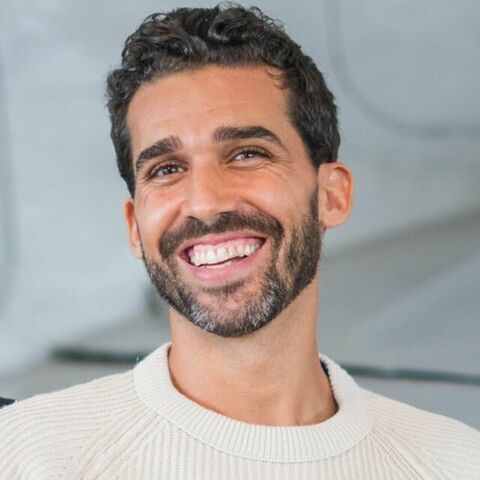
My name is Noah Elkrief and today I want to talk with you about how to stop procrastinating.
I made a video about this five or six years ago and I know it's helped hundreds of thousands of people but in this video I want to go much deeper or at least share how to deal with procrastination,
How to handle it on a different level.
So the first thing that we need to talk about with procrastination is I guess what is procrastination?
And for me procrastination is when there's a part of you that wants to do something and on a particular time frame now let's say and you can't do it now.
So put differently procrastination is when you can't do what you want to do.
Can't do what you want to do.
Now that's an interesting statement in and of itself.
I can't do what I want to do.
Now if that were true I can't do what I want to do and when we believe that to be true it can lead to a lot of intense feelings.
So one is helplessness.
I can't do what I want to do.
If I can't do what I want it means I can't do the things that will bring me joy,
Abundance,
Life force,
Power,
Passion,
All the things and pleasure and that can feel really helpless.
It can bring despair.
It can feel really not nice in those ways,
The helplessness side.
And the other side of it is or the other major pain it brings up is defectiveness.
If I can't do what I want to do I'm clearly defective because human beings should be able to do what they want to do.
That should be like or that is and even should be human beings can do what they want to do.
That's like this belief.
Human beings can always do what they want to do.
So if I can't do what I want to do I'm clearly broken,
Defective and screwed up.
Look I see at work everybody else seems to be doing.
You know if we have a project or there's a deadline or there's some action everybody else seems to be able to do it no problem because human beings can always do what they want to do.
I'm just the screwed up one.
Or everybody else can go hang out with friends.
Everybody else can work out and stick to a commitment of going to the gym every day at 10 o'clock or whatever the case may be.
But I'm the screwed up one.
Now this one is really so now I mentioned two things.
So when we procrastinate when we can't do what we want helplessness arises and shame.
This I'm defective I'm no good I'm a piece of shit I'm worthless I'm messed up I'm unworthy I'm not good enough I'm not strong enough I'm weak I'm stupid whatever all that type of stuff.
And I'm going to focus on that side first this shame.
Now in order to let go of that shame we actually have to want to let go of the shame.
And for some people that I've been working with in sessions they want to keep it and I'll tell you why.
You might notice this within yourself.
So let's say you have work to do or you want to go to the gym or you want to go hang out with friends but you can't.
Or you want to cook for yourself but you can't.
You literally just cannot do it right now.
What's the next thing that goes on in your head?
For many of us the next thing that goes on in our head is I'm a piece of shit I'm stupid I'm no good I'm worthless.
Now why does that go on in our head?
Well for a lot of us we actually want to keep that voice because we believe that that voice is motivating us.
Right?
That it's like it's almost like the whip.
Like if you have a slave or a dog or a horse or something it's like we whip them to motivate them to keep going.
Right if they can't do it if we give them the whip that will give them the motivation to keep going.
Now that's really screwed up.
And it might seem normal and natural and helpful but it's absolutely the opposite of effective helpful kind or enjoyable.
And the way you can check in with yourself is how is that working out for you so far?
Living your life often not being able to do what you want in response habitually or naturally in a sense responding towards not being able to do what you want with harshness criticism and self judgment and occasionally that gets you to do what you want to do.
So that means when you're doing what you want to do it's being motivated through threats.
It's being motivated through criticism.
That is such an unenjoyable way to live your life.
That is such a painful way to try to get motivation.
You understand?
So in order to actually let go of the shame you actually have to realize that it's not helping you.
You have to realize it's not supporting you.
So how is it not supporting you?
That's the question.
That's what I have to make clear for you now.
So here's the thing.
Okay.
I want to I want to give you an example.
So imagine that there's a little boy and he he was eating broccoli and while eating the broccoli he started to choke on it and then his father had to come and give him the Heimlich maneuver and get the broccoli out.
Now he's afraid of broccoli.
He's not just afraid of broccoli.
He's afraid to eat broccoli.
He's afraid of seeing broccoli anywhere on the table and he's afraid of going into kitchens where broccoli might be because broccoli triggers his fear.
Now later on in life as an adult when he sees other people aren't scared of broccoli.
Maybe he judges himself.
Why am I afraid of broccoli or someone else where to look at him?
Let's say and he's afraid of broccoli.
Afraid to eat broccoli afraid to go into kitchens.
They might say it's illogical.
It's stupid.
What's wrong with him?
He's defective.
There's nothing dangerous about broccoli.
Broccoli is okay.
Why is he scared to go in the kitchen?
A kitchen is safe.
But all of that misses the deeper cause,
The deeper incentive or reason why he's afraid.
Why isn't he going into the kitchen?
Why isn't he eating broccoli?
Because something happened in his childhood that wasn't healed,
Wasn't released,
Which has caused a leftover fear,
A remnant fear and anything that reminds him of that moment activates fear and he wants to avoid the place or the action or the food that activates that fear naturally because it seems dangerous to his body,
To his system.
But if we just stay on the level of the superficial,
The physical level,
He's just not doing what he should do.
He's just not doing what is safe,
Not doing what is healthy.
We miss the whole point of the why.
Is that clear?
So the reason I bring that up is if we were to look at that man now who's scared of broccoli or doesn't go near broccoli and we were to just judge him and say,
You need to eat broccoli.
You should eat broccoli.
You're stupid.
You're weak.
He might be able to force himself to eat broccoli.
He might be able to force himself to go into a kitchen,
But every time that broccoli shows up on the table,
He has to force himself through judgment and criticism.
But there's a much,
Much easier way to do it,
Which is to ask,
Why are you afraid of the kitchen?
Why are you avoiding cooking?
Why are you avoiding broccoli?
And then we might uncover the reason,
Heal it,
And then he could start eating broccoli naturally.
He doesn't need a push.
He doesn't need the whip.
It's just maybe he likes broccoli or broccoli is healthy,
So I'll eat it.
There's no resistance.
So normally when people procrastinate and they can't do what they want,
It's because there is resistance.
And the way we try to get ourselves to do it is through force,
Through commitment,
Through discipline.
I'm going to make myself do it anyway.
I should be able to do it.
I'm going to punish myself and treat myself like shit until I can do the thing that I want to do.
But a much,
Much easier way,
More effective way,
Permanent way,
Is to eliminate the resistance,
To heal the resistance.
So there's just no block in the way.
You got that?
Now in order to heal the block in the way,
In order to undo the cause of resistance,
We have to first be willing to let go of the shame,
The punishment tactic.
You see,
Because if I'm sitting here,
And let's say I can't make a video.
I want to make a video.
I want to share with you all and support you,
But I just can't do it.
Now if I tell myself I'm a piece of shit,
I'm no good,
Then all of a sudden my experience,
And I believe it,
My experience is I'm worthless,
I'm no good,
And I'm heavy,
And I'm down.
Now I begin to see everything through the filter of I'm no good and I'm a piece of shit,
And through the fog of that heaviness.
Now from that vantage point,
I have no clarity.
I'm not seeing life through my intuitive sharpness and wisdom.
I'm seeing life through the filter,
The prescription goggles of I'm a piece of shit.
So it blocks me from exploring deeper.
Now if I'm willing to let go of I'm a piece of shit,
Okay,
Then,
And I'm capable of doing it,
Then I can say,
Why am I not making the video?
What resistance do I have to making the video?
And then,
If I'm coming from a place of acceptance and pure curiosity and exploration,
I might discover some reasons,
Which I'll go into in a moment.
But first point I'm trying to make here is you need to be willing to let go of the punishment strategy,
Self-punishment tactic as a motivating force to help you to do what you want in order to uncover,
Heal,
And undo the reasons that cause the resistance which block you from easily lightly and naturally doing what you want to do.
So if you're willing to let go of it,
The question is,
How do you let go of that shame?
I'm terrible for not being able to do what I want to do.
It's simply not true.
It's not reality.
If you can't do what you want to do,
There's always a reason why.
Every decision we make from our mind-body mechanism,
Unless we're doing it from our intuition,
Is a cost-benefit analysis,
An unconscious cost-benefit analysis of which option will give me less pain.
So if you can't do what you want to do,
It's because there is unconsciously you perceive there to be potential pain if you were to do it.
You understand?
So if I can't make a video,
Why can't I make it?
Well,
Because I'm afraid.
I'm afraid that you will judge me.
I'm afraid of the shame I will feel if you don't like it,
The hurt I will feel if nobody watches it,
Or maybe just while making the video I feel fear which is painful,
And so I want to avoid the pain of feeling fear.
Now all of that is normal in a sense that all of us have a lot of buried emotions from our childhood that cause pain to get activated in situations where there is no potential danger.
All of us,
Even the people you think have no problems,
And I'll get into that later,
And seem to be doing everything that they want to do and can do anything and you can't,
Even them are filled with buried emotions that get activated in all sorts of different situations that have no potential for actual physical danger.
So what was I talking about?
Shame.
I felt a little shame there actually for forgetting what I was talking about.
Hmm,
Just trying to catch what I was saying.
So when we can't do what we want to do there's this belief on top of it that I'm bad and defective for not being able to do it,
But the reality is you are not bad or defective for not being able to do it.
There's always a very logical reason why you can't do what you want to do.
The resistance you have to doing what you want to do comes because of something that happened in your past.
So for example,
Why is the person afraid of the kitchen?
In that case the example is because they nearly choked in the kitchen from eating broccoli.
So why can't you do your work?
Well maybe when you do your work it activates fear because when you were a child,
When you didn't get a good score on your test,
You felt worthless and bad or your parents told you you need to do better and didn't give you love or were harsh towards you.
So now there's shame when you were a child there was shame,
Let's say was created,
Unworthiness was created when you didn't perform well.
And as a child when our parents don't love us we unconsciously,
Like evolutionarily perceive that to be dangerous because we are dependent human beings as children,
We're dependent on our parents and if our parents don't love us they could leave us which means I'm not safe.
You understand?
So now if we get rejected,
If we don't perform well,
That can remind us unconsciously,
Remind our bodies of when we were rejected as a child and potentially unsafe.
So when we go into doing a project,
Taking an exam,
Talking to a potential client,
It can activate the fear from childhood.
I feel like I need to give an analogy to understand that better.
So if when I'm a child I see I hurt myself and I'm in a lot of pain and I'm bleeding and I see the red,
Okay,
And it's intense and it's too intense for me to handle,
There's a lot of fear,
Then what happens is that fear,
If I'm not able to express it because it's too intense,
I can disassociate which means go up to my head or kind of out of my body,
Either one,
And then the feeling of fear gets kind of buried in my body and it remains in my body.
And when it remains in my body,
That means the rest of my life,
What could happen is when I see red,
When I see the color red,
It can automatically remind my body of that moment when I was in deep,
Deep pain.
And because that fear has been buried in my body,
It's still here,
So seeing red can activate that fear and I can feel afraid when I see a red shirt or red wine or red anything.
Now consciously it seems illogical if you aren't able to make that connection to that original moment when you were bleeding.
So that's what's constantly happening in our lives is that when we're afraid of something that in this moment has no danger whatsoever and we know that cognitively,
We know that logically,
But our body responds with fear,
We assume we're defective,
We assume we're screwed up,
But the only thing that's happening,
The reason why you assume you're defective and screwed up is because you simply aren't able to make the connection between the fear of this moment and the fear in your childhood when it started.
You get that?
So the reason you assume that you're defective,
The reason you conclude you're screwed up is because you don't realize there's a logical reason behind why you're afraid.
To give another sort of like evolutionary example,
It's more like if you're in sort of hunter-gatherer times and you're attacked by a leopard or let's say a jaguar.
I don't know why.
Let's say you're attacked by a jaguar.
I was thinking,
Well,
Yeah,
Whatever.
So if you're attacked by a jaguar but you manage to survive,
Okay,
You manage to survive,
That's a trauma and what trauma means is there was some fear created in you but because of the intensity of the situation or whatever happened,
Maybe you couldn't fully express that fear which means a bunch got buried,
Okay,
And now anytime you see any animal with four legs that slightly resembles a cat,
Your system is going to go right into fear before you can even think is it dangerous or is it not.
You don't have any conscious thoughts that is dangerous or before you do or maybe you can see something that you maybe even know isn't dangerous but yet your system responds as if it is and that's to help you instantly start running away or avoid something before your mind can catch on and start thinking about it.
Is it safe?
Is it not safe?
Your body's like,
Nope,
We're out of here.
You understand why it's helpful but in these times,
In our childhood,
We constantly got triggered with unsafety every time one of our parents rejected us and rejection isn't like your piece of shit,
You're no good.
That's generally not what happened although it sometimes does.
It's more like energetically,
Emotionally more subtle like they just didn't give us love,
They were cold,
They were harsh or they didn't give us the hug or they were like,
Why didn't you get that good grade or like what happened or whatever and yeah,
Things like this or they were angry or yelled at us or things along those lines and in our childhood because we were dependent on our parents,
We needed them for shelter and safety and food and protection and to heal our pain and to help our physical wounds and all of that.
There were so many moments we were in perceived danger.
Even if we had the healthiest seemingly like on the surface upbringing,
We had plenty of money,
Our parents were kind,
Nice people,
That's irrelevant.
These are emotional traumas that everybody has.
I never met anyone who isn't filled with them,
Not who has like one or two,
Like isn't filled with them from the healthiest upbringings and all of that.
People oftentimes think they shouldn't have fear because their childhood was so good but for anyone who's done this work and I'm sure you can mention it in the comments,
You might think your upbringing was filled with joy and your parents were the greatest parents ever but once you start this healing work,
It starts unraveling a whole bunch of shit you didn't know was there.
Okay,
It's a little sidetracked but not really.
So to let go of that shame,
All we need to do is recognize it's not that I'm defective if I can't do what I want.
It's just because something happened in my childhood,
Something,
I have resistance to doing this thing for some logical reason.
Okay,
So for example,
Why can't I do my work?
So,
Now we're going into,
So that's kind of to break the belief that I'm bad and defective for not being able to do what I want to do and now we're going to go into how to actually be able to do what you want to do.
Yeah,
But the first part,
We have to weaken the power of the shame or let go of the shame in order to see the deeper stuff,
See the deeper reason as to the why can't I do what I want.
Actually,
I'm going to do one more thing with the shame first.
Yeah.
So if I can't make a video,
If I can't work out,
If I can't cook or whatever,
And I can't meditate and if there's a story on top that I'm worthless and I'm no good for not being able to do it,
Oftentimes or practically all the time people assume that's my voice.
I'm treating myself like shit.
I believe I'm no good.
I'm terrible for not being able to do it.
But actually very,
Very often this is our parents' voice showing up in our head.
Say that again slightly differently.
So if I can't make a video and then the first thing that shows up is you're a piece of shit for not being able to do it,
You're worthless for not being able to do it,
That is let's say my mother or father's voice showing up in my head.
That is not my intuitive natural response to not being able to do what I want to do.
I feel I have to give another sample for this.
So if you close your eyes,
Okay,
If you close your eyes for a moment and imagine you have a child like six years old and they want to do something but they can't do it.
They want to go out with friends but they're scared.
They want to do their work but they can't.
I don't know,
Something that they want to do but just can't do.
What is the intuitive response to that if you're their parent?
It's okay.
I love you anyhow.
It's okay that you can't do it.
I see you.
You're okay.
And for many of you,
You might not be able to access this compassion.
That means it's just really deep rooted but for many of you,
You probably can.
And that when we were to see a child not being able to do what they want to do,
Our compassion opens.
I'm here for you.
How can I help?
This is what's natural in everyone whether you can feel it within yourself or not.
But what happens is we get taught,
Programmed a different way to treat ourselves because when we were young and we might have had the nicest parents in the world.
But what happens energetically when we can't do what we want to do?
So for example,
Maybe,
And this can happen in so many different ways and I'm just obviously I'm flowing on the spot here so I hope my examples are working out.
But if I can't eat,
So I'm like I don't know,
Three years old or something like this and I can't do it physically.
I can't do it.
Like I can't do the spoon or maybe I'm emotionally a mess or I'm all over the place.
My mom maybe wants me to be able to eat.
She wants me to be able to feed myself or something.
But I can't do it.
I'm not capable in that moment.
What might show up in her?
A very common response is frustration,
Annoyance.
And she might not say,
She never said you're a piece of shit,
Right?
And for most of our parents,
They didn't either.
But the energy,
The emotional place they were coming from had that feeling underneath it.
Like frustration and annoyance can be intense.
Right?
Like,
Why can't they do it?
What the fuck is wrong with them?
Right?
And our parents very frequently probably had that with us.
Maybe you didn't see it.
Most of you probably did.
But some of you might say,
No,
My mom didn't do that.
My dad didn't do that.
But they can close off also.
So let's say they want me to be happy.
They want me to go out with friends.
They want me to cook.
I don't know.
They want me to do my homework and I don't do it.
What do they feel?
They might also feel scared.
They might also feel closed off.
Like they're a failure if I'm not happy.
They're a failure if I don't go out with friends.
They're a failure if I don't do my homework.
They might feel scared for us.
They might close their heart to us.
They might close down.
And so all of this is rejection that we're not receiving love,
Approval,
And kindness.
You get it?
We're receiving harshness,
Like getting pushed away.
So what I want you to do now,
OK,
See if you can notice that one of your parents maybe had this either treated you harshly or spoke to you harshly when you couldn't do what you wanted or what they wanted.
And then close your eyes.
Imagine yourself not being able to do what you want in the current time.
Like imagine yourself trying to do yoga but you can't get yourself to do it,
Trying to cook,
Trying to write back a friend,
Trying to go out,
Trying to do your homework.
You can't do it.
And then hear that voice come in.
You're bad.
You're no good.
You deserve punishment.
You're a piece of shit,
Whatever.
Then imagine one of your parents in front of you or both.
And I want you to tell them,
This isn't my natural treatment towards myself.
This isn't my voice.
This isn't my belief that I'm somehow bad and terrible because I can't do what I want.
So I'm going to pass this back to you.
I'm going to give this belief.
I'm going to give this voice.
I'm going to give this treatment back to you.
It doesn't belong to me.
It's not mine.
I'm not going to hold on to it anymore.
I'm not going to carry it anymore.
I pass it back to you.
It doesn't serve me.
It doesn't support me.
And it doesn't serve or support you for me to hold on to it.
So I pass it back to you.
I place it at your feet.
You don't need to pick it up.
But it's just not mine.
And I'm sorry for you that someone treated you probably harshly when you couldn't do what you wanted.
And so you picked up that treatment towards yourself and then towards me.
So we imagine it flowing out of us.
Like imagine it physically,
Those beliefs,
Those energies,
Those emotions flowing out,
That treatment,
That harshness like you're bad,
Flowing out.
It's not your treatment towards yourself.
If you can't do it,
It's okay.
It will be after we go through the rest of the stuff that I'm going to share with you,
This might become easier when you watch this video back.
If you watch it back.
So when that feels complete,
You can pause it now if you need more time.
But when that feels complete,
What should we do next?
Yeah,
Let's go into the why.
So maybe I want to go to the gym,
But I can't do it.
Why?
Actually let's make this even more interesting.
I want to go to the gym,
But I can't.
My friend wants to go to the gym and she can all the time,
Every time.
Why can she go to the gym,
But I can't?
Clearly I'm defective.
Clearly I'm screwed up.
No.
Why do I avoid going to the gym?
Why?
Let's be honest.
Let's explore.
Maybe I feel frustrated when I don't make progress.
Maybe I feel anxiety when I'm at the gym that other people are looking at me.
Maybe I feel afraid that I'll never gain the muscle or lose the weight.
Maybe I feel helpless because I never seem to gain the muscle or lose the weight.
Maybe I feel sad about how I look and it reminds me when I go to the gym and I see other people and they look so great or they seem to be making so much progress.
Those are just a few examples.
There can be many more.
And so if those pains get activated while I'm at the gym,
Then it is logical,
Makes sense that I have resistance to going to the gym.
I have resistance to feeling pain,
Which is a normal human response.
It is healthy.
It's okay to avoid pain.
So if pain gets activated at the gym,
Then clearly you're going to want to avoid going to the gym.
Now on the other hand,
So now let's compare it.
Like I'm going to break this down in a few ways.
So if your friend,
My friend,
Your friend,
Can go to the gym,
Why can they do it?
Well,
There's a few potential possibilities.
So one is they have less pain that gets activated while they're at the gym.
They might not feel helpless.
They might feel like they're making progress.
They might not feel that they're comparing themselves and feeling worse.
They might actually feel happy or high because they think they're making progress or they like how they look or at least they know they're getting better or something along those lines or they can tell themselves,
I did good because I went to the gym.
So the first potential is they have less pain activated when they go to the gym.
So if you have more pain that gets activated when you go to the gym and they have less pain,
That doesn't mean you're more defective.
It means that things happened in your childhood that get activated when you're at the gym more than her.
It's completely arbitrary or it's completely,
It means nothing about who you are.
You're not weak.
You're not bad.
She might have more things that get activated at the zoo.
I don't know why the zoo came up to me as an example,
But that's the example that came up to me.
Now the other side of it is if they don't go to the gym,
They might have more pain.
Let me put that slightly differently.
So if two people want to go to the gym,
How much resistance there is,
Is dependent on how much pain gets activated when they go to the gym.
But now let's say you and your friend both experience a five out of 10 pain when you go to the gym.
You both want to,
You want to get something from it,
But you both experience a five out of 10 pain when you go to the gym.
But yet they can go and you can't.
Why can't you go?
Well it's possible,
There's a few possibilities,
But one major possibility is how much pain you feel on the other side.
So maybe when you don't go to the gym,
You feel some shame and some guilt,
But it's like a three out of 10.
And maybe your friend,
If they don't go to the gym,
They feel a seven out of 10 pain of shame and guilt.
So they have a much stronger incentive to go to the gym than you do.
So it's not that you're less disciplined,
You're less strong,
You're less normal,
It's that they go to the gym either because there's less pain when they go to the gym,
Less pain gets activated when they go,
Or more pain gets activated when they don't go to the gym.
You get that?
And there's other potentials.
Maybe I'll say a little bit of other potential possibilities.
So what do I want to say about this?
So one other potential is how much happiness do you believe you will get if you go to the gym?
So maybe you believe that if you can work out and get stronger,
It can increase your happiness by 20%,
But maybe they believe that if I go to the gym,
It increases my happiness by 50%.
So they have a higher potential of how much happiness they will get,
Which means happiness is the absence of pain.
So how much pain it will get rid of.
So if they believe that going to the gym will get rid of more pain than you do,
Well then obviously it's much more likely they'll go to the gym than you.
You get it?
So there's all sorts of different incentives happening behind the scenes that cause you to go to the gym or not.
It's not just they're stronger,
They're more disciplined.
I want to give an example.
I don't know if I ever gave this in a video,
But I've often said it in my sessions.
I have a feeling it might trigger some of you,
But I feel like I have to say it.
So imagine there's two people,
And some water,
That are both running a marathon.
And they both,
Let's say at the 15 mile mark,
They both have the same injury,
The same calf injury,
Let's say.
And it creates the exact same amount of pain in both of them.
One person decides to quit and one person decides to keep going.
Who is the stronger one?
Oh well,
Clearly the one who keeps going is the stronger one,
Right?
No,
That is not true at all.
But that is the way we've been programmed,
That the one who continues and does it anyhow is the stronger one.
But it's simply not true.
So what is true?
You have to look deeper than the surface.
Like we're so conditioned that you should just like,
If you have homework to do when we're a child,
Right,
You should just do it.
It doesn't matter what emotions come up,
Whether you're sad,
You're frustrated,
You're anxious,
You feel worthless,
You should just do it.
Our parents only met us on the three dimensional level,
On the physical level.
But there's emotional things happening behind the scenes.
And we need to bring our awareness to things that are more subtle and more deep than just,
Did I do it or did I not?
He did it and he didn't.
So therefore he's stronger.
That is so superficial and nonsensical for me.
And here's why.
So why did he continue?
And why did the other person not continue?
There are many possibilities.
There are many possibilities.
But I just want to open your eyes to some of the potentials.
So and I'm going to open first,
I'm going to explain some reasons why the one who continues isn't actually stronger,
Potentially.
I don't even know what strength is,
I don't even believe in that.
But here's the important part.
So if you look at it from the perspective of what we always choose,
As like a species who wants to survive,
We always choose the option which we believe is least painful.
So to continue running is obviously more physically painful than to stop running.
So why would someone choose to endure more physical pain?
There's only one potential reason why.
They believe it is less painful on all levels.
Particularly if they continue to endure the pain and continue to run,
Which means more pain,
It must mean they are more afraid of the emotional pain that happens if they stop.
I'll say that again slightly differently.
For the two people who get the same calf injury while running the marathon,
What will happen if they stop?
What do they unconsciously expect will happen if they stop?
For one of them,
Let's say for both of them,
Or let's say for one of them,
For the one who stops,
Maybe he's afraid he'll feel a little bit of shame,
Like a little disappointment that he wasn't able to complete it.
But he totally forgives himself.
He got injured and feels a little bit of judgment towards himself for not preparing better that his calf broke down.
But he understands it and it's okay.
But for the other one,
The one who decides to continue running,
Maybe they're terrified unconsciously or maybe even consciously that if they stop running,
They will feel like a massive failure.
They've been working for this for a year or want to do it their whole life.
They'll feel so sad,
So guilty,
So ashamed,
All of the things that's so intense that they literally choose to keep enduring pain,
To avoid the emotional pain.
That's not strong.
That is unkind towards yourself.
That is deeply,
Deeply unkind to your body,
Unloving toward your body to keep putting it through pain.
So now from my perspective,
Neither one is stronger.
That is absolutely irrelevant or not even irrelevant,
Like nonsensical.
It's just that there are different incentives for different people based on what's happened in their lives.
Now coming back to the normal things.
In order to be able to do what you want to do,
You have to understand why you're not able to do it,
Why there is resistance to doing it.
So when you go to do your work,
Why is there resistance?
Well,
What pain arises while you do the work?
Maybe while you're doing your work,
You feel inadequate.
Maybe you feel afraid.
Maybe you feel frustrated.
Maybe you feel helpless.
Why can't you cook?
Why is there resistance to cooking?
For a lot of us,
The kitchen,
I speak for myself,
But I have seen a lot of other people,
The kitchen was a place of pain a lot of the time.
There was a lot of frustration in the kitchen.
There was arguments about what to eat.
There was like being yelled at in the kitchen for not eating the right way or things like that or being too wild.
There can be family drama in the kitchen.
So there can be an avoidance of cooking because of it activates pain from the kitchen in our childhood.
Or it can activate pain that I'm making the wrong decisions about what to eat.
Or that I'm not doing good enough.
Or anything along those lines.
You get it?
I'm cooking the wrong things.
I'm eating unhealthy.
I'm bad.
I should be cooking more.
So maybe like there's just judgment and shame that I should be cooking more,
Which blocks us from being able to cook at all.
You get it?
What about like doing yoga or meditation or spiritual practices?
Why don't we do those type of things?
We want to.
It's good for us.
And so normally we think I should be able to do it.
If I think it's good for me or it's healthy,
Why can't I just do it?
Why can't I just eat vegan?
Why can't I just meditate?
It's not simple.
It's not simple.
It's not that you should be able to do it.
I feel like it's going from procrastination this video to also encompassing why you can't do some of the things you want to do.
And I'm not going to go too much into that,
But there's always pain.
You can't do what you want to do.
It's because there's emotional pain.
It either something that happened to us or something that happened to our parents or yeah things like this.
So let me just feel what else I want to say here.
Okay.
So how do we approach it?
So now I see that when I try to do my work,
When I try to do something that I think is healthy for me,
Yoga,
Working out,
I can't do it.
I keep avoiding it.
So what am I supposed to do about it?
The first thing is see what am I afraid of?
What unwanted feelings arise when I do it?
So now let's assume we know that.
I feel frustrated,
Helpless,
Inadequate,
Not good enough.
I judge myself.
I compare myself.
And how do we handle that?
You know each fear,
Each unworthiness is different.
So there's no,
I can't give you a simple answer for how to deal with all of them.
But the first thing,
The biggest,
Most important thing,
Like the door,
You can't be able to do what you want to do.
You can't stop procrastinating until you see the doorway out.
So this is the doorway out.
I'm presenting you with a door to get out of this pattern,
This endless resistance and pushing against it.
Okay.
And the doorway out is first to let go of your shame that you can't do what you want to do.
Okay.
The second thing is to see what emotions am I afraid to feel?
Maybe I want to do it on one level.
I think it's healthy.
I think it will help my career.
I think it will make me happy.
So a part of me wants to do it.
But another part of me is absolutely terrified of it and doesn't want to do it.
So the important thing there is to understand what emotions am I afraid to feel?
What emotions am I afraid to feel?
And from there,
So if you're afraid of rejection,
If you're afraid of failure,
If you feel unworthy,
Then you need to isolate that emotion,
That belief system,
And then do some work to heal that,
Undo it.
You can find that in my other videos or whatever other modality and tool you like to use.
Yeah.
So I'm not going to go into it because if I had to go into every emotion,
It would be a really,
Really long video.
So I hope that's helpful for you.
I really hope that's helpful for you.
I know the pain of not being able to do what you want.
I'll say something about that for a second.
I have gone through periods where I couldn't do anything.
Like I couldn't do my work.
I couldn't make a video.
I couldn't reply to text messages.
I couldn't reply to friends.
I couldn't do yoga.
I couldn't work out.
I mean,
You name it.
I couldn't reply to emails.
I procrastinated everything.
I was afraid of everything.
Everything was difficult.
Everything was difficult.
Doing anything was just hard.
And one by one,
When I couldn't do something,
I unraveled it.
I unraveled it,
Healed it,
Unlearned it,
Deprogrammed it,
Whatever,
So that I could just do things easily.
You know,
If you can't do something and you push yourself to be able to do it,
Okay,
You may have succeeded at doing it,
But you are harsh towards yourself,
Which is unenjoyable,
Painful,
And you have to go through the entire process again next time.
Whereas if you heal the underlying reason why you can't do it,
Why there is resistance to doing the thing,
Then that activity can just be easy and natural next time in light,
As opposed to every single time there is this block and I have to be strong enough to push through it.
There's a much easier way.
So yes,
I hope this helps.
I hope you have a beautiful day.
If you like this video,
You're welcome to subscribe and I invite you to share this with other people that you believe that this can help.
Bye.