So if you haven't joined me before,
I'm Nick Chung.
I'm a Conscious Leadership coach and mentor.
I'm here to help you to create even better workplaces through whatever influence you have.
So remember that Conscious Leaders don't have to be have leadership in their role or their job title.
They just need to have the will to step up and decide that they are the one who's going to change the face of the workplace.
And Conscious Leadership is all about changing that workplace into something that's positive,
That's empowering for all.
And hopefully,
The idea is,
If we can work within our workplaces and make something that's amazing and positive,
That people then take what they learn in the workplace out into their lives and we get to change the whole entire world.
So that's what I'm here to help you with,
Is to give you some really practical tools on these lives so that you can immediately go and start to implement these things into your workplace and hopefully start to make that positive change that we all desire to have.
So today we're talking about your beliefs as your experience and how Conscious Leaders can create their vision.
As Conscious Leaders,
We need you to create your big bold dream,
A big bold dream of creating a more positive,
Empowering workplace and beyond.
But maybe your beliefs are holding you back.
And so in this talk,
We will explore the power of your beliefs with evidence of its effects from psychology and spiritual schools of thought.
Before we dive into that,
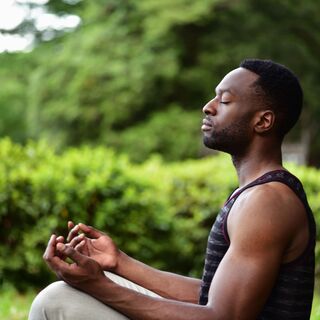
Let us all drop into this moment and let's start with a little bit of a meditation,
A little bit of a grounding practice.
So if it is safe for you to do so,
Close your eyes down,
Start to tune into your breath.
And we always start these meditations the same.
Eyes shut so your inner vision can be activated and so your attention can turn inwards and our attention comes onto the breath.
The breath being the key to connecting your body with your mind and your mind with your spirit and also being the connector to this moment right now.
So as you track your breath in and out,
You start to bring your attention away from any of the thoughts of the future or thoughts of the past and into here right now,
Into this breath.
And if your breath is something other than you would like,
Now is the time to change it.
So maybe you want to make your breath wider,
Larger,
Deeper,
Slower,
Fuller.
And we can also use the breath to manipulate the body and allow our body to relax.
And remember that anytime that we're in tension,
We're not really truly here now,
Right?
Remember that tension or stress that's held within the body is often because of thoughts about the future or thoughts about the past.
And so we use the breath to bring our body into even more presence.
And so we can do that by breathing in and creating space,
Physical space with the capacity of your lungs full.
And breathing out,
We can just relax our body,
Letting go of any tension that is created through the perpetual thinking of the mind.
Come here,
Arrive here,
Be here now.
And be here with all of you,
Your body fully relaxed into this moment,
Your mind,
Your attention and focus right here on the breath and on my voice.
And your energy or your spirit anchoring here through this breath.
And let's start our exploration today with a little energy clearing of any unhelpful beliefs that you may be holding consciously or unconsciously that are holding you back from creating your big bold dream as the conscious leader who wants to create more positivity in the world.
So again,
Let's use our breath,
This magical breath of ours.
Breathing in,
Creating space,
Drawing in energy from whatever source lights you up.
And breathing out,
We can pretend or we can imagine that our breath is breathing out any beliefs that no longer serve us.
So we can think of the breath in as gathering any of those unhelpful beliefs or limiting beliefs that hold us back.
And breathing out,
We literally breathe them out to the mind,
Letting them go.
So gathering with the in-breath,
Letting go with the out-breath.
Breathing in,
Drawing in any of those unconscious or conscious limiting or unhelpful beliefs.
Breathing out,
Letting them go.
And do a few more rounds here.
Breathing in,
Gathering,
Breathing out,
Letting go.
And we'll do one last big breath together.
Taking a huge breath in and holding up the top,
Gather all of the rest of those beliefs that may be holding you back or limiting you or are unhelpful.
Breathe it in and hold.
Feel the tension that exists in your body with these hard,
Solid and unhelpful beliefs that you hold.
And hold for a little bit longer at the top of your breath.
And when you're ready,
This last breath out,
Really exhale and imagine that all of these breaths,
All of these beliefs should I say,
Are breathed out away from your energetic body,
Away from your mind and away from the cells of your body.
Let them dissolve with the out-breath.
And return to your normal breathing.
And just take a little look at your inner landscape now.
Perhaps you feel that your body is less tense,
So it is more in this moment,
It is more fluid,
It has more room to move,
Maybe from the movement of the solid,
Fixed,
Unhelpful,
Limiting beliefs that you've released.
Maybe your mind is more clear and again is more spacious,
More room for creativity,
More room for that creative energy for you to be able to realize your big bold dream.
And perhaps you notice in your energy being this more fluid flow,
No more obstructions in where your energy goes to create.
So when you're ready,
Becoming aware of the room that you're in and gently opening your eyes.
So welcome back everyone.
Kia ora to those who've joined us.
You're with me,
Nick Chung.
I'm a Conscious Leadership Coach and Mentor here to help you create more empowering workspaces,
Whatever place you are in.
And today we're talking about your beliefs as your experience.
And this meditation that we just did was an example of how you can start to let go of those unhelpful beliefs that may be holding you back from creating the kind of positive empowering spaces that you wish to see in the world.
We're going to talk a little bit about these beliefs that may be holding you back.
And as we go along through this talk,
Stay open to some of the beliefs coming in right now about whether you are capable of creating the big bold dream that you have,
Whether you have the support or resources or any other kind of obstructive beliefs that may be getting in the way of creating your vision.
So just become aware of those and you may want to write them down because some of them might be new to you.
And I always think that the more that we become aware of our inner world,
Our inner world includes our beliefs,
The more that we're aware of that,
The more that we have the chance to change them.
Let's talk about this a little bit more.
Your beliefs shape your experience.
How do they do that exactly?
We're going to go back into looking at a bit about identity.
If you've followed me before,
You know I talk about your identity quite a lot and the egoic identity.
And your beliefs are part of this tapestry that shape your identity.
So your identity being the you that interacts with the world.
So me as Nicola Chung,
Interacting with the world.
So your beliefs are part of this tapestry that create your identity,
How it is that you interact with the world.
And how you interact with the world is set up in three parts.
First,
Your self-identity.
So the beliefs and thoughts that you have about yourself.
Am I capable of creating this?
Do I have the skills?
Am I good enough?
Am I valuable enough?
All of those sort of things about yourself.
So the beliefs about yourself,
That's your self-identity.
I'm going through this very quickly,
Okay?
So if you want to know more about this,
I talk about this in my upcoming book,
The Conscious Leader,
Which will be out by the end of this year.
So if you're interested in that,
Look at the link in my bio and insight timer and you can get more info there.
So your identity is shaped by your self-identity,
Your beliefs about yourself.
The second part of your identity is your worldview.
And your worldview is the beliefs that you have about the world.
So the world includes others,
Systems,
Nature,
All of the things external to you,
Okay?
So some of the beliefs that might be unhelpful in terms of my worldview might be things like,
I think corporate organizations are all bad,
Okay?
I'm exaggerating,
Right?
But it's like,
I think all corporate organizations are all bad and they can't change,
Okay?
Very unhelpful belief if you're trying to make change in the corporate world.
Another example of a worldview that might be unhelpful would be people are inherently not good,
Yeah?
Or people don't want to change.
So we have these two parts and we're coming to the third part.
So the first part is,
What is it?
Self-identity.
So your beliefs about yourself.
Second one is your worldview.
So your beliefs about everything external to you.
And the third one is,
Which these two influence,
Is your behavior in the world,
Okay?
So we have this kind of inner belief area and then these two feed into your behavior in the world.
And your actions in the world then have a looping effect with your worldview and your self-identity that tend to support each other,
Okay?
So say,
For example,
I have this,
I'm going to run off my worldview that people are not helpful,
Okay?
People don't want to change.
And so what I end up doing in terms of action is that I go,
Well,
What's the point?
There's no point trying to create change in the workplace because people don't want to change.
So my action is kind of like an inaction,
Right?
Remember inaction is also,
Non-action is also action in this case,
Okay?
So I decide not to act.
And then what happens?
The workplace gets worse,
Yeah?
More negative talk,
More of the old school culture that's kind of toxic.
And so then this feeds into my belief that I'm right.
The world sucks.
People don't want to change,
Yeah?
So can you see that feedback loop there?
We've got our thoughts about ourselves,
Our thoughts about the world,
That then influences our behavior and our behavior loops back to feeding our thoughts about the world and thoughts about ourselves.
And we also have a feedback loop actually between our self-view and the worldview and all the others,
Okay?
So you can imagine this kind of triangle and they're all feeding within each other.
So your beliefs shape your identity.
Can you see how what you're thinking inside about yourself and about the world then shapes how you act in the world?
That then has this loop of showing you your place in the world.
Let me make that more clear.
Based on the last example we just did,
Me not taking action because people suck and they're not going to change.
And then me getting that feedback and going,
I knew it,
People aren't going to change.
It's all the same stuff all over again,
Right?
How that shapes my place in the world is that I can't do anything,
Right?
My place in the world is I want to,
But I can't.
Yeah,
So you start to see how you are creating from your internal thoughts,
Your place in the world,
Your power in the world of influence and your ability to make change in the world.
So now that we know that,
Now that we know that our beliefs shape our identity,
That then shape how we interact with the world,
That then shape where we believe we belong in the world and what we can do in the world,
We can start to use that in the positive.
And now we start to look at that like positive psychology side of things,
Which is creating really good thoughts about ourselves and about the world.
I know a lot of people focus on thoughts about yourself,
But you actually also really need to look at your thoughts about the world.
Because as I said,
They are integral parts to your identity.
So don't just work on your beliefs about yourself,
Although that's a really good start.
Also look at those beliefs or biases that you have about the world around you.
Because imagine if I changed that thought about the world and instead of people suck and they don't want to change,
I thought people are inherently good and given the right environment and given the right motivation,
I know that they want to change for the better.
So imagine now I had that belief.
How do you think I would act in the world?
Instead of me sitting on my laurels and going,
What's the point?
I can't be bothered doing anything.
I would probably go,
Okay,
Knowing that I know that,
I just need to create,
I need to find out how I can motivate these people to change.
Yeah,
How can I do that?
And so can you see that I'm already changing the behavior of how I'm going to turn up in the workplace?
So when we talk about limiting or unhelpful beliefs in terms of them being your experience in the world,
Remember to also look at your worldview,
Not just your view about your thoughts about yourself,
But your thoughts about the external world,
Because they both shape how you interact with the world.
Oh,
Okay.
So we've got some lovely comments.
Let me have a quick look.
Thank you for the example.
That makes a lot of sense.
I can see my part more clearly now.
Oh,
That's wonderful.
I'm stoked for you.
Isn't it cool when we can see where we might be playing a part in what we're experiencing?
It's actually really empowering.
I know for me,
When I started this kind of work,
Like 15 years ago,
I was like,
Oh my goodness,
So much of my experience of the world is within my power to change.
It's empowering.
So I'm stoked for you.
That's awesome.
Great advice.
But how to reframe when someone gives you direct feedback about what a crap leader they think you are.
Again,
You can look at your beliefs.
So often when we take something like feedback like that,
Like someone goes,
You suck.
We can take it in two ways.
One way it might just slide off us because we inherently believe in ourselves and go,
I know that's not really true.
I think this is yours.
Yeah.
So there's that,
That reaction or response.
And then the other response is maybe they're right.
So if you are taking this with a bit of maybe they're right,
There probably is a belief in you that still doubts your greatness as a leader.
Actually,
There is a third option too.
I don't think you're right.
Like,
I think I'm a really good leader.
However,
You might have something to say about where I can improve.
Okay.
That's probably even the better thing,
Right?
So you're self-reflecting and you go,
I'm going to take on board what you're saying,
And I'm just going to put it through and be honest with myself,
Not in a like a self-flagellation way,
But I'm going to put it through my system and go,
Is there any ounce of truth with that?
And if there is,
How can I make sure that I'm doing that better?
So there's kind of three responses.
One is like,
They're right.
Oh my gosh,
I'm the worst leader ever.
And you go down the victim hole.
So that means that you do have probably an inherent belief that you're not actually that good,
Which means you can work on that.
The second way is kind of going,
No,
Not at all.
Okay.
Lacks a little bit of self-reflection there.
The third one is,
I'm going to just check with myself and see if there is some grain of truth to that.
And if there is,
I'm going to make the most of that feedback.
I'm going to thank you for that feedback because you've given me a chance to notice what I haven't been able to notice and therefore make some improvement.
Yeah.
I need to improve my thoughts.
Oh yeah.
Okay.
It makes sense that they influence how we end up behaving.
Yeah.
Like I just said,
This self-awareness thing or this dive into personal development,
Where you start looking at your inner world can be really confronting.
I know that on a personal level,
Right?
Like when I first started doing this,
And there can be a route where you start to self-flagellate.
You're like,
Oh my God,
I'm so shitty.
All these bad things.
It's all my problem.
Just avoid that,
Is what I'm saying.
Pat yourself on the back for knowing that you need to improve your thoughts.
Don't let it take you down though.
And follow with a really positive outlook.
Oh,
This is wonderful.
This is great.
I'm so glad I'm aware of this because now I can become the better version of me that I desire to be.
Okay.
So there's no more questions for now.
Let's wrap up a little bit.
So we know your belief shape,
Your identity,
Of which there are three elements of that.
Your self-identity,
Your worldview,
And then your behavior,
Which all have a looping effect.
And your identity,
Remember,
Tells you about your place in the world.
So we want to challenge those beliefs of ours that are limiting or unhelpful to us,
Creating the kind of big bold dream that we have to create more positive,
Empowering workplaces.
And sometimes we're actually unconscious of what our limiting beliefs are,
But how we get to have them revealed is by interacting with the outside world,
Right?
Or by interaction with the outside world.
So maybe that interaction might be direct,
Where someone comes and tells you your faults.
Kind of yay.
And others,
You can just see by observation.
So start to become the observer of yourself and your interactions and the kind of feedback that you're getting back.
Remember that feedback from the outside world can be a reflection of what is happening inside of you.
And that feedback can be actions towards you.
It can be that internal reactionary side of you.
So you can start to see where you still have work to do for yourself.
So start to look at that,
The interaction or the response that you get from the outside world,
In terms of being able to reflect on what you're unconscious about.
So this is sort of coming from more of a positive psychology bent.
Bandura talked about self-efficacy and how our belief shapes our behavior and therefore our outcomes.
Yeah,
It makes sense,
Doesn't it?
Snyder talked about the hope theory.
So evidence of how an optimistic outlook correlates with action and goal achievement.
We can think about that in terms of our beliefs.
If we have really optimistic beliefs about ourself and about the world,
It can really help with us to take action,
Like aligned action,
That is going to help us achieve the goal that we have.
So we have this evidenced in modern psychology now.
But we've also had this for so long in spiritual schools of thought.
So Buddha said that thoughts create your reality.
He didn't quite say that.
He said it way better than I said it.
But he's basically like,
Every thought that you have is shaping what you are seeing in the world.
And so we need to be really aware that what is happening inside here is creating our experience out there.
And now you know,
You have a tool.
If what you are experiencing out there is not what you prefer,
Then maybe there's some work in here,
Inside,
That you can do so that your experience in the outside world is better for you.
Ending on that,
Let's give you a few questions to journal on and take away with you now.
Please go and do this.
This is the part where you embody everything that you've heard today.
So I'm very much the person who's like,
Don't just read more books or listen to more lives and get more information in your head.
Go and get this into yourselves and start to live what it is that you've learned.
That's when you're actually changing yourself and making positive change in the world.
So first is embodiment and then we take that out into the world.
So please go do this homework.
And I set this homework in all of my lives apart from my meditations.
So first question.
What beliefs do I have that may be limiting me or are unhelpful for the creation of my big bold dream?
What beliefs do I have that may be limiting me or are unhelpful for creating my big bold dream?
So obviously we're looking at the conscious beliefs that you have.
Okay.
And remember that when you're trying to uncover your conscious beliefs or your unconscious beliefs,
Should I say,
When you're trying to uncover unconscious beliefs,
You can start to look at the external environment.
So the second question is,
What does the external environment say about my beliefs?
Or should I say,
Let's make that a better question.
What is the external environment telling me about how I believe I can create my big bold dream?
Did we get that?
So in the second question,
We're asking to start to look at your responses or the kind of external environment that you are experiencing and then take that and go,
If that's what I'm experiencing in the outside world,
What does that mean about what I believe about either the world or myself?
So for example,
We could take the example that Avis,
Maybe someone says,
You're a really terrible leader.
And then we noticed that we have this feeling of like,
Oh,
Maybe I am.
Okay.
So you start to see from the outside interaction,
What that unconscious belief may be that maybe I actually believe that I'm a really bad leader.
Okay.
Have we got those two things?
Third thing is,
How can I start to change my beliefs about myself and about the world so that I can start to take action towards my big bold dream?
I'll say that again.
How can I start to change my beliefs about myself and about the world so that I can take action towards my big bold dream?
And for those of you who don't know what big bold dream is,
It's your vision.
I changed the name of it in my upcoming book,
The Conscious Leader.
I changed it from vision to big bold dream because I felt like vision is so boring.
And what I found with my clients and people like you who are conscious leader,
You're already dreaming big.
And what actually motivates you is more of this bigger,
More impactful legacy type of dream.
And so I've replaced vision,
That boring vision word that we hear a lot in leadership circles to big bold dream.
Okay.
So if you're confused about that,
There we go.
So hopefully this was really helpful for you.
Hopefully I made the most of your time and your attention on here.
I do thank you for that.
If you found it really useful and you want to support me,
Consider sending me a donation.
Any amount is appreciated.
I do these lives three times a week on a donation basis.
And for those of you who still want to support me but donation isn't possible for you right now,
The next best way is to follow me,
Leave a comment and a rating on one of my meditations and that helps for me to be seen more by other people on Insight Timer.
All right,
We've got no more questions.
Thank you so much for the love and welcome to those who've just joined me today.
You've been with me,
Nat Chung.
I'm a Conscious Leadership Coach and Mentor.
I'm here to help you to create more positive,
Empowering workspaces in whatever role that you are in and in whatever work that you are doing.
And I hope that today has been incredibly useful for you.
I hope that I get to hang out with you again.
So whether that's you as a follower or you come and join me on my live again,
Remember I'm taking a two-week break from my live lectures but I will still be doing my meditations if you want to join me on Monday evenings for that.
Otherwise,
Have a beautiful rest of your day and hope to hang out more again soon.