Pause and relax.
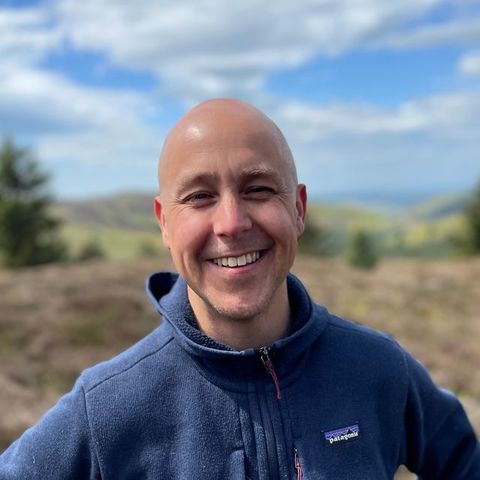
This exercise is recorded outdoors so hopefully you get some pleasant sounds,
Sounds of birds and the wind and insects.
But maybe there are other sounds that for you feel unwanted so especially you can just be mindful to any reactions to these.
In the pause and relax practice we bring together mindful pausing,
Postural adjustment and progressive muscle relaxation.
Together these practices help us to slow down,
Become mindful of our habitual patterns and ways of doing things.
And also through relaxing the body we can release tension and as our breath becomes softer and calmer this actually improves oxygen delivery to the brain.
There's a common myth that breathing more and heavier,
Taking bigger breaths is good for us but actually we already get enough oxygen with the air that we breathe.
And if we allow our breath to soften naturally through relaxation without trying to control it then we start to accumulate the gases of carbon dioxide and nitric oxide and these in turn balance out the pH in our body,
Improve oxygen release from our blood cells and also allow all the blood vessels in our body to open and dilate.
And paradoxically by breathing less we actually get more oxygen to our brain and the rest of our body and you can really feel the difference.
So this practice can be done in any posture but actually upright postures are can be slightly more effective so sitting upright in a chair or as I'm doing now you can practice this standing and that makes it really portable.
So let's begin just coming into an upright posture planting your feet flat on the floor and if you're standing like me just allowing the upper body to open up a little bit bringing the shoulders back a little and down,
Head looking up so that the eyes are gazing straight towards.
If it feels right perhaps just tucking the chin slightly allowing the shoulders to soften the arms to become heavy and at the same time there's a gentle uplift through the top of the head as if there were a thread attached to the top of the head gently lifting you upwards.
And we'll be breathing through the nose during this practice so if the mouth is open and if it feels right for you to do so just allowing the lips to close and allowing the breath to shift into the nostrils.
So no need to control the breath,
Just allowing the body to breathe naturally.
So now we're in our optimal posture perhaps just checking if any part of the body needs further adjustment so if the knees are locked perhaps just softening at the knees.
The tailbone's tucked under perhaps just untucking the tail.
Once again just bringing some uprightness into the posture lifting the head once more to look ahead.
Allowing the eyes to soften you can either have the eyes open or close them if you prefer.
And just pausing.
Just notice what happens when you pause when there's nothing that you need to achieve.
Nothing that you need to do.
Often when we pause in this way after a few moments we might start to become aware of our senses,
Sounds from the environment around you from near and far,
The feel of the weight of your body standing here or sitting or lying.
Might also be aware of thoughts in the mind.
Often the mind is constantly doing things in the background,
Planning,
Scheduling,
Worrying,
Ruminating,
Daydreaming.
Just acknowledging what the mind is doing right now.
From this place of non-doing we can start to bring a little bit of muscle relaxation into the practice.
Just gently allowing your attention to begin to shift to the face and in particular the region of the mouth and the jaw.
Often there can be quite a lot of tightness and holding in the jaw.
Seeing if that's true for you.
And if it is perhaps just allowing the lower jaw to begin to drop.
Still keeping the lips together.
Allowing the jaw to begin to soften and relax as much as it will.
Allowing the shoulders to begin to soften.
The arms heavy.
Might notice gripping and tightness in the hands.
Often we're still gripping and holding onto things from our day or the previous weeks and months.
So what would it be like just to let go of all that to allow the hands to gently begin to soften,
The fingers begin to unfurl.
And shifting our attention now to the belly.
Often the belly can be held,
It can be armoured up and tight.
Perhaps we're used to holding the belly in so that we maybe we feel like we look better for our appearance.
But actually it can be incredibly nourishing just to acknowledge that tension there in the belly.
And allow the belly to soften and relax.
Allowing the belly to become round.
Like Father Christmas' belly.
And as we relax the body in this way there might just be a subtle sense of a deeper relaxation in the body.
And as the breath calms and softens,
Sometimes there might be a sense of wanting to breathe more actually.
But that air hunger we call it is actually really powerful,
It's a really powerful resource.
And rather than taking deeper breaths or sighing or yawning,
Just allowing that air hunger to stay there if it feels right for you.
So as we accumulate carbon dioxide and nitric oxide,
All the blood vessels in the body begin to open up.
You might have a sense of warmth throughout the body.
Maybe there's moisture in the mouth.
Something or else is happening for you.
Different people may have different experiences at different times.
There's no right or wrong.
The jaw is soft.
And the tongue is soft.
The shoulders are beginning to soften.
The hands are beginning to relax.
Some bellies are beginning to soften.
The whole body is becoming more and more relaxed.
And as it does so,
All the cells in our body become more and more nourished with oxygen.
And so you can practice this exercise at any time once you've listened to the recording a few times and got the hang of it.
It just takes a few minutes to pause,
Check in with your posture and allow the body to begin to soften.
Thank you for practicing with me today and maybe well.