Hello and welcome to another edition of Quick Buddhist Lectures.
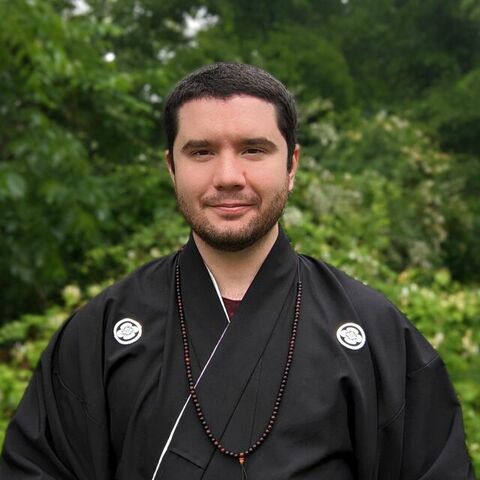
I'm Silas Day,
And this series is used to introduce you to the variety of characters,
Documents,
And schools found throughout the Buddhist tradition in short and easy-to-consume ways so that you have an understanding of who these people are,
What these schools represent,
And what the documents were used for.
Today we will be talking about Zen Master or Chan Master,
Zhou Xu.
Zhou Xu,
Also known as Zhao Zhao,
Kong Xin,
Lived between 778 and 897 CE in what is now modern-day China.
He was a revered Zen Master whose direct and enigmatic teaching style became a hallmark of the Zen tradition,
Studying under the guidance of the great master Nan Xin.
Zhou Xu became renowned for his profound understanding of the Dharma and his ability to convey it through unconventional means.
One of the most significant aspects of Zhou Xu's teaching is his use of koans,
Which are paradoxical or seemingly nonsensical questions and statements designed to challenge a practitioner's conceptual understanding and help to lead them to the direct experience of reality.
Among the most famous koans attributed to Zhou Xu is the question,
Does a dog have Buddha nature?
To which he replied,
Me,
Meaning no or nothingness.
This koan has since become a cornerstone of Zen practice,
Inviting practitioners to contemplate the nature of reality and transcend dualistic thinking.
Zhou Xu's teaching style,
Which often involved spontaneous,
Unexpected responses to his students' questions,
Exemplified the essence of Zen.
He sought to break through the limitations of language and concepts,
Guiding his students toward a direct,
Experiential understanding of the Buddhist teaching.
His teachings emphasized the importance of direct experience rather than relying solely on scriptures and intellectual understanding.
The impact of Zhou Xu's work on the development of Zen Buddhism is immense.
His innovative use of koans and his unique teaching style has shaped the Zen tradition entirely and influenced generations of practitioners.
His teachings have been recorded in various collections,
Such as the Recorded Sayings of Zen Master Zhou Xu and the Blue Cliff Record,
Which continues to be valuable resources for contemporary Zen practitioners,
Be they Rinzai,
Soto,
Or some other variety.
In conclusion,
The life and teachings of Zhou Xu offer us a glimpse into the heart of Zen practice,
Emphasizing the importance of direct experience and the transcendence of dualistic thinking in our meditation practice and in our everyday life.
As we strive to cultivate our understanding of the Buddhist teachings,
Let us remember the wisdom of this great master and aspire to integrate his insights into our own practice.
Thank you for joining me in this short introductory exploration of Zhou Xu and his contributions.
May we all continue to walk the path of wisdom and compassion,
Guided by the teachings of great masters who have illuminated the way before us.
Thank you so much.