Hello,
And welcome to episode 1 of Theological Rascality.
Today we'll be talking about prayer,
Contemplation and meditation from the Buddhist and the Catholic perspective.
We may dip into some other things,
But if you have any questions from today's podcast,
Please let us know.
Somehow we provide contact information and the ability to review,
So we're happy to answer you any and all of your questions.
Thanks,
And enjoy the episode.
Hello,
And welcome to the first episode,
Or the first proper episode,
Of Theological Rascality.
Today,
Me and Madison,
Madison and I,
Will be talking about prayer,
Contemplation,
Meditation,
And kind of subjects and things around that area,
Or at least we'll try to keep to it.
Madison,
What is prayer,
First off?
Let's try to define this word so we can talk about it.
Yes,
Prayer is something that as a Christian,
I grew up hearing a lot about,
But I probably didn't quite understand it until I kind of started reaching out into the Catholic sphere,
And really learning about what communication with God is for,
Or why we do it.
And as I kind of started exploring,
Then I realized that prayer takes so many different forms.
There's an old story of a priest,
He's walking around,
Walking through a convent,
Somebody's giving him a tour,
What have you,
And he looks outside and sees this little nun out there screaming,
Wailing,
Throwing handfuls of dirt at a statue of Jesus in the garden,
And of course,
Like the priest,
He starts getting worried,
But the Mother Superior comes around and puts her hand on his shoulder and says,
Don't you dare interrupt her,
She's praying.
So,
And that's one of those stories that really stuck with me,
Because it shows that prayer is more than just praying your rosary,
Or it's more than just going to church,
Going to mass.
Prayer is something,
It's how we as humans reach out into the void,
The unknown,
Into God.
We reach out into God to communicate,
To express.
You don't have to always ask for something,
Sometimes it's just simply being present.
And that's one of my favorite kinds of prayer when we get into the contemplation and contemplative prayer.
But what about for Buddhism?
I know there's not a whole lot of technical prayer going on.
So with it,
And you know,
It's just like Catholicism,
And maybe even more so,
Buddhism is incredibly diverse.
Someone who calls themselves a Buddhist in Sri Lanka,
And someone who calls themselves a Buddhist in Northern Japan or Tibet may appear to be practicing completely different things.
For example,
Like in Sri Lanka,
You can find people that are for all intensive purposes,
Praying to bodhisattvas and Buddhas as if they were deities.
Like actual incarnations of beings that exist in a different realm other than us that can help them with their life right now.
And while you do find stuff like that,
Like,
And you may look at,
Like,
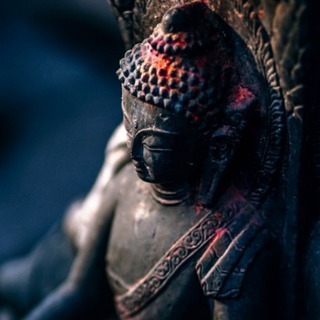
Bowing to like bodhisattva statues,
And bowing through times and doing prostrations and all these things.
The greater context of prayer in Buddhism is not that I am praying to,
Let's just say,
Manjurshi,
The bodhisattva of wisdom.
I'm not praying to Manjurshi,
But in a way I am acknowledging the aspect of ultimate wisdom within myself,
As well as that as an aspect that exists outside of me,
And that,
Or that everything has,
Right?
So it's,
They like to say that the reason why you do three prostrations,
In some cases,
To a bodhisattva is that the first prostration you do to the teacher that is the bodhisattva.
You do a prostration to yourself to represent what that bodhisattva represents in you,
And then you do a prostration to the ideal itself or the other people.
Like,
You do a prostration to all aspects of that thing.
So it's like where that could be,
Like,
Interpreted as a prayer of some kind,
Unless you have a very specific kind of thing or person in Buddhism.
Especially in the West,
I wouldn't say that there's very many people praying to Buddhas.
You won't find like a direct,
I'm trying to communicate with Buddha directly.
I mean,
Buddha himself said,
You won't be able to contact me after I die,
So there's really no reason to do it,
Right?
But why,
Because you mentioned it earlier before we turn the mic on,
But why do you think that we may be praying more in Buddhism than we think?
So there are,
In the Christian tradition,
There are two main schools and types of prayer.
There's the cataphatic tradition and the apathetic tradition.
And cataphatic is,
It is more,
It's the praying that when you think of Catholics,
That's more so what you're thinking of,
That style of prayer.
Using words,
Using logic,
Using reason,
Reasoning with God,
Bargaining with God in some cases.
And it's not a bad thing.
I mean,
I would probably say that until I started putting into practice the apathetic tradition,
I would say 75% of my conscious prayers were cataphatic prayers.
So do,
Because I know with most Catholics,
What are prayers to saints then?
So those would be the part of that cataphatic tradition.
And in that particular case,
Like prayers to Mary or prayers to.
.
.
Like Michael or Gabriel.
Yeah,
St.
Michael,
Like the archangels who are also recognized as saints.
They,
So prayers,
It's the same reason that.
.
.
So just as in life,
I would tell you if I'm having a hard time,
Hey Silas,
I need you to pray for me.
Okay.
And that's me verbally asking you to use your experience,
Your thought,
Your emotion,
Your feeling,
Your sense of mercy on me to then raise up your prayers to God and for me.
Right.
As a Catholic,
We believe that that doesn't change after you die.
Okay.
That you can pray just as well as you can,
If not better,
After you have passed.
Okay.
The church has multiple parts.
There is the church here on earth,
There is the church in heaven,
And then there's the people who have passed in awaiting judgment.
Okay.
And with the saints,
Those are people who the church has recognized have been kind of expedited through that whole judgment process based on evidence of certain miracles that have happened since they've died.
Like I know with John Paul II,
I know there was a woman who was cured of Parkinson's,
And it was considered a miraculous total healing based on the intercession of Pope St.
John Paul II.
My apologies.
So in that case,
What she did is she may have prayed a novena,
Which is a period of nine days of prayer to Pope St.
John Paul II and for healing,
For intercession.
And what her goal in that was to take her prayers,
Get in touch,
Ring up over the prayer lines,
Pope St.
John Paul II,
Because he also had Parkinson's and he understands the struggle.
He understands the pain,
The particular journey that someone with Parkinson's goes on,
He knows.
So who better to pray?
Who better knows the needs of a Parkinson's patient than a Parkinson's patient?
So in many ways,
Because that's one aspect to look at prayer,
Right?
Are you bargaining with the divine in some degree?
It may feel like it,
But is it a bargain if it's always freely given?
Well,
Is it always freely given?
I would say so.
I would say that grace is always freely given from God.
That's a key theological point of Christianity is that God is infinitely graceful,
Infinitely merciful.
And you could go and also say,
Well,
He's also infinitely just and say that he can burn people in a pit of flame if he wants to.
I'm not quite of that persuasion.
I much more believe that there is more grace coming from God than we could possibly even imagine.
That we are not even a drop in the ocean.
That is God's grace.
So with prayer and then Catholicism in general,
Because this is kind of,
There's a great line and I can't remember where it's from.
I think it's from Zen where they say,
Be a pillar unto yourself,
Right?
Where it's like,
You're the one that's holding it up.
With Catholicism,
Would it be that like Christ or the Christ or whatever would be the pillar that you're kind of leaning on?
Absolutely.
And grace is that support that one can be,
That one can get from leaning on that thing?
Yes.
Okay.
Interesting.
There was an interesting instance where the Dalai Lama prayed to the statue of Mary and I found that,
You know,
It surprised a lot of people within kind of the Buddhist and Catholic world,
But I'm like,
I mean,
Come on at a certain point.
Yeah.
And honestly,
The Blessed Mother has a lot of respect in non-Christian spaces.
I know in Islam,
She is the main character of,
She is the key figure of the New Testament,
The Christian text.
Huh.
Because she is the one that submitted to God's will.
Yeah.
Freely and completely.
Right.
So she is much more revered in Islam than Jesus of Nazareth is.
And like,
I've read a book,
Not read,
I mean,
I reread it every year.
It's called True Devotion to Mary by St.
Louis de Montfort.
Highly recommend it.
It's a very deep devotional book.
It is a product of its time.
It's very,
This is my way or the highway,
It's this way,
Or you're going to hell.
There are some little bit of notes of that or everything else that you're doing besides this is not needed.
This is the most important.
Take it with a grain of salt.
Well,
Yeah.
I mean,
He was a person of his time and he was trying to discuss it in a very serious way.
Yes.
Yeah.
Absolutely.
So in the book,
It talks about,
And a lot of Christianity,
Especially us in the West,
We have a lot of these monarchy based metaphors around Christ,
Christ the King.
Right.
You know what makes me the most uncomfortable?
Which one?
Prince Jesus.
Ooh.
Yeah,
That's a weird one.
I don't like that.
I don't like that either.
I'm not big on that one.
Prince?
That's a weird title.
Yeah.
I mean,
Maybe if there's like some kind of weird Latin translation that that came from.
It came from a Fire and Brimstone Baptist Church.
No.
Yeah.
Yeah.
No.
Christus Rex.
Yeah.
Christ the King is much,
It helps fit a lot of these metaphors together.
Right.
So if Christ is the King.
Right.
And you have to kind of put yourself into think of like,
We're playing D&D right now.
Right.
And we're going to the King of the land and we need to ask a favor of the King of the land.
Or we,
Let's just say we want to get in his good favor.
Right.
So we're going to take a gift.
We're just a poor little peasant.
We were out walking around on our walk today and we found a wild apple tree.
Okay.
So we look and we look and we look and we go,
Ah,
There's the perfect apple.
Take the apple.
You know who needs this?
I'm going to give this to the King.
Because maybe if I can give this apple to the King,
He'll remember me come tax season.
And on April 12th,
He'll let me have my extension.
Right.
So you take that apple,
You go to the palace.
And is it better to give that apple directly to the King or in the Blessed Mother's case,
Do we go to the Queen Mother?
The person who knows how the King likes his apples.
He knows that he doesn't like,
She knows that he doesn't like the skins on them.
So she's going to peel them off.
She's going to cut the apple into little slices,
Little wedges,
Serve it with a little bit of peanut butter,
Because that's how the King likes it.
How J Man likes it.
She puts it on a gold plate and takes it to the King.
So which is better?
You giving your apple to the King or taking your apple,
Giving it to the Blessed,
The Queen Mother,
The Blessed Mother and saying,
Make this prayer as perfect as you can for the King.
Okay.
And then she gives that prayer to the King,
Serve golden platter.
So is that in prayer,
Like say I'm praying to like St.
Michael or Gabriel or the Blessed Mother,
Those kinds of things,
Are they acting as like the middle person between me?
It's called intercessory prayer.
Intercessory prayer.
Yes.
Okay.
And sorry,
The reason why I laughed was you called Jesus J Man.
And for some reason it's,
I like to refer to Buddha as Uncle Sid.
And so for some reason I thought they would make a great rap group,
J Man and Uncle Sid.
Oh no.
But intercessory prayer,
That's really interesting that where,
So why do you think that exists as a medium in prayer with the Catholic Church?
And,
Or why do you think that came about instead of directly going to God in prayer?
Like,
Is it because of that monarchical kind of cultural tendencies or like,
Was it because your average Agri 800,
You know,
Your 800 peasant didn't particularly like have a very great understanding of it all.
And so these characters were used as like metaphors for the variety of aspects of the Father,
That kind of thing.
I,
Yes,
You're,
There's a lot of different reasons for a lot of different saints.
And so like,
I know there's Saint Genesius is a great one of Rome.
Saint Genesius of Rome is the patron saint of actors and of performers.
Okay.
His big story,
He was put up for execution and he did some,
I think it was like a miracle play and it was so moving that he converted the emperor.
There's so many different stories about early Christian saints,
But it's been,
People are fairly sure the Saint Genesius of Rome didn't really exist.
He's more of one of those mythological saints that worked as a token,
As a way to relate the faith to you as a Christian,
To you in particular,
To give you a more personal anchor into that devotional life.
Yeah.
Because it's easier for me to,
Because for me as a white boy growing up in Arkansas,
I,
It's kind of hard for me to relate to a Middle Eastern rabbi who lived very poor.
He was probably a carpenter.
I mean,
I put some floors down in my attic last summer.
I mean,
That's about as close to carpentry as I've ever gotten.
You know,
We actually have something somewhat similar with like the fading of the original figure and like the introduction of these figures that may have like never existed before with,
Specifically in,
Not so much in like the Therabada tradition,
Which holds very closely to Buddha and the people around Buddha who lived with Buddha.
But in traditions like the greater Mahayana and the Tibetan tradition,
Like,
And Zen too,
It's like Siddhartha Gautama the Buddha,
Very rarely mentioned almost.
And like,
He's never like mentioned exactly,
But like characters in Tibetan Buddhism,
Like Padmasambhava or like Manjarshi,
Avalokitesvara,
Lanya,
And like all these other mythological characters that came about.
And of those that I named,
Like Padmasambhava is the only one that existed,
But it's like,
They came about as representations of certain aspects of the teaching.
Yeah.
They're like archetypes of the teaching.
And so,
And they were closer to the time than like,
So for example,
With Padmasambhava,
He,
I mean,
He was around like 700 to a thousand CE.
And it was like,
The reason why people are so much more attracted to him is because like,
One,
He's a Tibetan,
He's of their culture.
He's like,
Of their time rather than this Indian prince that lived 1500 years prior.
Yes.
Even though everything that Padmasambhava is teaching kind of is based on or comes from that prince.
And it's like,
And I agree,
Cause it's taken me a long time to relate to Sid,
My uncle Sid,
You know,
It's taken me a long time to relate to many of these characters because they're just so weird.
It's like,
They were the weird person in the town and that's why they left probably.
Or like with Dogen,
Like Zen master Dogen,
He was like,
He was born into a relatively wealthy family,
But he went over to China to learn Buddhism because he didn't like the Buddhism of his time.
And it's like,
Well,
That's a little strange.
Like,
Why did he do that?
But,
But yeah,
I kind of get,
That's interesting that they're sort of used in the same facet.
Yes.
Yeah.
And there's probably,
There's a million different reasons why a billion different people pray to the saints.
Right.
And that's always,
Always with a grain of salt because there are so many different forms of Catholicism and of Christianity that recognize and do have devotions and adorations with the saints.
Yeah.
But I did want to also touch on the cataphatic tradition because that's where you,
I think might find a little bit more similarities with kind of the traditions that you've been more familiar with.
Right.
So the apathetic tradition is the knowledge of God by negation.
Okay.
Yeah.
It's talking about like what God is not or,
Or like what God is like.
Right.
And this is one of those,
This is where the word stopped working.
Right.
Because the,
In the apathetic tradition,
Prayer takes on a completely different kind of personality.
Cause in the cataphatic tradition,
We have all of this language,
We have all of this stuff to describe it.
We have all of these very,
We have all of these points on the graph that we can actually plot and use.
Not so much with this other school.
This is going to be the school that's more common with the desert fathers.
It's going to be more common with the monastics.
Because for,
Especially after the enlightenment and Renaissance,
This form of prayer was really pushed under the covers because it's not rational.
It's not logical.
It is nearly impossible to describe.
Well,
It's,
It's working in a realm that is,
What is it?
It's working in a realm that is very personal and it's,
While,
While I do think you can have a language to talk about it and a language to describe the experiences,
It is working within a realm where I can't prove it to you unless you do it yourself,
Which isn't very helpful to people who don't want to put the legwork in.
And it's like,
I can tell you that all these things can happen.
And like for me specifically,
With like the meditative states,
I can tell you that all these things can happen and I can have 2000 years of history of people telling you that if you do this,
This will happen,
But you'll never actually understand what I'm saying until it happens to you.
Yeah.
Or it's like,
You won't understand.
Like,
For example,
Like the first concentration genre,
Right?
It's like,
I can say,
Well,
Incredible bliss will arise.
Like happiness and bliss will arise.
And people are like,
What?
I was like,
You have to get there to,
I can say that and like,
We can agree and you can be like,
Okay,
So this is what happens.
But when you get there,
You can be like,
Oh yeah,
Happiness and bliss arise.
Okay,
I get this.
But yeah.
So with that form of prayer,
Do you think that it connects more completely to what I might call a more formal spiritual path where it's like you're taking it almost as your profession?
Because I mean,
I wouldn't say I don't see many Protestants doing this kind of prayer.
See,
And it's mostly on a thing.
It's a theological difference to why Protestants don't really do it because especially the Protestants that subscribe more to the sola scriptura technique of interpreting scripture,
But it's only the word.
So when they read,
When Christ says to go into your closet,
Shut the door and pray to your father,
They literally take that to mean that I'm supposed to go into the closet or into a quiet private place,
Shut the door and pray.
However,
Kind of when we're talking about some of those cultural,
Like you miss the joke because you're not from that culture,
You're talking,
Jesus is telling people who don't necessarily have a private room to go to.
There's not a whole lot of private rooms or closets.
Oh,
He's telling people to go into their interior.
Bingo.
Go into your interior,
Shut the door and pray to your father.
So,
And that's the thing is as a Protestant or at least in the tradition that I grew up in,
In the church of Christ,
They're like,
They literally meant go into the closet,
Shut your door next to your sweaters and your cardigans and pray and pray to God,
Pray to Jesus.
And though I think that's a great thing to do,
I don't necessarily think that that's what Christ was talking about.
I think he was more so,
Go to a private place,
Go within yourself and pray to God.
I,
You know,
And do you think that the same thing could be achieved if one actually did that?
Like,
For example,
What I mean by that is like,
There'd be stories in Buddhism of people like living in caves by themselves for like years on end.
And it's like,
Well,
Are you using the simplicity and the like minimalism of the exterior world to try and better reflect the interior of what you're trying to generate?
Or it's like,
Because of the simplicity and the minimalism of the exterior world,
You have this vast inner world that is enjoyable and fruitful,
But at the same time,
Like learning and explorative,
That kind of thing.
Okay.
So with all this,
What is contemplation in the Catholic sense?
So contemplation,
There's,
It can be kind of hard to describe if you're talking about contemplative prayer because contemplative prayer,
The goal is to contemplate,
But the caveat is that you cannot actually bring about contemplation on your own.
Okay.
The theology behind it is that contemplation itself is a gift from God.
It is a grace of God.
True contemplation to be able to internalize the end.
I know the Blessed Mother is a great,
She's a great symbol of contemplation.
She,
Whenever she found,
When she and Joseph found Christ in the temple as a child,
And actually,
I can't remember if it was,
If Simeon was whenever they found him in the temple or whenever she presented him in the temple.
I'm a bad Catholic.
I don't read my Bible.
I'm sorry,
Guys.
But I guess it means I'm a good Catholic.
So she's prophesized to by Simeon and basically said that your heart will be pierced by a sword.
This child is destined for great things,
Blah,
Blah,
Blah.
And it's said that Mary held these things in her heart for the rest of her life.
She contemplated what that meant for the rest of her life.
So I think it's very similar to kind of some of the jhanas.
I hope I said that right.
In that you can concentrate,
You can meditate up into a certain point,
But for you to really get that,
Or when you do experience that bliss,
When that bliss arises,
Right?
That is the contemplation that is coming from God.
Because you cannot make that happen.
That happens when it wants to.
When you have reached a sufficient state that your spirit,
Your mind,
Your body are all working together in order to reach out into this divine reality.
Okay.
This external divinity.
So with that,
And I would say that the biggest difference is that we don't really,
It's all on you.
It's all on you.
It's all you.
It's all your work and your effort.
Exploring the conscious moment of this exact now through a very specific venue.
And so with contemplation,
It just begins as concentration.
So you attain this thing called access concentration,
And then you can take it further and further.
But with the concentration jhana specifically,
You would,
I like to think of it as casting the mind in a certain direction or casting the meditation in a certain direction.
If you want to get to the fourth jhana,
Which is kind of this wide open,
Equinominous space that you would tell yourself,
I wish to attain to the fourth jhana,
The fourth concentration jhana,
And kind of cast the mind toward that location,
And then use that equinominous thing,
Use equanimity as a contemplation into that meditation.
Well,
You're not actively thinking about it,
But you're holding it within your mind.
You're holding it within the moment as an object of focus.
And so in that way,
I guess,
One could consider it a contemplation kind of quote unquote.
So that's interesting.
But the biggest difference would be between,
It's not something that is given to you,
It's something that you already have,
And you are just discovering.
So,
And it may take others longer,
It may take others shorter.
And that's the way with anything in Buddhism is you are,
You are not just in Buddhism that you are in some,
There's the parable of the four horses.
I like to say there's the horse that runs when the whip is cracked in the air.
There's the horse that runs when the whip is cracked on the skin.
There's the horse that runs when the whip is cracked on the muscle and the horse that runs when the whip is cracked on the bone.
So it's like you may overall…I may be a person who I run when the whip is cracked in the air,
But that means,
I don't have to kind of work nearly as hard as you do,
But you may have a much thorough understanding and a much better ability to stay concentrated,
Stay in the meditative states,
Work towards it than I do.
It's kind of like someone who,
Talent versus practice,
Almost that kind of thing.
But then you have the really weird people that just like,
They're there and you get it and you're like,
Of course,
Yeah,
Go away.
But two characters,
Like a character that was that way was someone like Sri Ramana Maharshi.
He was this Indian saint from the 1900s.
You'd really appreciate his stuff.
I'll try to,
How do I spell that?
Sri S-R-I Rahamana or?
I'll try my best.
Maharshi.
Yeah,
Just pull,
I'm sure I'm butchering the pronunciation as well,
So don't worry.
It's okay.
Google is our friend and she is really good at autocorrect,
So thank you so much Google.
But yeah,
I could see it being as a contemplation and even in vipassana practice or insight meditation,
You use a technique to get into certain areas,
But you are unconsciously kind of going through the motions until you have enough skill to notice the psychophysiological effects that happen or the meditative occurrences that happen with,
For example,
Like mind and body,
Cause and effect,
The three doors.
And so it's like until you have had several or maybe 50,
100,
150 arising and passing away experiences,
You may just be dragged along in your meditation through whatever door you're going through of the three doors.
But once you get good enough,
You can choose which door to go through to that arising and passing away experience.
And then when you get into the dark night,
You can sit more fully with things like disgust,
With things like desire for deliverance,
With fear,
Gluttony,
These kinds of things that come up in the dark night of meditation to try and attain path.
See,
And I want to talk about the dark night because that is a buzzword in Catholicism is the dark night of the soul.
Oh no,
I stole that.
Okay.
I was about to say,
I was like that,
That sounds a whole lot like my favorite Carmelite,
St.
John of the cross.
Yeah,
No,
He,
He,
He's a very interesting Catholic to me.
Very.
Yeah.
Well,
And it's like,
I could say the poly word for it.
And I it's,
It's not coming to me at the moment,
But like I could say the poly word,
But it's just so much easier to describe it as like the dark night,
The dark night of meditation.
Because it's like,
It's something that Catholics,
It's something that Buddhist and even like Hindus know it as like,
It's going to get worse before it gets better.
It's gonna,
It's gonna get way worse before it gets better.
Yes.
Yeah.
And some people never make it out of the dark night.
And in Buddhism,
We sometimes like to call those people dark night yogis because it's like,
They,
You,
You may be able to attain like the eighth concentration Jhana,
Which is neither perception or non-perception of neither perception or non-perception,
Right.
Which is a very peculiar state to be in,
But like,
You may not be a stream enter.
And so it's like,
Because for some reason you just can't put the effort in for some or,
Or like some kind of block.
Yeah.
Oh,
You have a block or what we like to call a golden chain where it's like,
You're so obsessed over here that you can't do this over here.
And that kind of works.
But so,
So what then would,
What is proper meditation in Catholicism then?
Well,
I'm so glad you asked.
So there's a few different ways.
One of the most popular ways of kind of meditation and the Christian world is something called Lectio Divina.
Okay.
And that is a,
It means holy reading.
So for example,
I do a Lectio Divina group and we meet online,
We get on like Google Hangouts.
We used to use discord,
But we would get on and we would take the reading for that Sunday out of the lectionary,
Which is the calendar of readings that goes through the entire Bible over a one to three year period,
Depending on which one you're using.
So the,
So with Lectio Divina,
There's four phases,
Four ways of interacting with the text.
The first time you read it,
You just read it as it goes.
Lectio,
Just reading with it.
You can sit with it for a moment,
Just as the words are hitting you,
Washing over you.
And then you can go on to,
To kind of pray about the words.
You can reread it and read it as a prayer.
If it's one of the songs,
A lot of times that's very helpful.
There's a,
But then you can reread it and meditate on it and go,
All right,
So what are they,
What are they talking about?
Well,
What does that implicate?
What does that implicate?
And just,
And go through that kind of that spiral,
But you can kind of go down the rabbit holes that are being presented in the reading,
But then you can go to a contemplation once you've reached that contemplative place,
That state or not that you've reached it,
But it has,
It has been given to you.
You can sit with the text,
Not thinking,
Not just being present with it.
A lot of times for me,
That is,
I can,
What I'll do is it's kind of like a two-part thing where I start with the meditation and I do,
It's called an Ignatian exercise from Saint Ignatius,
Where you build these scriptural scenes in your mind in as much detail as possible.
It's like building a little automaton.
It's like building a little robot scene in your head.
I always think it's almost like that,
Like the Chuck E.
Cheese shows where they have all the robots up there.
Nowhere near as creepy,
I hope.
Not nearly nearly as creepy.
Oh,
I don't know.
Sometimes when you do stuff on the precious blood,
That can get a little creepy.
Yeah,
That's a little weird.
But,
So like if you were doing like the Nativity,
A lot of people are very familiar with that scene and like you go into each of your senses,
You engage in this meditation,
You go,
What am I seeing?
I can see the hay on the floor.
I can see the dirt on the coats of the animals.
I can see the sweat on Mary's brow.
I can,
I can hear the cries of a newborn child.
I can hear the brangs of the donkey.
So it's like a visualization meditation.
Very much,
Very much.
The mission exercise is very much a visual exercise.
Okay.
But once I get that machine wound,
Built,
And I kind of meditate on it,
Wind it up a little bit,
And then the contemplation comes in whenever I can't wind it up anymore,
And then it clicks.
Okay.
And I can watch the scene play out almost as if I was actually there.
Yeah.
And I don't have to think about it.
It is,
I am truly in my mind's eye,
In my,
In my meditative state,
I am experiencing,
I am living it.
Like I said,
Because I've already,
I've put in that work as like,
I can literally smell the straw,
The hay.
To me,
It almost smells like I always take the smell from like the Washington County fairgrounds.
Like,
I can smell it.
And that's the thing is like,
And like,
When you build that picture,
It's amazing with a little bit of practice.
And being used to getting into that state of being present with the word,
Capital W,
Lowercase w,
Both.
Right.
Being present with that.
And in a way,
It brings your mind to God.
Right.
It's.
So would you do different visualizations for different things you want to contemplate?
Yes.
For example,
Like you brought up the nativity,
But like if I wanted to visualize like Christ on the cross.
Absolutely.
Right.
Or if I wanted to visualize like his baptism.
Right.
And all these different things.
So you could actually pray the rosary,
Which is a wonderful contemplative tool.
Even though it is kind of,
If you're not doing it,
In my opinion,
Right,
It can be a cataphatic prayer,
But it's what you do.
So what you do is you use the kind of base knowledge.
The rosary is five sets of 10 Hail Marys,
Bookmarked by an Our Father and a Glory Be.
And you do all of those prayers and on each set of 10 beads,
There's actually different mysteries that you're supposed to meditate on while you're praying that.
So it's very,
You have to be able to multitask to be able to remember your prayers,
Keep track of what beads you're on.
Am I on a small bead?
Am I on a big bead?
It matters.
So in Buddhism,
We do have a lot of visualization.
Yes.
I've personally never been very good at it.
But there's one that your,
The visualizations can get very intense,
Especially in the Vajrayana and the Tibetan traditions,
Where you're supposed to envision,
You know,
Every hair on the guru's head,
Every feature of his face,
That the fabric that he's wearing,
Or like hundreds of these things,
Or and then with some of the other things you might envision,
Like,
There are bodhisattvas that were like necklaces of human skulls filled with blood,
And like you envision these things.
And if you're doing,
For example,
Like a guru meditation,
You envision your guru in front of you and on top of your head,
And you get a very,
Very clear picture of that guru.
And then when you have the clearest picture that you can visualizing of that guru in front of you and above you,
You collapse them into yourself.
And you do that over and over and over again to try and recognize the aspects of that teacher within that teaching,
Kind of unconsciously invoking the essence of that specific teachers teaching or that traditions teaching,
Like one might do this with Avalokitesvara.
If you're trying to work on compassion,
Understanding,
Empathy,
Those kinds of things,
You're envisioning Avalokitesvara to the best of your ability with all of his,
You know,
His necklaces and his chains and his beauty and her beauty and its beauty,
And then absorbing it into yourself through a respect and admiration and a contemplation on that being through that meditation.
It sounds very similar to kind of a way that you can pray with the saints.
Right.
It's like,
Or even with Jesus,
Like I know in the prayer,
The St.
Patrick's breastplate,
Where Christ in front of me,
Christ behind me,
Christ above me,
Christ left,
Christ beside,
Christ within,
Christ without.
Right.
And it's,
We're here.
But it's like,
You could also say,
Like St.
Joan of Arc,
That's a wonderful popular saint that is very empowering for a lot of women in Catholic circles because she,
I mean,
She is,
She's a badass.
Absolutely.
And they,
One of the things that I've actually heard people is that they'll imagine,
They'll visualize St.
Joan of Arc and all of the things that she was able to do by faith,
In faith,
And through faith and say,
I want to do that.
And we'll pray to St.
Joan of Arc,
St.
Joan of Arc,
Help me to do this.
Help me to get through.
And it's very similar almost to some of that guru meditation.
Okay.
Because from what I,
I'm no expert by any means,
But what I understand about kind of the guru structure would be very similar to a devotion to a saint.
Right.
Maybe not as intense because I know there's a little bit more of a direct spiritual connection or nature.
There can be in many ways,
Or at least in my opinion,
I think the guru is just trying to trick you into realizing that you yourself are the guru.
Yes.
Yeah.
Yeah.
It's like,
He's,
What was it?
I think it was Watts who used to make the joke that like,
The guru is going to make you do all these like wild,
Crazy meditations and weird things and all of this and all of it is like in an attempt to trick you into realizing that you yourself are the guru or like the guru is within you.
And it's like,
He may be an exterior representation of it,
But like the true guru is within and that kind of thing.
So yeah.
And with the saints,
Are you ever,
Is it ever,
Not even with the saints like,
Or the apostles or Christ himself,
Are you ever trying to realize any quality with them almost?
So to,
With everybody in that list,
Except for Christ.
Okay.
I could say yes.
Okay.
Because when you start getting into that,
Because Christ is perfectly and fully human and divine,
Right?
So Christ is our brother,
Right?
But he is also the father.
Okay.
So that's one of those paradoxes that you,
I kind of have to kind of tiptoe around without getting myself into too much trouble.
Right.
Yeah.
But definitely like with Mary,
It's the idea is to,
At least for me,
It is to emulate her in all things,
Right?
To not let the story be about me,
But to let my story be about Christ.
Okay.
And that is very much an inspiration that I take from the Blessed Mother and the example in scripture of her.
Yeah.
For me,
It's like you recognize the Buddha nature that is within yourself or the Buddha.
And it's not something that you attain.
It's something that you find because it's like,
It's sort of like,
I think of it in grace,
Like grace in some ways,
Where like someone asked,
Like if someone came to a teacher and said,
I would like to attain awakening.
And so the master says,
Can you hear the flowing of the mountain stream?
And the student goes,
Yes,
I can.
And he goes,
Well,
Search for it there.
And the student went off and became awakened.
And several hundred years later,
A student of Dogen said,
Well,
What if he would have said no?
And Dogen goes,
What do you mean?
He goes,
What if he couldn't have heard the flowing of the mountain stream?
And Dogen said,
We'll look for it there.
Go find it then.
If you can hear it,
It's right there.
Go to the flowing mountain stream.
If you can't hear it,
Go find the flowing mountain stream.
Or it's also,
It's like,
Where's enlightenment found?
Where's awakening found?
Well,
It's found at your feet.
It's exactly where you are exactly here and now,
Freely given,
Freely able to be found.
You just have to be able to see it,
Find it in a way.
And then even one may say that you realize that there was nothing ever to find.
There's no awakening to awaken to.
It's like,
This is the moment.
This right here,
As it is now.
There's a wonderful book that's actually been redone.
And I've not read the original,
I believe it's called The Pilgrim's Progress.
But I've read a modern rendition called The New Pilgrim's Progress.
And it's by a lovely author who has done a lot of work as well with like the Tao Te Ching and translating it in different ways to show the similarities between the Gospels and the Tao.
Yeah,
You're a white boy,
Man.
Tao Te Ching.
Yeah,
I know.
Don't fight me on it.
Tao Te Ching.
Tao,
There's a T there,
Sorry.
It's really funny because,
So that's like,
I forget,
There's like,
That's the romanization spelling of it,
But it is pronounced Tao Te Ching.
But then I've had a traditional Chinese speaker tell me that I will almost never be able to say it right.
Because the D is like,
It's like pronounced D-E,
Like,
And then with an H,
And then he's like,
And a tiny bit of R at the end.
And I'm like,
What?
He's like,
All right,
Whatever.
I was like,
Okay,
Fine.
I'm not a native Chinese speaker.
Yeah,
My wife who knows more Chinese than me always gets on to me about my pronunciation of things.
So,
But she's not here.
She would be judging me.
Luckily,
She never says any poly or Sanskrit or I could get on to her.
She's a smart woman.
So are there any like walking meditations,
Like where you'd be walking around doing these things or you'd be like laying down?
Because in Buddhism with meditation,
Buddha said that there are four forms of man.
There's sitting,
Standing,
Walking,
And laying,
Where you can be engaged with a meditative contemplative state while doing those activities.
Yes.
Well,
Are there any examples of that within the Catholic tradition?
Yes,
There are.
There's actually quite a few,
But I think there are.
One of the,
Probably the most modern and most well-known is going to be centering prayer.
And that,
Well,
Actually now that's more so like a sitting,
That's a sitting prayer.
Yeah.
So in the Carmelite tradition,
There is a monk by the name of Brother Lawrence of the resurrection.
And he has a concept called the presence of God.
And that's a devotion where you simply recognize and accept the fact that God is everywhere.
Always.
Okay.
And you maintain awareness of that fact.
That is the prayer.
Yeah.
Plain and simple.
That's,
I mean,
That's almost vipassana meditation.
I mean,
I mean,
Sticklers of vipassana and insight out there are going to be like,
Well,
Actually,
But like it's an awareness of the infinity of the present moment and an investigation thereof.
Right.
Yeah.
And if you ever,
What I love about it,
It's such a loving and grace giving devotion.
Okay.
Because especially like in the book,
Like at first I was like,
Oh God,
What am I reading?
Because it's so he's very strict on that.
You don't,
Again,
You don't have to do anything else in your life except for this devotion wise.
This is the only devotion that you need.
It's,
This is the most perfect devotion.
Okay.
Perfect.
Yeah.
It's not,
It does really well with some people.
It's very easy to remember.
And like I said,
It gives you a lot of grace and that you,
Like the book says,
If you find yourself falling out of this state,
If you come to realization,
Like,
Oh,
I'm not maintaining the presence of God in my mind,
Don't worry about it.
Don't bug yourself about it.
Don't beat yourself up.
Just go back.
Right.
Because the sooner you go back,
The sooner you're better.
It is infinitely better to be in that state than it is to be denigrating yourself because you're not in that state.
Right.
So just do it.
Yeah.
And that I love that because it's one of those things that at the end of the day,
When I'm laying in bed,
I'm not going to say most days by the time I get into bed at the end of the night,
Lay down,
Shut my eyes and go,
Okay.
Am I in the presence of God?
A lot of times I say no.
By the time I get to the end of the day,
Life is crazy.
Yeah.
And I'm not necessarily at that point where I can maintain that.
Right.
I may,
I may have prayed throughout most of the day.
So you're not in the presence of God.
So with that,
I would like to say like,
So with,
With the let's,
Let's take some trappist monks,
Right?
Would they asking themselves that question at the end of the day?
Let's say I've been a trappist monk for five years.
Right.
And I've engaged with this fully and completely and contemplative prayer and stuff.
Can I be in a place where I can answer yes to that at any moment?
Yes.
What would you call that?
I would probably call it a state of,
See that's the thing is I'm not sure if there really is a word because it's not necessarily something that's not necessarily a state that we're trying to always achieve.
Right.
It'd be good to get there.
Yeah.
It'd be great to get there,
But it's more so it's less about the devotion itself,
Especially like with living in the presence of God.
And I know that the Orthodox church has some more developed teachings on the Jesus prayer.
The Greek version being the Curia at Laysan,
Lord have mercy,
Lord have mercy,
Lord have mercy.
I would be curious if,
Because like in Buddhism,
It is very plainly laid out.
Like these are the states that you're trying to get to.
And with path attainment is what I like stream entry,
Agonomy,
Stuff like that.
Yeah.
You are making actual,
Like,
Let's say you're a stream enter,
Right?
Like you are vastly more capable of entering into meditative states,
Staying connected to the moment,
Then someone who is not would be,
But you are still vastly less able to than someone who has attained like second path or third path or fourth path.
And I'd be curious,
And we can touch on this on a later episode once we do some research or if our listeners want to point us in the right direction,
If Catholicism has that.
So yes.
And I actually just,
I had to jot it down because it was,
I almost just blurted right out.
Okay.
So there's actually a book,
Carmelite,
Okay.
But not this time,
Saint John of the Cross,
His counterpart,
Saint Teresa of Avila.
Yeah,
I actually know that one.
Teresa of Avila,
Teresa of Jesus.
She had wrote a book called The Interior Castles or The Interior Mansions.
It was originally written in Spanish.
So the castles and mansions,
It's the same word.
It's the same word.
But it talks about how,
And it's not necessarily like there's actually castles or it's a metaphor for the different interior states and how you move through those interior states.
So like there's,
You go into the first castle and there are the people who are outside the door.
And then when you go into the first castle,
You can see the second castle.
And then there's the people who are outside the second castle.
And then you go in,
I think there's six or seven maybe.
I don't quite remember.
It's been a little bit since I've read that book and it's really,
Really,
Really intense.
Yeah.
Yeah.
I mean,
Talking about it,
Anytime you get,
Because I mean,
That's the deeper waters where you're like,
And that's why I think,
So like someone who would be like a lay person is like elementary school students playing like flag football.
But once you're getting into stuff like that,
You're like college level football or like professional where it's like,
Okay,
These people,
This is all they do.
You know,
They've explored this fully and completely and it can get a little crazy.
Yeah.
And I've actually,
I've received some criticism from different people in my church and my community because a lot of this stuff is so next level.
Right.
That it can be so easily misinterpreted or misconstrued and end you up in deep high heresy.
Right.
And wouldn't want that.
You don't want that.
No,
What is it,
Ecclesiastic councils to be convened over whether or not you're a heretic.
But.
I had the willing wheels of the ecclesiarchy turn slow.
Luckily they do.
So we'll at least be able to get a few more episodes out.
Yeah.
And that'd be something that I would be interested in doing is,
Is sitting down with that text and kind of comparing and contrasting the variety of steps and stages.
Because I think that we may find that they are far more similar than,
Than we quite think.
But other than that,
Do you have anything else you want to say on meditation,
Contemplation and prayer?
Not really.
Just that contemplation is one of the most interesting things when you start getting into the mystical tradition of Catholicism,
Because it's,
They're kind of these two concepts with the same name.
There's this contemplation that you can't actually attain by your own merit or grace.
And then there's the actual act of trying to contemplate and hopes that it will come to you.
Right.
So it's,
It's a very complicated subject.
However,
It's a,
It's one of those things that if you fall off the path,
Just try again.
Yeah.
And that persistence and working will just like with meditation,
As you meditate more and more,
As you go deeper,
It becomes easier to do so.
Yeah.
It's the same thing in the West,
Same thing in the Catholic Church,
That that ease is with practice.
For me,
The one thing that I'd want to say with meditation specifically,
Do more of it,
Especially if you're wanting to,
You know,
I'm talking about things like jhanas and vipassana,
These kinds of things,
Like,
They are things that can quickly happen.
They're not,
They take a lot of practice,
They take a lot of time.
Just as an example,
I'll use access concentration.
I would say that most people,
If you want to attain access concentration pretty thoroughly and completely,
You need to sit down and meditate for five to seven hours for a few days in a row.
And I would say most people are going to get it on the first day and break into it and know kind of what it feels like.
But if you are sitting down and meditating for an hour,
Two hours a day,
I mean,
There's a chance you can break into it.
But there's not a good chance.
The more the better,
Unless it is like directly interfering with other things in your life that is making the meditation harder.
But other than that,
Yeah,
Well,
Cool.
Great little episode.
Woo-hoo.
All right.
We'll catch you guys next time.
This is Theological Rascality.
I'm Silas and I'm Matty.
Have a good day.
But my fish got delivered.
So What