The word renunciation may stir images of extreme asceticism,
Withdrawal from the world,
Or even self-deprivation.
However,
From a Buddhist perspective,
Renunciation is not about rejecting life,
But about embracing it more fully.
It's about letting go of the non-essential to make room for what truly matters.
Renunciation in Buddhism is the willing abandonment of worldly attachments for the sake of spiritual liberation.
It involves a shift in priorities from the pursuit of sensual pleasures and material accumulation to the quest for inner peace and even awakening.
The first step on the path of renunciation is recognizing the impermanent,
Unsatisfactory,
And selfless nature of worldly phenomena,
A foundational teaching in Buddhism.
This understanding loosens the grip of craving and attachment and really paves the way for renunciation.
Renunciation does not necessitate that we all become monks or nuns or withdraw from the world entirely.
It's about simplifying our lives,
Reducing our wants,
And being content with what we have.
It's about realizing that true happiness does not lie in external possessions or achievements,
But within,
In a peaceful and liberated mind.
Simplicity,
Which is a key aspect of renunciation,
Invites us to live with what is necessary,
Reducing our dependence on external goods and circumstances.
Simplicity is not poverty,
Though,
But richness of another kind.
It is freedom from the complexity and stress that often accompanies a life driven by material consumption.
Connected closely with simplicity is the cultivation of contentment.
Contentment is the ability to be able to be happy and satisfied with what we have without seeking more.
It is an antidote to the restless desire and greed that often fuels dissatisfaction,
Distraction,
Craving,
And suffering.
Yet contentment does not mean complacency or lack of ambition.
We can still have goals and strive to achieve them.
The difference lies in our relationship to these goals.
Are we defined by them?
Do we believe our happiness depends on their achievement?
Or can we pursue them while maintaining an underlying sense of peace and satisfaction,
Knowing that our ultimate happiness lies within?
The Buddha taught that contentment is the greatest wealth.
In a world that often equates wealth with material possessions,
These words invite us to redefine our understanding of true wealth and prosperity.
The path of renunciation is not about deprivation or withdrawal,
But about simplicity,
Contentment,
And inner freedom.
It invites us to let go of non-essential attachments,
To simplify our lives,
And to cultivate a deep sense of contentment.
This is a path that leads to true peace,
Liberation,
And profound happiness.
Let us journey on this path with wisdom and courage,
Knowing that in letting go,
We stand to gain what is of the highest value.
Inner peace,
Freedom,
And even awakening.
Thank you so much for listening today.
I hope you enjoyed this short little touch on the Buddhist perspective of renunciation.
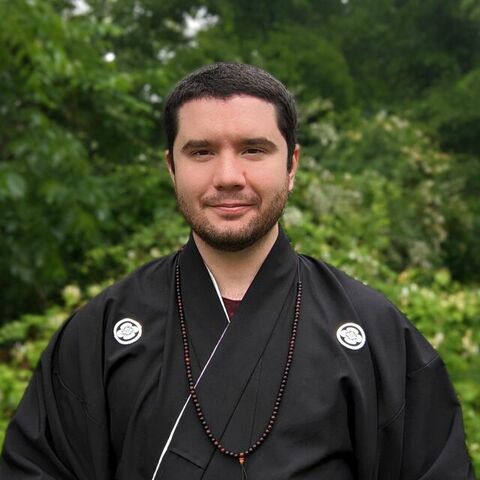
I'm Silas Day,
And I hope you have a wonderful day.