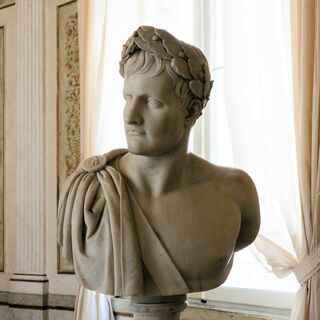
Welcome to part two of looking at the themes and ideas from Marcus Aurelius' meditations and the teachings of the Buddha.
These lines and themes are taken from the absolutely wonderful boiled down version of meditations created by the YouTuber Vox Stoica,
And he has so kindly allowed me to use them for this comparison series.
Section two covers the topic of everything depends on how you interpret it,
Which I think is a very obvious thing that rests just beyond our mind most of the time,
But I also think it's hard advice to follow without a little practice.
I know from personal experience that I have allowed myself to be pulled along by whatever group think is prevalent and allowed my emotions to get the better of me without any thought put to it.
But I also know that when I am the better version of myself,
I have been able to put out a growing fire by stepping back and really considering my interpretation of an event,
Something someone said,
Or any measure of things just by taking a moment and understanding my gut reaction and my interpretation.
So what does Marcus Aurelius advise on this subject?
Throughout these lessons I'm going to take lines from Vox Stoica's boiled down meditations and then talk for a good length about its comparison or contrast with the Buddhist way of thinking.
If this causes any confusion,
Please let me know.
The first line for meditations that we'll look at says,
Everything is interpretation.
It's a quote from Marcus Aurelius which is cited from a cynic philosopher.
He notes that obviously this is not literally true,
But that it is a useful mental crutch.
If you take it for what it's worth,
You can apply it to everyday life with amazing results.
Here I think we see the first real disagreement between some schools of Buddhism and Marcus Aurelius.
However,
The disagreement is one of semantical and philosophical quality and is not a disagreement on the day-to-day living and practicality of the teachings.
Where it is noted that Marcus Aurelius says that it is not literally true,
Some schools of Buddhism,
Or most perhaps,
Would argue that it is literally true in the ultimate sense,
That all things are mind generated,
Or in this case,
Interpretation.
That the universe of experience that is before you comes not from and of its own volition,
From its own self-generation,
But from your mind's interpretation of its reflection.
That what we see is not absolutely true reality itself,
But is the interpretation of an echo back into our mind from our sense organs,
And that true reality is at once both this thing and that which sits behind that interpretation or mind-generated reality.
Yet,
In the way that we live our lives day-to-day,
We are not engaged in a thoroughly far along the path to awakening style of practice.
I think that these two schools of thought would be in good agreement besides that semantic difference.
That we have within ourselves the chance to take every moment,
No matter what comes to us,
And understand it through the filter that we choose to see it through.
If we are angry,
Filled with malice,
Incredibly hungry,
Or annoyed,
Then perhaps the way that we see something,
Whether it's insubstantial,
Can bring about the greatest burst of emotion.
The smallest thing could be the straw which breaks the camel's back,
All due to the way we are interpreting the world and our experience within it that moment.
Yet,
We can also take what could be an absolutely dreadful situation and turn it into something entirely manageable,
Just by keeping our heads cool and stepping back to more fully analyze not only the situation,
But the way and why of our interpretation of it.
The next thing that Marcus Aurelius says on this subject is that,
With that in mind,
Remind yourself that how things affect you is determined by your mind's interpretation of them,
Not the external things themselves.
Whatever happens,
You can choose how to interpret it.
So choose not to feel harmed,
And you haven't been.
End.
Exactly.
Buddha talks not only about the way that we react to the world,
But the way the world will react to us when we have a measure of understanding,
Will,
Determination,
Wisdom,
And kindness behind our interpretation.
Buddha said,
Do not dwell in the past,
Do not dream of the future,
Concentrate the mind on the present moment.
It is better to conquer yourself than to win a thousand battles.
Then the victory is yours.
It cannot be taken away from you.
End quote.
Our jug of life is filled drop by drop with whatever we want to fill it with.
It is our choice each day whether poison water will be put into it.
No matter what though,
At the end of the day,
And at the end of this life,
The jug is dumped out.
Will yours help to nourish the earth around you,
Or will it help to poison it?
Through our filter of interpretation,
You can choose not to feel harmed,
Not to feel crossed,
Even if you have been.
Your ability to understand and better handle the situation will increase by a ton if you simply take the time and effort not to be yoked by your emotions,
But to have your hands on the reins.
The next thing that we're going to talk about is the sense of silence.
The next thing that Mark Ceruleus says is,
If it rains,
You can choose to feel angry at the weather and pained by the sensation of the water on your clothes and body.
Or you can choose to feel grateful at being alive and able to feel such sensations.
How easy it is to wipe away every impression which is troublesome or unsuitable and immediately to be in all tranquility.
End quote.
Here,
While Buddha may agree with the theme presented by Mark Ceruleus,
I think that the ease of casting away negative thoughts may be a point of disagreement.
I think that as well that the Buddha would agree that we should feel grateful toward our chance to get to be alive and feel such sensation.
He might push us to inquire further about those sensations if we are wanting to walk the path to awakening.
And as well,
Buddha may disagree with the ease with which one can cast away these troublesome or unsuitable things.
Yet,
I think here we can read between the lines and see that Mark Ceruleus has,
In his own way,
Done the work,
Practice inner contemplation,
And in some way meditation necessary to gain the skills to be able to easily cast them away.
Buddha would agree,
I think,
That yes,
After some training,
Noticing them and casting them away would become easy,
But not at first.
Mark Ceruleus then says,
So work on gaining control of your mind to frame things positively.
End quote.
Buddha would agree.
But to teach to absolutely be able to see the negative things as negative as well,
To see reality directly for what it is and to try and work from a place of understanding,
Compassion,
Wisdom,
And clarity.
In Buddha's awakening he realized that one must face reality for exactly what it is,
Without any tethers to the past,
The present,
Or the future.
Instead of running away from the problem,
One must face it directly as it comes at us.
The universe is a myriad of happenings and that-ness which the meditations of his day could not help him to understand.
He found that all the types of meditation existing in his day consisted of merely diverting the mind from the prevailing misery of this direct and ever-present experience of right now.
He found that practicing the meditations of his time,
Which were for,
I believe,
On the most part concentration-style meditations,
Actually only diverted a small portion of the mind and then only went in meditation and never went out of those meditative states.
Deep inside the concentration states,
One keeps reacting,
One keeps generating sankhara's or mental physical reactions of craving,
Aversion,
And delusion,
And one keeps suffering at a deep level of the mind.
The object of meditation should not be an imaginary object,
It should be reality as it is.
One has to work with whatever reality has manifested itself now,
Whatever one experiences within the framework of one's own body.
This does not mean that concentration meditations are bad,
To do,
Or are not useful.
I personally very much so enjoy concentration meditation.
But they simply do not lead to the lasting and permanent changes that are made through vipassana meditation,
Or the investigation of this exact moment through the sense faculties.
The entire field of mind and matter,
The six senses and their respective objects,
Have the basic characteristics of impermanence,
Suffering,
And egolessness.
Buddha wanted us to experience this reality within ourselves,
Not just in a positive manner like Marcus Aurelius is wanting us to.
To explore the truth within the framework of the body,
He designates two fields.
One is the material structure,
The corporeal structure,
The physical structure,
Whatever you want to call it,
And the other is the mental structure with four factors,
Consciousness,
Perception,
The part of the mind that feels sensation,
And the part of the mind that reacts.
And to be able to explore both of these,
He gave us two kinds of meditation,
Observation of the body and the observation of the mind.
Through these practices,
We are able to do as Marcus Aurelius recommends,
Kind of,
To be able to frame the world through a positive filter,
Or merely the filter of absolute reality,
Taking situations exactly as they are,
Rather than how we wish to see them.
And the last section from Marcus Aurelius' Meditations for Today says,
Ultimately,
You are what you continually think,
So take care which thoughts you allow to exist in your own head.
Your mind will take the shape of what you frequently hold in thought,
For the human spirit is colored by impression.
End quote.
Here,
Marcus Aurelius almost quotes Buddha in his own way.
This is one of the harmonies of these two traditions.
Buddha said,
We are what we think.
All that we are arises with our thoughts.
With our thoughts we make the world.
What we think we become.
Peace comes from within.
Do not seek it without.
End quotes.
Our existence is colored by our thoughts.
Our existence is experienced through our mind.
All that we are is the result of what we have thought.
And I think that the two traditions speak for themselves here,
And I don't really need to go on any further.
So this is part two.
In the next,
We will be looking at how Marcus Aurelius meditations and the teachings of the Buddha talk in and around the subject of how your mind should sit superior to your body and its sensations.
Thank you for listening to part two,
And I hope to see you next time.