Hello and welcome.
Today is the second lesson of the course covering the Majhima Nikaya for a beginner.
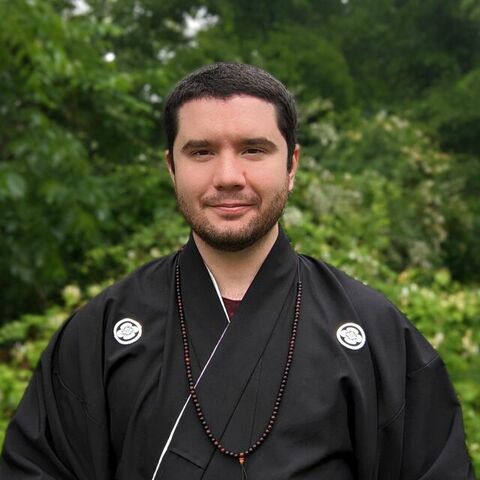
My name is Stylus Day and today we will be taking a look at the second sutra of the Majhima Nikaya.
But first I want to bring something up.
Something I should have probably said earlier is that I have a habit of switching between the terms sutra and suta throughout my speech.
Know that these words mean the same things and that sutra is the Sanskrit version of the Pali word suta.
Just a note for if you hear me call something a suta one second and a sutra the next.
Sorry if this has added to any confusion in the previous lesson.
Now,
In the Pali this particular discourse is called the sabasava suta.
Though the phrase could be roughly translated to mean all of the fermentations or the discourse on all of them.
What are called asavas or defilements of the mind.
Within it the Buddha will teach us seven methods or point out seven things for eliminating these deeply rooted defilements which can obstruct our awakening.
These defilements or again asavas are sensuality,
Sensuality,
Becoming,
Views and ignorance.
In this suta Buddha is actually teaching us and providing a comprehensive practice for transcending suffering through the recognition and overcoming of these defilements.
Within the Buddha is advising us to develop each of these things thoroughly to help us incline ourselves toward achieving awakening.
Of these defilements Buddha said that they are like liquor long fermented.
They convey the idea of something flowing out that intoxicates or befuddles the mind.
Asavas are usually classified into four different categories.
One,
They are gross attachment to and craving for the sense objects.
Two,
Craving for better existence or more widely put a better rebirth.
Such as being reborn into the godly and heavenly planes of existence in the belief that they are permanent and infinite.
This as well could be a clinging onto the idea of eternalism.
Three,
The defilement of lack of comprehension or merely just not being familiar enough with the dharma which I don't particularly think is a defilement but just an error.
Four,
The defilement that is false belief or belief not born of experience,
Wisdom and insight of the buddha dharma practice.
Or assuming things about reality,
The universe around us and our perceptions without actually testing them,
Verifying them and showing them through the practice.
The sutta begins by calling the buddha a title I don't think we've run across yet since we've only been through one other sutta so far.
It calls him Bhagava which translates to exalted one.
It's just a title,
One of the titles that the buddha has.
In it the monks and nuns are around him and they are called bhikkhus and will be called bhikkhus and bhikkhunis throughout the text which just means monk or nun.
They actually don't have a question this time around.
A lot of the times in the sutas and sutras they will have a question that they propose to one of the teachers or the speaker and then they'll give a lecture on that question.
But in this instance buddha is just giving a lecture.
A great thing about this particular sutta is that overall it is a phenomenal summary of the entire path as a whole if you look at it individually.
But buddha does a great job here by giving us a summary of the whole sutta right in the opening paragraphs which I think is pretty cool of him to do.
This isn't always the case.
They don't always give us a good summary.
But he says,
Bhikkhus,
I declare that there is the extinction of defilements in one who knows and sees,
And not in one who does not know and see.
Bhikkhus,
What is known and what is seen by one in whom I declare that there is the extinction of the defilements.
The right perception of phenomena and the wrong perception of phenomena.
Bhikkhus,
In one who has wrong perception of phenomena there arises defilements that have not yet arisen.
And there also is an increase of defilements that have already arisen.
Bhikkhus,
In one who has right perception of phenomena there is no arising of defilements that have not yet arisen.
And defilements that have already arisen are also removed.
Bhikkhus,
There are defilements that should be removed through vision,
Defilements that should be removed through restraint,
Defilements that should be removed through proper use,
Defilements that should be removed through forbearance,
Defilements that should be removed through avoidance,
Defilements that should be removed through rejection,
And defilements that should be removed through the cultivation of the factors of awakening.
So through these two short paragraphs we actually get to bring up a lot of cool aspects of Buddhism and the Buddha Dharma.
That I don't think are particularly talked about plainly enough and this just may be my opinion so take it with a good handful of salt.
And if you listen to the last lesson you will remember that Buddha was talking about the variety of perceptions that the four kinds of people can have based on their level of practice in the Buddha Dharma.
And again here the Buddha is talking about perception,
Cognition,
And the mind.
Something that took me years to learn but I am happy to share with you today is that Buddhism and the training through the Buddha Dharma is one that is firmly planted in training,
Reframing,
And habituating our cognitive process.
And of our perception of vast phenomenological experience which is interacting with our being at all time.
So throughout these lessons keep it in the back of your mind that this is a training,
Or if you like big fancy words,
An orthiopraxy style of spirituality and view.
Where it is a thing in which you are actively doing with the mind,
The perception,
And your actions rather than as a set of beliefs.
In many ways one could say that the Buddha is teaching us to permanently rewire our cognition so as to remove all the things that cause suffering and then remove the suffering entirely as well as providing us methods of exploring our inner world.
And what I like to refer to as the immaterial world or the world of our mind,
The world of our being,
And the world that so often is referred to as the spiritual world.
The Buddha goes on in this sutta,
As we saw,
To name the perceptions through which defilements or asavas can affect us and work with us and how we can use methods,
Markers,
And qualities to clearly see and remove them little by little.
They are defilements that should be removed through vision,
Restraint,
Proper use,
Forbearance,
Avoidance,
Rejection,
And then the cultivation or what are called the factors of awakening or the factors of enlightenment.
Some of the translations of these words though I find interesting.
Another list that you could use could be how some taints are removed by seeing,
By restraining,
Using,
Enduring,
Avoiding,
Removing,
And developing,
Which I think to the modern reader will work better,
Though they may not be the closest possible translations.
I think that the words may convey a closer idea of what one should be doing rather than a word like forbearance,
Which probably fell out of use in the late 1700s if I'm being honest,
Though I do myself enjoy archaic language.
The Buddha begins by going through the defilements to be abandoned with seeing or vision.
He also goes on the most about vision and seeing due to the fact that,
You know,
We're visual creatures.
We see a point in space and we move to it and this is kind of our existence.
We see a thing and we crave after it.
We engage every single waking moment with the faculty of sight.
So it kind of needs the most attention.
Buddha is again using the example of what an ordinary person who doesn't practice or have any idea of Dharma does versus one who does have skill in the Dharma and how they interact with this perceptive phenomena.
In short,
The unskilled person attends to and gives attention to things that causes the defilements of sensual desire,
Being,
And ignorance to arise in them through their unskillful seeing or vision.
The skillful person here sees these defilements as they come about and so they do not arise in them and are abandoned.
Now,
Though Buddha kind of teaches this as if it were instantaneous,
The actuality of this takes practice and time,
Sometimes lots of time.
Especially in certain cases like sensual desire where we will see in other parts of the Mashima Nikaya,
It will be brought up again and again as a particularly hard thing to get rid of is sensual desire.
Because it's just so ingrained in us as beings.
The way these incorrect views give rise to the defilements are through clinging and the affirmation of the illusion of independence or of an independent being in the universe and separateness.
Or even the reaffirmation of our ego's permanence throughout time and space rather than as an ever-shifting thing that is dependent on everything else to exist.
A conceiving of the illusion either consciously or unconsciously in a way.
The Buddha refers to this reaffirmation of the illusion of permanence and of self as the thicket of views and goes through them.
The views of self exists for me.
The view of no self exists for me.
The view I perceive self with self.
The view I perceive not self with self.
The view I perceive self with not self.
The view is this.
It is this self of mine that speaks and feels and experiences here and there,
The result of good and bad actions.
But this self of mine is permanent,
Eternal,
And not subject to change.
This is the wrong view to have.
This speculative view,
Bhikkhus,
Is called the thicket of views,
The wilderness of views,
The contortion of views,
The vacillation of views,
If you want to talk about an archaic word,
The vacillation of views,
The fetter of views.
Fettered by the fetter of views,
The untaught ordinary person is not freed from birth,
Aging,
And death,
From sorrow,
Lamentation,
Pain,
Grief,
And despair.
They are not freed from suffering.
So,
Buddha here is stating that through these wrong views,
One is kept on the rollercoaster ride of suffering and the round of birth and death.
So,
To have the right view,
Which is one of the steps of the Noble Eightfold Path,
By the way,
Just like most of these are always,
So try and remember when you are learning or talking about one aspect of Buddhism,
You are probably talking about a massive,
Like,
Fractal of aspects.
The Buddha ends this section on vision by stating that one skilled and disciplined in their practice and of the Dharma knows what things to pay attention to and what not to,
That they attend wisely toward sensual desire and ignorance,
As well as the Four Noble Truths,
Knowing that this is suffering,
This is the origin of suffering,
This is the cessation of suffering,
And this is the path that leads out of suffering.
As someone who has engaged a lot in Buddhist style meditation and practice,
I can say verifiably that through the meditation practice,
Through giving yourself to the study of it and the active engagement of compassion,
Of metta,
Of mindfulness,
Of paying attention to what you're paying attention to and using the power of attention and awareness and the mind,
You can have phenomenal results and live an entirely different existence than the one that you're probably living in right now,
That most people walking around in their ordinary,
Everyday lives are pulled this way and that,
Existing in the future,
Existing in the past within their minds,
And generating all of these illusions and qualities and cravings and wants and desires.
And through the practice of meditation,
Somehow,
I don't know the why,
This is just kind of what happens,
That these things are upended and we suddenly come to the realization,
Eventually,
Through practice and time,
That we don't have to do all those things,
Which is pretty wild,
In my opinion,
That he's teaching it here in the second,
You know,
Sutta of the Mashimi Nikaya.
The rest of these defilements and asavas that he goes through are much shorter or the techniques that we should be using to overcome asavas.
So I'm not going to be quoting from them,
But we'll be discussing the spirit of them.
He moves on to restraining and the Buddha discusses how the practice of meditation and the practice of the Buddha Dharma is about opening us up to reality as it actually is,
So that we may know and transcend the suffering that is born of the illusion we most often find ourselves in.
Restraint is a guard that is built around the senses and not overindulging in them.
Too many really pleasant things can distract us.
Too many terrible things can undermine us and our confidence in the path and practice.
It is a reminder not to let these senses carry you away into the unmindfulness of chasing the next thing or longing after the past.
For monastics and laypeople alike,
It is important to limit,
Or in the monastic case,
Completely cut out things like drugs,
Alcohol,
Too much news,
Being online all the time,
Playing video games for many hours a day,
Or letting ourselves be absorbed into a whole variety of fleeting sense pleasures.
It is always a warning of restraining the mind as a faculty,
The mind as a sense.
So often,
Even in my own teaching practice,
People will let themselves be swept up and confused by pondering unanswerable questions or wasting time dwelling on problems that are beyond our ability,
Beyond our life,
And beyond our capability to resolve,
Instead of focusing on the practice right here and right now through these sense faculties,
Through the six senses,
And through changing themselves and becoming the best version of themselves,
Through deepening their practice,
Through deepening their wisdom,
Their insight,
Their compassion.
They're able to be a better help in the world than they were before when they were worrying about all of these things that they had no control over.
So that's a way to restrain the mind from getting caught up in all those kind of things.
It's good to think about them.
It's good to consider them.
It's good to keep them in mind,
But not let the mind obsess over them.
Next,
The Buddha talks about using or proper use,
Where he discusses only using what he needs and not having excess.
Since he is talking to monks,
It is kind of at an extreme level,
Telling them that all they need is their robe,
Bowl,
A little food,
And a little shelter where they can find it.
But in our modern life,
We can make moves throughout our life to be able to lessen our excess if we don't want to go off and become monks and nuns.
The aim should be a simple life and to be content with little,
Using the things in life that we need for their purpose and not for vanity,
Clout,
Or social gain,
Because it is at the end of the day not the objects themselves,
But our attachment to them that causes and brings about suffering.
Next,
The Buddha talks about enduring or forbearance,
Where,
You know,
What must we endure?
What must we have forbearance toward?
Which,
By the way,
Is such a wonderfully straightforward translation now that I'm thinking about it.
Within,
The Buddha tells us sometimes you just gotta tough it out in this moment and that our practice may not be at the point where we can abandon a clinging,
A suffering,
A thing,
A pain that's happening to us,
Or that these things are sometimes just the nature of this human existence.
For example,
When Buddha was in his 70s and getting close to death,
He talked about the aches and pains of existence that we must bear through this,
Like,
Human vessel that we're currently in.
That even though we can overcome the suffering,
The deep intrinsic suffering of sickness,
Old age,
And death,
That does not mean this form or incarnation as a human doesn't have to go through them as experiences.
If we don't bear with the unpleasantness,
We'll never fully see impermanence,
Dissatisfaction,
And no self,
And we'll continue to suffer.
I've always said that getting sick is a great reminder of how wonderful health is,
And so can be used as a practice,
Even when we are at our lowest and can't even stand because we have a flu or something.
It can be a wonderful practice to be mindful towards health through impermanence,
Through no self,
And through the dissatisfaction that clinging to one thing or another can bring.
When suffering is seen for what it really is,
We won't have to bear it,
And it develops into what is called equanimity.
Next comes avoiding,
Or avoidance,
That the Buddha talks about,
Which I think is kind of one of the most blatant things he speaks of here.
It is about not putting oneself in situations that would lead one to bad karma,
To do bad things,
Or to lessen your practice.
Living fearlessly in the Dharma doesn't mean putting yourselves in harm's way,
You know,
So staying away from harmful people,
Places,
And situations should be avoided where possible.
This actually ties in with a later teaching of the Buddha called Right Association,
Which I sometimes call the ninth step on the Noble Eightfold Path,
Where it is best to surround yourself with people where you can that support your practice and help you to become a better,
Wiser,
And more compassionate version of yourself and your being.
Basically,
Try and avoid bad situations,
Places,
Or individuals that kind of pull you away from practice and could hamper your ability to seek awakening,
Or,
On a smaller scale,
To be the best version of yourself.
Next,
The Buddha talks about removing,
Or rejection,
Which is kind of an interesting translation.
This aspect is about removing the self from what you are doing,
Or removing the reification of the self from what you are doing.
It is a teaching on how pleasurable fantasies and painful fears are both unskillful thoughts that develop craving and aversion,
And they can be counteracted by developing the opposition of those things.
Some classic examples include things like lust,
Where you oppose lust by contemplating the blood,
The organs,
The bones,
The body of the person or thing you are lusting about,
Decaying,
The death,
And all other factors of the body which are not superficially lustful in that instance.
Another example is hatred and ill will being opposed by compassionate meditation and consideration towards that which you hold hatred or ill will towards.
I've always loved the teaching of anger,
What anger is,
By the Buddha.
The Buddha said that anger is like holding a hot coal and hoping it burns the other person,
Because you're just going to burn your hand holding the anger.
You just drop the coal,
It's fine,
You don't have to hold that coal in your hand.
Things like pride,
Anger,
Feelings of inferiority or superiority,
Along with a whole myriad of factors,
All stem from the reification of the self,
And such thoughts can be destroyed or removed from the mind by clearly investigating them through meditation,
Mindfulness,
And insight in our everyday life.
And finally there is development,
Or the development or what are called the seven factors of awakening and enlightenment.
This is a teaching to continually develop in your meditation through the factors of mindfulness,
Investigation,
Energy,
Joy,
Tranquility,
Concentration,
And equanimity.
So basically Buddha is telling us to actually do the meditation practice and not just try and be a good person and live a good life,
Because the practice itself is what will show us and give way to the deeper,
Easier,
And more fundamental insights that are available right here and right now.
Buddha even says,
The monk who cultivates and makes much of the seven factors of wisdom slopes to nirvana,
Inclines to nirvana,
And tins to nirvana.
To practice and study and learn these things in the Buddha Dharma is sloping us towards awakening.
So what can we do with all of this?
Because this is where the sutra ends.
This sutra is followed.
.
.
This sutra,
If followed exactly,
Could lead you to a very deep and wide practice of understanding in this cognitive and perceptive universe that surrounds us.
It gives us the tools and the instruction to begin to know the full length of the path and journey of unlocking the understanding of samsara and coming to awakening here and now.
To avoid all evil,
To cultivate good,
And to cleanse one's mind.
This is the teaching of the Buddha,
And this is the message of the second sutta in the Majjhima Nikaya,
The Sabasava Sutta.
Tomorrow we will be taking a look at the third sutta,
Which goes over the Buddha talking to bhikkhus and bhikkhunis about something called the heirs in Dharma.
If you enjoy this free course,
Please follow me here on Insight Timer,
And if you are wanting to ask questions,
Please reach out to me via email or through the mentorship program offered here on Insight Timer for a full hour of my time to talk about anything and everything,
Buddhist,
Spiritual,
Meditatively,
Those kind of things.
My name is Silas Day,
And I am so happy to have you here listening and sharing my passion with you.
I hope you're getting something from it,
And have a wonderful day.