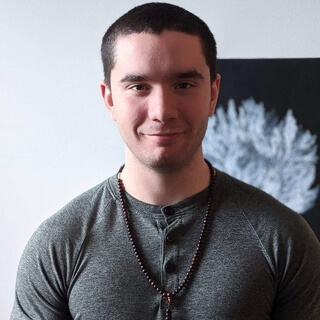
Hello everybody.
It's good to see you all and hello to everyone listening elsewhere on the internet.
Today we are going to go through our normal schedule and I'll give a short talk and then we will go into the practice for about 15 to 20 minutes.
Today we will be continuing our look at some of the most basic Buddhist teachings.
Specifically today we're going to be talking a little bit about embracing our suffering.
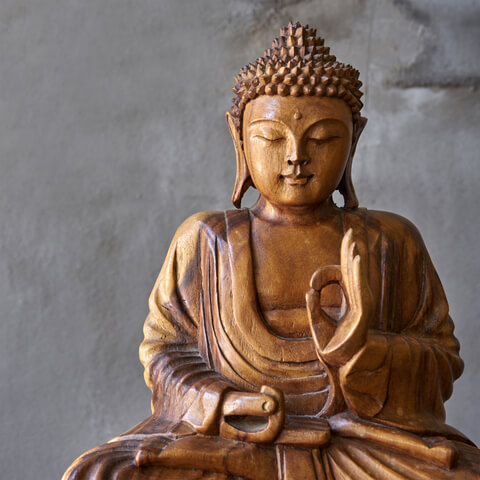
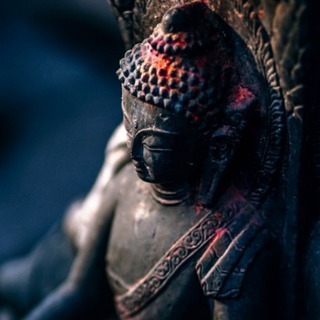
Buddha was not a god.
He was a human being just like you and I.
Before he became the Buddha his name was Siddhartha Gautama.
He suffered when he was Siddhartha as an ascetic torturing his body to the most extreme lengths and he suffered as Buddha with aches and pains that come with conventional existence.
He wandered for many years after his enlightenment experience,
His practice continuously evolving and his teachings getting deeper and wider.
We can see this in the beginning.
He's teaching a lot of ethics and establishing a basis while later on in his life he's talking about the Prajnaparamita Sutra and some of his more esoteric and complex teachings.
If we come to Buddhism,
If we come to the Kushan honestly and completely with a good motivation and a steadfast heart we can know what Siddhartha learned and what Buddha taught.
This is that because there is suffering in our hearts that it is possible to enter the Buddha's heart.
As the suffering of the world is infinite,
The compassion of the Buddhas and Bodhisattvas is infinite.
Buddha said that because the world is sick,
I am sick.
Because people suffer,
I suffer.
You know I think we all come to Buddhism for various reasons but I think that we all find solace in it.
We all find solace in the heart of what the Buddha taught.
That just because you are unhappy,
Just because you have inner turmoil or suffering,
Doesn't mean that you can't approach the practice of Buddhism honestly and wholly in the hopes that you can touch into that pain and that suffering and understand it more fully.
I know when I first came to Buddhism I wouldn't have considered myself a good person and I wouldn't have considered myself compassionate or insightful or you know any of these things but through practicing what the Buddhist teaching and understanding my suffering on a deeper and more fundamental level I was able to cultivate things to help me grow and be the best version of myself that I could be.
I think that understanding our suffering and the suffering of those around us is almost key to entering the compassion of the Buddhas and Bodhisattvas.
Our practice of meditation is a daily reminder of this I think.
That we can come to the cushion and have the worst sit in the world but it is still worth doing and in my experience those sits that seem to be the worst are the most necessary.
In those moments we're taking the true effort needed to transform our suffering and applying it right then and there with the breath or with our meditative object of choice.
For 45 years the Buddha over and over again said that I teach only suffering and the transformation of suffering.
When in our practice we choose to recognize and acknowledge our own and others suffering for exactly what it is we can know the suffering of Buddha.
We can touch into the Buddha that already exists within us.
We can see that to dwell in the heart of Siddhartha Gautama,
The Buddha,
Is to see a path to lasting transformation,
To peace,
To joy,
And maybe even liberation.
Suffering is the means the Buddha used to liberate himself.
That along with insight and wisdom that comes from that suffering.
And it is also the means by which we can be freed and liberated from our own suffering.
The ocean of suffering is immense.
The cycle of samsara is endless.
It is filled not only with the memories,
Experiences,
And pains of this life,
But of our countless reverberations through space and time as this substrate consciousness.
Our suffering may be immense.
You may have had loved ones who have died,
Experienced war,
Deep states of psychosis,
Done awful things,
Or may have felt the pain of true loneliness even in a crowd.
But you don't have to wait until you have no more suffering before you allow yourself to be happy and begin to transform this suffering.
One act and one moment at a time.
Don't scoff at your suffering.
Do not run from it.
Do not judge it as evil or bad.
That won't help it at all.
Open your heart to it.
Sit with it and embrace it.
Cherish it as you would a dear friend and know it through and through.
Know the Buddha within and without you.
Sit with them and show them your pain and know that you are in the refuge and heart of the Buddha.
On and off the cushion we are shown how to embrace our suffering.
If we would only take the moment to,
We are shown how through loving kindness,
Compassion,
And wisdom our capacity to heal and grow is infinitely deep.
And that it all starts right here,
Right now,
On the cushion or in your home.
Buddha called suffering a holy truth and a supreme teacher because our suffering shows us a path to freedom and to liberation from this endless cycle.
Embrace your suffering.
Know your suffering.
Recognize it through and through.
And by this infinite forgiveness,
Wisdom,
And freedom is possible.
It is offered freely and is directly at our feet.
Now let's go into the practice period for 15 minutes.
There will be a chime when that time is up followed by a short statement.
So relax into the body.
Let the awareness settle and allow all things to come and go neutrally.
Equally attend to all things.
Give equal preference to all things.
Let thoughts come and go.
Let sensations arise and fall.
When you wander,
Return.
And when you return,
Refocus to a level neutral plane of non-doing and non-judgment.
Let us begin.
You you you you you you you you you you you you you you you you you you you you you you you you you you you you you you