From the perspective of Buddhism,
Relationships provide a fertile ground for our spiritual growth.
They mirror our inner states,
Reflect our virtues and our flaws,
And challenge us to really cultivate wisdom,
Patience,
And compassion.
They offer us opportunities to practice the teachings of the Buddha in kind of the most intimate and direct manner.
Let's look at a couple of the principles that Buddha's teachings offer us to nurture a healthy and fulfilling relationship.
The first principle,
If there are any guesses,
You probably know what it is.
We talk about it all the time.
Is mindfulness.
The Buddha taught that mindfulness is the path to the deathless.
The absence of mindfulness is the path to death.
When we bring mindfulness into our relationships,
We are attempting to be fully present with our partners,
Attentive to their words,
Sensitive to their feelings,
And really try to be aware of their needs.
Mindfulness fosters clear communication,
Mutual understanding,
And deep connection,
Which are vital for a thriving relationship.
The second principle pertains to loving-kindness.
How surprising.
Loving-kindness is important in relationships.
And loving-kindness is the genuine desire for oneself and others to be happy.
In the context of relationships,
It manifests as a selfless love that wishes for the well-being and happiness of the other person,
Free from possessiveness or expectations of reciprocity.
This unconditional love nourishes the relationship,
Making it a source of joy and support for both partners.
The third principle that we need to consider with Buddhism in relationships is karuna,
Or compassion.
Compassion involves recognizing the suffering of another and responding with a wish to alleviate it.
In our relationships,
Compassion encourages us to be patient,
Understanding,
And supportive when our partner is going through difficulties.
It also helps us to forgive and let go of grudges,
Which are really toxic to relationships.
The fourth principle that we'll look at here is empathetic joy,
Or mudita.
This means rejoicing in the happiness and success of others,
Rather than getting caught up in our jealousy and envy-ness,
Which I think can really be the true killer of any relationship.
I was taught from a very young age that jealousy is the mind killer.
In the context of relationships,
This empathetic joy compels us to celebrate our partner's achievements and happiness as our own,
Fostering a deep sense of connection and shared fulfillment as a team.
And the last principle we'll look at is equanimity.
Equanimity is the ability to maintain a balanced mind regardless of our circumstances,
Which in relationships can be very hard sometimes.
In relationships,
Equanimity means accepting the other person as they are without trying to change them.
It also involves staying calm and composed,
To the best of our ability,
During disagreements or conflicts,
Facilitating a more constructive resolution.
In addition to these principles,
The Buddha also emphasized the importance of virtuous conduct,
Which in relationships involves following a set of rules that you've set up together,
Such as not lying to each other,
Not doing things that would harm the other,
And not having misconduct in our sensual pleasures,
But really listening to our partners.
And by adhering to these,
You foster trust,
Respect,
And integrity in your relationship.
Lastly,
Though,
I think something that is very important to consider about relationships and something Buddha taught about is impermanence.
Relationships like everything else are subject to change.
Acknowledging this fact helps us to appreciate our relationships in the present moment,
And respond with wisdom and equanimity when they evolve or end.
In conclusion,
Buddhism offers profound insights and practical guidelines for nurturing healthy and fulfilling relationships.
By integrating these principles into our relationships,
We can transform them into a path of spiritual growth and mutual fulfillment and enjoyment.
May you all succeed in cultivating these noble qualities in your relationships,
Making them a source of happiness,
Growth,
And liberation.
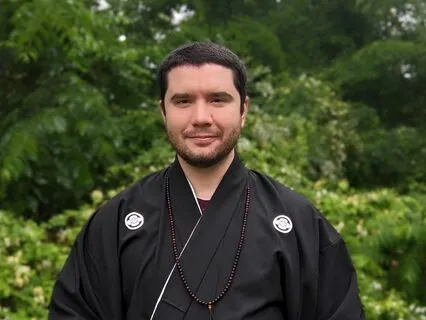
I'm Silas Day,
And I hope you've enjoyed this short little Buddhist lecture of mine.
Thank you so much,
And have a wonderful day.