Hello and welcome.
This lecture will be the first of 23 lectures where we will be going over the meditations of Marcus Aurelius.
I however will not be doing a line-by-line analysis of his wonderful work,
But using the incredibly concise work created by Robin Homer,
Also known as Vox Stoica on YouTube,
Who creates incredibly concise and digestible shorter versions of great stoic works.
I thank him very much for allowing me to use his text and to be able to share his text on a wider basis.
I for one am amazed by his ability to boil down texts,
Which are 50,
000 words into 4,
000 words,
Without losing almost any of their character,
Air,
Or message.
If you do not know what Marcus Aurelius' meditations are,
In short,
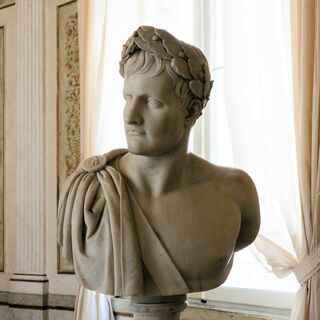
Marcus Aurelius was a Roman emperor who is considered by many to be the prime example of a philosopher king.
The book Meditations is,
For lack of a better term,
Somewhat of a diary or thought journal kept by Marcus Aurelius over a 19-year period,
Where he would come back time and again to record his thoughts from all around the Roman Empire.
He is considered to be one of the fathers of stoicism,
And rightly so.
His words had such an impact on the foundational Western philosophy of stoicism that his place at the table of the founders is well-earned,
At least in my view.
Yet we have not come here today in these lessons to strictly talk about stoicism,
But to compare and contrast stoicism,
Specifically the writings within meditation,
With Buddhism.
I have produced one other talk on this similar topic,
But with the good graces of Vox Stoica,
I am able to now produce a complete thematic comparison between these two schools of thought,
Much much more thoroughly.
If you would like to follow along,
Please check out Vox Stoica on YouTube where you can find his text.
Let's get started.
Section 1,
After the introduction,
Covers the topic of not letting unkindness disturb you,
Which in and of itself is good advice.
But I think it is very hard advice to follow without a little practice and without a little grounding.
I know personally nothing can get me angrier than when someone wrongs me in a stupid,
Clearly avoidable,
Or downright mean way.
So what does Marcus Aurelius advise for us here?
Throughout these lessons I am going to take a line from Vox Stoica's boiled-down meditations and then talk for a good length about its comparison or contrast with the Buddhist way of thinking and explain some about Buddhism along the way.
If this causes any confusion,
Please let me know and I will try and adapt this as best I can.
Marcus Aurelius says in meditations on this topic,
When receiving bad treatment or criticism from someone,
Tell yourself that either the other person is right,
In which case you've no right to complain,
Or they're wrong,
In which case they're misguided and have just made a mistake.
Remind yourself how many mistakes you've made in life and allow yourself to feel pity for them.
" Buddhism tells us to be a lamp light unto ourselves,
To be our own guiding light,
To search out and understand our meditations and practices for our own being and not just because some guru,
Teacher,
Or master had anything to say on them.
Not to take the words and teachings of strangers and random people to heart or by any means seriously until we have taken the time to really and truly understand ourselves.
Not merely on a surface level but on a deep and contemplative level where we understand our faults,
Our shortcomings,
And where we struggle not only on the meditation cushion but in our daily life.
It teaches us to recognize all those things that we have regretted or messed up in the past and to forgive ourselves and learn from them.
Marcus Aurelius is saying no less in no less terms this,
Kind of the same thing.
You got to let the reins of life not trouble you and recognize that if they are real and true they will cleanse your being,
Otherwise what's a little water at the end of the day?
The next thing that Marcus Aurelius' meditation says on this topic is,
By all means point out to them where they've gone wrong but do so affectionately,
Not meanly with hatred in your heart or to impress onlookers,
To speak directly at them.
Buddhism would tell you here to act through the heart of compassion and to only correct or try and teach those who sling verbal arrows and stones at you if,
One,
You think that they might actually take your advice and do not have ears full of sand,
Or two,
You are doing so not only for your own sake but in a spirit of real wisdom,
Understanding,
And compassion for the other person's ignorances,
Weaknesses,
And shortcomings,
Not acting in a way that is to one-up them or place yourself on some noble seat of being more philosophically or spiritually evolved than them but to raise them up to equal standing,
Yet only if you can do so without malice,
Meanness,
Or pride.
I think that Buddhism and Marcus Aurelius' meditations would be in good agreeance here.
The next thing that meditations says on this topic is,
If this doesn't work,
Ask yourself what qualities nature has given us to counter the defect.
For example,
As an antidote to unkindness,
It gave us kindness.
Put that to use and see what happens.
Very few people can continually act unkindly to you if you show continued kindness to them.
No matter what anyone says or does,
My task is to be good.
End quote.
Buddhism would teach that compassion is the antidote for hatred,
For evil,
For misunderstanding,
And for un-nodding past wrongdoings between people.
Whether the scars of words and actions are new or are older than we can remember,
There's always a chance to heal them.
Take the master Tilopa,
For example.
He had committed horrendous evil before realizing the measure of darkness that he had cast not only on himself but on the world.
Even he was not beyond this measure of self and environmental work and consideration.
Even he was not beyond self-forgiveness and understanding into the nature of our human condition.
If we can use our time in meditation,
Whether it be walking,
Laying,
Sitting,
Standing,
Or with a focus of concentration or insight,
To not only understand where perhaps we have areas to learn and improve,
But where in life we could perhaps provide the antidote to unkindness and rudeness within ourselves,
Then it is well used.
If we can use the clear seeing offered through the practice of studying,
Then it is worth it.
The next thing that meditation says on this topic is that if you've mistakenly trusted an untrustworthy person,
Then turn the reproach on yourself.
The fault is yours.
Recognize that untrustworthy,
Bad,
And even evil people exist in the world.
To expect not to encounter them is foolish.
Say to yourself,
I have encountered one of them.
This is to be expected from time to time.
" From our meditation and mindfulness,
I think you come to realize that we all have a darkness in us.
Even without these practices,
I think we can fully come to know our shadow and learn not to treat it as an enemy,
But let it eat at our table of self and know it for exactly what it is.
To expect not to meet people who think that Buddhism,
Meditation,
Philosophical study,
Exercise,
Or anything which you may hold dear and in high regards to your measure of goodness is silly,
Or that you're just some hippie,
Or that you're way out of line in your philosophical thinking,
Or that it's dangerous to study ideas which run counter to the prevailing ethos of your society is ridiculous.
To encounter people who are violent or flippant to you about anything is entirely possible no matter where you are.
People have become violent,
Aggressive,
Mean,
Or rude about far,
Far less than ideas.
Buddha specifically talks about this and teaches us how we might try our best to avoid it.
He does so in what is sometimes referred to as the ninth fold of the eightfold path.
This is the teaching of right association,
Where we are to try and keep to those who support us,
Are able to question our actions,
Words,
And understanding of life in a way in which builds us up,
And try our hardest to fill our friendships with those people who can support our growth,
Not only on the path,
But in life in general.
To be around those who have kindness,
Understanding,
A sense of logos,
And quality of character,
Rather than those who wish to pull us down,
Even if those people are our family.
So expect to meet those with ill-intention,
But no how to handle it,
And reflect once the experience is over.
The next thing that Marcus Aurelius says on this topic in meditations is that,
Then remember that any evil that men do you only harms your soul if you do evil in return.
It is your job to be good and not allow their evil to change that.
The noblest kind of retribution is not to become like your enemy.
" Buddha,
I think,
Has a very apt phrase just for this kind of thing.
He says,
Getting angry is like holding a hot coal in your hand and wishing for it to burn the person that you are angry at.
All it's going to do is burn your own hand,
So drop the coal.
You are the only one who has control over your own actions.
You are the one who decides moment by moment,
Day by day,
To either build yourself up in wisdom,
Concentration,
Goodness,
And compassion,
Or to drag yourself down by actions both large and small.
Moment by moment we can overcome that enemy,
Whether that enemy are those who which we meet on the battlefield,
Or the enemy that we have within ourselves.
Whether our battle is to keep ourselves in the spirit and path of kindness to others and stop and truly consider before making a decision,
Or if our battle is getting to the meditation cushion,
To the gym,
To the health food store,
Or whatever.
The noblest kind of retribution is not to become like your enemy.
That enemy may be the you who continues to make negative and bad decisions day after day,
No matter how small.
So overcome that enemy.
Drop that hot coal and have the retribution to become the best version of yourself that you can,
No matter the enemy which lay before you.
Buddha,
Up until his awakening,
Faced Mara,
The demon of desire,
Clinging,
Craving,
And all other dreadful things,
And even after his awakening he faced troubles,
The aches and pains of being born into human existence that we can never truly completely escape,
Just as we will and just as Marcus Aurelius did too.
So this is it for part one I think.
We're just going to take a few lines at a time that are around similar subjects and talk about how Stoicism and Buddhism might compare and contrast and talk a little bit more about Buddhism's idea in and around what the phrase is talking about.
In the next part we will be looking at how Marcus Aurelius' meditations and the teachings of Buddhism talk about how interpretation is key in everything.
Please let me know what you think of these.
I've got a bunch that are going to be coming out and have a great day.