Hello there.
This is Mark Gladman,
Also known as Brother Frederick James,
Your friendly neighborhood monk in Docs.
Welcome to this teaching audio in which we'll look at some definitions of meditation and contemplation from the Christian tradition,
Which I hope help you in defining your practice for a complete and holistic experience of your spiritual work.
A little while ago,
Someone asked me what the difference was between meditation and contemplation.
This is an excellent question that,
In seeking the best way to explain,
Allowed me to explore these two and discover that at their core are two very different yet complementary ways of entering into that space of union with the divine,
And that when practiced together bring a very holistic experience to our lives.
Before we begin though,
I want to be very clear that what follows is a description from the Christian tradition.
In many places,
These two words are used interchangeably to mean the same thing.
And yet in doing some extra research and reading to develop this talk,
I discovered that in nearly every tradition,
These two words have a rhyme and reason that is very much their own.
Having said that,
What one tradition may call contemplation,
Another may call meditation.
So here,
I'll be defining them through a Christian lens.
That said,
At the end of the day,
It probably doesn't really matter what they're called.
Rather,
Take time to consider the nuanced differences in these two and seek to practice them for what they are,
Regardless of what they might be called.
Okay,
So let's begin with a very basic definition of both,
And then I'll go to look deeper into each one and explain it more fully.
Contemplation is a form of prayer in which we give thoughtful and mindful reflection to something.
Contemplation on the other hand is a form of prayer in which we seek to put words aside and simply rest in God's presence.
Now there's the very basic definitions,
But let's look now at each of these separately,
And then we'll come back and consider the relationship between the two.
Now as a form of prayer,
Meditation is a very cognitive exercise.
In meditation,
We are mindfully reflecting on something.
In essence,
We're trying to get our minds around something.
In meditation,
We are prayerfully seeking God as we consider something we've read,
An idea that's come to mind,
Or through trying to understand an experience we've engaged or are engaging in.
Meditation is the inner dialogue we have as we mull over things,
Except that in meditation,
We understand that someone is listening,
And we give space in our meditation for the other to listen and for us to listen back,
And then we might continue in dialogue as we respond to that listening.
It is very much a conversation that we might have with God.
In meditation,
Then,
We think and we talk.
We might also refer to this as pondering.
Now I discovered that the English word ponder comes from the root word that we also get the weight unit pound.
So one might say that in meditation,
We are literally weighing our thoughts and our ideas in our minds,
But again recognizing that we're not doing this alone,
But in dialogue with God.
At the same time,
Our meditation might be wordless,
But led by our feelings.
If we recognize that we can ponder things from an emotional and affective place,
You can see how this can be so.
We can literally weigh or ponder the affections of the heart with God,
And perhaps even experience a wordless response from the divine.
The point though,
Is that there is a mindfulness of what we're doing and of the fact that this is a conversation that's taking place,
Even if our listener doesn't seem to be saying much back,
Which in and of itself might be the very response that is right in that moment,
Although we'll save considering that for another time.
Whatever the case,
Meditation is mental work.
In the Christian tradition,
Meditation can take place stimulated by a number of different things.
For example,
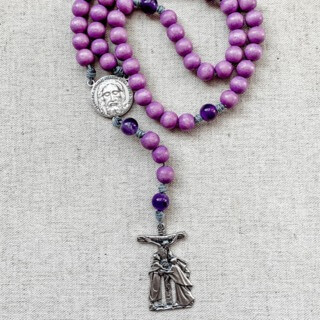
For those who pray the rosary,
When you do,
You are engaged in meditation.
In this case,
It is meditation upon the mysteries of that particular day.
Likewise,
In the Orthodox tradition,
Icons are a gateway into meditation.
By gazing upon and reading the icon,
We are invited to meditate on what the Holy Spirit is saying to us in that moment through the icon,
And then to ponder its meaning in our life.
While probably a more Catholic practice,
Eucharistic adoration is another gateway to meditation.
For me,
As someone with a Benedictine practice,
The stimulus for my meditation comes from scripture as I practice Lectio Divina.
In fact,
After the first stage of this practice,
Which is literally called Lectio,
Which means reading,
In which we read the scripture passage or text for the time of prayer,
We then move on to meditatio,
Which is doing exactly what we've suggested here.
Then the third stage of Lectio Divina is oratio,
Which is conversation with God and prayerful reflection on what we're meditating on.
These two often go back and forward,
And together,
Meditatio and oratio make up what is effectively,
We've been discussing here and calling it meditation.
And so it becomes the meditation part of Lectio Divina.
For others,
Meditation is stimulated by nature.
And still again,
I think there are many times when we might move into an informal time of meditation after a conversation,
An interaction,
A reading that we're doing,
Or even after watching a movie where we ponder the things that have just engaged us and we have a conversation with God about them.
I mean,
Think about those times,
For example,
When you're driving home from a heated meeting or a conversation with someone and you're having that meditation on what's just happened and talking with God about it.
In essence,
Then,
Meditation is a mindful engagement with God out of a stimulus that motivates us to reflect on a deeper meaning and spiritual truth that might be found within it.
And while formal times of meditation are good,
We also understand that there might be more informal moments in which we find ourselves in meditation,
Often deep meditation about something we've just read,
Seen or experienced.
So now then,
What of contemplation?
We'll contemplation is different to meditation in that it is a wordless form of prayer in which we seek to rest in the presence of the divine.
In contemplation,
We seek to set aside our words and thoughts and just be with God and to wordlessly simply love God and respond in turn to God's love.
In meditation,
There is a work or effort of sorts.
And by that,
I don't necessarily mean that it's hard,
But there's a movement that comes from us.
In contemplation,
However,
It's very much the opposite.
For in contemplation,
We very much become the receptive vessel of what comes from God.
In contemplation,
We are relieved of all effort.
There is nothing much else to do except put away our own agenda and simply be with God.
Contemplation has been described as sitting and deeply listening to God as a silent gaze or a wordless love and adoration.
Contemplation recognises that God comes to us in many and often deep ways that are at times beyond our conscious awareness.
Contemplation is in effect a mystery,
For it reminds us that God moves in any way God chooses to move.
And all we can do is accept God in the moment with humility and love.
This is a prayer that we enter into not via our intellect,
But through a knowing,
Loving and deep communion.
And so entering contemplation requires nothing more from us than to make ourselves radically available for God's presence.
Psalm 46,
10 speaks strongly to this.
In Psalm 46,
The psalmist describes a situation in which the world around them is coming apart.
Earthquakes,
Tumultuous seas,
Mountains falling down are all used as metaphor to describe the circumstances of life that the psalmist finds themselves in.
And then in the midst of all of this,
The psalmist reminds us to be still and know that I am God.
Note that this stillness is an interior stillness and that it's not an emptying of the mind necessarily,
But a conscious choice to allow the mind to rest,
To slow the thoughts and to provide space for God to gently enter into our situation.
In Christian contemplation,
We seek to let go of our thoughts and just be open and attentive to God.
St John of the Cross said that,
And I quote,
In meditation God is sought after by discursive effort.
In contemplation there is no effort as God has been found and is gazed at.
St Teresa of Avila described contemplation beautifully.
She said that contemplation is,
And I quote,
Nothing else than a close sharing between friends.
It means taking time frequently to be alive with God who we know loves us.
The Catholic Catechism describes contemplation as,
And again I quote,
The simple expression of the mystery of prayer.
It is a gaze of faith and attentiveness to the word of God.
That's capital W by the way,
As in the logos described at the start of John's Gospel.
The Catechism goes on to say that it is a silent love.
It achieves real union with the prayer of Christ to the extent that it makes us share in God's mystery.
Now these descriptors really get to the heart of contemplation.
That through it we are reminded of the union that we have with the divine spirit and with everything that carries the divine spirit's name.
In fact,
Someone has said that contemplation isn't really a practice per se,
But is more a gift from God that can happen consciously or even unconsciously.
It's like an infusion straight from God is love to our soul.
It's a gaze,
An infusion,
It's not an effort.
It's a kind of divine peace in the midst of our chaos.
Now despite there being a difference between meditation and contemplation,
And despite their practice being possible in isolation from the other,
There is a connection between the two.
This is simply that in many cases and probably in most times,
One leads into another.
The oriental monk Mattar al-Miskayin puts it perfectly.
They say,
Meditation is an activity of one's spirit by reading or otherwise while contemplation is a spontaneous activity of that spirit.
In meditation,
One's imaginative and thinking power exerts some effort.
Contemplation then follows to relieve one of all effort.
Contemplation is the soul's inward vision and the heart's simple repose to the love of God.
End quote.
It seems meditation is intended to lead us into contemplation.
Contemplation creates an awareness of God's presence in which we more than often forget is there with us all the time.
And as this realization is revitalized by our meditation and conversation with God,
We're invited to respond by simply sitting with God in contemplation that is a response to and from that time in meditation.
Lectio Divina once again is a clear,
Simple and beautiful way to illustrate this.
After reading the stage known as Lectio,
The practitioner moves into a time of meditation and conversation with God about what they have just read.
The stages known as Meditatio and Oratio,
Which describe pretty much what we've called meditation.
However,
Lectio Divina concludes with a stage known as Contemplatio.
Yes,
It's that explicit.
And it's in this phase that after pondering and meditating and discussing the reading with God and mulling it over in our minds,
That we come to a point where we recognize that we've said enough or the point has been made and we simply sit and rest in God.
We might simply hold that thought for a moment or even contemplate with a simple word of gratitude.
But the point to the last phase is to simply be in God's presence and love,
Both to give love and receive love.
If you think back over a few of those other practices we mentioned before,
You can see how these lead us into contemplation as well.
Contemplation is that time of resting in God after the rosary has been said.
When you might sit and be thankful for one of the mysteries that spoke to you deeply.
It's the space in which we sit and gaze thoughtlessly and simply adore God through the icon or the sacramental bread.
Or it may be a practice like walking a labyrinth or walking in nature,
Where we simply rest in God's presence and beauty.
It's the point at which we recognize enough has been done and we allow ourselves to be still and know.
Interestingly,
That word translated still in Psalm 46 10 is the Hebrew word Rafah.
And if you've listened to my audio on Sabbath,
You'll recognize this word.
It literally means to rest,
To relax,
To fall and to sink into.
In essence,
Psalm 46 10 is the perfect description of what happens in contemplation.
We fall back and sink into God's presence and allow it to cover us over and just be.
So there are the differences between contemplation and meditation and also their relationship to one another.
Meditation is the time pondering in which we give thoughtful reflection to a stimulus and spend time in mulling this over knowing that we have a listener who will interact with us in that conversation.
Contemplation is the effortless prayer where we simply allow ourselves to sit and be with God,
Allowing ourselves to sink into love as equally love sinks into us.
Meditation will more often than not be the catalyst that leads into contemplation,
Although their practice independently is also more than possible.
So I hope this little audio has helped you get your head around these two words,
Meditation and contemplation,
And see how by engaging consciously in both of them,
You can allow the differences in them to form and change you in those subtly different ways to grow you and continue to form and transform you into what it is God desires you to be and to become.
And as always,
If you have any comments or questions,
Please do so by commenting here,
Or you can always send me a direct message via my Instagram account at monkindocs.
Com And know of my prayers for you as you seek to deepen your relationship with divine love via the practices of meditation and contemplation.
And may grace,
Peace and love go with you this day and always.
Amen.
Peace be with you and bye for now.