I think most people on this call know who I am,
At least in passing.
My name is Mojo.
I've been studying Buddhism and Dharma,
Taoism and Taoism,
Chan Buddhism,
Tibetan Buddhism formally since about 2005,
Practicing since 2005.
Most recently I finished a master's degree in Buddhist textual interpretation and translation from Dharma Realm Buddhist University in 2019.
My vocation now,
Among other things,
Is I teach ethics and world religions at a Buddhist high school.
So I'm a professional.
I'm in the biz.
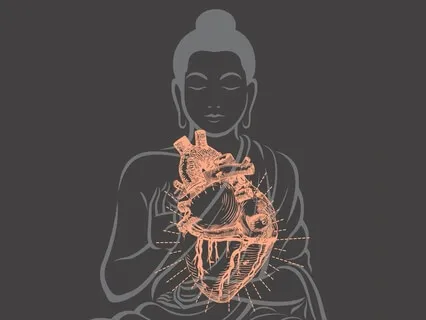
But I'm really interested in the Heart Sutra.
It's an extraordinary text and there's a lot going on,
But also it can be kind of opaque and difficult to access because it's kind of written in a shorthand.
A lot of the philosophical content of the Heart Sutra is mentioned in passing,
But it's not really unpacked.
It's not explicitly explained.
And there's a lot of ellipses in the Heart Sutra where it mentions a concept and it says,
And up to and including,
And then another concept,
And then it assumes that you know that there's a list of four or six or eight or 15 things in there that it's summarily negating because of course it's a text on emptiness.
So what I would like to do is go through this text,
Talk about these principles,
And unpack it so that we can see how it is a shorthand for the Buddhist path and for a broad range of Buddhist philosophical concepts and practices,
And also how it's a practice text that is not a philosophical text per se,
But a meditational text,
Something that's used for contemplation rather than textual study.
My approach to that is that we're going to go through the text in Sanskrit.
And I've translated it from Sanskrit a couple of times in committees with groups of people translating it.
So I've gone through the text from Sanskrit to English word for word a couple of times now and so it's a text that I'm fairly familiar with in the original language.
So we're also going to be talking about Sanskrit and going through the text in Sanskrit.
So hopefully you're interested in that as well.
I think it's nice to kind of study Buddhism not just philosophically but also historically and linguistically and become familiar with the sort of vernacular or jargon of the source languages that the texts were written in.
Sanskrit has a lot of layered meaning to it and so whenever we're translating it's difficult to just pick one word to say this word means this.
They have a lot of connotations and take on different meanings because of the context that they're in.
So it's worthwhile to look at the text in Sanskrit and talk a little bit about the language.
But it's not going to be,
This isn't going to be like a translation course,
We're just going to be using the Sanskrit as our markers,
As our reference points.
But before we get into all of that,
It's customary with a Buddhist teaching to always begin by going for refuge and setting our motivation.
And there are many different sort of prayers or short poems,
Ways of going for refuge by reciting a short verse.
Often times we will recite that verse in Tibetan or Sanskrit or Chinese,
The three of the main languages that Buddhism is written in and studied and practiced in.
But a big part of what I find interesting about Buddhism and what I'm interested in is helping the deeper principles and the concepts of Buddhism become increasingly relevant to us in our own lives.
And I like having that connection to the language and the history and the sort of the text and the cultures that Buddhism is coming from.
But I also like to connect with it in as relevant a way as possible for my own life.
So when going for refuge,
We go for refuge to what's called the three jewels or the triple gem in Buddhism.
And the three jewels are the Buddha,
The Dharma,
And the Sangha.
Those are Sanskrit terms.
And we go for refuge to these things in the sense that we're looking for something that can provide us with protection and shelter and safety and solace,
Something that we can invest in,
Something that we can depend upon while we're navigating the terrain or the rough seas of samsara.
And samsara means the sort of constant pervasive,
Nagging,
Dissatisfaction,
Discomfort,
Suffering that comes with all forms of life.
But in our case,
We're talking about human life.
Often in Buddhism,
You'll hear samsara,
They talk about infinite lifetimes.
You have infinite past lifetimes and infinite future lifetimes.
And we're going through this cycle of rebirth.
And so even when we die,
There's no release because we're reborn into a subsequent life.
And maybe we'll be a human,
But maybe we'll be an insect or an animal or in some other kind of life that we can't even really imagine from the perspective of a human being.
But I think it's helpful really to think about how going for refuge can help us immediately in a moment to moment kind of way in our daily lives and in the vicissitudes of life,
The ups and downs of life.
So when we go for refuge to the Buddha,
I think of it as the Buddha is the enlightened being.
And there are,
Depending on what mode of Buddhism you're in,
There is either one Buddha,
The historical Buddha,
Siddhartha Gautama,
Who lived roughly 2,
500 years ago in what's now Nepal and Northern India.
But in Mahayana Buddhism,
There are countless Buddhas.
Many,
Many beings,
Maybe infinite numbers of beings have gone through this process of ending suffering,
Ending suffering once and for all.
So when we go for refuge to the Buddha,
We are,
In essence,
I think we are finding comfort in the idea that it's possible to end suffering,
That someone has gone through this process of learning how to master their mind,
Stop the process of creating their own suffering.
That's a characteristic of samsara.
Suffering is not something that's happening to us.
It's something that is the result of causes that we've put into place,
Our own selves in the past.
And Buddha has gone through the process of stopping creating the causes for suffering,
Uprooting the suffering that's happening,
And ending their suffering once and for all.
And so when we go for refuge to the Buddha,
We are looking to Buddha as a model,
As a teacher,
As a guide,
As kind of a beacon of hope that this sort of fundamental shift,
That there's this radical transformation from being a being who's battered around by circumstance and reacting constantly to things that are happening that seemingly are outside of our control,
And going through this fundamental transformation and becoming someone who is still and calm and able to respond appropriately to whatever's happening without reactivity,
Without overreacting,
Without all of the pain and anguish that comes along and uncertainty that comes along with the kind of life that we have.
So we go for refuge to Buddha in the sense that we are recognizing that this is a possibility,
And Buddha represents this sort of beacon of possibility.
Next we go for refuge to the Dharma.
And Dharma,
Dharma again is a Sanskrit word that has many different meanings,
And especially depending on context,
But in this context Dharma are the teachings that Buddha and other Buddhas and other people who have mastered Buddha's teachings,
His methodology,
Have left behind the teachings,
The lineages,
The fact that this has been passed down over generations,
The sutras,
The texts,
The commentaries,
Like the Heart Sutra that we're going to be studying in this class series.
In other words,
That there's a methodology,
That there are things that we can put into practice,
Things that we can apply in our own lives,
Wherever we're at,
We can access,
There's some way we can access this practice,
This path.
And so when we take refuge in the Dharma,
We're taking refuge in the,
We are getting solace,
We're seeking safety,
We're finding hope and comfort in the idea that there's something we can do,
And wherever we're at there's a place that we can begin.
You know,
The state of awakening,
The state of enlightenment of the Buddha sometimes seems so cosmically out of reach,
It seems so profound that it feels daunting to even know where to begin.
And especially when we're in a really rough patch,
And it feels like we're just keeping our head above water.
You know,
Buddha's like perfectly still,
Clear,
Infinitely peaceful,
Infinitely loving,
Compassionate,
Imperturbable being seems impossible to us.
But the Dharma is this,
You know,
Taking refuge in the Dharma is this idea that there's always something we can do,
That there are steps that we can take,
Things we can put into practice,
Ways that we can gradually improve even in small ways.
And we can find safety and shelter and solace in that.
And then the third is the Sangha.
And the Sangha is the community.
And there's two aspects to Sangha that we take refuge in.
One is that many people over the past have followed Buddha's methodology.
They have strived to emulate the Buddha by taking refuge in Buddha.
They have put the Dharma into practice,
Taking refuge in the Dharma.
And they have gone through this arc of personal development to attain the same kind of realization that the Buddha had.
So in taking refuge in the Sangha,
We know that Buddha wasn't just a one-off.
He was an innovator,
He was a scientist,
A philosopher who introduced concepts that changed the arc of world history.
But also many other people have done what Buddha did.
They've documented their process.
They've written their own original texts,
Or they've written commentaries on the historical Buddha's texts.
They've introduced new practices that work for different types of mental afflictions,
Different psychological types.
So if one method doesn't seem accessible to you,
That there are many other methods,
Because there are many different types of practitioners who have traversed this process of attaining,
Of seeking and realizing,
Awakening,
In many different ways.
And we can take solace,
We can get comfort in this idea that others have done it before us.
That there's actually a huge corpus of people that have realized awakening,
And that we can walk in their footsteps and learn from them.
So we take refuge in the Sangha in that sense.
And then another sense that we can take refuge in the Sangha is that we have friends and community and loved ones who are encouraging us on the path here and now in our life.
So from that point of view,
The Sangha is everyone who comes to a class like this,
Who wants to spend their Tuesday evening studying Dharma,
That we have people who work hard to run a Dharma center where these kinds of teachings are preserved and where there's a community of people who get together to do these activities together,
To do the practices together.
And also I think it includes people who aren't necessarily Buddhists in our lives,
But are there to support us and to encourage us and guide us along the way,
Like friends that we can go to.
I increasingly think of therapists,
Psychotherapists as part of the Sangha,
Because even if they're not Buddhists,
Ultimately they're trying to help us alleviate suffering.
And not by fixing the problem for us,
But helping us realize how we're creating the suffering for ourselves and that we can gradually learn how to change the way that we are so that we aren't creating suffering,
We aren't wallowing in suffering.
So I think it's worth taking a few minutes to think about going for refuge and how it's imminent and practical in our lives.
The second thing that's customary to begin a Dharma teaching is setting our refuge,
I mean setting our motivation.
And this is because in Mahayana Buddhism especially,
Ending suffering for ourselves as a way to,
You know,
Practicing Buddhism as a way to end our own suffering so that I personally am not hurting anymore is insufficient.
It's not enough to simply find a way to end our own suffering and that we are obligated to help others as well.
So it's easy to become kind of preoccupied in our own suffering and our own experience.
I mean,
You know,
We're basically confined and trapped by our senses and our conception of the world.
And it's virtually impossible to really understand how another person sees the world.
So it's hard for us to really connect with another person's suffering as important or even more important than our own.
But in Mahayana Buddhism,
That's exactly what it's asking us to do.
And it's actually practical.
It's not just out of altruism and selflessness that we are wanting to end suffering for others.
It's that we want to look out on a world in which others are free of pain.
That nirvana,
The cessation of suffering would not feel adequate.
If we attain that level of realization where we don't feel any suffering anymore,
Where we have pure equanimity and we look out on the world and see others suffering,
We still would not feel satisfied.
So Mahayana Buddhism says that that's the goal really is to be oriented towards alleviating suffering for others as much as or more than alleviating suffering for ourselves.
And since that's the case,
They say let's set that as our motivation from the beginning.
Don't wait until you're way along the arhat path of striving for nirvana before you realize that you are going to feel this intense responsibility for others' wellbeing and ending their suffering.
So Mahayana Buddhism says that we should set that as our motivation from the beginning.
And also it says that the practices become much more powerful and much more efficacious when we are acting with selflessness and striving for the wellbeing of others as our primary motivation.
And as we're going to learn in just a second,
That's called bodhichitta.
That's a Sanskrit word.
And we're going to get into the word bodhichitta and bodhisattva within the first couple of lines in the text.
But that altruism,
That bodhichitta is a primary characteristic of Mahayana Buddhism as distinct from some of the other schools of Buddhism that have bodhichitta,
But it's not their primary emphasis.
Okay,
So the Heart Sutra.
When I initially started learning about the Heart Sutra,
It sounded very romantic to me.
And I expected it to be like a really sweet kind of loving kindness kind of text.
And I was kind of surprised when I read it for the first time and found that it's actually a pretty intense emptiness text.
And that's because the title of the text is not actually the Heart Sutra.
That's our sort of colloquial condensation of the title of the text.
The title is in Sanskrit,
Prajñāpāramitāhṛdaya-sūtraṁ.
So hṛdaya means heart,
So hṛdaya-sutra,
That's the part that we understand as Heart Sutra.
And of course the word hṛdaya is,
The English word heart is a cognate of the Sanskrit word hṛdaya.
So we're seeing a relationship between the Sanskrit and the English there.
But actually the important part of the text is prajñāpāramitāhṛdaya.
Prajñāpāramitāhṛdaya means the perfection of wisdom.
So specifically the word prajñā means intellect or wisdom,
And parāmitāhṛdaya means perfected,
Supreme,
Complete attainment.
A literal translation from Sanskrit is gone to the other shore.
So you might find,
Especially in Chinese Mahayana Buddhism,
They tend to translate prajñāpāramitāhṛdaya not as perfection,
The perfection of wisdom,
They tend to translate it as gone to the other shore.
And that's an important metaphor in some schools of Buddhism,
This idea that the dharma is a raft and we want to build a solid raft so that we can get across the river of suffering.
And then the realization,
The attainment of that is having arrived at the other shore,
Gone to the other shore.
So prajñāpāramitāhṛdaya means the perfection of wisdom.
So the complete title of the text is the Sutra on the Heart of the Perfection of Wisdom.
So prajñāpāramitāhṛdaya is a whole genre of Buddhist literature.
There are many prajñāpāramitāh texts and they're a very important part of Buddhist literature.
You may have heard of the six perfections and prajñāpāramitāh is the sixth of the six perfections.
So if we're going through the bodhisattva path,
The six perfections are an important methodology within the bodhisattva path,
The path of altruism.
And as we go progressively through the six perfections,
The attainment,
The ultimate attainment,
The ultimate realization,
The pinnacle of the six perfections is the perfection of wisdom.
And so in this case,
Wisdom really is referring to having a clear unobstructed,
Direct,
Unmediated understanding of how reality is working.
And that's to make a distinction from our subjective,
Perspectival,
Opinionated misunderstanding of reality,
Which is what we're constantly doing,
Creating our narratives about what's going on about the world.
And perfection of wisdom is having this point of view,
Being able to look on the world without the misunderstandings that we're constantly habitually applying to things.
So we're all coexisting in a world,
But we're all essentially living in our own version of the world.
We're all living in our own narrative where we see things differently.
We have very different opinions on the same facts.
If we need a clue about the subjectivity of reality right now,
Just think about how in the past few years about things like fake news and alternative facts and things where people have fundamentally different versions of what something means to be true.
And sometimes we look at other people's perspectives and it just seems unimaginable how somebody could see the world that way.
But for them,
That's literally the world that they see.
And that's happening on subtle levels all the time.
Some people prefer some kinds of foods over other kinds of foods,
And that kind of stuff has a lot of influence on how we act,
How we behave,
How we think about the world,
What we think it means for something to be good or not good.
And so Prajnaparamita is a viewpoint on the world that's not mediated by any of those opinions,
Any of those perspectives,
Any of the opinions.
The point of this text then is to try to open up our mind to thinking about what is the world like without anyone's perspective coloring it.
Your perspective,
Anyone else's perspective.
What is actually happening in reality,
In ultimate reality?
Not just the world in terms of navigating our environment,
But what do things look like when they're free of anyone's perspective on them?
And that's a big question.
And the purpose of this text is to try to tackle it,
Albeit in a kind of a shorthand,
In a sort of condensed version.
Prajnaparamita Hrdayasutram.
So there are many versions of the Heart Sutra.
And this is worth going into a little bit from the perspective of scholarship and historicity because part of what I want to do in this course is to demystify some of this.
I named this class Decoding the Heart Sutra.
And so a lot of what I want to do is look at some of the things that are confusing about the Heart Sutra and talk about them directly rather than just sort of let them stay confusing.
So one of the things that's confusing about the Heart Sutra is that there's many different versions.
Some that are longer than others.
Some have more of an introduction and a conclusion.
Some fit the traditional model of a sutra more than others.
And this is because the sutra was distributed widely throughout Asia.
And it took on different flavors and different characters for the different cultures that it was in.
The sutra,
There are Sanskrit,
Pali,
Chinese,
And Tibetan versions that are the main versions,
Although it's been translated into many other languages as well.
And one of the things that's kind of a question about the Heart Sutra is that it's unclear what its origin is.
It emerged on the scene hundreds of years after Buddha died.
And so there are questions about whether or not it's literally a teaching of Gautama Buddha or if it was introduced later.
One of the things that's controversial about it is it may have been written in Chinese.
It may be originally a Chinese Buddhist text and then translated into Sanskrit.
And then the Sanskrit was given attribution as the original in order to give it some sort of additional authenticity or credibility in Chinese Buddhism.
And this is debated.
There's disagreements about this.
And I've read arguments and counterarguments that are quite persuasive,
And I haven't seen anything conclusive about that.
But it's worth knowing about because it helps us at least be aware that there's some controversy about this text.
One of the things that sutras tend to begin with is this phrase,
Thus have I heard.
What a sutra means in Buddhism is that it's a text that was either spoken by the Buddha,
That it was spoken by somebody else due to a blessing from the Buddha,
Or it was spoken with Buddha's permission.
So if we look at the old sutras,
The Theravada sutras,
Which are preserved in the Pali language,
Not in Sanskrit,
There's a whole controversy around why that is,
But we're not going to get into that because it's not related to the Heart Sutra.
We see that many of the sutras are spoken by Buddha's students,
And then they ask him,
Am I understanding this correctly?
Here's how I understand the Dharma.
And then the Buddha says,
Yeah,
That's accurate.
You got it correct.
And so with Buddha's approval,
Those become part of the canon,
Even though it wasn't a teaching directly from Buddha's mouth.
It was something that somebody else put in their own words,
And then Buddha gave it his seal of approval.
This phrase that they begin with,
Thus have I heard,
Is one of the markers of a sutra.
And it's to acknowledge that in the early centuries,
Buddhism was an oral tradition.
It was passed from each speaker to each audience and then usually memorized,
Which was true of most religious texts in those days,
That texts were memorized and recited.
And that's how they were preserved.
Also it's to acknowledge that Buddha didn't write anything down in his life.
He taught extensively,
Mostly in the form of giving personal advice to people.
Buddha didn't give a lot of doctrinal teachings.
He gave some,
But he mostly was giving personal advices to people.
So people would come to him with a question and they say,
I'm having this problem.
And Buddha would say,
And he,
Because he had clairvoyance and he could penetrate into all of the causes and conditions that were unique to that particular person's situation,
He could give a response.
He could give a teaching that was pointed directly at the type of problem that they were having in their specific life.
This makes,
This is one of the things that makes Buddhism kind of tricky and challenging because for the most part,
Buddhist teachings are situational.
They're responding to a particular person in a particular place and time.
And it's been the one of,
If not the main challenge of Buddhism for the subsequent centuries to try to codify what Buddha's teachings,
What the core of Buddha's teachings are.
And there are many differences of opinion about this,
Which is why there's many different sects and lineages and schools of thought.
And so we're going to find something,
You know,
Yogacara school is going to say something different than the Madhyamaka school and so on.
And there's dozens of these schools and sects and they don't always agree.
They don't see eye to eye,
Or they're trying to reconcile an apparent conflict in two other sects.
So we see a lot of this stuff.
Though this is,
I'm mentioning this because Buddhism is not so cut and dry as like,
There's Buddhism.
Like there's many,
Many different forms of Buddhism,
Many different philosophical systems within Buddhism,
Many different approaches to practice.
And they don't all see eye to eye necessarily.
Anyway,
Thus have I heard is this phrase that marks that this is something that came from Buddha.
Generally the narrator of the text is Ananda,
Who was Buddha's close disciple and Ananda who legendarily had a photographic memory.
And so he memorized everything that Buddha taught.
And so when anybody had a question,
They'd say,
Hey,
Ananda,
I remember it like this,
What actually happened.
And so Ananda could recall it perfectly.
So thus have I heard is the narrator's generally Ananda who is speaking what he heard Buddha say and he's usually recounting a dialogue.
Most Buddha sutras are taking place as a dialogue.
Somebody shows up,
They've got a question,
Buddha responds,
We have a back and forth.
That's how it goes.
And the longer versions of the Heart Sutra are set up like that.
They start with thus have I heard.
They give us the location.
We're in Vulture's Peak.
This particular place,
It tells who was there.
There were many bodhisattvas.
There were many arhats.
There were many advanced spiritual practitioners.
And then it sets up with a question.
And the question in this text and the longer versions comes from Shari Putra,
Another one of Buddha's close disciples.
Shari Putra is often the guy who is asking the question and Buddha responds.
This text is a little different because it's not Buddha who responds.
It's somebody else.
One of the things that's unique about the Heart Sutra is it's a sutra where Buddha is present but he doesn't give the teaching.
Everyone else gives the teaching and we'll get into that in just a second.
I'm just kind of setting the stage.
This version of the sutra that we're going to go through doesn't have the setup and the conclusion that the longer version has.
So we're going to be working with the shorter version of the already very short Heart Sutra.
So this one doesn't start with the typical thus have I heard.
We were on Vulture's Peak,
All of these Bodhisattvas and Arhats were there.
This is what happened.
It just launches right into the teaching.
Okay,
I mentioned that we'll be translating from the Sanskrit,
Working from the Sanskrit.
Oh yeah,
I wanted to mention all of this stuff about historicity is I find it interesting kind of academically,
But I don't actually think it's what's crucial or most important about Buddhist literature.
Buddhist literature is transformative.
They're practice texts.
They're meant to be contemplated and internalized and used in your own internal process to produce realizations,
To produce transformative states of consciousness.
And so I kind of think that Western scholarship is missing the whole point of Buddhism by saying well who was the actual author of the Heart Sutra or the Lotus Sutra and was it written in Chinese and translated to Sanskrit or was it written in Sanskrit and all of the Sanskrit versions are lost and so the oldest versions we have are Chinese and we have these like academic debates that go on and on and on.
And I just think it's kind of missing the point.
Like what does the text say?
Like what is the text saying about itself?
What is the text saying about how your mind works?
And can you penetrate directly into that and have a deep experience of it through contemplation and meditation?
So in that way they're like liturgical texts.
They're not,
Even the philosophical texts in Buddhism are liturgical texts.
The philosophical texts are like the textbooks that are like breaking down and explaining all of the nitty-gritty details of the philosophical systems.
But even then I think that the way to interface with them,
Especially if we're not like hardcore philosophers and we really want to know all of the nitty-gritty details and like debate them with monks and stuff like that,
If we're not that interested in that,
That's not our approach,
Then I think they're liturgical in the sense that their purpose is to like open our mind to new possibilities and to invite us into this world.
And then we get to like hang out in this like cosmic realm where consciousness is functioning in very different ways than what we're accustomed to.
And then hanging out in that space allows us to have these like shifts of awareness,
Shifts of what our markers for reality are.
And that's what's going to lead to these like deep transformations that are progressively leading us towards full awakening.
And these texts were often typically chanted and still are.
They're recited in sort of a song form.
And I think that this gives them sort of a Montric quality where we're getting into a sort of subliminal state where we're not necessarily trying to rationally understand and puzzle through all of like what Prajnaparamita texts are trying to say,
But we get into this kind of spaciousness where the words have like subliminal meaning,
Like they're washing over us rather than we're like wrestling with them.
And so the singing aspect,
The chanting aspect gets us into this kind of mode of letting the text sort of move through us and wash over us.
And since we're going to be working with the text from Sanskrit,
I thought it would be worthwhile for you to hear it chanted in Sanskrit.
About a year ago,
A little over a year ago,
I was studying Sanskrit in Nepal at a monastery in Nepal.
And one of my teachers was a Sanskritist from India.
And he was teaching us sort of spoken Sanskrit,
How to pronounce it properly,
How to chant it correctly.
And one of the texts that we worked on was the Heart Sutra.
So I'm going to,
This is the version that we're translating and I'm going to chant it for you now as it was taught to me by my Sanskrit,
One of my Sanskrit professors.
Om Namo Bhagavat Ye Arya Prajna Paramita Ye Arya Velo Kettishvaro Bodhisattva Gamiram Prajna Paramita Charyam Charmano Vyavalo Kaya Tisma Panchaskandar Tamschasvabhava Shunyan Pasyatisma Iha Shariputra Rupam Shunyata Shunyataiva Rupam Rupana Pratak Shunyata Shunyataya Naprittak Rupam Yadrupam Sa Shunyata Ya Shunyata Tadrupam Eva Meva Veda Na Samjna Samskara Vishnanam Iha Shariputra Sarvadharma Shunyata Lakshanaha Anutpanna Aniruddha Amala Avimala Anuna Apari Purnaha Tasmachariputra Shunyata Ya Navedana Na Samjna Samskara Navijnanam Nachakshu Shrotagrana Anjiva Kaya Manam C Narupa Shabda Gandara Sesprasthava Yadarma Nachakshur Dathur Yavanavijnanadathuh Navidya Navidyakshayo Yavanajara Maranam Najara Maranakshayaha Nadukha Samudaya Nirodha Margaha Najnana Prapthir Na Prapthihi Tasmachariputra A Prapthitvaad Bodhisattvasya Prajna Parmitamashritya Viharathya Chitta Varanaha Chitta Varanah Nastitva Dattrasto Viparyasathir Kanto Nishtanevana Prapthaha Travyavavastitaha Sarvabuddha Prajna Parmitamashritya Anutaram Samyak Sambodhim Abhisambuddha Tasmajnantavyam Prajna Parmitamahamantro Mahavidya Mantro Anutaram Mantro Assamasama Mantraha Sarvadukha Prasamanaha Satyamamityatvat Prajna Parmita Yamukto Mantraha Tadyata Gate Gate Paragate Parasamgate Bodhisvaha So reciting the Heart Sutra like this could be a practice in and of itself.
The Sanskrit is not that difficult in this text and so if you read some other translations or learn from a course like this,
You can pretty quickly learn what the Sanskrit is saying and by reciting it in the Sanskrit you get that tonal vibratory quality of the original language,
But you also are getting this sort of meaning content from having studied it and read translations.
And that can be a very satisfying spiritual practice or a form of meditation all on its own.
Speaking of translations,
There are many many translations of the Heart Sutra.
So it's difficult to pick one or over others.
This is.
.
.
It's a little too bright.
You can't see it.
There we go.
Buddhist Wisdom by Edward Conze.
This is a classic.
This one includes the Diamond Sutra and the Heart Sutra.
The Diamond Cutter Sutra I should say.
It's not called the Diamond Sutra.
It's called the Diamond Cutter Sutra just like the Heart Sutra is called the Heart of the Perfection of Wisdom Sutra.
And this includes the Sanskrit and he has a pretty good translation and it's a pretty insightful commentary.
Another one that's much more contemporary and he's working for this author's working from both Sanskrit and Tibetan is Carl Brunhosel,
The Heart Attack Sutra,
Which is a funny title,
But and his kind of point.
.
.
This is in a much more like modern colloquial sort of writing style and it's from a more Vajrayana kind of point of view.
So he goes a lot into.
.
.
It's Carl with a K.
And you can't really see it.
But part of his joke about the Heart Sutra and why he calls it the Heart Attack Sutra is that if we really understood what the text was saying,
It would give us a heart attack.
So I don't know if that's an endorsement or not.
Okay,
So the text itself.
We'll get into it.
The text begins with an invocation.
Rather than starting,
As I said,
The short version,
Rather than starting with the sort of customary sutra intro,
This one starts with an invocation.
Om namo bhagavatye arya prajna paramitaye.
Which has some mantra-like qualities,
Right?
It starts with om,
The traditional sort of mantra marker.
Om is also a complete mantra in itself and it's prevalent not just in Buddhism but also in other Hindu traditions,
Other Hindu religions as well.
So it's.
.
.
And non-Hindu Asian traditions.
But it is a mantra in itself but it's also a marker that you're starting a mantra or starting an invocation.
Om is a very complex concept philosophically and more than we're going to get into here,
But it's noteworthy that this version of the heart sutra starts with om.
And om namo.
Namo means name,
Literally,
But what it really means is homage to or I bow down to or I am acknowledging the potency or the power of this thing I'm about to articulate.
Om namo bhagavatye arya prajna paramitaye.
So the word bhagavat,
The next word in the line,
Is often an epithet for Buddha.
So in a lot of Buddhist sutras you'll see they don't call him Buddha,
They don't call him Gautama Buddha,
They call him the Bhagavat.
The Bhagavat said.
And bhagavat means awakened one or enlightened one.
In this case bhagavatye means to worship or to have recourse to.
So it's paying homage,
Again it's another honorific that's paying homage.
The next word is arya.
And you may know the word arya because this is also the arya truths,
The four noble truths,
Are the four arya truths,
Or the noble eightfold path is also the same word.
Noble is the Sanskrit word arya.
And historically the arya path is the path towards nirvana.
As distinct from the path towards the bodhisattva path.
So like the arhat path,
The arya path is sort of distinct from the bodhisattva path.
But that's not hugely relevant in this text.
It means literally noble,
Holy,
Sort of exalted person.
Now the next word is prajnaparamita.
And I should emphasize it's prajnaparamita,
The long a at the end is significant because it indicates that it's a feminine word.
The ending of bhagavatye and prajnaparamitaye,
The ending indicates that we're going to or for.
So here we are saying I'm going,
I am bowing down or worshiping,
Taking myself to the noble prajnaparamita.
But prajnaparamita is personified in some sects of Buddhism.
And so,
And it's a feminine personification.
So in Vajrayana especially,
But in other forms of Mahayana as well,
Prajnaparamita is a Buddha.
It's the name of a Buddha.
So the word perfection of wisdom is personified as the Buddha of the perfection of wisdom,
Which is a female Buddha or has a feminine energy.
And this is quite interesting in Buddhism that wisdom has a feminine quality to it.
That's something that's kind of unusual in Buddhism because most of the characters sort of take on these male personas,
Not exclusively.
There are many stories of Buddha's female followers,
But it's quite clear that prajnaparamita has a feminine quality and a feminine Buddha.
And prajnaparamita is called the mother of all the Buddhas.
So she's thought of as the perfection of wisdom is thought of as this feminine deity that gives birth to all enlightened beings.
So metaphorically or philosophically,
There's a feminine,
Receptive,
Soft quality to the perfection of wisdom that is what creates the condition of possibility for all enlightened beings and all enlightened states to emerge.
And that's how this text begins.
Okay,
The next line is introducing our main teacher in the sutra.
So the next line is arya avaloketishvarobodhisattvo gamiram prajnaparamita charyam charmano vyavalo kayatispa.
So we have the same word arya again,
The noble.
And then it's introducing our main bodhisattva,
Avaloketishvara.
Avaloketishvara is one of Buddha's main disciples in Mahayana Buddhism.
Buddha's two main disciples were Manjushri and Avaloketishvara.
Manjushri is the Buddha of wisdom and Avaloketishvara is the Buddha of compassion.
Avaloketishvara literally means Avalokita,
Which means looking,
He's looking down or looking down upon the world.
Euphemistically what that's saying is that he or she,
Because Avaloketishvara is often represented as a feminine Buddha as well.
Particularly in Chinese Mahayana where Avaloketishvara is called Guanyin and is explicitly a female Buddha.
So if you encounter Guanyin,
That's the Chinese version of Avaloketishvara,
The Buddha who hears the cries of the world.
And so Avaloketishvara is this character whose heart is perpetually breaking in love and compassion for the suffering of beings.
The noble bodhisattva who is looking down upon the world,
Wanting from their enlightened state wanting to intervene on human's behalf,
Other beings' behalf,
Wanting to help them,
Wanting to rescue them,
Wanting to take their suffering away.
And Ishvara means Lord,
Avaloketishvara,
The Lord who looks down upon the suffering of the world,
The Lord who hears the cries of the world.
Ishvara is a Sanskrit word that means God and is often used with the Hindu pantheon where there are lots of gods.
We don't really,
We don't view Buddhas as gods in that sense,
But nevertheless Avaloketishvara has the word Ishvara in his or her name.
So the noble Avaloketishvara,
Then the next word is a description of Avaloketishvara.
Bodhisattva is.
.
.
The name is Bodhisattva,
Sorry.
The description of Avaloketishvara is Bodhisattva.
And so that's what we were talking about earlier with bodhichitta.
A bodhisattva is someone who has bodhichitta.
Bodhichitta is this intense desire to take away the suffering from others,
This intense desire to end suffering for others.
A bodhisattva is somebody who has bodhichitta.
They are totally focused on the practice of working towards enlightenment.
And bodhisattvas,
There are the 10 stages of a bodhisattva.
And low-level bodhisattvas are fairly recognizable,
But the more advanced bodhisattvas are very close to being Buddhas where they essentially have ended subject-object dualism in their own consciousness and they're on the cusp of Buddhahood.
So what I mean by all of this is that there's a range of states of consciousness that are encapsulated by bodhisattva.
But it's worth understanding because bodhisattvas are really important characters in Buddhist texts,
Mahayana Buddhist texts.
The word bodhi means awakened or awakening.
I've often seen the word bodhi used as the word for awakening,
The word for enlightenment.
So the word buddha comes from the word bodhi.
The word sat means being,
So I'm breaking down bodhisattva.
Bodhisattva.
Sat means being and tava in Sanskrit is the equivalent of ness in English.
So bodhisattva is awakened being ness.
It's a process.
I find that interesting.
And that's one of the things I like about studying Sanskrit is,
You know,
When we hear the word bodhisattva,
It feels like an object noun,
But actually it's a process.
Bodhisattva is an ongoing process.
The word in Sanskrit means this thing that's happening,
Not something that's fixed in place.
The next word,
Gamiram is another descriptor of avalokitesvara.
And it means depth or profundity of character,
Generosity,
Calmness,
Composure.
So they're saying,
So what this all means is the noble bodhisattva,
The noble profound bodhisattva avalokitesvara.
So he's not just a normal bodhisattva,
He's a profound bodhisattva.
So they're saying that he's an advanced bodhisattva.
So that's the first half.
Arya avalokitesvara bodhisattva gamiram.
Then the next segment is prajna paramita charyam charama no vyavaloka yathisma.
So prajna paramita charyam is a compound.
So they're two words that are put together to give a new kind of meaning.
So prajna paramita we've already talked about,
Perfection of wisdom.
But by adding charyam to that and a compound,
That means the practice of.
So it's the practice of the perfection of wisdom.
So here perfection of wisdom is again not being given as kind of an object,
But rather a practice.
This very much has a sense of process to it.
Prajna paramita charyam charama no,
The same word but slightly different grammatically,
Means the practice.
So prajna paramita charyam charama no means practicing the practice of prajna paramita,
Practicing the practice of the perfection of wisdom.
So the noble,
Profound bodhisattva avalokitesvara is practicing the practice of the perfection of wisdom.
And what is he doing?
Vyavalokaayati,
He's looking down upon the world.
The same word that we have in avalo,
Avalokitesvara is again here,
Vyavalokayati.
So it's the same word.
And so that's a cool kind of poetic thing here where his name means to look down upon the world,
The Lord who looks down upon the world.
And here,
While he's practicing the practice of the perfection of wisdom,
What he sees from within that is he's looking down upon the world.
So there's a lot of coded information in this line.
One of the most crucial pieces of coded information in this line is that it's not the bodhisattva of wisdom,
Manjushri,
Who's teaching the perfection of wisdom practice.
It's the bodhisattva of compassion and love who's teaching the perfection of wisdom.
Now that's a little bit counterintuitive.
You would think it would be the wisdom bodhisattva who would be teaching the practice of wisdom,
But it's the bodhisattva of compassion who's teaching the practice of wisdom.
And I think that that,
I mean,
It's hard to name one thing,
But I think that that might be the most important lesson in the whole Heart Sutra is that the practice of wisdom is coming from the practice of compassion.
It's rooted in,
It's completely enmeshed in the love,
The compassion,
The intense need to take suffering away from other beings is what creates the condition of possibility.
It's the foundation.
It's the source for the perfection of wisdom.
So we,
In Buddhism,
They often will talk about the two wings of Buddhism,
Which are compassion and wisdom,
Which are represented and personified by Avalokitesvara and Manjushri,
The sort of two kind of superheroes,
Buddha's superhero sidekicks.
But they're seen as two sides of a coin,
You know,
Like that's why they're the wings,
Right?
You need both wings in order to fly.
Both wings have to be equally strong.
They have to be equally well developed.
And I think how that's expressed in the Heart Sutra is that the perfection of wisdom,
The deepest understanding of wisdom,
The deepest realizations of ultimate reality are coming from the mouth of this intense,
Profound,
Compassionate being.
Another thing that I think is really important about this line is something that I've already mentioned is that they really emphasize practicing the practice.
Like they use the word practice twice in this one line,
Back to back.
Practicing the practice of the perfection of wisdom.
So that's kind of like putting no too fine a point on it that this is something that you do.
This is something that you have to work out.
This is something you have to develop in yourself.
And what it also implies is that while Avalokitesvara is speaking,
While he's giving this teaching that he's about to give,
He's speaking from the perspective of the perfection of wisdom.
He is absorbed in this sort of,
I mean,
We'll get into emptiness,
You know,
A lot of this text is about emptiness,
The doctrine of emptiness.
But he's absorbed in this realization of emptiness,
This deep,
Profound,
Non-dual wisdom,
Perceiving reality directly,
Unmediated,
Without fault,
From this heart of intense compassion and love and care.
And from that he's in this state of non-dual wisdom,
In the perfection of wisdom,
And then everything that he's speaking is coming from that place.
So we're being asked as an audience to understand that this teaching is this total mesh of wisdom and compassion,
And that we can't take the one without the other.
This is a Prajnaparamita text.
Prajnaparamita texts are the wisdom genre,
But it's not incidental that the speaker of this text is Avalokitesvara.
This is the only sutra,
Interestingly,
It's the only sutra where Avalokitesvara is giving the teaching.
So it's,
You know,
These are some of the things that make Heart Sutra significant and also things that are very within the Heart Sutra that make it a profound teaching and a deeply meaningful teaching.
And also,
So another thing about this line is the Avalokitevara,
That Avalokitesvara,
Even though he's absorbed in this non-dual wisdom of the Prajnaparamita,
He's in this deep,
Imperturbable meditation,
He's still looking out at the world.
He still sees the outer world.
He's not just,
You know,
This is like one of the concerns about getting,
You know,
Spending too much time with emptiness meditations is that it can spin into nihilism very easily of this sort of,
When you sort of negate everything,
Which we're going to see is what the Heart Sutra's like jam is,
Negate everything.
When we negate everything,
Like what are we left with?
And so it's quite easy to spin into a nihilistic worldview from there.
And so this is saying quite clearly that he's,
That Manjushri is,
Or I'm sorry,
Avalokitesvara is still engaged in the world.
He's still looking out on the world.
So of course now we've met Avalokitesvara and Avalokitesvara is about to start his discourse.
And the text has now set up that he's practicing the practice of Prajnaparamita and he's looking out upon the world and it goes into what he sees.
And the first thing that he sees is that the five aggregates,
Which is an awkward technical term in Buddhism,
The five heaps they're sometimes called,
The skandhas,
Panchaskandha,
The panchaskandha are Svabhava Shunyon,
They are empty of self-nature.
And that is really the heart of the Heart Sutra.
There's also a heart of the Heart of the Heart Sutra at the very end.
So that's something to look forward to in a few weeks.
So first of all,
The five aggregates,
The panchaskandhas are the sort of basic Buddhist model for the mind,
Describing how the mind is,
Describing,
It's like,
You could say these are loaded words because they have special meanings in English that they don't necessarily have in Buddhism,
But you could say that the panchaskandhas are like the Buddhist model of psychology,
The Buddhist model of what the mind is and how the mind works.
And by extension,
What our self-conception is,
What our identity is,
How we think of ourselves as existing is these five aggregates,
These five heaps,
These five groupings.
And so it does a couple of things.
One is it's like you're actually just these functions.
You're just these functions of sensation,
Perception,
Mental constructions,
Consciousness.
Those are four of the five.
You think you're you,
But actually you're just these functions operating in concert that has kind of as a byproduct or an emergent phenomenon your sense of self.
And so not only that,
But the skandhas themselves.
So first of all,
You're not actually you,
You're just these functions operating in concert.
But not only that,
Those operations are also empty of self nature.
Even the functions themselves don't exist the way that they seem to exist.
So this is one of the things that the Heart Sutra does expertly,
Is it deconstructive.
It says you think that this is the thing that you think exists,
But we're going to dismantle that thing.
And we're going to explain how each one of the,
Or intimate,
It doesn't really explain,
It just kind of states these as facts.
We're going to state that each of these things are empty of self nature.
So one of the reasons that the Heart Sutra is controversial within Buddhism is that the Heart Sutra basically is attacking,
I mean I don't mean attacking violently,
But I mean attacking philosophically.
It's challenging or refuting all of these other Buddhist ideas.
So these other Buddhist ideas are like the five aggregates,
The sixteen Datus,
The twelve links of interdependent origination,
Where these are things that are like the Buddhist,
The philosophical facts of Buddhism.
It's like you think you're you,
But actually you're the five skandhas.
You think things are happening out there,
But they're actually happening through this sequence of steps in the twelve links of interdependence.
And we're going to talk about all of those in the future classes.
We're going to talk about the philosophical ideas from Buddhism and we're going to talk about how the Heart Sutra attacks them and how the Heart Sutra negates them.
It's not useful to really just talk about the negating aspect if we don't understand the thing that we're negating.
That's the Gokcha in Tibetan.
You have to really understand the thing that you think is real in order to negate it or deconstruct it or disassemble it or claim that it is empty of self-nature.
But one of the things that the Heart Sutra does is it goes right at Buddhist teachings and says these Buddhist teachings are empty of self-nature.
So it's kind of,
It's a little bit on the warpath in terms of a Buddhist philosophical text because it's not being,
It's not playing nice with the rest of Buddhism.
It's going on the warpath with the rest of Buddhism.
And so we can imagine a time historically where the Heart Sutra dropped on the scene where everybody's like really committed to the Skandhas and the Datus and the 12 Links of Dependent Origination and all of this kind of stuff and then the Heart Sutra comes and says no,
You guys are completely deluded for thinking that that stuff is real.
And that's,
You know,
That's the development of philosophy.
Philosophy is a whole thousands of years of people saying I believe this and then somebody coming along and being like here's how that's completely not true.
And then somebody comes along and says here's how that's completely not true.
And then on we go.
And then we in the,
You know,
In the 21st century are adopting 2,
500 years of Buddhism's arguments and counter arguments and counter counter arguments and syncretic solutions and deconstructions of the syncretic solutions.
And we're trying to make sense of it as a corpus,
But it's 2,
500 years of people debating this stuff and we're trying to make sense of it.
So we're going to try to do a little bit of that with the Heart Sutra.
And we're going to start with the lack of self nature of the five aggregates next week.
And before we go,
I want to I mean,
We'll have time for discussion,
But kind of just wrapping up this segment.
But one thing that's another thing that's customary to do just like at the beginning of a Buddhist teaching,
It's customary to go for refuge and to set our motivation.
At the end of a Buddhist teaching,
It's customary to dedicate the merit.
And again,
I like to think about what that means rather than simply recite a liturgy or a prayer.
If you have a prayer for this that you like to do,
That's wonderful.
And I strongly encourage that.
But when we're thinking about dedication of merit,
We're again harkening back to that motivation that we're trying to make the world a better place that we're not just working for our own benefit.
We're not just trying to get out of suffering so that I can like ignore all of the problems,
But rather I'm trying to alleviate my own suffering so that I can better engage with the world and that I can be more effective at helping other people alleviate their suffering.
I have to put out my own dumpster fire so that I can help other people put out their dumpster fire.
And so one of the characteristics of dedication of merit is remembering that we've spent an hour and a half so far thinking about these philosophical principles that have the possibility to radically change the way that our mind works,
To help us put out our own dumpster fire.
And that's good for us,
But even more important,
That's good for the world because it makes us better equipped to help other people solve their problems.
So that's one aspect of dedication of merit,
That just recalling like I'm doing this not just for me,
I'm doing this for others and like,
You know,
Giving yourself a little pat on the back for that,
But also remembering that it's,
I mean,
It's good to feel a little bit of like satisfaction in that.
Maybe pride is too strong of a word,
But some kind of satisfaction that you prioritize this and that it's important to you and that you are sincerely trying to end suffering for yourself.
But also that it's a huge act of altruism just to do this with the motivation of wanting to help others,
Of wanting to be better equipped to handle the violence and the trauma and the suffering and anguish of the world of other people.
And then Buddhism also has this kind of cosmic metaphysical thing of dedication of merit,
Which is that we're in the flow of karma that we are,
What we're experiencing is the,
This past backlog of our karma ripening for us in the moment,
Every moment.
And then in also in every moment,
We're planting the karma that is going to project out into the future and be our world in the future.
And the way to,
So we're,
You know,
We're kind of haphazardly,
You know,
Planting karma all the time,
Whether we're aware of it or not.
But the more intentional we are about planting our karma,
The more skillfully,
The more quickly we're moving towards the world that we want to see,
That we're moving more quickly towards the karma ripening.
Now the catch is that that's true of bad karma as well as good karma.
So having a strong motivation and a lot of clarity while you're doing something harmful or while you're acting out of anger or something like that also accelerates and potentizes that karma.
But one tool that we have,
A sort of life hack,
Karma hack,
Is that when we dedicate the merit of something good that we've done,
We strengthen that karma and we accelerate its ripening and we make its ripening more intense.
So dedicating the merit is also intentionally planting the karma for a desired outcome.
I'm doing this because I want to end suffering for myself and others once and for all.
That's why I'm doing this.
There are other reasons,
But I'm setting those aside.
That's the reason that I want to emphasize.
Those are the karmic seeds that I want to plant.
That's the merit.
That's what I want to dedicate the ripening of these karmic seeds that I want to dedicate this merit to.
And that strengthens it.
That accelerates it.
Okay,
That's the last thing that I have to say.