Experience the most charming rainy night escape in this cozy sleep story where a library tucked in an old Greenwich Village townhouse becomes a firelit haven against the backdrop of a stormy evening.
Let the patter of rain on the windowpane and the warmth of a crackling fire guide you into a night of deep restorative rest.
In this flickering light,
The distance between the past and the present dissolves as the timeless energy of this charming neighborhood conjures a sense of safety and warmth.
It's time to dream away.
Welcome to Michelle's Sanctuary.
I'm Michelle,
Your sleepy guide for tonight's journey into the quiet corners of the past.
I hope my voice greets you like that of a dear,
Long-time friend.
The story has been inspired by my years spent working in the historic Greenwich Village.
On quiet nights coming home,
There is a specific aroma in the village after dark as the season becomes cold.
A rich,
Resinous perfume of wood burning in centuries-old fireplaces on rainy and snowy nights.
The vibrant neighborhood becomes quiet,
And as I navigate the narrow cobblestone lanes,
It's easy for my mind to drift back to another time.
I revisit my youth and my early performances at the Bitter End,
Where so many legends once sang.
I consider the times when Bob Dylan penciled lyrics in a small apartment,
When coffeehouses overflowed with beatnik poets,
Or the turn of the 20th century when O.
Henry captured the sense of a beloved community.
As we travel through time,
The only requirement is that you feel guiltless as you luxuriate in this moment of peace and self-care.
Tonight's journey offers a story within a story,
And a reading of O.
Henry's The Last Leave.
Come along with me for a few minutes that are dedicated to slowing down as the air shifts in the room.
Imagine it takes on the scent of rain-washed air and reflective cobblestone in the heart of the village.
Let out the most healing sigh,
Releasing the day,
Releasing your challenges,
Sensing your breath condense in the air.
The unseen becomes seen.
So many things that exist within you that are so often unseen.
Hope,
Peace,
The pulse of your life forms.
Draw in the misty cool air,
Sensing it purify you,
And clear the space for dreaming.
Yawn if you like,
Before you let out another easy audible sigh.
You may continue to deepen your breath,
Knowing you are connected with all of humanity,
With this need for peace and this time for settling down.
Breathe.
Visualize yourself drawing indoors,
Stepping in from the cool damp night into the promise of absolute coziness.
This is a transition,
A gift that every night brings us,
A chance to leave the world behind and be embraced by the warm.
Pour.
Imagine your spine is as relaxed as the binding of an old book,
Effortlessly holding all the pages of you together.
Starting from the base of your skull,
Feel a wave of golden candlelight moving slowly down each vertebra,
Soothing every nerve with gentle warmth.
Breathe.
Cascading streams of tender care flow through you,
Reaching every cell with a certainty that you are safe and it is okay to stand down.
Breathe.
Two,
Stillness settles into your arms and legs.
You feel a blissful warmth in your hands,
As if they are resting near the heart of a centuries-old fireplace.
Breathe.
One,
You have reached your sanctuary that is always here,
Crafted by your imagination and all the most pleasant memories you have collected in this precious life.
Breathe.
Feel your breath take on the tempo of a very sleepy soul,
As the rain brings us to an enchanting cityscape whose charm has endured through time.
I find it surprising that there's no song that's been written in cold Greenwich Village in the rain,
For every winding lane offers a new vision of tranquility and beauty.
How the soft raspberry neon lights of the bake shop reflect on the slick sidewalks as a yellow cab passes by.
How perfect spirals of the plum-gray smoke journey toward the silvery black sky.
How the trickling sound of rainwater splashing from gutters of low-rise townhouses becomes music on its own,
Enhanced by the faint strains of an acoustic guitar.
From a storied,
Quaint music venue that still thrives on rainy nights like this.
When the clouds roll in,
The glass towers to the south disappear,
And the vibrant colors of the Empire State Building to the north illuminate the underbellies of storm clouds.
The spire becomes a narrow silver needle,
Piercing the sky.
City lights are dimmed by the hands of Mother Nature,
Insisting that even the city will sleep tonight.
You leisurely stroll down a cobblestone lane,
Your wide umbrella giving the ideal cover from drips and streams of silver rain.
The raindrops drum softly on the nylon fabric,
And your gait matches the slow rhythm,
Cherishing this moment of a bustling village,
Now quiet and all to yourself.
And in this serenity,
History comes to life.
With the timeless smells of wet cobblestone and burning logs in old fireplaces,
Every storefront offers its own version of charm.
Mom and Pop shops,
Boasting of their century-plus presence,
While newer establishments offer a promise of something unique and trendy,
Their owners knowing the village is a safe place to launch new ideas.
And just beyond Bleeker,
You turn onto a residential street,
A sidewalk so narrow and bustling days they are artfully shared.
But on this rainy night,
You make your way with ease,
Admiring the stone stoops where gatherings take place in the summer months.
Strangers interacting with a sense of camaraderie and ease,
An exchange that has taken place for so long.
You arrive at your townhouse,
A rusty red three-story home that glistens in the golden street lamps and the orange marmalade glow of antique glass lanterns that hug the front door.
Carefully,
You ascend the stone steps.
As the rain falls more steadily,
You slip through the oak door into the warm,
Dry,
Fragrant air of home,
Greeted by a pet who rubs their warm body against your legs.
You shed your wet layers in the grand foyer with polished mahogany walls.
The familiar,
Melodic creaks and groans of the original hardwood floors,
Wide planks that have felt the footsteps of many generations,
Accompany you as you move through the cozy home to your bedroom first.
You exchange your damp clothes for the softest pajamas and thick,
Plush socks.
Feeling the tactile comfort of the fabric against your skin as you make your way to the parlor,
Where the library waits to embrace you with a sweet smell of polished old wood and beloved books that line the floor-to-ceiling shelves.
A sense of the past is revealed in every architectural detail,
Imparting a sense of protection and enduring safety.
From the strength of massive,
Chocolate-brown wooden beams that span the ceiling,
To the wide,
Ornate moldings designed with care,
And the vintage crystal chandeliers.
Yes,
These beautiful old homes in Greenwich Village reveal that so many crafty souls truly cared and poured such pride into their work,
That it still brings comfort and a sense of awe so many eras later.
The walls are lined with art,
Oil paintings of the Hudson River,
And black and white photographs of the very streets you just walked.
You strike a match on the mantle,
Lighting the candles that rest on the rustic wooden showpiece.
You then proceed to start a fire in the brick hearth as the dry wood catches effortlessly,
And the crackles and pops join the songs of the raindrops falling on the mullioned windows.
You sink into the deep velvet sofa,
And your pet,
A warm,
Steady weight,
Snuggles in beside you,
Letting out a long,
Contented sigh.
The candles,
Throwing dancing shadows across the floor,
Enrich honeyed light on you and your pet.
You reach for a heavy,
Weathered volume of beloved classics.
The paper is cool,
And slightly textured under your fingertips.
You turn the pages,
A sound like a soft whisper,
Until you settle on the last leaf,
By O'Henry.
As you begin to read his account of the village of long ago,
The rain against the window becomes the rain of 1905,
And the firelight before you merges with the glow of an artist's studio.
As you drift between worlds with the captivating magic of his tale.
The Last Leaf,
By O'Henry.
In a little district west of Washington Square,
The streets have run crazy and broken themselves into small strips called places.
These places make strange angles and curves.
One street crosses itself a time or two.
An artist once discovered a valuable possibility in this street.
Suppose a collector with a bill for paints,
Paper,
And canvas should,
In traversing this route,
Suddenly meet himself coming back,
Without a cent having been paid on account.
So,
To quaint old Greenwich Village,
The art people soon came prowling,
Hunting for north windows,
And 18th century gables,
And Dutch attics and low rents.
Then,
They imported some pewter mugs,
And a chafing dish or two from Sixth Avenue,
And became a colony.
At the top of a squatty,
Three-story brick,
Sue and Johnsy had their studio.
Johnsy was familiar for Joanna.
One was from Maine,
The other from California.
They had met at the Tablodote of an 8th Street Delmonico's and found their tastes in art,
Chicory salad,
And bishop's leaves so congenial that the joint studio resulted.
That was in May.
In November,
A cold,
Unseen stranger,
Whom the doctors called Pneumonia,
Stalked about the colony,
Touching one here and there with his icy fingers.
Over on the east side,
This ravager strode boldly,
Smiting his victims by scores,
But his feet trod slowly through the maze of the narrow and moss-grown places.
Mr.
Pneumonia was not what you would call a chivalric old gentleman.
A mite of a little woman,
With blood thinned by California zephyrs,
Was hardly fair game for the red-fisted,
Short-breathed old duffer.
But Johnsy he smote,
And she lay,
Scarcely moving,
On her painted iron bedstead,
Looking through the small Dutch window panes at the blank side of the next brick house.
One morning,
The busy doctor invited Sue into the hallway with a shaggy gray eyebrow.
She has one chance in,
Let us say,
Ten,
He said,
As he shook down the mercury in his clinical thermometer.
And that chance is for her to want to live.
The way people have of lining up on the side of the undertaker makes the entire pharmacopeia look silly.
Your little lady is made of her mind,
And she's not going to get well.
Was she anything on her mind?
She wanted to paint the Bay of Naples someday,
Said Sue.
Paint?
Bosh.
Was she anything on her mind worth thinking twice?
A man,
For instance?
A man,
Said Sue,
With a sharp twang in her voice.
Is a man worth.
.
.
But no,
Doctor,
There's nothing of the kind.
Well,
It is weakness,
Then,
Said the doctor.
I will do all that science,
So far as it may filter through my efforts,
Can accomplish.
But whenever my patient begins to count the carriages in her funeral procession,
I subtract fifty percent from the curative power of medicines.
If you will let her to ask one question about the new winter styles in cloak sleeves,
I will promise you a one in five chance for her,
Instead of one in ten.
After the doctor had gone,
Sue went into the workroom and cried a Japanese napkin to a pulp.
Then,
She swaggered into Jonsi's room with her drawing board,
Whistling ragtime.
Jonsi lay,
Scarcely making a ripple under the bedclothes.
With her face toward the window,
Sue stopped whistling,
Thinking she was asleep.
She arranged her board and began a pen and ink drawing to illustrate a magazine story.
Young artists must pave their way to art by drawing pictures for magazine stories.
But young authors write to pave their way to literature.
As Sue was sketching a pair of elegant horseshoe riding trousers and a monocle of the figure of the hero,
An Idaho cowboy,
She heard a low sound,
Several times repeated.
She went quickly to the bedside.
Jonsi's eyes were open wide.
She was looking out the window and counting.
Counting backward.
Twelve,
She said.
And a little later,
Eleven.
And then ten.
Nine.
And then eight and seven,
Almost together.
Sue looked solicitously out of the window.
What was there to count?
There was only a bare,
Dreary yard to be seen,
And the blank side of the brick house twenty feet away.
An old,
Old ivy vine,
Gnarled and decayed at the roots,
Climbed halfway up the brick wall.
The cold breath of autumn had stricken its leaves from the vine,
Until its skeleton branches clung almost bare to the crumbling bricks.
What is it,
Dear?
Asked Sue.
Six,
Said Jonsi in almost a whisper.
Three days ago,
There were almost a hundred.
It made my headache to count them.
But now it's easy.
There goes another one.
There are only five left now.
Five what,
Dear?
Tell your Sudi.
Leaves on the ivy vine.
When the last one falls,
I must go too.
I've known that for three days.
Didn't the doctor tell you?
Oh,
I never heard of such nonsense,
Complained Sue with magnificent scorn.
What have old ivy leaves to do with your getting well?
And you used to love that vine so,
You naughty girl.
Don't be a goosey.
Why,
The doctor told me this morning that your chances of getting well real soon were,
Let's see exactly what he said,
He said the chances were ten to one.
Well,
That's almost as good as the chances we have in New York when we ride on the streetcars or walk past a new building.
Try to take some broth now and let Sudi go back to her drawing so she can sell the editor man with it and buy a port wine for her sick child and pork chops for her greedy self.
You didn't get any more wine,
Said Jonsi,
Keeping her eyes fixed out the window.
There goes another.
No,
I don't want any broth.
That leaves just four.
I want to see the last one fall before it gets dark.
And I'll go too.
Jonsi dear,
Said Sue,
Bending over her.
Will you promise me to keep your eyes closed and not look out the window until I am done working?
I must hand those drawings in by tomorrow.
I need the light or I would draw the shade down.
Couldn't you draw in the other room,
Asked Jonsi coldly.
I'd rather be here by you,
Said Sue.
Beside,
I don't want you to keep looking at those silly ivy leaves.
Tell me as soon as you have finished,
Said Jonsi,
Closing her eyes and lying white and still as a fallen statue.
Because I want to see the last one fall.
Tired of waiting.
Tired of thinking.
I want to turn loose my hold on everything.
Just like one of those poor,
Tired leaves.
Try to sleep,
Said Sue.
I must call Behrman up to be my model for the old hermit miner.
I'll not be gone a minute.
Don't try to move till I come back.
Old Behrman was a painter who lived on the ground floor beneath him.
He was past 60 and had a Michelangelo's Moses beard curling down from the head of a satyr along with the body of an imp.
Behrman was a failure in art.
Forty years he had wielded the brush without getting near enough to touch the hem of his mistress's robe.
He had been always about to paint a masterpiece,
But had never yet begun it.
For several years,
He had painted nothing except now and then a daub in the line of commerce or advertising.
He earned a little by serving as a model to those young artists in the colony who could not pay the price of a professional.
He drank gin to excess and still talked of his coming masterpiece.
For the rest,
He was a fierce little old man who scoffed terribly at softness in anyone and who regarded himself as a special mastiff-in-waiting to protect the two young artists in the studio above.
Sue found Behrman smelling strongly of juniper berries and his dimly lighted den below.
In one corner was a blank canvas on an easel that had been waiting there for 25 years to receive the first line of the masterpiece.
She told him of Jonsi's fancy and how she feared she would indeed,
Light and fragile as a leaf herself,
Float away when her slight hold upon the world grew weaker.
Old Behrman,
With his red eyes plainly streaming,
Shouted his condemned indurision for such idiotic imaginings.
Thus,
He cried,
Is there people in the world amid their foolishness to die because leaves they drop off from a confounded vine?
I have not heard of such a thing.
No,
I will not boze as a mottle for your fool,
Hermit,
Dunderhead.
Why do you allow that silly business to come in their brain of her?
Hark,
That poor little Miss Jonsi.
She is very ill and weak,
Said Sue,
And the fever has left her mind morbid and full of strange fancies.
Very well,
Mr.
Behrman,
If you do not care to pose for me,
You needn't,
But I think you are a horrid old liberty gibbet.
You are just like a woman,
Yelled Behrman.
Who said I would not boze?
Go on,
I commit you.
For half an hour I have been trying to say that I am ready to pose.
Good.
This is not any place in which one so good as Miss Jonsi shall lie sick.
Someday I will paint a masterpiece and we shall all go away.
Good.
Yes.
Jonsi was sleeping when they went upstairs.
Sue pulled the shade down to the windowsill and motioned Behrman into the other room.
And there they peered out the window,
Fearfully at the ivy vine.
Then,
They looked at each other for a moment without speaking.
A persistent cold rain was falling,
Mingled with snow.
Behrman,
In his old blue shirt,
Took his seat as the hermit miner on an upturned kettle for a rock.
When Sue awoke from an hour's sleep the next morning,
She found Jonsi with dull,
Wide-open eyes,
Staring at the drawn green shade.
Want to see?
She ordered in a whisper.
Wearily,
Sue obeyed.
Oh,
After the beating rain and fierce gusts of wind that had endured through the live-long night,
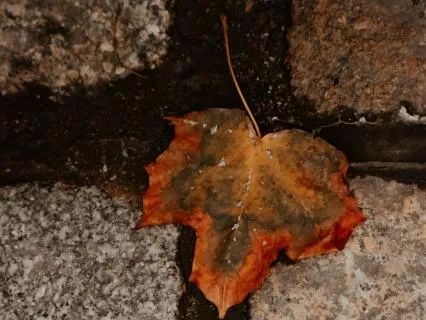
There yet stood out against the brick wall one ivy leaf.
It was the last one on the vine,
Still dark green near its stem,
With its aerated edges tinted with the yellow of dissolution and decay.
It hung bravely from the branch,
Some twenty feet above the ground.
It is the last one,
Said Jonsi.
I thought it might surely fall during the night.
I heard the wind.
It will fall today,
And I shall die at the same time.
Dear,
Dear,
Said Sue,
Leaning her worn face down to the pillow.
Think of me if you won't think of yourself.
What would I do?
But Jonsi did not answer.
The lonesomest thing in all the world,
The soul when it is making ready to go on its mysterious far journey.
The fancy seemed to possess her more strongly,
As one by one,
The ties that bound her to friendship and to earth were loosed.
The day wore away,
And even through the twilight,
They could see the lone ivy leaf clinging to its stem against the wall.
And then,
With the coming of the night,
The north wind was again loosed,
While the rain still beat against the windows and pattered down from the low Dutch eaves.
When it was light enough,
Jonsi,
The merciless,
Commanded that the shade be raised.
The ivy leaf was still there.
Jonsi lay for a long time looking at it,
And then she called to Sue,
Who was stirring her chicken broth over the gas stove.
I've been a bad girl,
Sudi,
Said Jonsi.
Something has made that last leaf stay there to show me how wicked I was.
It's a sin to want to die.
You may bring me a little broth now,
And some milk with a little port in it.
No,
Bring me a hand mirror first,
And then pack some pillows about me,
And I will sit up and watch you cook.
An hour later,
She said,
Sudi,
Someday I hope to paint the Bay of Naples.
The doctor came in the afternoon,
And Sue had an excuse to go into the hallway as he left.
Even chances,
Said the doctor,
Taking Sue's thin,
Shaking hand in his.
With good nursing,
You'll win.
And now I must see another case I have downstairs.
Bearman,
His name is.
Some kind of artist,
I believe.
Pneumonia,
Too.
He is an old,
Weak man,
And the attack is acute.
There's no hope for him.
But he goes to the hospital today to be made more comfortable.
The next day,
The doctor said to Sue,
She's out of danger.
You won.
Nutrition and care now,
That's all.
And that afternoon,
Sue came to the bed where Jonsi lay,
Contentedly knitting a very blue and very useless woolen shoulder scarf,
And put one arm around her,
Pillows and all.
I have something to tell you,
White Mouse,
She said.
Mr.
Bearman died of pneumonia today in the hospital.
He was ill only two days.
The janitor found him the morning of the first day in his room downstairs,
Helpless.
His shoes and clothing were wet through and icy cold.
They couldn't imagine where he had been on such a dreadful night.
Then they found a lantern still lighted,
And a ladder that had been dragged from its place,
And some scattered brushes.
A palette with green and yellow colors mixed on it,
And look out the window,
Dear,
And the last ivy leaf on the wall.
Don't you wonder why it never fluttered or moved when the wind blew?
Darling,
It's Bearman's masterpiece.
He painted it the night the last leaf fell.
As you reach the end of the story,
You pause and think about this time long ago,
Grateful for the comforts of your modern townhouse.
The book rests gently in your lap now,
Its pages cool against your skin.
The story of Sue,
Johnsy,
And the brave old painter lingers in the air.
A final note of peace that settles over the library.
You look toward the window,
Where the rain continues its steady solve,
As your inner world softens,
And you feel yourself drifting in that delicate space between being fully awake and asleep.
Your eyes slowly revel in the softer state of consciousness.
A delightful heaviness is felt in your body as you make your way to bed.
Your pet still drowsy and warm follows at your heels with a soft patter of paws on the old wood.
You make your way out of the library and back through the hallway,
Where the amber light of sconces guides you.
You enter your room,
Where the air is cool and still,
Scented faintly with lavender and the clean mist of a rainy night.
You pull back the heavy,
Soft covers of your bed and settle in,
The sheets crisp and inviting.
Your pet leaps up with a familiar light thud,
Circling once before nestling against your side.
You close your eyes in the sounds of Greenwich Village.
The gentle splash of rainwater in the courtyard beyond your bedroom,
The soft sighs of your pet,
And the steady,
Persistent rain invite you into the embrace of sleep.
And with gratitude,
You welcome this invitation,
To find comfort,
To find peace,
To find safety,
To find sleep.
It's time.