Hello,
So I hope everyone is doing well today.
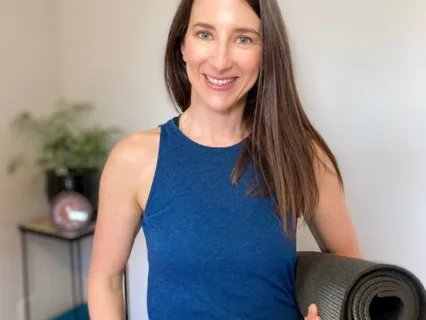
So my name is Michelle and I have my doctorate in physical therapy,
And I'm a personal trainer,
A health coach,
And a yoga teacher.
So today I'm going to talk about how to create a sustainable and healthy lifestyle.
So it gets real easy to just get into that trap of doing a quick fix,
A diet,
Or hoping this will work or this will work,
And jumping from different things,
But not really finding anything that's sustainable and healthy at the same time.
So you have this sheet here and you can have it as a PDF.
So you can go back and look at this.
So we're just going to go through some things that I want you to think about when you're thinking about creating a sustainable and healthy lifestyle for you.
So the first thing is know your why.
So a lot of people will first think,
Oh,
My why is I want to lose 10 pounds.
I want to fit into a size smaller pair of jeans.
Or something like that.
But usually that is not going to be motivation enough to keep you going when things get hard.
So I want you to think of your why.
And then I want you,
If you get one of those first things,
Like,
Oh,
To fit into one size lower pant.
Then I want you to think,
Why do I want to do that?
And just keep asking yourself why till you start to find that true motivation.
So it's not going to be the superficial reason.
It's going to be something that's a little deeper,
That makes you really want to be healthy.
So typically,
Even though somebody may want to lose weight,
There is usually some type of goal or motivation that's more related to health.
So maybe they want to be healthy for their kids and be able to play around.
Maybe they want to be able to go up a flight of stairs without feeling out of breath.
So really finding what that true motivation is and connecting it to your health can help you to stay motivated along the way.
So when things get hard or that they don't go well,
That you can come back to that true motivation,
Why you are doing this.
So that is a good first place to start.
The second place to start is being very attentional about what you choose to change.
So a lot of times,
If we start with too many things,
We're not going to be able to make any changes that we can stick with.
So really narrowing down your focus.
Being very intentional about what you're going to do.
And picking one or two things to do.
And when you're also thinking of this,
I want you to think,
What is going to have the biggest impact?
So that may or may not be what you do.
So maybe you know if you do this one thing,
Maybe it is you eat half the amount of dinner you have normally eaten.
That would make the biggest impact.
But you're like,
That's just going to be super hard.
And it's not somewhere you want to start with.
That is totally fine.
Don't start it.
Don't start it.
But sometimes,
Helping figure out what the biggest impact is can also be a good way to start.
So maybe you are like,
Yeah,
If I just do half a dinner,
That's super easy because I tend to overeat at dinner.
That can be a really good place to start.
So you can ask yourself,
What will make the biggest impact?
And also,
What am I actually going to do?
So be very intentional in narrowing down what you're going to do,
Focusing on those one to two things,
And then going from there.
So just because you start with one or two things,
That doesn't mean that's all you're ever going to do.
So just imagine yourself picking one thing to do,
Maybe two,
And really sticking with those,
Really being consistent,
And building those up to a habit.
So when you build something that's a habit and you don't have to think about it,
It becomes so much easier.
And a lot of times with health,
We get caught up because change is hard.
So I talk to clients all the time who are trying to make changes in their habit,
And it's just hard.
They're used to just grabbing some type of bar or pop tart or something for breakfast,
And it's hard to actually make a breakfast,
Even if it's quick,
Just oatmeal or eggs.
So that can be a hard change.
So really narrowing down that focus,
Being very intentional about what you want to do,
And just trying one or two things at a time before you move on.
So the next one is define what your target goal is and what is reasonable or doable.
So you might have your goal of you're wanting to lose a certain amount of weight,
But in the back of your mind,
You're keeping what that true motivation is.
Maybe it's to get healthy and play with your kids.
But when you're thinking about losing that weight,
So if someone has a weight goal of I want to lose 10 or 15 pounds,
We want to think what is that time frame that they're going to lose that.
So typically,
Especially men can lose weight a little bit faster because they're typically bigger,
But with women,
It's going to be a little bit slower.
So definitely no more than one pound a week,
Maybe even a half a pound a week.
So you don't want to do anything drastic because drastic results usually lead to a bounce back,
And sometimes people rebound higher.
So sort of taking it slow and steady,
Creating habits that you can stick with and that will get you there.
So when you're thinking of that,
What your goal is and your weight,
So be very clear how you're defining it and making sure that it's something reasonable and doable.
So you're going to have that in mind what your goal is,
But also those habits that you're going to do each day to get you there.
Because a lot of people,
You are here and you want to be here,
And the only way to get somewhere else is to make some changes to get there.
So those are typically those daily habits and what we choose to do each day.
All right.
So number four is identify struggles ahead of time that you are going to face,
How you will handle them,
And then really setting yourself up for success.
So let's think identifying struggles ahead of time.
So if we go back to that example of breakfast and grabbing a Pop-Tart or something like that,
So thinking of ahead of time,
What's going to be my struggle?
I'm going to be rushed in the morning.
So maybe I need to prep my breakfast the day before.
So that could look like creating little egg muffins.
So it's basically scrambled eggs that you cook in the oven,
And you can pop them in the microwave.
Maybe that's doing overnight oats.
So you can put your oatmeal together,
Put it in the fridge,
And it's ready to go in the morning.
So just really taking time to think,
What's my struggle going to be?
What am I going to get hung up on?
And then figuring out how you're going to handle that.
So if you don't take the time to really think that through and figure out how you can overcome that obstacle,
Most likely you're going to face it.
And in the moment,
You are not going to be able to do it.
So you really want to plan that ahead of time,
Because in the moment,
We don't make very good decisions,
Especially when it comes to our health.
We do what's easy,
What's quick,
What's our normal habit.
So really take the time,
Talk that out with somebody,
Look up some different ideas,
Especially if you feel like you can't come up with an idea on your own.
It's really great to talk it out with somebody and get other ideas,
Because a lot of times,
We just don't even think of other ideas that would be helpful for us.
So when you're doing this,
You're going to set yourself up for success better.
So a lot of times,
The problem is people will try something for their health.
It may work for a little bit,
And then they sort of fail,
Rebound back.
They try something else,
Same thing.
So they're stuck in this vicious cycle of failing.
And then you start to feel like you can't do this.
You can't get healthy.
It's too hard to eat healthy.
You've tried this.
It didn't work.
You just can't do it.
So when you go to make changes,
Going through these steps and being very intentional can help to break that cycle,
Because you don't want to think that you can't make changes to get healthy,
Because you can.
It's just hard,
And you need the right support.
So you definitely want to break that negative loop you have going in your mind.
So if you are someone who feels like they have that negative loop in their mind,
That they can't get healthy,
Or they can't do it,
Or they have failed so many times before,
I just encourage you to maybe write down those thoughts,
Sort of check those thoughts,
Become aware of them.
Sometimes we're not even aware of all of these thoughts we have in our head that are sabotaging us.
So just really recognizing what those are,
And then going through these steps to really set yourself up for success when you go to make changes.
All right,
So the next one is start with small habits and really work on developing consistency.
So it goes back to number two a little bit.
So we're only picking one or two things.
And these are habits.
So these are daily actions,
Because like I was saying before,
You have your goal,
And that can be great.
But goals don't typically get you from A to B.
The habits do.
The actions you take each day.
So you have to take action to create changes.
So your action is going to be your new habits that you want to do.
So maybe that is changing your breakfast.
Maybe that's getting rid of processed food.
Maybe that's starting your day off with exercise.
Whatever those habits are,
That's what you want to start with.
For most people,
It's typically better to start small.
So a lot of time with exercise,
If somebody hasn't been exercising,
I encourage them to just do 10 or 15 minutes.
So if you are consistent with doing exercise for just 10 or 15 minutes a day,
That will pay off versus someone who does 30 minutes here,
Maybe another one in the week,
Maybe they skip the next week.
Real sporadic.
But someone who does 15 minutes most days of the week is going to start seeing results from that.
So you can strengthen your muscles.
You can increase your flexibility.
You can increase your cardiovascular system,
All with just 10 or 15 minutes a day.
So you don't need this huge amount of time.
So you can start small.
And the same thing with your nutrition.
If it sounds too overwhelming to,
Maybe your goal is to be on mostly Whole Foods.
But if that sounds too overwhelming,
Start small.
Start at just breakfast and sort of get that down.
Then maybe you add in lunch.
So whatever it is,
Don't fear that starting too small isn't going to help.
So the idea would be to stay consistent with that.
Develop that new habit.
Once it feels good,
Keep adding on.
And then that way,
You're building something that is more sustainable.
All right.
So next is number six,
Is to prepare yourself.
Set yourself up for success.
So you have thought about what is going to be hard and what your struggles might be.
And you're sort of planning for that.
So this goes a little bit with that.
So you also want to set yourself up for success.
So this could be having things prepped.
So this could be your food.
Maybe this means you chop up your vegetables that you're going to take to work the next day.
Or on Sundays,
Maybe you prep some freezer meals or maybe you cook.
A lot of times,
I cook rice and quinoa ahead so that we can eat that during the week so I don't have to cook that for the week.
Or I also like to do that with like butternut squash because it takes a long time to cook and a little bit of prep time and messy.
But if I have it cooked,
It's just easy to pull out of the fridge.
So it's almost like I have this ready-to-go food.
But I've taken that time to prep it.
And also getting extra support.
So if you are really struggling with finding time,
Maybe you have someone help clean your house.
Maybe you get a babysitter.
Maybe it's just your spouse if you have kids.
And in the evening,
They're going to watch the kids so that you can exercise or work out or do whatever you need.
So just think of ways you could draw in extra support if that's what you need.
Maybe it's a friend you work out with.
Maybe you need more community and socialization to just talk to other people,
Share with other people.
It's really hard to get healthy if you're surrounded by people who are not healthy.
So we are typically like those that we are surrounded by.
So if you are surrounded by a bunch of friends who go out to eat a lot and prefer to do activities where you're sitting,
That will most likely be what you want to do.
So if you're surrounded by people who like to go for a bike ride on the weekend or they like to grill and make salads,
You're more likely going to do that.
So I'm not saying to ditch any of your friends or family,
But really think about making sure you are surrounded by people who will support and encourage you in your health.
So maybe that looks like putting new people in or getting plugged into some type of community where you have that encouragement to do those healthy things that you want to do.
So the other one here is creating visual reminders.
So I know life gets busy for me.
And literally,
I have alarms set on my phone,
And I will put little sticky notes up on my bathroom.
So put visual reminders up if you need them where you'll see them,
And also change them out.
A lot of times,
I will put something up,
And then I start not even noticing it anymore.
So you can switch it out,
Put something else up,
Put reminders on your phone.
So maybe that looks like drinking water.
Drinking enough water can be huge.
A lot of people are dehydrated and don't drink enough,
And that can leave you feeling more hungry.
It can make you eat more food.
So a lot of people will put a little reminder on their phone to drink water till that feels like more of a habit,
That they're used to drinking more water,
And they almost need enough water.
So you can also put reminders up to exercise.
So maybe in the morning,
You have a reminder that you are going to go do your yoga for 15 minutes,
Or you literally put your clothes out the night before,
Your workout clothes.
So you see that in the morning,
And you're like,
Oh,
Yes,
I am working out.
I pre-decided I made that choice before,
So now I'm going to work out in the morning.
So whatever you think would be helpful.
So this could also be maybe you have a bowl on the counter,
And that has fruit in it.
So that's just that visual reminder,
I'm going to eat healthy.
I'm going to grab some healthy foods.
So depending what your goal is and what that first step and those first habits are,
Really having yourself prepared and set up for success.
Because most people,
You can make these changes when you start to narrow down,
Be specific,
And really prepare yourself and really be intentional that you'll be able to start to make the changes that you need to.
So number seven is don't give up.
So if things don't go well at first,
Reassess and keep moving forward.
So this is a huge one I see in clients.
So we're all going to have bad weeks.
Maybe we go on vacation.
Kids are sick,
Especially with COVID.
Kids were home,
And then parents had to call off work.
And we're out of our routine.
We're out of our schedule.
And it's really hard.
And it's really easy to give up,
Like,
I can't do this.
I don't have time to work out.
Or I'm still off my schedule.
I'm just eating whatever I want.
So know that struggles and bumps are going to come.
So the idea is to really narrow down that time that things get out of whack.
So if you're on vacation,
Don't let that vacation lag when you come home and keep going,
Like,
Oh,
I ate whatever I want on vacation.
Now I'm just going to give up.
No,
Reassess.
So you can reassess and say,
What should I have done on vacation?
OK,
Yeah,
I would have been fine eating out every night.
But I should have ate a healthier breakfast and lunch.
So reassessing for next time and then just hopping right back on it.
So if you had a bad weekend and you ate a bunch of crappy food and it left you feeling bad,
Like,
OK,
That doesn't make me feel good.
But I'm just going to hop right back to it on Monday.
I was just talking to someone the other day.
And she talked about how they went out and they got ice cream and some French fries.
And she's like,
And you know,
I was OK with it.
I was going to beat myself up.
Yeah,
Because if you think about all the food you eat in a week,
All the calories you ate,
You ate really good all week.
So having a small thing of ice cream is not going to throw everything off track.
The only thing that will is if you let that throw you off track and snowball into more decisions that don't make your body feel good.
So if you feel like you sort of went off track or whatever it is,
Is to just get right back to it.
So you don't need to carry that shame or that guilt or think I ate a bunch of bad food.
Just move on and just focus back on to,
How does your body feel?
What makes you feel better?
And just go towards that.
So don't beat yourself up if it doesn't go right.
All right,
So those are all of my tips,
Sort of those steps that when you are looking to sort of create a goal and a healthy lifestyle that you can think through.
So these last few minutes,
I'm just going to give you some ideas in case you don't know where to get started.
So when you're thinking about your health,
You sort of have your nutrition and you have your fitness.
So you cannot outrun your fork.
So that means if you eat a bunch of food that's not good or you're overeating,
That you're not going to be able to work that off.
So nutrition does count for more of how you are health wise or weight wise.
But it's not the only way.
So some people will find that if they start exercising,
Especially just that 10 to 15 minutes,
That gives them the motivation to eat better.
So sort of think where you are if you want to start more with your nutrition or more with your fitness.
And notice if you think doing that little bit of exercise will help motivate you to change your nutrition because that nutrition is really important.
OK,
So with exercise or fitness,
It can be really easy to start with just 10 to 15 minutes.
That could be walking,
Yoga,
Strength training.
So I am definitely more for strength training or yoga that has strength training.
Cardio can also be good.
But when you do strength training and you put on muscle,
The muscle is going to burn more calories than fat.
So even when I'm sitting here right now,
Since I have more muscle on me,
I'm going to be burning more calories.
So a lot of times with cardio,
You burn a bunch of calories at once and then you're really hungry because you just burned a lot of calories.
And then you're sort of in that vicious cycle.
So not that cardio is bad,
But strength training,
Yoga,
That strength training is a really great way to go,
Or just starting with walking or biking if you haven't done much exercise.
So on the nutrition side of things,
Generally across all the different types of diet,
Everybody will agree that eating more whole foods and less processed foods is the way to go.
So when you eat more of the processed foods,
They are refined grains.
Everything's processed.
So not only may there be chemicals in there,
But those,
Since it's more processed and broken down,
It can spike our blood sugar faster.
Our body doesn't have to work as hard.
So you could have a piece of chicken and a piece of bread.
They could be the same amount of calories.
But your body is going to use more calories from that piece of bread.
It has to work harder to break down that piece of chicken and other things.
So that's just something a little to think about.
It's not always calories in,
Calories out.
It's really that quality of food you're eating.
So making goals towards eating more whole foods,
Less processed foods can be a way to start.
The other thing with nutrition is also portion sizes.
So obviously,
If you're eating too much,
So there is some truth in the calories in,
Calories out,
But there's little tweaks in there.
But if you are eating too much,
You're obviously going to put on weight or hold that weight.
And when you go to eat a little less,
You don't want to do it drastically because that's going to make your body think it's starving and it's going to hold onto those calories.
So if you have been eating too much,
Just slowly decrease it.
And your stomach is also going to need time to shrink.
So if you have been overeating,
Your stomach is expanded.
And then when you're not eating as much,
It's like gets hungry.
So it takes a little time for that stomach to adjust and go back to its size.
So try focusing on whole foods and your portion sizes,
But not going crazy.
So again,
Sticking with those small changes as you do it.
So I hope that this was helpful.
And I hope that you're able to just really write down a couple habits that you want to do and really stick with those new habits for,
Ideally for at least a few weeks for them to become ingrained.
But stick with it till you feel like they're a habit.
So that can take up to a couple months,
Even longer,
Depending how consistent you are with it.
So the more consistent you are with doing that goal every day,
The quicker that habit will develop.
The more sporadic you are,
The longer it takes.
So all right,
So I hope this helps you guys.
And I hope that you're able to walk away,
Write down a few habits that you want to work on.