This is a stretch and breath practice.
It will take approximately 25 minutes.
The first half is usually done in a standing position and then we will move to a seated posture so it may be worth preparing a chair or a cushion to do this.
So coming to a standing posture with feet about a hip's width apart,
Knees unlocked and your back upright.
Tuning in to the feeling of standing here and the contact that your feet are making with the floor.
It's important to make wise choices about what you're able to do today and work within the limits of your body as it is right now.
So coming to the breath as we stand here in a mountain-like pose,
Rooted to the floor,
Perhaps with an awareness of the whole body as it stands here,
Allowing the eyes to close if that helps you to tune in to these sensations.
The intention of this practice is to notice what is happening in our bodies and as best we can without judgement.
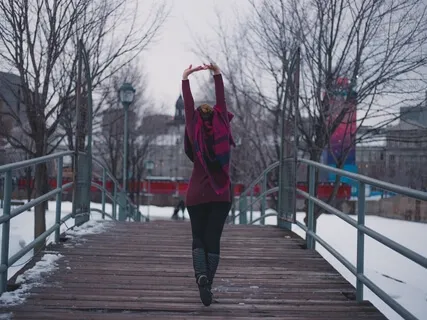
So opening the eyes for the first posture and allowing the arms to rise up on either side of the body so they become level with the floor.
Just holding them here for a moment,
Tuning in to the sensations,
Perhaps it might be tingling in the fingers,
Maybe noticing some stretching.
And if it feels okay for you,
You can allow the arms to rise further up above the head but leave them at a position that feels right for you.
Then tune in to the sensations that are here.
Perhaps notice some wobbling as your body balances.
And then when you're ready,
Allowing the arms to come back down by the sides.
Only close the eyes and tune in to the feeling of having moved the arms in this way.
Perhaps notice the temperature of your arms and your hands now.
Perhaps there's some tingling,
Feeling of aliveness in the body.
Then allowing the eyes to open again and taking the right arm,
Allow it to raise up just to a height that feels okay for you but as if you're picking fruit from a tree that's just out of reach.
Allowing the left heel to rise up with the movement and noticing the sensations that come with this.
Perhaps there may be a little discomfort,
Perhaps tuning in to that and noticing what is that like?
What's the feeling here?
And then when you're ready,
Allowing the arm to float back down and again closing the eyes to tune in to the sensations that are here in the body.
Then allowing the left arm to float up and again reaching for perhaps some fruit that's just out of reach.
Allowing the right heel to come off as you move into this stretch.
Bringing your attention to the sensations that come with this movement and knowing that you can put your arm down whenever you need to,
Choosing what's wise for your body.
If you haven't already,
Allowing the arm to lower and closing the eyes again to tune in to what's here now in the body.
Perhaps bringing some curiosity to the sensations that have arrived here now.
Perhaps there may be some warmth in the fingers.
There may be some tingling,
There may be some coolness.
Allowing yourself to tune in to the experience of standing here right now and as best you can,
Allowing those sensations to be here and notice them as sensations.
Then opening the eyes to move into another stretch.
So first of all placing the hands on the hips.
Making sure the knees are unlocked,
The back is upright and then gently allowing the body to bend towards the right hand side.
Gently going as far as you feel is right for your body,
Gently moving back to the centre and then moving over to the left hand side and back again to the centre.
Moving to move in this way,
Bending to the right and the left.
And as you do,
Noticing the sensations that come with this movement.
Perhaps noticing any tendency to push yourself beyond your limits and pulling back if that's the case.
Then coming to stillness in an upright position,
Allowing the hands to fall again by the sides.
Perhaps closing the eyes to notice the sensations that are here having done that movement.
Perhaps use this opportunity to check through the body,
Notice any tension or sensations of tensing.
Perhaps allowing those to soften if that's possible for you.
Then opening the eyes and moving into some shoulder rolls.
So the first part of the movement is to raise the shoulders towards the ears,
Then allow them to float back,
Drop down and come round to the front again.
So slowly and gently moving the shoulders in a circular motion.
Tuning into the feeling of your arms as they move and your shoulders.
Perhaps the effect it's having on your whole body.
Noticing how you need to balance and that wobbles are normal.
Then coming to stillness and tuning into the physical sensations.
And when you're ready allowing the shoulders to roll in the opposite direction.
So first moving them back,
Then up to the ears and around to the front.
Making the movements as gentle as you need them to be.
We're not trying to exercise here,
We're noticing the sensations in our body.
The next movement involves some gentle neck stretches.
Then choosing what's wise for your body today so if you know that this won't be quite right for you.
Allowing the body to stand still and tune into the sensations that are here.
But otherwise gently move the head towards the right shoulder.
Perhaps holding it here for a moment before bringing it back to the centre.
And then moving gently towards the left shoulder.
And again back to the centre and repeating the movement.
So towards the right shoulder,
To the centre and then the left.
And as you're moving,
Noticing the sensations of stretching.
And then coming to stillness.
Noticing the eyes,
Tuning in to the body as it is standing here.
Perhaps checking with sensations in your feet.
There may be some effects of having stood here for some time.
Noticing what the body feels like now having stretched and done these movements.
And then mindfully moving to a seated position.
So doing this slowly and gently.
Being aware of the sensations that come with this movement too.
Settling into a comfortable seated position.
With the back erect and if it's possible for you,
Away from the back of the chair.
Legs uncrossed and gently closing the eyes if that's comfortable for you.
Noticing the physical sensations of being sat here.
The contact between you and whatever you are resting on.
And then bringing the attention to the breath.
Perhaps the sensations of breathing in the lower abdomen.
Following the in breath and the sensations that come with this.
Perhaps noticing the pause between the in and the out breath.
And then bringing the attention just to the sensations of the out breath.
Noticing the gentle stretching.
The rise and fall of the abdomen.
And following the breath as it is right now.
We don't need to try and get anywhere.
And as best you can.
Accepting the breath as it is.
It is completely normal for the mind to wander.
And when it does,
Congratulating yourself that you've noticed this has happened.
And gently escorting your attention back to the sensations of breathing.
It doesn't matter how many times we do this.
Practicing being kind to ourselves and patient.
And bringing the attention gently back to the breath.
Perhaps being curious about the sensations of breathing here today.
Following the breath.
Noticing the silence to practice being with the breath as it is right now.
Perhaps expanding the awareness to include the whole body breathing as it is right now.
Perhaps tuning in to the contact of the feet on the floor.
The sensations in the lower and upper legs.
The hips and pelvis.
The lower back and the abdomen.
The upper back and the chest.
And the shoulders and neck.
Noticing sensations in the head and the face.
And the facial expression.
Opening in to what's here.
It's very common when we sit for some period of time to notice some discomfort.
Maybe you have the opportunity to choose whether you bring your attention into this discomfort.
Perhaps exploring the sensations.
Noticing how it may change or there may be patterns of sensations.
And if it is better for you today,
Knowing that you can come back to the breath.
Being aware of the body breathing.
Perhaps allowing your attention to be pulled into areas of sensation.
And then when your mind is no longer pulled there,
Coming back to the sensations of sitting here to the body as a whole.
It may be possible for you to breathe into and out from any sensations.
And for the last few moments of the practice,
Bringing the attention back to the breath.
Following the in-breath,
The pause in between and the out-breath.
Knowing that the breath is always with us,
We can always come back to this in any moment of our day.
We can always come back to this in any moment of our day.