Hello,
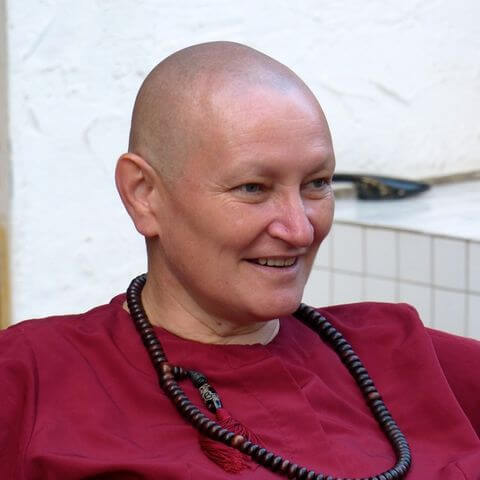
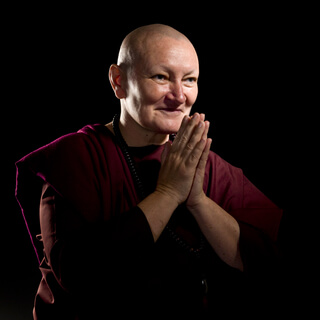
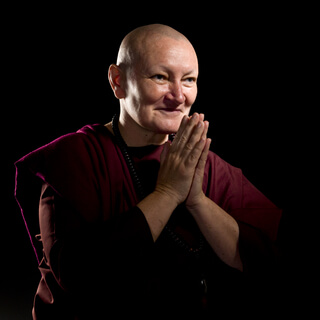
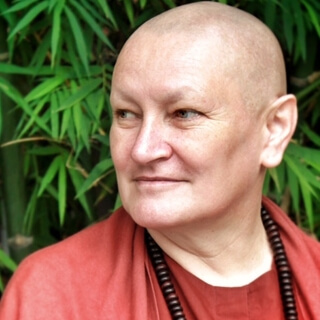
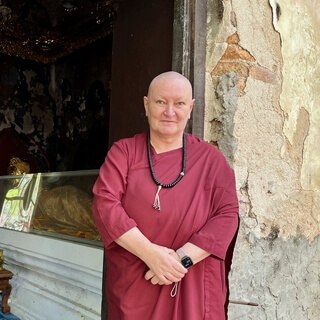
I am Meiji Bridget.
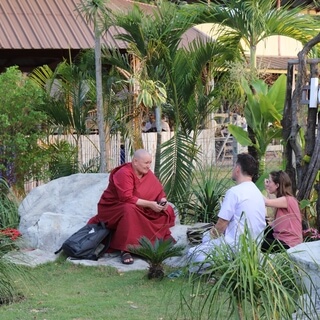
I live in Thailand in a monastery.
I'm a Buddhist nun.
And I got some questions which I should answer for you to explain a little bit about Buddhism.
The first question is,
Who is Buddha for you?
Well,
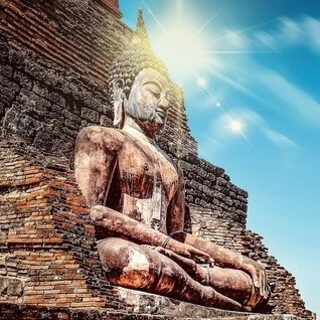
I think Buddha was a very kind and wise being.
And he always tried to help others and also helped them to become happy and to be kind to others.
The second question,
What did the Buddha teach?
Well,
The Buddha taught us not to bully others,
You know,
Not to be unkind to others.
No one wants to be bullied.
You don't want to be bullied.
So it's just normal that we try to avoid that,
Avoid that we harm others or make them sad or unhappy.
Then he also taught that we should not steal from others,
Take their things,
Because we all love our own things and we don't want anyone to take them away.
So we try to not to do that.
Then he also taught us not to be too selfish,
Only think about our own fun and our own happiness,
But also try to think of others and try to make them happy or help them if they are not happy,
If they have problems.
So not being selfish and only thinking about ourselves.
And he also taught that we should try to be truthful,
Like speak the truth.
Don't lie or don't speak in a way that it causes trouble for others or yourself.
So that is one main thing he taught.
And then he said that we can become very happy and we make beings around us also happy if we do like that.
The third question is,
What is the daily routine like in the monastery?
Well,
We usually wake up very early at four in the morning.
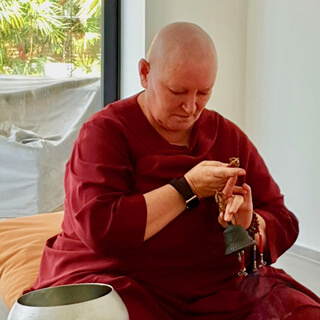
Then we do some singing and meditation.
And then usually the monks and nuns go for alms round.
That means they have a little bowl and with the bowl they go out in the village and the people give them some food.
They give us food and we give the people in the village a blessing for that so that we wish them to be happy and always have more than enough so they have a good life.
Then the next thing is we have our breakfast in the temple.
We eat what the people gave us and then we help together to clean the temple because we have no one to work for us.
So we do it ourselves.
We sweep leaves,
We water the garden,
We clean up.
And around 11 we have our second meal,
Our lunch.
And after that we don't have any more meals.
So there's only two meals we have a day.
And then we have a little rest.
And in the afternoon we start again with taking care of things in the temple,
Cleaning,
Sweeping,
And also maybe some study,
Some book study.
We read something and meditate for ourselves.
And then in the evening we have another,
We call it chanting.
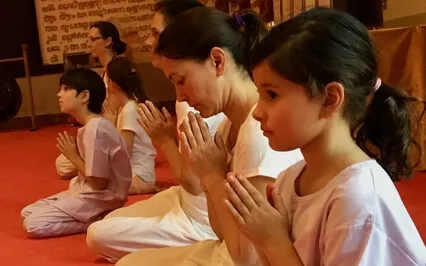
We sing texts and we meditate all together,
All the monks and nuns and sometimes also lay people,
People from the village come in and join us and also sing with us.
And after that we have time for our rest.
We can maybe read some more in our hut or we,
Whatever,
Do our laundry.
We have to take a shower,
Whatever normal people also do.
And then we have a rest and sleep and get up very early the next morning.
The fourth question is why do we make offerings to the Buddha?
Yes,
The Buddha kind of showed us,
He taught us the way how to become happy,
How to become a better person,
A kind person.
And we are very grateful for that.
And that's why we also want to kind of give something back.
So we make offerings.
Usually,
Yeah,
That's the next question.
Fifth question,
Which kind of offerings do we make to the Buddha?
Usually it's candles.
So we give light,
Then we give some flowers and some incense,
Something that smells very good.
So that is the normal offering.
Sometimes we have special festival,
A big feast,
Like,
Yeah,
A special Buddhist holiday.
And then we offer more than the people often offer also food or fruits and other delicacies,
Anything very nice.
And often they offer something that they love themselves very much,
But they think,
Okay,
Today I want to offer it to the Buddha.
And then they become happy because they don't always need to keep all the good things for themselves.
But sometimes we can share it and then become even more happy.
And the sixth question is Buddhist festivals,
Which Buddhist festivals we celebrate in our monastery.
There are three very important Buddhist festivals in Buddhism.
And they are the Vesak Day,
That is the day when the Buddha was born and also realized what we call enlightenment.
He understood how is it possible to become a really happy person and be kind to others.
So he understood that,
That is what we call enlightenment.
And the second day is the Asvalaputra Day.
That is the day when the Buddha the first time taught this.
He went to disciples,
He had five disciples that time and taught them this Dharma.
And the third important Buddhist holiday is the Makaputra Day.
And that is when they said in the former time,
There were more than thousand monks coming together to the Buddha and then the Buddha taught them what kind of rules they should keep to have great harmony,
To be good with each other,
Not to cause trouble for each other and not to have any quarrels.
So live a harmonious life.
So these are the three main Buddhist holidays.
And then the question,
The next question is,
What is Vesak and how do we celebrate Vesak Day?
Well,
Vesak,
I said before already,
Is the day the Buddha was born and realized how to live a life of great happiness and kindness.
And what we do in a temple is usually we have candles,
We have incense,
We have flowers.
And with that,
We go to the main Buddhist statue in the temple and we walk around it.
We sing,
We chant praises to the Buddha,
Dharma and Sangha.
And we offer that to the Buddha.
And it's not just the monks and nuns in the temple,
But also the people from everywhere outside in the village and cities,
They come to the temple to celebrate this day.
So it's a very nice ceremony we have on the street main festivals.
Then the last question is a more personal question.
Are you happy living this way?
And I must say I am very happy because in this way,
I really,
I can live a life where I try not to do any harm to others or myself,
Being kind to humans,
To animals and all beings that you meet in your life.
And also sharing that knowledge,
How to do it,
How can we do that?
How can we be a better human being?
How can we help others?
And in the temple where I live,
All monks,
Nuns and all people who come here,
They try that.
So they all try to do this and try to be kind.
And even if it does not always work,
But when they remember,
Oh no,
This was not kind,
Then they apologize and they try it new.
And that is,
It's a beautiful life to live like that.
And I wish for all of you also to be a kind person in the future and have much happiness in your life.