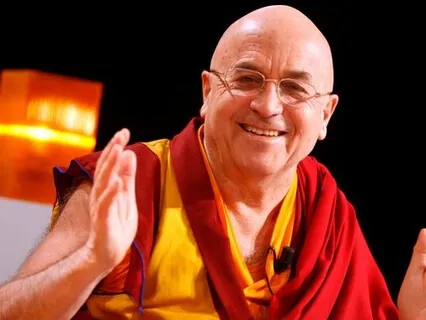
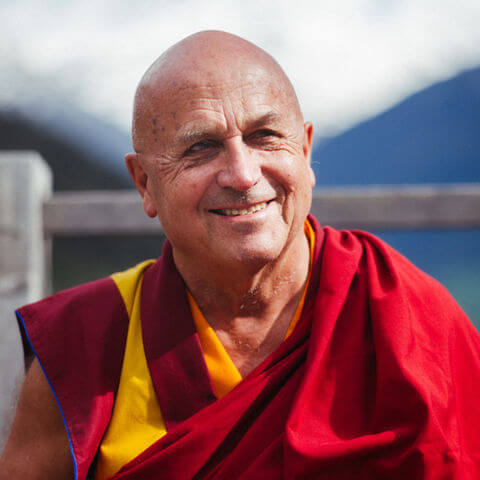
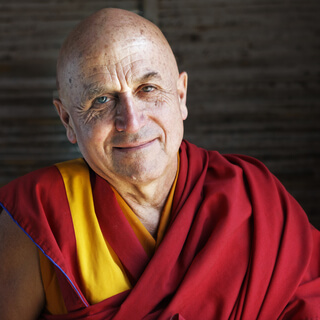
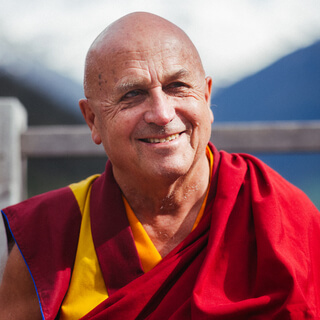
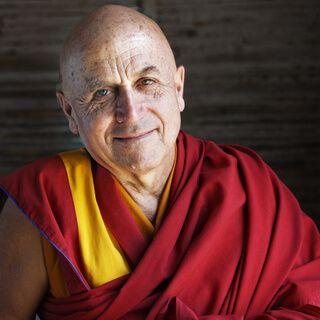
Today,
Buddhist Dao has the honor of interviewing His Eminence,
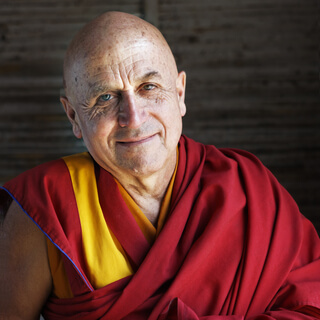
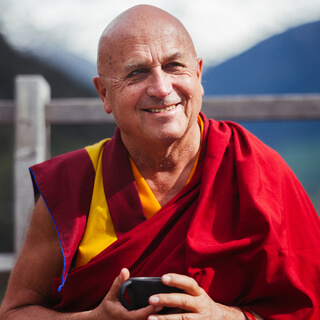
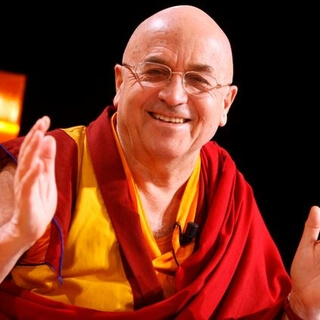
Zhechenran Pzhe and Venerable Matthew Ricard,
Who are on a visit to Hong Kong.
The two masters will share their wisdom on topics including the relevance of Buddhism in the modern world and the role of Buddhist gurus in Tibetan Buddhism.
So every student must get a word guru,
Is it?
Yes,
If you are going to sail in the ocean,
You need to have a good captain to guide you.
So a special master is like a very good captain to help you navigate across the ocean.
So I say you must have,
In order to achieve enlightenment,
Buddhahood,
You must have a good special master.
Okay,
But actually,
What is the true meaning of the root guru?
What's the difference between guru and root guru?
Guru means something,
Sanskrit word like guru means something like very heavy or very,
In a sense,
I think what it means like,
If you know how to,
First you find the right special guru and if you know how to relate,
Then the blessing is like very heavy.
And then if you,
Let's say,
If you find an authentic spiritual guru and then you don't follow properly,
Then the consequence can be very heavy.
So therefore,
Guru word means something very heavy.
So I think,
Like I mentioned earlier,
They can be like sutra-yana,
Gurus,
And then you can have mahayana,
We will take bodhisattva vows and all that.
And then I think the more deeper connection with the guru is one who bring you into the vajayana path and especially the one who actually,
Especially in our nima tradition,
The one who actually introduce you to the nature of your mind,
We consider as the root guru.
I see.
But can root guru be found so easily just by asking one rainbow and say,
Can you be my root guru?
Then he can become my root guru.
I think there's lots of teaching how to relate with the master,
Analyzing.
Doesn't mean again you go and dig up all their faults,
But to see that is this the right guru,
First of all knowing that he's the authentic guru,
And these days maybe sometime you can also Google it,
Get more information.
But of course I think the special quality of the vajayana Buddhist tradition is this authentic lineage.
So on that you can do some research,
Not just rely on flyers these days.
Flyers?
Flyers?
Advertisements?
Go around saying I'm so and so,
But I think it's quite easy to do a little bit further research this lineage and authenticness.
And then once you feel that this is the right,
Feel close connection,
There are many cases some people like when they see or when they hear about the name of the guru,
Then they really feel inspired and connected.
In some cases it doesn't happen,
But then once you know it is the authentic guru,
Then you can develop this kind of connection through many different ways,
Especially like practicing guru yoga as the way to connect to the guru.
Another talk you are going to have in Hong Kong is about happiness.
Unfortunately some Buddhists found they didn't become happier after learning Buddhism,
Or even they experienced more sadness,
Attachment and negative emotions.
Have you heard about that situation?
What do you think?
If you practice properly,
You know,
I think the right way,
Properly,
Then I think it should bring you temporary and ultimate happiness.
Typically happiness,
I think we can say that the whole teaching of Buddhist is based on how to deal with your negative emotions which causes all the sufferings and pains.
So if you are practicing properly and if you are actually learning how to deal with your negative emotions which causes all the sufferings,
Then you should be happier.
And ultimate happiness is enlightenment Buddhahood.
So if you don't do it properly,
Then maybe you have a different result.
Can you give advice on how to learn Buddhism properly?
I think we have to not lose the goal why we entered Buddhism.
You don't join any religion thinking that it will bring you suffering.
You are looking for some kind of way to achieve happiness.
That's how you choose to follow any religion.
So same thing,
Without losing our goal,
Again and again reminding us why we joined to practice the Buddha Dharma,
And our goal is to achieve happiness,
Temporary and ultimate.
Nowadays many Chinese Buddhists are learning Tibetan Buddhism.
But many of them,
They just emphasize empowerment,
Mantra and blessing.
They emphasize this very much but seldom study the theory.
Do you have any advice for them?
Yes,
I think in order to become Vajrayana Buddhist practice,
You must go through receiving Abhishek or empowerment.
But again,
Like I mentioned before,
I think it's very important to not only get the empowerment but if you really want to be a good practitioner,
Then you have to follow and practice.
But also there's kind of a tradition in Tibet where Vajrayanas flourish,
Where people take empowerment just as a connection,
To have a connection with a spiritual master or lineage.
So that's another case.
But if you really want to seriously go into practice,
Then receive the initiation and then go into the practice.
So that's how you get into the Vajrayana path.
Do they have to learn something or just practice by chanting mantra,
Receiving empowerment?
Yeah,
I think it's always necessary to learn how to practice.
And also the chanting mantra is also not just a kind of saying by mouth,
But you have to visualize it and there's lots of things to deal with your mind.
It's not just a reciting mantra.
We have a saying that reciting mantra without thinking is like a pirate reciting mantra.
In Tibetan it's an eso-mani.
So more is to do with your inner mind.
Many Chinese Buddhists emphasize empowerment,
Mantra and blessing very much.
And I think they don't think stopping the evil deed,
Practice,
Guru deed,
And holding the samaya vow is important.
Even they don't know after receiving empowerment,
They have to hold the samaya vow.
They don't know what the samaya vow is.
So I want to ask for more advice from your immaners for them.
So when you receive the empowerment or abhisheka,
Like in Tibet or places where they practice Vajrayana Buddhist,
There are many different ways of receiving empowerment.
Some like I mentioned before,
They just make a connection just to have a spiritual connection or to the lineage.
So that's just thinking like a blessing.
And then some want to engage more into that lineage and practice.
So there they take the empowerment more seriously.
So then they will have to,
Well,
Essence of the Vajrayana samaya is to develop your vision and devotion.
So that I think goes for all the Vajrayana practice.
So I think people who do practice Vajrayana,
So they more or less they should know the developing vision and devotion.
It is the crucial essence.
No,
No,
That is for the base of Buddhism,
Not necessarily for Vajrayana.
Base of Buddhism first believing in the law of cause and effect.
So the essence of Buddhist teaching,
The Vajrayana mijashekhi,
You are presumed sovachana.
So then Rangisivani,
Yon sudul,
Then comes different methods.
The quote that Jnimvashi mentioned is,
Don't do any evil acts.
Perform all virtues to transform what's mine,
That's the Buddhist teaching.
That's what Jnimvashi says,
The basic quote of Buddhism.
I'm a very many Chinese Vajrayana practitioners,
Lack of this basic knowledge.
So also when you talk about the dikpa and geva,
Positive and negative version,
Also in Buddhist it's more on your intention,
Sambhasam.
So intention directs towards positive or negative.
Thank you very much for Ramon's teaching.
Toh-jis-he,
Used to be English,
But maybe well.
Thanks a lot.
And then it's my turn,
Sorry,
It's my partner's turn.
Venerable,
Thank you so much for being with us here today.
On the advertisement of the talk,
Buddhism and its relevance to the modern world,
Which is the second of the two talks,
Will be given on the 12th of September.
It was declared,
Buddhism is a pragmatic science of mind,
An altruistic art of living,
A meaningful philosophy.
Could you explain how Buddhism can be science,
Art and philosophy all at the same time?
Well,
Science means honest,
Rigorous investigation of reality.
So now that's the criteria of good science,
Not based on blind faith,
Not based on hearsay,
Not based on hypotheses,
Which either have not been verified or cannot be verified.
You might postulate something that you can never fully verify.
So science has to be demonstrated based on empirical experience of data.
Now the domain of science can vary.
Modern science,
Basically the domain is what is measurable in the outside world.
That is like biology,
Physics and with mathematical laws.
So we could say here,
Buddhism as well as psychology and cognitive science is about science of mind,
Science of emotions,
Science of happiness and suffering.
But the process has to be as rigorous as it can,
Means make hypotheses.
For instance,
Does ego grasping and boosting self-esteem going to make you happy or not?
You can examine that and then you can examine that with your own experience and you can examine that to psychological investigation.
And the answer is no.
If it was yes,
You say go for it,
Boost your ego as much as you can and see the result.
Does jealousy help for happiness?
Okay,
Try for 24 hours to be jealous for morning till evening and if the result is good,
Go for it.
If it's not,
Don't shoot yourself in the feet.
So in that way is a science,
Basically of how the mind works and how the mind can be our best friend or our worst enemy.
Now an art,
In a way,
Art means to someone who is very expert at certain art can skillfully perform his or her own heart.
So in a way,
We speak of art of happiness,
Art of meditation in the sense of a Buddhist heart,
In the sense of doing properly,
Skillfully in the best possible way,
Travelling on the path.
Now philosophy,
Because it is not based only on blind experience,
But also it is guided by view.
The Buddhist view is crucial,
Especially when we deal with suffering,
Because one of the biggest misunderstandings about Buddhism and also one of the most profound teachings of the Buddha is that when we speak of suffering,
It's not just to take our inconvenience and sorrows that you have momentarily,
Because everyone knows it is suffering.
When the Buddha said the truth of suffering,
He doesn't have to say that a truth-take is suffering,
Because everyone knows why we don't need the Buddha for that.
What the Buddha said is suffering is at a much deeper level than that,
Linked with ignorance,
That we don't usually recognize as suffering.
And that's the problem,
Because as long as we think that this kind of suffering that is guided by ignorance,
By the mental toxins,
Like anger and hatred and greed and desire and so forth,
Is going to bring us happiness,
And if we enjoy temporary happiness,
We think it's ultimate happiness,
That ignorance is in a way suffering.
So that we don't know and we don't recognize.
So in that sense,
Philosophy in the sense of a view about what is the nature of reality,
What is the nature of the self,
What is the nature of phenomena,
That's crucial in order to put things into practice.
Otherwise without that view,
Then there's no such thing as the four noble truths.
So to recognize the root as being ignorance and the freedom coming from wisdom,
And that there is a possibility to put an end to suffering,
There is a cause to suffering,
There is a part.
We could call it philosophy in terms of the maybe the word in Sanskrit darshan,
Which is a view about reality.
Buddhism as science,
Art and philosophy.
Now I realize that nowhere in there,
In those three words or in those four words,
Is mentioned religion.
Now as Buddhists,
Even if we don't try to actively convince other people to become Buddhists,
We always hope to benefit them in some way.
And nowadays,
As you probably well know,
There are many who have given up on religion altogether,
Not just perhaps their traditional religions,
But also simply about the idea of religion altogether.
So do you think we can present Buddhist theory and practice as what we've just discussed as the three words of philosophy,
Art and science in order to benefit those people who have simply,
Frankly speaking,
No interest or have given up?
The idea of saying science,
Art and philosophy,
We don't find that in scriptures and all that.
I think basically if we say Buddhism is a science of mind,
I think that's a more concise definition.
And of course there are philosophical aspects,
There are devotional aspects,
There are many different aspects.
But it is a way of transforming the mind from a state of ignorance and suffering to a state of enlightenment.
So that I think would be completely fine in traditional perspective.
Now religion all depends on what you mean by that.
As Mr.
Dalai Lama often says,
There are theistic religions,
The three main religions of the book,
Like Christianity,
Judaism and Islam,
Believe in a creator and a god.
So he says there are also non-theistic religions,
Like Buddhism and Jainism,
Which base their teaching on interdependence and law of cause and effect.
That means they are bringing less universe and everything is ruled by the law of cause and effect,
Including happiness and suffering,
So you are your own creator,
The Dalai Lama often says.
So you could call it religion in the sense that there are practices that look like religious,
But they are also imbued all with meaning.
There's never a notion of blind faith that comes nowhere.
You don't have to make a leap of faith,
You must believe in something that you can never verify.
As against Buddhism principle,
The Buddha always said,
Don't accept what I said,
Just because I mentioned it,
But examine it by yourself.
So you have to step by step be able to recognize the truth of the Buddha's suffering.
So this being said,
Now,
As again,
The Dalai Lama often says,
More than half,
Roughly,
Of the humanity is either not,
Doesn't belong to any religion,
Is against religion,
Or is nominally religious,
But don't do any practice.
So he said,
Although the great religion has brought major contributions to the world,
It will be a pity if some of the basic,
Most indispensable human values like compassion and altruism and happiness,
When you speak of compassion,
People say,
Oh,
That's for religious people.
I'm not interested because I'm not religious.
He said religion is a choice that we can make or not make,
But compassion is need,
Not this choice.
We need it from the day we born,
Otherwise with this unidentified crying object that we call a baby,
Is no way to survive without the compassion of the mother,
The father,
Those around the community.
An elderly person also cannot survive without help.
So in all the steps of our life,
We need to receive and give compassion.
So that's not linked with religion.
This is a must for humanity.
So therefore he said it would be a pity to equate compassion with religion.
That's why he promoted this idea of basic human values and secular ethics.
It's not to diminish religion,
It's just to make sure that those basic values can be practiced by all.
Now,
If you use like Buddhist teaching,
You can enhance that and cultivate those much further.
So there are tools to do that,
But it's not indispensable,
But at least we should recognize that those are basic values that everyone needs.
Now,
If you want to cultivate them through religion,
That's fine,
It's up to you,
But we should not just exclude the secular people from the idea of becoming a better human being.
In your travels,
Have you noticed any differences between traditional Tibetan Buddhism and Tibetan Buddhism as practiced in Western regions?
Well,
There are many different ways that it's being done.
Some are very authentic,
Traditional,
As Paramjyamuni Maharishi said,
Based on authentic lineage.
And by hairs of that lineage,
Who do their best to preserve that authenticity and then to transmit the teaching in a correct way.
So that's happened in the West,
That's happened in the East.
And there are also people who invent their own sort of fabrications and mix a little bit with that and this.
The time often says I'm making kind of salad,
Mixed salad.
So of course then it may not be authentic,
But it's also happened in the East.
So it's not just for the West.
Even in the West,
Sometimes it happens even with young Tibetan teachers that come out of nowhere somewhere.
That's why,
As Paramjyamuni Maharishi said,
We need to examine according to the scriptures.
There are many scriptures like the Way of the Great Perfection of Paramjyamuni Maharishi and the Treasury of Precious Quality of Jimalimpa that explain in great detail the characteristic of authentic teachers who are imbued with compassion,
With wisdom,
With knowledge of the scriptures,
With experience in the practice and distinguish from the fake teachers.
Many examples,
Like fake teachers like a wooden mill.
Wooden mill makes a lot of noise but doesn't make the grain become flour.
So make a lot of noise by speaking but doesn't transform the disciples' nature.
So whatever is East or West,
That's why it says traditionally we used for many years,
Up to 12 years,
We're supposed to make sure that we rely on authentic teachers.
Likewise the teacher also should examine the disciple if someone is committed,
Who has determination,
Who has confidence,
Who can have perseverance.
So they are mutually examining each other before committing oneself and not jumping into anybody that comes and advertises,
As Ramishi said.
Tell me about your work with Karuda Shechter.
There's so much this charity does,
From initiatives to empower women,
To invest in sanitation in East Tibet and training students in India to do solar power.
What parts are you involved with?
So there are two aspects of activities of Ramishi and what I try to serve.
One is purely spiritual,
To preserve the tradition,
To restore monasteries,
Like we're trying to rebuild the session monastery in Tibet,
And monastic colleges and retreat centers and being monks and nuns in different parts of the world,
Like in Tibet,
Bhutan and Nepal,
India,
And so to preserve the tradition.
So that's the core of the mission of the Kinsale Moshi Lineage.
Now there's also the activity aspect of compassionate activity that is an outcome of the Dharma and that is meant to address as much as we can any suffering that we encounter.
So of course we cannot do everywhere in the world everything at the same time,
So we don't have any karma possibly to do that somewhere in Africa or somewhere because of our personal sort of connections it happens that we are living in those four countries I mentioned and therefore that's where we try our best to put compassion in action through those activities.
So over ten years and the first long time ago Kinsale Moshi inspiration and Jambhiram Moshi inspiration since 2000 we accomplished almost 110 projects in health and education mostly dispensaries,
Clinics and schools as well as social work like helping the elderly,
The orphans.
This is an outcome of the Dharma to serve as much as we can people who are in the areas that we know well,
We speak the language when we have connections and sometimes thanks to the spiritual connection we can work better.
So that's our dedication and also because of the dedicated to the people grassroot and in a secular way because we are not trying covertly to promote religion through that but just helping people who need and so also it can be joined by people who have sympathy for Buddhism but are not necessarily Buddhist themselves which is the case we just want to do charitable work.
You are stopping first in Hong Kong and then in Singapore and then Mexico.
We can all tell what's the odd one out there and so why Mexico and how do you see the development of Buddhism in Latin America?
So we are not going to probably try to solve the drug problem in Mexico and the gangs and all that,
How could survive but basically you know that shows that the Buddha Dharma has taken roots in many places and actually there is a very enthusiastic community in Mexico and they are very naturally enthusiastic people like you know Latin people even in Europe the people from the south like Portugal and Spain and Italy they are more showing outer enthusiasm so I think for many years in Mexico there have been a lot of people who are very keen to study Buddhism and Tibetan Buddhism so since we have personal connections and now a small session center was established at the request of the Mexican people and Jambuche and goes from time to every few years and we have also a teacher who graduated from our philosophical college in Nepal who is now residing there and just trying to help people who want to study the Buddha Dharma to do it in a proper way.
Our modern world has been irrevocably changed by social media now many who will be listening to you talk are parents and they are very curious and very interested to know what to do about their kids who are constantly on social media and you know on all these new platforms that have transformed the way we socially interact you know online and in person.
How would you see the role of Buddhism or Buddhist teachings in advising those parents on how they can relate to their children and advise them?
So Jambuche was saying that like any tools like any powerful tools a tool can be used in positive and negative ways like a hammer you can destroy a house or build a house so likewise obviously social media is a powerful tool of communication of linking people together that can be used for good that can be used for either negative things or even just simply to waste one's human life in time.
Time is one of the most precious thing we have and people underestimate the value of time.
They think that they won't ask you for your watch but they would ask you for three hours of your time.
Probably it's most precious to have three hours of life than your watch anyway.
So that's a consideration that the parents should have not just pulling the plug.
It's quite upset but so it is difficult to make sure that this is used for the right purpose so in a way you can see that in many cases it has been used to promote wonderful causes like democracy and things to promote knowledge so all the tools for good are there.
There's also a negative effect obviously and the studies of psychologists have shown that the biggest risk is to just increase narcissism boosting this kind of self-esteem that's finding a window to show off when nobody else will listen to you and also it makes the conversation very poor.
Imagine you have three thousand friends on MySpace or Facebook you don't have a conversation with three thousand people you just expose yourself again and again and again.
So especially in the United States there has been a psychological study showing that if you ask kids or teenagers or anyone actually even adults to spend 30 minutes updating their MySpace or Facebook page and if you ask them to do 30 minutes of looking for information on something on the internet or like a Google map or something and then you measure their level of narcissism with a questionnaire after 30 minutes there's a significant increase of narcissistic ego-centered attitude even after 30 minutes.
So that shows that it is that danger is one of the stronger danger because that promote wild individualism which is the last thing we need which is increasing a lot in certain countries much less in the east so far but it's coming.
So that's the danger main danger because there's nothing that can replace a real conversation between human beings.
You can judge people's facial emotions,
You can feel,
You can change the course of the conversation as you interact but this virtual interaction can be very brutal and sometimes used also to demean people and can be very cruel.
There are many cases of suicides following bullying,
Virtual bullying.
So that aspect of dehumanizing human relation is somehow dangerous.
So how to control that?
I think parents need to give quality time to their children,
To themselves,
Take them to places where there is really something wonderful happening,
To their visits,
Something that travel or even to spend time.
I have a friend who has been studying consumerism and he said,
I met him in a conference in Bangkok on Buddhism and on consumerism and he said he spent the morning in a park in Bangkok with his son and it was a wonderful time watching some statues and flowers,
Exotic flowers and birds and he said father and son together,
They had such a wonderful time.
He said that would have taken my son to a supermarket and we'd have bought things that we don't need and then we'd have taken maybe a tuk tuk or like you know a rickshaw and then we might have an accident and then a court case and then taking the rickshaw driver to hospital.
So that would be much better for the consumption and the economy but it would be much less in terms of human relations.
So I think in general we should be very worried about,
We should encourage really warm,
You know,
Fulfilling,
Enriching human relationship and those tools can be very useful for doing research,
For writing useful things.
It can also be a terrible tool of destruction and especially the violent video games.
That is absolutely well established without controversy that they increase violent attitudes and violent behaviour.
This does not matter anymore of discussion,
This is entirely clear and it has not only a short term effect of increasing aggressive behaviour following playing a violent game but it has a cumulative effect and you can measure it down five years later.
This is really something that is destructive to making a compassionate person.
Crime rate,
High chart work,
Productivity and crime rate.
And also the television is the same.
It's not that television is bad per se but television has a totally unnatural amount of violent images.
By 12 years old,
An European and American boy or girl have seen 12,
000 crimes on TV.
So basically even program for children,
70% have violent images,
About 14 per hour.
I was just looking at statistics.
That means at the end of the year you have seen tens of thousands of violent acts.
This is totally unreal.
This has nothing to do with real life.
I mean fortunately it's quite rare that a teenager has seen a real murder in real life but he has seen 20,
000 by 20 years old.
So that gives a completely deformed vision of reality.
So television is not reflecting the real world but it makes you believe somehow that murder and crime and violence is the way of life.
So therefore studies,
Which is not any more possible because TV is everywhere,
But studies that show the difference after the introduction of television that was done in remote valleys of Canada,
In South Africa and in Bhutan.
It has shown that following the years after the introduction of television,
Because of the violent contents of many of the broadcasts,
Crime rate has increased,
Aggressiveness has verbal aggressiveness and physical aggressiveness has doubled or tripled.
So nobody contests those results but nobody pays attention because the financial lobbies are so strong and it's a big mistake because in fact violence,
People think the violence will attract more audience.
It has been shown that it's also not true.
There's a study that took a violent thriller,
Which is a well done story,
And they took out all the 20 most violent episodes out of the film but they left the story line,
Which was very entertaining.
And they run that to 50 students,
One with the violent content,
One with the violent content taken out.
And actually the non-violent edited thriller,
Which was still very engaging,
The rating of 50 students was better.
So it's a mistake also to think that because of violence you're going to attract attention.
And most of the blockbuster movies are often very human ones,
That really people enjoy because it's so moving and it gives a good idea of human being.
So I think not only is it very mean for the lobbies to impose those violent images,
Knowing the consequences for the children,
But it's also a wrong bet because in fact people do naturally prefer movies that are more inspiring than violent movies.
Your Eminence and Venerable,
Thank you so much for having us and please enjoy your stay in Hong Kong.
Also,
Thank you from my side.