Hello and welcome to the Mark Groves podcast.
So it's been a while since I came at you with a solo episode.
I've had some things brewing,
But have ultimately not gotten around to recording this till now.
A couple reasons.
I mean,
One,
I've just felt like life is very,
In a lot of ways,
Unstable.
There's a lot of uncertainty.
There's a lot of things happening.
And I've just wanted to be able to get grounded before I dove in.
And the other side is that I've never recorded a solo episode while being filmed.
So it feels like a real stretch to what I know is possible.
Can I still,
You know,
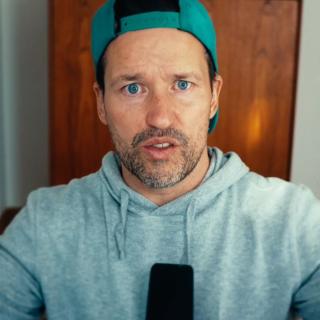
I'm used to just sort of being in this state with my hoodie up and mic just in front of my face and I get to sort of marinate in the information and just let it flow through me.
And so it's like,
Can I do that while I have a camera looking at me and I'm looking at it?
And well,
I guess we'll wait and see.
Yeah,
You know,
The reason I have to start,
Well,
The reason I wanted to start filming them is because I want to start just,
I want to continue to expand my comfort zone.
I've never done this before,
This specific thing before,
And I was uncomfortable about it.
And I made a rule years ago that I would always do the things that scare me,
The things that I know move me towards expansion.
And this will be much of the topic of today will actually be about commitment,
About the alchemy of commitment.
There's also going to be an episode coming up on the podcast that Kai and I had.
We did a presentation.
We did a joint session on the app Mind,
Which is M-I-N-E apostrophe D.
You want to check it out.
It's like the,
I founded it with my good buddy,
Aaron Albert,
And it's like live and on demand classes about everything you can imagine.
And Kai and I did a whole series on liberated love,
The whole idea of choosing to move towards what is uncomfortable,
What is uncertain,
What is unknown,
Right?
Like we don't like uncertainty as humans.
We don't.
It's we would rather cling to certainty,
Even if it causes us harm often,
Which is crazy to think about because it doesn't feel logical.
And that's because it's not logical.
It's emotional,
Right?
It's fear related.
And I've really thought a lot about like every moment that you step into or experience that you've never lived.
I mean,
You're creating a new experience.
You're if you take a different way to work,
You know,
This is like in the science of luck.
They talk about how they studied lucky people and then they studied unlucky people and they saw that lucky people just happen to do things differently.
And of course,
When you do a study like that,
You're like,
Hey,
Unlucky people.
I need to study you.
And they're like,
Yeah,
I can't wait to prove how unlucky I am.
Please,
Please choose me.
And they started to teach the unlucky people what lucky people do and their lives changed.
And it really is about looking at the world differently,
Right?
Like looking at it through a lens of optimism,
You know,
I always think which is not the negation or toxic positivity.
It's not the negation of the reality of life that it's hard and that we experience tough things.
It's just like can we frame our view in our mind?
And Barbara Fredrickson talks about this in her research on positive emotion.
Why did positive emotion evolve?
Because negative emotion,
Of course,
Makes sense because we're always like looking for the tiger.
And if you see the tiger,
You survive.
You run and all the rest of the people didn't see the tiger or not on Ancestry.
Com,
Right?
Like let's be honest.
So it evolved that we had this ability to look for what's wrong.
Now,
Why does it benefit us to see what's right or to be open?
And she has a theory called the broaden and build theory,
Which is ultimately positive emotion allowed us to open our minds to make more connections,
Right?
Like when you're in a rest and digest state and you've I'm sure you've heard the episode with Sarah Baldwin and Nicole Lowe's both of them are separate episodes on the nervous system.
They're incredible,
Right?
To be able to learn that when you get into this state of rest and digest,
You're able to look at the world and be open to new things and open to new connections and open to possibility.
It's kind of like imagine if you just woke up every morning and you started it by just believing that miracles exist.
I mean,
Miracles do happen all the time,
Right?
And there's a quote from Ram Dass that I always love that miracles are just a way of reminding us that we don't actually know how it works.
And man,
That creates uncertainty because then we got to breathe into shit like we don't actually know shit like we know some stuff,
But we don't know all the stuff.
So,
You know,
I wanted to talk about this subject of well for me that really was about leaning in to always being on the edge of who I am,
How I consume information,
How I dialogue.
I mean,
I got feedback from Kai because I,
You know,
I'd record videos and about things I'm passionate about about what's going on in the world.
And she's like,
Hey,
Like when you record those videos and you're passionate,
But you're dysregulated,
You'll just bring up dysregulation in other people like they won't be open to hearing what you're saying because your nervous system triggers theirs.
And I was like,
Shit,
That's so true.
And,
You know,
Just being open to all perspectives.
And I've shared this quote before that just I really continue to try to live and embody.
And that is when you draw a circle to exclude me,
I draw a bigger circle to include you.
It's such a beautiful thought,
Right?
It's such a beautiful thought to think I can disagree with someone,
But I still love them.
They're still in my circle.
You know,
There's no need to exile.
And we're not talking about like I'm not talking about things that like harm and violence and,
You know,
Racism and all that kind of stuff that should be.
You should not hang out with those peeps.
But from a compassionate space,
One can understand how one might get to those places.
It doesn't remember this.
There's this confusion that to be compassionate about something means to tolerate it.
That if I'm compassionate about something,
It means I'm saying tolerate that.
No,
Compassion and tolerance are completely different.
You can be compassionate and not tolerate the bullshit.
You can be compassionate about why your parents might have been the way they were and not tolerate the behavior.
You could be compassionate about why a narcissist might be the way they are,
But not tolerate their bullshit.
Right?
Like that is to be embodied as a human.
To be able to know you have your own back in that conversation.
To really look at the world through that lens of how do I be open?
You know,
How do I be open to all that life shows me?
Oh my God,
All the lessons and all the learnings.
And,
You know,
As Peter Krohn talked about that,
You know,
The people that are brought into your life,
The experiences,
They all are here to teach you where you're not free.
What a beautiful thing to learn.
Like where are you not liberated?
And so we're going to talk a bit about that in the context of relationship.
Because I think there's this idea,
Right,
That when you are committed,
You are trading your freedom.
And there's a reality to that.
Freedom to go,
Depending on the relational agreements,
Perhaps it's freedom to go mate with someone else or create another relationship with someone else or have emotional bonds with someone else.
You are literally choosing to forego those things for a monogamous relationship.
And if you're choosing to go into polyamorous relationship,
Perhaps you're foregoing other things that a monogamous relationship might provide.
Perhaps the more restricted or,
Restricted is probably the wrong word,
But that intimacy is focused on one.
And the argument could be made that then you can go deeper within that space.
Again,
No judgment on relational structure.
This is my own personal experience of relationship.
And whatever you choose that gets you deeper into your own soul,
Go choose that.
I want to read to you something that I wrote about commitment and the fear of commitment.
Because it was something that I definitely had in my life.
Not necessarily that I,
It presented as a fear of commitment,
But oh my God,
It was so much more.
And so I wrote about that here and I hope this helps put into words what possibly you have felt when you run from love that is good for you.
You're not afraid of commitment.
You're afraid of being hurt by someone you're committed to.
It's not that you don't believe you're worthy of an amazing partner.
It's that you don't trust love.
And in turn,
You don't trust that you'll know how to hold it.
That you'll hold on to yourself when you meet it.
Stand up for yourself to protect it.
Or walk away when love is no longer present.
The solution to this is that you have to learn how to be committed to yourself and your truth above everything else.
You have to learn how to have boundaries around your heart,
Your desires,
Your values.
You have to become a warrior who has your own back always.
In all ways.
When we know that we won't sell ourselves out in the face of anything,
All of a sudden everything becomes possible.
You must love yourself unconditionally above all else to be able to share love with another.
It is this trust in yourself that will allow you to trust love.
Because ultimately love is who you are,
Not what you seek.
And I wrote that experience of being afraid of commitment.
And I want to share this.
I remember when I was afraid to get engaged when I was in my 20s.
Someone told me that I was just afraid of commitment.
That as a man,
That was just normal.
I wasn't supposed to run towards love,
But rather just surrender.
As if it was some sort of life sentence I would need to learn to tolerate.
All of that couldn't have been more wrong.
I wasn't afraid of commitment.
I was afraid that love would hurt me.
I didn't trust love,
And I didn't trust myself with holding it.
I didn't.
You know,
The story that I had was that when I move close to people they hurt me.
That when I love people they betray me.
That when I love people I betray myself.
That when I let people love me,
They take advantage of me.
You know,
And I think this so often presents,
You know,
There's this idea that especially for men,
That they're just afraid of commitment.
As opposed to,
Like,
We certainly present more likely as being avoidant.
That's true.
Like,
The way we handle attachment injuries is we usually become more avoidant.
And that's likely due to a lot of socialization.
That we just don't have a large capacity to hold our feelings because we're not socialized to hold feelings.
Other than perhaps aggression and happiness,
Or moderate amount of joy.
But not sadness,
Not grief,
Because those are associated with weakness in the masculine.
You know,
And often this experience of being afraid of commitment.
Like,
This to me,
I used to think about this,
And you've probably heard me say this.
I used to think about it as when we want to be in a great relationship and we can't receive it,
Or we run from it.
There is an aspect that I thought it was all about that we just don't believe we're worthy of it.
And so the contrast of someone actually wanting to love us is too big for us.
So we,
It presents as I'm afraid of commitment.
But really what's going on is I'm afraid that you might love me because I don't believe I don't love me.
So in order to let you love me,
That has to melt away.
That has to die.
There has to be a part of me that believes I'm lovable.
And I always did really sort of romantic,
You know,
Treasure hunts and stuff like that.
Like,
I really am a sort of access service is one of my main love languages.
And I remember a partner I had.
You know,
There's this idea,
Just before I get into that,
There's this idea that we often,
The way we like to receive love is the way we try to love our partner.
You know,
I've heard people be like,
You know,
Like,
I just don't feel like you love me.
Like you never get me gifts.
Right.
And gifts is your love language.
It's like I get you gifts all the time.
And it's like,
It's like we're like getting them gifts.
So they'll just notice so they can do it back to us when their love language might be quality time or physical touch or whatever it might be.
So it's really fascinating that we try to like over do our own love language.
There's hoping they'll notice instead of being like,
Hey,
My love language is gift.
It's really helpful.
My lowest one is this.
So when you do that all the time,
I don't feel as loved.
But if you did this,
I would feel loved.
You know,
And that's I see that all the time in relationship where people are just missing each other because one saying I don't feel loved.
And they're like,
You know,
You don't you don't hold my hand.
And it's like,
Well,
I pick you up all the time from work and I love taking you for dinner.
And it's like,
I just want to hear it.
Maybe it's just words they want to hear.
So it's important that we learn to understand those things about our partners and ourselves.
So getting back to the story,
I remember sitting with a woman I was dating and she had done this treasure hunt.
Like there was a map and instructions and all these things.
And I remember just sitting there after it occurred.
And I had not experienced that in years.
Like one,
I didn't have the language to say this is my love language.
And I hadn't said that to her.
She just happened to happen to be hers.
And so I had experienced this and I remember having this part of me sort of have to melt away.
This part of me that felt really unlovable.
I was emotional in that moment.
And I hadn't really I hadn't really I had definitely had partners who had tried,
But I don't think I had been ready.
And so it was like one of the first moments that I had received it fully and let it sort of,
You know,
In the words of Francis Weller,
I let it sort of cook me.
I let it be absorbed.
And I felt this emotional space because I hadn't let myself be loved in quite a long time.
And then in turn,
A belief had to form like I am lovable.
I am a good man.
And I can trust myself.
And I can trust others.
And what I've learned over time is that ultimately what matters most is can you trust yourself when you face love?
Can you trust yourself when when you're facing bumping up against your boundaries or someone is bumping up against yours or you're bumping up against yours,
Whatever it might be?
Can you stand in your sovereignty and in your power?
You know,
As I said,
It's like we don't trust.
We don't trust that we'll know how to hold it,
That you'll hold on to yourself when you meet it.
Stand up for yourself to protect it or walk away when love is no longer present.
Think about that.
That's all the things.
Right.
It's like.
We lose ourselves like we forget what we need,
What we want.
Often people don't even know that their relationships are centered around the other person's needs,
The other person's wants,
You know,
And that we'll stand up for ourselves.
We'll stand up for ourselves to protect it.
Well,
The sanctity of love,
The sacredness of it that lives between me and my partner.
I mean,
That's everything.
But to honor it,
I have to have good boundaries around myself.
Like I'm not actually honoring the sacred connection between us if I'm actually not honoring myself.
That is dishonoring myself means I'm dishonoring the connection.
You know that that if I consider it sacred with them,
Why don't I consider it sacred with me?
And we see that breakdown,
That breakdown of like,
I love you so much and I would give anything and you complete me and I'm nothing without,
You know,
All this language that ultimately says like this relationship is my everything.
But your relationship can't be your everything,
Because if you lose it,
Then you have nothing.
Right?
Like if my relationship is where I source my worth,
Then if you leave,
I no longer have worth.
And so I will cling to you.
I won't tell you the truth.
I won't be honest because I'll be afraid that if I do this,
Even if I present myself as all that I am,
If that puts the relationship at risk,
Then we likely won't present ourselves fully.
And you know this,
It's so interesting to me that relationships should be this place where we become all of ourselves.
And they are often the place where we turn down the volume on who we are,
Which is really kind of crazy to think about,
Isn't it?
Like it should be the place that we become most liberated,
That we discover things that our partner should,
We and our partner should always be inviting each other towards our greatest expansion.
I've said before that like when I get feedback from my partner,
It doesn't mean I'm excited about the feedback.
Like often I get feedback and I'm like,
Ugh,
Or I don't want to hear it in that moment or maybe whatever it might be.
But hearing a truth that says to you,
You can be better can be absorbed from a space of self-worth that says they're actually putting a deposit in my expansion.
And this,
By the way,
I am not saying this,
This is not true of abusive narcissistic relationships,
Either of those,
Not true.
In highly critical relationships,
That's not true.
Because criticism can be used as a form of control.
So if I'm getting feedback from my partner,
One is how is the feedback being shaped?
Criticism is using words like you always,
You never,
We never like to give them a chance,
Right,
To have never done that.
Like you always do that and you're like,
What about last week?
And you're like,
Shit,
My argument fell apart,
Fuck.
But that criticism,
How we structure the feedback is important because what normally happens is criticism dances with defensiveness or stonewalling.
Defensiveness,
If I hear like,
You're late all the time,
I want to,
I might be like,
Oh,
You want to talk about late?
Let's talk about when you did this,
This,
This,
And this,
Right?
Defensiveness reacts and pushes away and tries to put it back on the other person,
The focus on the other person.
Stonewalling is this withdrawing,
Right?
It's very much we're talking about this fear of commitment.
It's this withdrawing ourselves from the pain of the truth,
Right?
And we're talking about not abusive feedback,
But like literally good feedback that says,
Hey,
Like I felt like you could have shown up differently.
I felt like you could have been more tender there.
I felt like you dismissed when you did this,
You know?
And being able to structure our language in a way so we can take responsibility for our side of the dance.
So we have this,
The feedback has to be delivered in this very loving way.
It doesn't,
You know,
It can be direct,
Which is different because directness can be loving,
Right?
And so it could say like,
Hey,
In my experience when this occurred,
This is how I felt and this was the impact on me,
Right?
Do you hear that?
There's no,
It's saying in my experience,
Which means it's mine.
So now I have like less space for your experience.
When this occurred,
I'm talking about the event,
Not you as a person.
Here's what the impact was on me.
I'm sharing what that was.
The proper response,
Of course,
Before being defensive,
Because I am a recovering defender.
My previous response was to push that away because I didn't have the self-worth and the openness to hold it.
I didn't,
I saw criticism or feedback,
Meaning I wasn't enough.
Just validating that belief,
That feeling.
It took so much,
Just like sitting in a space a little longer.
And I remember the antidote to defensiveness is to say,
I can see some truth in what you're saying.
Oh man,
That is,
That's like eating your own goddamn shoe,
Let me tell you.
Because it's hard because you got,
You're absorbing it.
But what's so beautiful in the relationship when you do that,
Is that maybe for the first time,
You're actually beyond a place in a relationship that you've never been.
Like you've never been in a conversation where you receive the feedback and actually let it sit with you and acknowledged and validated your partner's or friend's or boss's experience.
And now you're deepening intimacy.
Now you're deepening connection.
This is very similar to being afraid of commitment.
If I start to build trust in myself that I can hold this feedback,
I'm also starting to build knowledge of myself.
Like I remember I said,
It is the trust in yourself that will allow you to trust love.
Right?
Because ultimately love is who you are,
Not what you seek.
If I can begin or continue to deepen my relationship with myself and the love I have for myself,
And get to know myself,
Not just self-love like bubble baths and shit,
Which is super great.
Not negating those things.
Those are fucking awesome.
Who doesn't love a good bubble bath?
But that I actually have reverence for myself,
Admiration for myself.
As I said,
That it is sacred.
The relationship with myself is sacred.
If that was true,
Then I would be very particular about the language I use about myself.
The language I use about others,
I would soften into myself.
I would learn how to treat myself with respect.
And the more you deepen that relationship with self,
That softness,
Which really involves telling the truth about who you are.
Right?
Like very few people can actually sit down and do an accurate audit on how they can't show up.
And this is such an important question.
If you want to be good at any relationship and just life in general,
Can you hear feedback and notice that it is the gateway to the most expanded version of you?
Like literally feedback is inviting you to become the best possible version of yourself because someone has shone a light on a thing that you can't see on your own.
And granted,
We can look at all of our relational experiences and say,
I am the common denominator in all of them.
In all of them.
In all my relational outcomes.
And listen,
Like anyone you're in a relationship with,
You chose to be in a relationship with.
And that's important to acknowledge because then you realize you're in choice.
So if you're in choice and you want to build deep,
Connective relationships,
What do you got to get better at?
What do you got to change?
And you know,
For the person who runs,
Right?
Like for the person,
We're going to be afraid of commitment till we learn how to trust ourselves around love and intimacy and closeness.
But we won't be able to do that by maintaining ourselves as an island our whole lives.
Right?
Like if I keep running from love and closeness and intimacy,
How will I ever see that I can trust myself in the face of it?
Right?
But this idea,
Remember the whole underlying narrative that fucks it all up is that if I lose you,
I am not validated as being worth anything.
If this relationship doesn't work out,
Then I'm not good.
I'm not enough.
Oh my God,
Your relational outcomes have nothing to do with your self-worth.
They might have to do with the behaviors you show up with,
But they have nothing to do with who you are as a human.
You can control the quality of your own self on your own.
Your relationships will give you feedback about how you're showing up.
And if you cheated and lied and blew something up,
That's good feedback.
You should feel that.
That's healthy to feel that,
To feel like I could have been better.
I could upgrade my values and my integrity.
Running from that,
Drinking that away or banging that away,
None of that's going to get you through it.
It's just going to be a band-aid.
You can't Instagram your way out of that.
You have to go into it.
You have to go into it and understand it so it can change you,
So it can cook you,
So it can transform you.
It's not dissimilar to the caterpillars.
It's always hard to pick on caterpillars,
Right?
Because they're beautiful too.
We just call the butterfly beautiful,
But they're beautiful.
They're walking around all sluggy.
Some of them have horns and shit.
They're pretty unique.
But as it's transforming,
Maybe it gets some feedback.
Like,
Hey,
Did you know you could have wings?
I don't know what the fuck happens.
But imagine,
It's able to realize that there's something else that's possible,
Which is just as beautiful as what was.
That's the compassion we have to have for where the behaviors came from.
If you're someone who's lied or cheated or sabotaged or whatever,
Which,
Welcome to being a fucking human,
You only got that way in order to survive.
So you have to have compassion for where it came from so that you don't reject it.
Because if you reject it,
Then you can't learn from it.
You're doing exactly what people do in communities.
It's like,
Someone fucks up,
Gets pregnant before they're quote-unquote supposed to.
That's a whole can of worms.
But like in a religion,
And so the religion kicks them out.
Or the family kicks them out.
Or the culture kicks them out.
That's such bullshit.
And that has been modeled for us.
Look at cancel culture.
Look at what we do with any opposing opinion right now.
We cancel it.
We shame it.
We have created,
You know,
Identity politics is essentially that.
And we all do that within ourselves.
We've been modeled to cancel parts of ourselves,
Parts of ourselves that we're ashamed of.
When really we should be inviting them back in to sit down with us and teach us.
Much like we should invite back people into our communities.
That's what initiated communities do,
Is they say,
Teach us.
Teach us.
Like if someone goes out into life and gets divorced,
Oh my god,
Do you imagine what we can learn from them?
Rather than saying you're a failure because your relationship ended,
Imagine if we said you are now more wise.
Like you're now actually become,
You're stepping more into elderhood.
Sit down with us.
Teach us.
How did that happen?
What did you learn?
Like imagine if we approach not just other people,
But the parts of ourselves,
Which are really just internalized forms of exile and belonging,
That are modeled for us outside of us.
And of course the reclamation occurs when we start to do it first,
Because when I welcome all the parts of myself back,
Then I can do that within my family and do it for other people.
I can model the behavior that says,
There's nothing to be ashamed of.
This is life.
We make mistakes.
Now teach.
Tell me what you've learned.
You're still lovable.
Like that's so powerful.
It's so powerful to say that love is not conditional on this.
All right.
Okay.
We got one more.
A couple more.
So I wrote another post about commitment.
Being committed in a relationship isn't about staying together.
It's about thriving together.
It's about being committed to becoming the best possible human we can not just be for ourselves,
But also to honor the sacredness of the relationship that we are committed to.
So you see commitment to the relationship is about commitment to self.
You can't be committed to a relationship unless you are committed to yourself,
Because you essentially can't give what you don't know how to touch or be.
Right?
So I wrote,
If you think being committed to your partner means that you have to stay together forever,
Then your relationship is a prison and it will demand that you stay small to accommodate how small your commitment is.
A lot of us observe relationships and think the ultimate achievement of commitment is that you have to stay together with someone forever,
No matter what.
That's not commitment.
That's martyrdom.
That's low relational standards.
That's a recipe for depression and likely many inflammatory related health challenges.
When you see your relationship as a place you have to be rather than a place you choose to be,
You will resent both your partner and your relationship.
Relationships are a choice.
As I said earlier,
If you are in a relationship,
You are choosing to be there.
Our relationships are the most potent vehicle for transformation.
Even the ones that keep us small and make us feel trapped are informing us of how big we and our love actually are.
Relationships can send your soul into a rocket,
Straight to the highest possible expression of who you are,
If you accept the invitation.
When you commit to your partner,
You're committing to yourself first.
You're saying,
I'm going to use this relationship as a mirror to how I'm received by the world and to be informed about what I still need to heal.
I would love to walk alongside you,
My partner,
As you heal your stuff and I heal mine.
And we create a love that liberates us from the confines of our wounds and our conditioning.
This is delicious love and this is why we are here.
Hmm.
Let that sink in.
You know,
I really,
I remember when I first wrote this part.
If you think being committed to your partner means that you have to stay together forever,
Then your relationship is a prison and it will demand that you stay small to accommodate how small your commitment is.
There's such a truth in that,
You know,
Because I wrote it from my own previous life experiences to say,
If that's all you're in relationship for,
Which you're welcome to,
It's not a judgment.
It is certainly not a judgment.
Listen,
I learned years ago,
Decade,
Over a decade ago,
That some people don't want great love.
They don't.
And they're welcome to that.
Some people don't want deep intimacy and connection and to talk and to communicate and to grow.
Some people don't want to grow.
They don't even want feedback.
And that's OK.
Right.
Like like everything,
It is not worth your time forcing your ideologies upon people or your views or what you want from life and trying to get them in line with you when they just don't line up.
Right.
Like in the previous one,
I said that you'll walk away when the love is no longer present.
You don't trust that.
And because we have created this idea that being together forever is the ultimate achievement,
Then anything that threatens that again,
We turn down the volume on because the judgment is why did your relationship end as opposed to,
Holy shit,
That's incredible that you keep expanding and you invited your relationship to expand with you.
You gave them a choice and they chose not to.
And then they get mad you left,
Even though you literally said,
Do you want to do this?
And they're like,
Nah,
Or no,
I don't want to go to therapy or I don't want to do this or I don't want to.
I'm just going to.
Oh,
Yeah,
I'll change.
And then they don't change shit.
Or maybe that's you.
But as I said,
You know,
It's a.
As I said,
It's even the ones that keep us small and make us feel trapped are informing us of how big we and our love actually are.
If you feel confined,
It means you need to expand.
There's a more expanded version of you.
If you feel heavy,
Anxious,
Depressed,
What is being invited from you?
What are you suppressing?
What edge are you not going to?
I was listening to Carolyn Mase this last week,
Her audible version of Anatomy of the Spirit,
Which is a workshop.
It's incredible.
And in it,
She said,
Every couple of years we get invited to the mystery.
Who are you?
What do you want?
This like destabilizing space right where we don't know what we stand for.
The reality of the world,
Which I think for a lot of us has been melted and in what we knew to be true,
Collapsing and all of this.
And it's like,
Will you go into the mystery?
Will you accept the invitation that that life and love provides?
What is in the mystery of the conversations you've never had or the edges you've never been to?
I mean,
That is the juiciness of life.
That is everything.
And will you accept the invitation?
And when you invite another,
Will you not see that love is in the inviting,
Not in the accepting of the invitation?
Like if they don't want to do it,
That doesn't mean love's no longer present or that you're not enough.
The asking of the question or the inviting,
Which you don't even have to do because sometimes walking away without the invite because it's toxic or whatever it is,
That's sometimes the thing to do too.
It's not for me to tell you.
It's for you to know.
Like you are so much wiser than you think.
And if you're asking everyone else for advice on your life,
Know that you are the authority of your life.
We are all learning discernment.
The more you love yourself,
The more you learn to stand in your power,
The more you can turn towards commitment and trust yourself.
Whatever that is,
Commitment to your thoughts,
Your beliefs,
Your opinions,
Just allow yourself to always be learning.
But discernment comes from a solid sense of self.
When someone says,
You're this,
If we're discerning,
If we're in our bodies,
If we are adulting,
Which,
Fuck,
That's hard,
Let's be honest,
We can say whether what they're saying to us is true or not.
And we can sense our bodies.
Which I said,
Like the antidote to defensiveness is saying,
I can see some truth in what you're saying.
But if you can't,
You can say,
That doesn't feel true for me.
But that doesn't mean it's not true for you.
So let's explore that.
What am I missing?
Or are we not figuring out what maybe you actually mean to say?
Is there another emotion under that?
Is there another experience under that?
I mean,
This is what it means to be human.
We cancel each other because we can't,
Which means we've canceled nuance,
Which don't get me wrong.
Holding people accountable and ideologies that are about intolerance should be not tolerated.
Right?
But what we've ultimately has led to as sort of like a viral experience of that ideology is that it's canceled nuance.
And it's canceled nuance within ourselves.
And that is a beautiful thing to learn,
How to go into all the complexities and the oppositional views you have within you and can you hold them?
Can you hold them with your partner?
Can you both have experiences of the same thing and still love one another and recognize that both experiences are true?
And the real bridge to intimacy is connecting that truth and saying,
Tell me about you,
Tell me about me,
You know,
Like that ability for the sacredness of the relationship to hold two entities.
Right?
There's this beautiful quote from Rilke that,
Oh my God,
It just speaks to this so well.
Love consists in this,
That two solitudes protect and touch and greet each other.
What we call fate does not come into us from the outside,
But emerges from us.
I hold this to be the highest task for a bond between two people that each protects the solitude of the other.
That each protects the solitude of the other.
That love is actually about celebrating the individuation and,
And,
And the expansion of your partner,
Because in doing that,
You're actually expanding the container of the love and the connection and also yourself.
Like turning down their torch because you're afraid of their bigness just keeps the relationship small and it keeps you small.
Often when our partners grow,
When we're not,
It reminds us that we're not.
When our partners get adventurous and excited about something,
It might remind us that we are not doing that.
When our partners start to get into a fitness regimen or go about their health or start to spend more time with their buddies or their girlfriends or whatever it might be,
Their people,
It's like when we're,
When we get triggered by those things,
It often is because we haven't individuated or,
Or invested in ourselves.
Right?
That we haven't done the thing that they're showing.
And that's so beautiful to say,
Like when you do that,
It's when that's happened,
When you've started to do this more,
It's made me feel uncomfortable.
It's made me feel afraid you're growing away from me.
Right?
And it could mean that you don't feel prioritized or valued in a relationship.
Again,
A beautiful invitation to a conversation.
So I'm going to end with this.
Kylie and I got engaged in September and the experience for me was so beautiful.
And I wrote this just to express how I felt about it because a lot of people were saying to me that,
Oh,
You guys have deepened your commitment.
A lot of people think of getting engaged or married as a deepening of a commitment.
And while that may be true,
I see marriage as a celebration of the sacredness of the union and commitment that already exists.
I did not become more committed to my partner on the day we got engaged.
I was already committed the day we entered a relationship.
Marriage is the celebration of the sacredness of the union.
Make it sacred,
Then celebrate.
And you don't have to get married to do that.
Just make it sacred and then celebrate in whatever you want.
But the celebration itself will not make it sacred.
It's just the celebration of what already is.
So with all that said,
Accept the invitation to the mystery.
Go to the edge of what you know to be true.
Have the conversations that will expand you.
Learn things and tools that you need to expand how you relate.
Learn how to trust yourself.
Build deep,
Loving relationships with yourself.
Have reverence for yourself.
And if you want the relationship to be sacred that you share with anyone and everyone,
Then you must have a sacred relationship with you.
You will not find sacredness in love.
You will bring it to love.
Much love to you.
Have a beautiful week and a beautiful day.