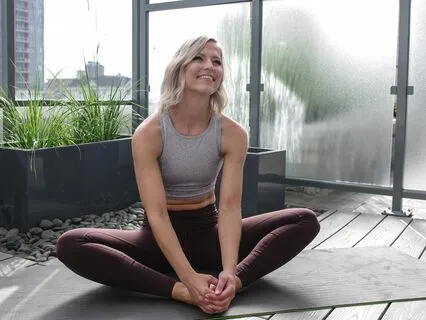
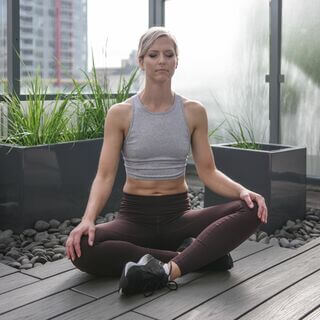
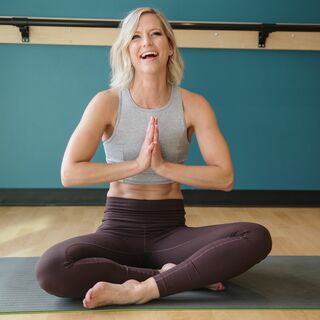
I'm going to invite you to take a comfortable seat.
You can do this in a chair with your back upright,
Your feet planted on the floor,
Your hands resting comfortably in your lap,
Or if it feels more comfortable for you or if you're used to the posture,
You can sit cross-legged on your couch or a meditation cushion,
Even on your bed.
And if you just don't have the energy to sit upright today,
That's okay too.
Please feel welcome to lay down on your bed,
On the couch,
On the floor,
Whatever feels comfortable for you,
Preferably with a pillow underneath your head,
Maybe a blanket covering you so that you can rest and simply listen and receive the guidance I'm about to share with you.
And once you find a comfortable seat,
Or once you lay down,
I invite you to close your eyes if that's comfortable.
And we're going to take a moment to just tune into our bodies.
So with a quick scan from your head to your toes,
Just noticing how your body is feeling in this moment.
You might notice some tension in your forehead,
Some tightness or clenching in your jaw.
Perhaps some holding in your shoulders.
We tend to hold most of our tension in our face,
Shoulders,
And hips.
And so if you can notice where you're holding or squeezing and just breathe into that space,
Letting go of that tension.
Moving down your body into your belly and just noticing your breath and how it moves your body.
Noticing your belly expand on the inhale as your diaphragm drops and contract on the exhale.
Really trying,
If you notice that you're breathing mostly into your upper chest,
Which is breathing that most of us do on a regular basis,
Especially during the day,
Without noticing,
If you can guide that expansion into your belly.
And what that does when we expand our belly and drop our diaphragm down is that it activates our parasympathetic nervous system,
Which puts us into that rest and digest phase away from fight or flight so that our heart rate drops,
Our breathing slows,
And hopefully our mind slows at the same time as well.
So taking a few deep breaths in here,
Once again,
Focusing on that belly expansion,
And then seeing if you can lengthen your exhales.
And if it feels good to sigh on the exhale,
Then do so.
Sighing is a very natural human tendency,
Especially during periods of stress and overwhelm,
Again,
Because it's a parasympathetic nervous system activator.
We see our pets sigh all the time after a busy day or a heated interaction,
And that is an intuitive response in that moment for them.
Once again,
Lengthening the exhales also activates that parasympathetic nervous system.
So if you can,
Breathing in for four seconds,
And then out for at least four,
If not six seconds.
A few more breaths.
Exhale.
One more time together now.
Inhale.
And exhale.
Now I'm going to invite you to just notice the rest of your body down to your toes.
If you've got any clenching or holding in your hips or in your legs,
Your calves,
Your feet,
Your toes,
See if you can just let that tightness,
That holding go.
Just relax your body as much as you possibly can,
Taking another scan again from your head down to your toes and just almost imagining just a wave of relaxation watching over you.
And then we're gonna move into a bit of visualization here,
And I'm gonna ask you if it feels comfortable to recall a situation where you made a mistake.
Now,
I can think of many times in my career that I've made mistakes.
One in particular was during my residency training where a mistake that I made resulted in the death of a patient.
And that mistake is very fresh in my mind.
I think it will always be that way.
And I invite you to recall a similar mistake.
Maybe it was something that happened recently,
Or maybe this was months or even years before.
See if you can recall the images that come to mind when you think about that mistake that you made.
Maybe you can see the patient that was affected.
Maybe you can visualize the face of the client when you shared the news with them,
Or your team member when you talked to them about what happened.
Thinking about how you reacted to that mistake,
Maybe there was tears,
Sadness,
Regret,
Guilt.
At this point in time,
Just recalling those images and then noticing what thoughts come up for you when you think about that mistake.
Maybe immediately you hear yourself saying,
You know,
I can't believe you did that.
How did that happen?
How did you let that happen?
What were you thinking?
So often during these situations of difficulty,
We are so hard on ourselves in the way that we speak to ourselves.
Or we have thoughts that come up around shame.
You know,
I'm a bad veterinarian.
I'm wrong.
I'm not good enough.
And as you notice those thoughts that are coming up for you,
Try to also notice how it feels in your body.
Where do you feel that mistake?
For some of you,
It might be a burning in your cheeks or in your face.
It might be a clenching or a turning of your stomach or a tightness in your chest.
Think about that mistake and all the images and thoughts that go with it and feel it in your body and sit with that feeling for just a moment.
And then tuning into that emotional experience,
What are you feeling in terms of your emotions?
There may be sadness,
There may be that guilt,
Or there might even be that shame that I mentioned earlier.
Maybe for some of you,
There's relief because although you made a mistake,
The patient didn't die or the harm was very minimal.
Notice those emotions that you experience just thinking about this mistake that happened before.
And as we bring to mind these thoughts,
These feelings,
These emotions that come up when we think about this mistake,
This is where self-compassion can be so powerful for us.
So remember that self-compassion is a practice of being kind to yourself while mindfully tuning in to how that experience feels in your body and while recognizing that you are not alone in your experience.
And we know based on research among veterinarians,
Among physicians and other healthcare providers that this practice of self-compassion increases resilience or the ability to bounce back after these horribly trying and stressful circumstances that involve mistakes.
So I'm gonna invite you to practice self-compassion in this moment by placing your hands on your heart if that feels comfortable for you,
And then repeating to yourself either inside of your mind or maybe moving your lips to mimic the words,
Saying to yourself,
This sucks or this hurts as you tune in to those thoughts and feelings and emotions that come up for you.
And then repeating to yourself,
I'm not alone.
We all make mistakes.
And then with your hands on your heart,
Saying to yourself,
May I forgive myself.
May I accept myself just as I am.
And let's do that one more time,
Saying to yourself as you bring to mind this mistake that you made,
This hurts,
This sucks.
This sucks,
I'm not alone,
We all make mistakes.
May I forgive myself,
May I accept myself just as I am.
Remember that at the end of the day,
Every one of us in this profession is doing the best that we can with the time and resources that we have available to us.
That's all that you can ask of yourself in these difficult times.
And so taking a moment to just notice where those words have landed in you,
Tuning back into those physical sensations,
Those thoughts,
Those emotions,
And just noticing if anything has changed.
And tuning back into your breath,
Noticing the sensation of that breath moving in and out of your nose,
Filling your body with air,
And then leaving and letting your body exhale.
And know that you can come back to this meditation at any time,
For any reason.
If you are going through something difficult,
If you've made a mistake,
Perhaps not even at work,
Perhaps with a relationship,
Or in a parenting moment,
Self-compassion has the power to allow you to bounce back from those situations so much more quickly than if you beat yourself up over that.
So inviting movement back into your body by gently wiggling your fingers and toes,
Perhaps stretching your arms overhead,
Slowly opening your eyes.
Remember that at the end of the day,
You are doing the best you can with the time and resources available to you,
And that you are not alone in how you feel.
Have a wonderful rest of your day.