Welcome to this sitting meditation,
With a breath as primary object of focus.
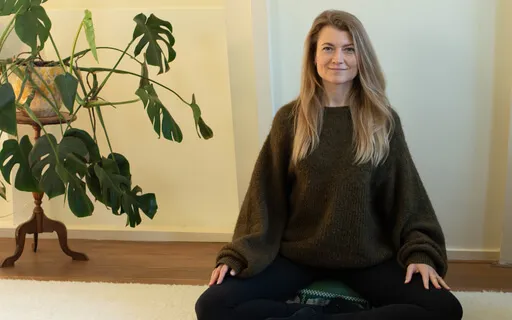
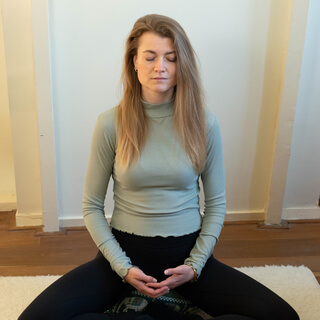
Come into a comfortable seated position,
In which you can find stillness for the duration of the meditation.
If you feel the need to make any adjustments,
Taking the time to do so.
And then close the eyes.
Whether you're sitting on a chair or a cushion,
Adopting an upright posture,
Lengthening the spine and neck,
Head balanced over shoulders,
Shoulders over hips.
See if you can relax any muscles that you don't need right now.
Relaxing the muscles in the face,
The eyes,
The jaws,
Relaxing the shoulders,
The belly,
The hips,
The legs and the feet.
See if you can find this relaxed,
Yet still wakeful and upright position with a long tall spine.
Now take a moment to arrive in this meditation.
Take a moment to notice what is here now.
Noticing the thoughts that are on your mind.
What kind of thoughts are there?
Observing your emotional state,
Which emotions are present.
Without judgement,
Liking or disliking.
Just noticing.
And then bringing your awareness to the body.
Noticing any sensations in the body.
Noticing how the body feels.
And from there gently bringing your awareness to the breath.
To the rising and falling of the belly and the chest.
On the inhale you notice the belly rising,
The chest rising.
Then on the exhale you notice the chest falling and the belly softly drawing in.
Following the rhythm of the breath by the belly and the chest.
Without needing to change the breath,
Just allowing the breath to be in its natural state.
Whether it's shallow or deep,
Long or short.
Allowing it to be.
Following the rhythm of the breath by the belly and the chest.
And maybe you can also notice the breath by the shoulders,
The neck or the throat.
And at the tip of the nose.
See if you can follow the whole cycle of breath.
The air moving in through the nose,
Through the windpipe.
Expanding the lungs,
The belly.
And on the exhale moving out of the body again.
Following the whole cycle of breath.
And when you notice your mind has wandered off into thinking,
Just gently yet firmly guiding your awareness back to the breath.
Noticing the pause at the end of the inhale and at the end of the exhale.
Without needing to change the breath.
Just observing the pause at the end of the inhale and at the end of the exhale.
Also noticing if there are any muscles that have retenced again.
Checking the muscles in the face or any other muscles.
Also noticing if the spine is still upright.
And from there,
Bring your awareness to the points in the body where you feel the breath the most.
Just taking a moment to notice where in the body do you feel the sensations of breathing the most.
And then bringing your attention there,
Following the rhythm of the breath in that point.
Breathing and exhaling.
And every time you notice the mind has wandered off into thinking,
You just notice and gently yet firmly bring your awareness back to the breath to the part in the body where you feel the breath most vivid.
Holding your attention there as best as you can.
Allowing the breath to form an anchor to bring you back to the present moment.
Breathing and exhaling.
And where is the attention now?
If you notice your mind went off into thinking about the past or future event,
Worrying,
Rehearsing,
Planning,
Solving,
And just noticing this and gently yet decisively bringing your awareness back to the breath to the point in the body where you feel the breath the most.
Following the breath moving in and out of the body.
A breath rolls in.
And when your mind keeps wandering into thought,
You may also choose to label the thought,
Saying to yourself,
Thinking,
Thinking,
And then gently returning back to the breath.
Or more specifically,
Work,
Relationship,
To-do list.
Making sure you choose a label that is simple,
In order to avoid thinking about the labeling.
So just choosing a general overarching category,
Such as work,
And then labeling the thought,
Imagining filing it and putting it away,
Storing it,
Leaving it behind for this moment.
And thereafter,
Gently returning back to the breath,
In a point in the body where you feel it most,
Holding your attention there.
The breath necessarily has to be Cab Ketant.
.
When you notice a certain sensation in the body that keeps grabbing your attention,
A bodily sensation that is strongly at the forefront,
Such as pressure,
Tension,
Pain,
Tingling,
You may also choose to bring your awareness towards this sensation,
Observing the sensation with investigative curiosity.
Where does the sensation start?
Where does it end?
Really exploring,
Surrounding the sensation with attention.
Is it constant?
Does it change?
What kind of shape does the sensation have?
And when you feel you've explored this sensation enough,
Letting go of the focus on the sensation and gently guiding your awareness back to the breath,
To the point in the body where you feel it most,
Your anchor.
Now if this sensation is one that asks for a reaction,
Such as an itch or a sleeping body part,
Also here you're invited to first explore the sensation and from there,
From awareness,
Choosing how to respond to this,
Whether you want to react to it or whether you can return back to the breath after you've observed it.
Knowing that the intention is to sit as still as possible for the duration of the meditation,
But also that when your body asks for it,
Or when there is any pain or sleeping body part,
That you can observe this and from awareness make any adjustments,
Always taking care of yourself in your body.
Always creating space between the impulse,
The reaction and the action.
Now bring your awareness back to the breath,
Continuing to follow the breath moving in and out of the body at the point where you feel it most vivid,
Holding your attention steady there.
And if you notice the mind has wandered off into thinking,
See if you can recognize the entire cycle of awareness,
Starting with your focus on the breath,
Being distracted and then coming back again,
Recognizing that flicker of attention,
That moment you realize you've gone somewhere else and that you can choose to bring yourself back to the present moment.
At that moment see if it's possible to invite in this attitude of celebration,
Instead of judging,
Disliking or frustration,
Celebrating that you've noticed that your mind wandered and that you can bring your attention back,
Seeing this moment rather as an opportunity,
An opportunity to come back to present moment awareness and train the mind.
Now bring your attention back to your anchor and hold your attention there as best as you can,
Following the rhythm of the breath until you hear the sound of the bell bringing this meditation to a close.
12