Hello,
It's Mandy here again.
Welcome back to The Enchanted April by Elizabeth von Arnim.
You're going to be hearing chapter 13 tonight,
But before I go ahead,
Please feel free and make yourself really comfortable settling down into whatever surface you happen to be sitting or lying on,
And I'll begin.
Chapter 13.
The uneventful days,
Only outwardly uneventful,
Slipped by in floods of sunshine,
And the servants watching the four ladies came to the conclusion that there was very little life in them.
To the servants,
San Salvatore seemed to be asleep.
No one came to tea,
Nor did the ladies go anywhere to tea.
Other tenants,
In other springs,
Had been far more active.
There had been stir and enterprise,
The boat had been used,
Excursions had been made,
Beppo's fly was ordered,
People from Metzago came over and spent the day,
The house rang with voices,
Even sometimes champagne was drunk.
Life was varied,
Life was interesting.
But this,
What was this?
The servants were not even scolded,
They were left completely to themselves.
They yawned.
Perplexing,
Too,
Was the entire absence of gentlemen.
How could gentlemen keep away from so much beauty?
For,
Added up,
And even after the subtraction of the old one,
The three younger ladies produced a formidable total of that which gentlemen usually sought.
Also,
The evident desire of each lady to spend long hours separated from the other ladies puzzled the servants.
The result was a deathly stillness in the house,
Except at mealtimes.
It might have been as empty as it had been all the winter,
For any sounds of life there were.
The old lady sat in her room alone,
The dark-eyed lady wandered off alone,
Loitering,
So Domenico told them,
Who sometimes came across her in the course of his duties,
Incomprehensibly among the rocks.
The very beautiful fair lady lay in her low chair in the top garden alone.
The less but still beautiful fair lady went up the hills and stayed up them for hours,
Alone,
And every day the sun blazed slowly round the house and disappeared at evening into the sea,
And nothing at all had happened.
The servants yawned some more.
Yet,
The four visitors,
While their bodies sat,
That was Mrs Fisher's,
Or lay,
That was Lady Caroline's,
Or loitered,
That was Mrs Arbuthnot's,
Or went in solitude up into the hills,
That was Mrs Wilkins's,
Were anything but torpid,
Really.
Their minds were unusually busy.
Even at night their minds were busy,
And the dreams they had were clear,
Thin,
Quick things,
Entirely different from the heavy dreams of home.
There was that in the atmosphere of San Salvatore which produced active-mindedness in all except the natives.
They,
As before,
Whatever the beauty around them,
Whatever the prodigal seasons did,
Remained immune from thoughts other than those they were accustomed to.
All their lives they had seen,
Year by year,
The amazing recurrent spectacle of April in the gardens,
And custom had made it invisible to them.
They were as blind to it,
As unconscious of it,
As Domenico's dog asleep in the sun.
The visitors couldn't be blind to it.
It was too arresting after London in a particularly wet and gloomy March.
Suddenly,
To be transported to that place where the air was so still that it held its breath,
Where the light was so golden that the most ordinary things were transfigured,
To be transported into that delicate warmth,
That caressing fragrance,
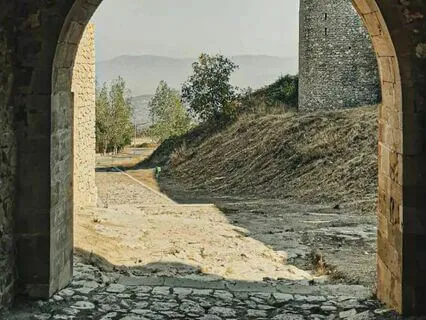
And to have the old grey castle as the setting,
And in the distance the serene clear hills of Perugini's backgrounds,
Was an astonishing contrast.
Even Lady Caroline,
Used all her life to beauty,
Who had been everywhere and seen everything,
Felt the surprise of it.
It was that year a particularly wonderful spring,
And of all the months at San Salvatore,
April,
If the weather was fine,
Was best.
May scorched and withered.
March was restless,
And could be hard and cold in its brightness,
But April came along softly,
Like a blessing,
And if it were a fine April,
It was so beautiful that it was impossible not to feel different,
Not to feel stirred and touched.
Mrs Wilkins,
As we have seen,
Responded to it instantly.
She,
So to speak,
At once flung off all her garments and dived straight into glory,
Unhesitatingly,
With a cry of rapture.
Mrs Arbuthnot was stirred and touched,
But differently.
She had odd sensations,
Presently to be described.
Mrs Fisher,
Being old,
Was of a closer,
More impermeable texture,
And offered more resistance,
But she too had odd sensations,
Also in their place to be described.
Lady Caroline,
Already amply acquainted with beautiful houses and climates,
To whom they could not come quite with the same surprise,
Yet was very nearly as quick to react as Mrs Wilkins.
The place had an almost instantaneous influence on her as well,
And of one part of this influence she was aware.
It had made her,
Beginning on the very first evening,
Want to think,
And acted on her curiously,
Like a conscience.
What this conscience seemed to press upon her notice,
With an insistence that startled her.
Lady Caroline hesitated to accept the word,
But it would keep on coming into her head,
Was that she was tawdry.
Tawdry.
She.
Fancy.
She must think that out.
The morning after the first dinner together,
She woke up in a condition of regret,
That she should have been so talkative to Mrs Wilkins the night before.
What had made her be,
She wondered.
Now,
Of course,
Mrs Wilkins would want to grab,
She would want to be inseparable,
And the thought of a grabbing and an inseparableness that should last four weeks,
Made scrapped spirit swoon within her.
No doubt the encouraged Mrs Wilkins would be lurking in the top garden,
Waiting to waylay her when she went out,
And would hail her with morning cheerfulness.
How much she hated being hailed with morning cheerfulness,
Or indeed hailed at all.
She oughtn't to have encouraged Mrs Wilkins the night before.
Fatal to encourage.
It was bad enough not to encourage,
For just sitting there and saying nothing,
Seemed usually to involve her,
But actively to encourage was suicidal.
What on earth had made her?
Now she would have to waste all the precious time,
The precious lovely time,
For thinking in,
For getting square with herself,
In shaking Mrs Wilkins off.
With great caution and on the tips of her toes,
Balancing herself carefully,
Lest the pebbles should scrunch,
She stole out when she was dressed,
To her corner,
But the garden was empty.
No shaking off was necessary.
Neither Mrs Wilkins nor anybody else was to be seen.
She had it entirely to herself,
Except for Domenico,
Who presently came and hovered,
Watering his plants,
Again,
Especially all the plants that were nearest to her.
No one came out at all,
And when,
After a long while of following up thoughts,
Which seemed to escape her,
Just as she had got them,
And dropping off exhausted,
To sleep in the intervals of this chase,
She felt hungry and looked at her watch,
And saw that it was past three.
She realised that nobody had even bothered to call her in to lunch,
So that scrap could not but remark,
If anyone was shaken off,
It was she herself.
Well,
But how delightful,
And how very new.
Now she would really be able to think,
Uninterruptedly,
Delicious to be forgotten.
Still,
She was hungry,
And Mrs Wilkins,
After that excessive friendliness,
The night before,
Might at least have told her lunch was ready.
And she really had been excessively friendly,
So nice about Mellish's sleeping arrangements,
Wanting him to have the spare room and all.
She wasn't usually interested in arrangements,
In fact,
She wasn't ever interested in them,
So that scrap considered that she might be said,
Almost to have gone out of her way,
To be agreeable to Mrs Wilkins.
And in return,
Mrs Wilkins didn't even bother whether or not she had any lunch.
Fortunately,
Though she was hungry,
She didn't mind missing a meal.
Life was full of meals.
They took up an enormous proportion of one's time,
And Mrs Fisher was,
She was afraid,
One of those persons who at meals linger.
Twice now,
She had dined with Mrs Fisher,
And each time she had been difficult at the end to dislodge,
Lingering on,
Slowly cracking innumerable nuts,
And slowly drinking a glass of wine that seemed as if it would never be finished.
Probably it would be quite a good thing to make a habit of missing lunch,
And as it was quite easy to have tea brought out to her,
And as she breakfasted in her room,
Only once a day would she have to sit at the dining room table and endure the nuts.
Scrap burrowed her head comfortably in the cushions,
And with her feet crossed on the low parapet,
Gave herself up to more thought.
She said to herself,
As she had said at intervals throughout the morning,
Now I'm going to think.
But never having thought out anything in her life,
It was difficult.
Extraordinary how one's attention wouldn't stay fixed,
Extraordinary how one's mind slipped sideways.
Settling herself down to a review of her past as a preliminary to the consideration of her future,
And hunting in it to begin with for any justification of that distressing word,
Tawdry,
The next thing she knew was that she wasn't thinking about this at all,
But had somehow switched on to Mr Wilkins.
Well,
Mr Wilkins was quite easy to think about,
Although not pleasant.
She viewed his approach with misgivings,
For not only was it a profound and unexpected bore to have a man added to the party,
And a man too of the kind she was sure Mr Wilkins must be,
But she was afraid,
And her fear was the result of a drearily unvarying experience,
That he might wish to hang about her.
This possibility had evidently not yet occurred to Mrs Wilkins,
And it wasn't one to which she could very well draw her attention,
Not that is,
Without being too fatuous to live.
She tried to hope that Mr Wilkins would be a wonderful exception to the dreadful rule.
If only he were,
She would be so much obliged to him that she believed she might really quite like him,
But she had misgivings.
Suppose he hung about her so that she was driven from her lovely top garden,
Suppose the light in Mrs Wilkins' funny flickering face was blown out.
Scrap felt she would particularly dislike this to happen to Mrs Wilkins' face,
Yet she had never in her life met any wives,
Not any at all,
Who had been able to understand that she didn't in the least want their husbands.
Often she had met wives who didn't want their husbands either,
But that made them nonetheless indignant if they thought somebody else did,
And nonetheless sure when they saw them hanging around Scrap that she was trying to get them.
Trying to get them,
The bare thought,
The bare recollection of these situations filled her with a boredom so extreme that it instantly sent her to sleep again.
When she woke up she went on with Mr Wilkins.
Now if,
Thought Scrap,
Mr Wilkins were not an exception and behaved in the usual way,
Would Mrs Wilkins understand or would it just simply spoil her holiday?
She seemed quick,
But would she be quick about this?
She seemed to understand and see inside one,
But would she understand and see inside one when it came to Mr Wilkins?
The experienced Scrap was full of doubts.
She shifted her feet on the parapet,
She jerked a cushion straight.
Perhaps she had better try and explain to Mrs Wilkins during the days still remaining before the arrival,
Explain in a general way,
Rather vague and talking at large,
Her attitude towards such things.
She might also expound to her,
Her peculiar dislike of people's husbands and her profound craving to be,
At least for this one month,
Let alone.
But Scrap had her doubts about this too.
Such talk meant a certain familiarity,
Meant embarking on a friendship with Mrs Wilkins.
And if,
After having embarked on it and faced the peril it contained of too much Mrs Wilkins,
Mr Wilkins should turn out to be artful.
And people did get very artful when they were sat on anything and managed,
After all,
To slip through into the top garden.
Mrs Wilkins might easily believe she had been taken in and that she,
Scrap,
Was deceitful.
Deceitful and about Mr Wilkins.
Wives were really pathetic.
At half past four she heard sounds of saucers on the other side of the Daphne bushes.
Was tea being sent out to her?
No,
The sounds came no closer.
They stopped near the house.
Tea was to be in the garden,
In her garden.
Scrap considered she might at least have been asked if she minded being disturbed.
They all knew she sat there.
Perhaps someone would bring hers to her in her corner.
Nope,
Nobody brought anything.
Well,
She was too hungry not to go and have it with the others today,
But she would give Francesca strict orders for the future.
She got up and walked with that slow grace,
Which was another of her outrageous number of attractions,
Towards the sounds of tea.
She was conscious not only of being very hungry,
But of wanting to talk to Mrs Wilkins again.
Mrs Wilkins had not grabbed.
She had left her quite free all day,
In spite of the rapprochement the night before.
Of course,
She was an original and put on a silk jumper for dinner,
But she hadn't grabbed.
This was a great thing.
Scrap went towards the tea table,
Quite looking forward to Mrs Wilkins,
And when she came in sight of it,
She saw only Mrs Fisher and Mrs Arbuthnot.
Mrs Fisher was pouring out the tea,
And Mrs Arbuthnot was offering Mrs Fisher macaroons.
Every time Mrs Fisher offered Mrs Arbuthnot anything,
Her cup or milk or sugar,
Mrs Arbuthnot offered her macaroons,
Pressed them on her with an odd assiduousness,
Almost obstinacy.
Was it a game?
Scrap wondered,
Sitting down and seizing a macaroon.
Where is Mrs Wilkins?
Asked Scrap.
They didn't know.
At least Mrs Arbuthnot,
On Scrap's inquiry,
Didn't know.
Mrs Fisher's face at the name became elaborately uninterested.
It appeared that Mrs Wilkins had not been seen since breakfast.
Mrs Arbuthnot thought she had probably gone out for a picnic.
Scrap missed her.
She ate the enormous macaroons,
The best and biggest she had ever come across,
In silence.
Tea without Mrs Wilkins was dull,
And Mrs Arbuthnot had that fatal flavour of motherliness about her,
Of wanting to pet one,
To make one very comfortable,
Coaxing one to eat,
Coaxing her,
Who was already so frankly,
So even excessively eating,
That seemed to have dogged Scrap's steps throughout life.
Couldn't people leave one alone?
She was perfectly able to eat what she wanted,
Unincited.
She tried to quench Mrs Arbuthnot's zeal by being short with her.
Useless.
The shortness was not apparent.
It remained,
As all Scrap's evil feelings remained,
Covered up by the impenetrable veil of her loveliness.
Mrs Fisher sat monumentally and took no notice of either of them.
She'd had a curious day and was a little worried.
She had been quite alone,
For none of the three had come to lunch,
And none of them had taken the trouble to let her know they were not coming,
And Mrs Arbuthnot,
Drifting casually into tea,
Had behaved oddly till Lady Caroline joined them and distracted her attention.
Mrs Fisher was prepared not to dislike Mrs Arbuthnot,
Whose parted hair and mild expression seemed very decent and womanly,
But she certainly had habits that were difficult to like.
Her habit of instantly echoing any offer made her of food and drink,
Of throwing the offer back on one,
As it were,
Was not somehow what one expected of her.
Will you have some more tea?
Was surely a question to which the answer was simply yes or no,
But Mrs Arbuthnot persisted in the trick she had exhibited the day before at breakfast of adding to her yes or no the words Will you?
She had done it again that morning at breakfast and here she was doing it at tea,
The two meals at which Mrs Fisher presided and poured out.
Why did she do it?
Mrs Fisher failed to understand,
But this was not what was worrying her,
This was merely by the way.
What was worrying her was that she had been quite unable that day to settle to anything and had done nothing but wander restlessly from her sitting room to her battlements and back again.
It had been a wasted day and how much she disliked waste.
She had tried to read and she had tried to write to Kate Lumley,
But no,
A few words read,
A few lines written and up she got and went out onto the battlements and stared at the sea.
It didn't matter that the letter to Kate Lumley should not be written,
There was time enough for that.
Let the others suppose her coming was definitely fixed,
All the better.
So would Mr Wilkins be kept out of the spare room and put where he belonged?
Kate would keep,
She could be held in reserve.
Kate in reserve was just as potent as Kate in actuality and there were points about Kate in reserve which might be missing from Kate in actuality.
For instance,
If Mrs Fisher was going to be restless she would rather Kate was not there to see her.
There was a want of dignity about restlessness,
About trotting backwards and forwards,
But it did matter that she could not read a sentence of any of her great dead friend's writings.
No,
Not even of Browning's,
Who had been so much in Italy,
Nor of Ruskin's,
Whose stones of Venice she had brought with her to re-read so nearly on the very spot.
Not even a sentence of a really interesting book like the one she had found in her sitting room about the home life of the German emperor,
Poor man,
Written in the 90s when he had not yet begun to be more sinned against than sinning,
Which was,
She was firmly convinced,
What was the matter with him now,
And full of exciting things about his birth and his right arm and a couture without having to put it down and go and stare at the sea.
Reading was so important,
The proper exercise and development of one's mind was a paramount duty.
How could one read if one were constantly trotting in and out?
Curious,
This restlessness.
Was she going to be ill?
No,
She felt well,
Indeed unusually well,
And she went in and out quite quickly,
Trotted in fact,
And without her stick.
Very odd that she shouldn't be able to sit still,
She thought,
Frowning across the tops of some purple hyacinths at the Gulf of Spezia,
Glittering beyond the headland.
Very odd that she,
Who walked so slowly with such dependence on her stick,
Should suddenly trot.
It would be interesting to talk to someone about it,
She felt,
Not to Kate,
To a stranger.
Kate would only look at her and suggest a cup of tea.
Kate always suggested cups of tea.
Besides,
Kate had a flat face.
That Mrs Wilkins now,
Annoying as she was,
Loose-tongued as she was,
Impertinent,
Objectionable,
Would probably understand and perhaps know what was making her be like this.
But she couldn't say anything to Mrs Wilkins.
She was the last person to whom one would admit sensations.
Dignity alone forbade it.
Confide in Mrs Wilkins never.
And Mrs Arbuthnot,
While she wistfully mothered the obstructive scrap at tea,
Felt too that she had had a curious day.
Like Mrs Fishers,
It had been active,
But,
Unlike Mrs Fishers,
Only active in mind.
Her body had been quite still.
Her mind had not been still at all.
It had been excessively active.
For years she had taken care to have no time to think.
Her scheduled life in the parish had prevented memories and desires from intruding on her.
That day they had crowded.
She went back to tea feeling dejected,
And that she should feel dejected in such a place,
With everything about her to make her rejoice,
Only dejected her the more.
But how could she rejoice alone?
How could anybody rejoice and enjoy and appreciate,
Really appreciate,
Alone?
Except Lottie.
Lottie seemed able to.
She had gone off down the hill,
Directly after breakfast,
Alone,
Yet obviously rejoicing,
For she had not suggested that Rose should go too,
And she was singing as she went.
Rose had spent the day by herself,
Sitting with her hands clasping her knees,
Staring straight in front of her.
What she was staring at were the grey swords of the agaves,
And on their tall stalks the pale irises that grew in the remote place she had found,
While beyond them,
Between the grey leaves and the blue flowers,
She saw the sea.
The place she'd found was a hidden corner where the sun-baked stones were padded with thyme,
And nobody was likely to come.
It was out of sight and sound of the house,
It was off any path,
It was near the end of the promontory.
She sat so quiet that presently lizards darted over her feet,
And some tiny birds like finches,
Frightened away at first,
Came back again and flitted among the bushes around her,
Just as if she hadn't been there.
How beautiful it was!
And what was the good of it with no one there,
No one who loved being with one,
Who belonged to one,
To whom one could say,
Look.
And wouldn't one say,
Look,
Dearest?
Yes,
One would say,
Dearest,
And the sweet word,
Just to say it to somebody who loved one,
Would make one happy.
She sat quite still,
Staring straight in front of her.
Strange that in this place she didn't want to pray.
She who had prayed so constantly at home,
Didn't seem able to do it here at all.
The first morning she had merely thrown up a brief thank you to heaven on getting out of bed.
She had gone straight to the window to see what everything looked like,
Thrown up the thank you as carelessly as a ball,
And thought no more about it.
That morning,
Remembering this and ashamed,
She had knelt down with determination,
But perhaps determination was bad for prayers,
For she had been unable to think of a thing to say.
And as for her bedtime prayers,
On neither of the nights had she said a single one.
She had forgotten them.
She had been so much absorbed in other thoughts that she had forgotten them,
And once in bed she was asleep and whirling along among bright,
Thin,
Swift dreams,
Before she'd had so much time as to stretch herself out.
What had come over her?
Why had she let go the anchor of prayer?
And she had difficulty too in remembering her poor,
In remembering even that there were such things as poor.
Holidays of course were good,
And were recognised by everybody as good,
But ought they so completely to blot out,
To make such havoc of,
The realities?
Perhaps it was healthy to forget her poor,
With all the great Augusta would she go back to them,
But it couldn't be healthy to forget her prayers,
And still less could it be healthy not to mind.
And Rose didn't mind.
She knew she didn't mind,
And even worse,
She knew she didn't mind not minding.
In this place she was indifferent to both the things that had filled her life,
And made it seem as if it were happy for years.
Well,
If only she could rejoice in her wonderful new surroundings,
Have that much at least to set against the indifference,
The letting go,
But she couldn't.
She had no work,
She did not pray,
She was left empty.
Lottie had spoiled her day that day,
As she had spoiled her day the day before.
Lottie,
With her invitation to her husband,
With her suggestion that she too should invite hers.
Having flung Frederick into her mind again the day before,
Lottie had left her,
For the whole afternoon she had left her alone with her thoughts.
Since then they had all been of Frederick.
Where at Hampstead he came to her only in her dreams,
Here he left her dreams free,
And was with her during the day instead.
And again that morning,
As she was struggling not to think of him,
Lottie had asked her,
Just before disappearing,
Singing down the path,
If she had written yet,
And invited him,
And again he was flung into her mind,
And she wasn't able to get him out.
And how could she invite him?
It had gone on so long,
Their estrangement,
Years.
She would hardly know what words to use,
And besides,
He wouldn't come.
Why should he come?
He didn't care about being with her.
What could they talk about?
Between them was the barrier of his work and her religion.
She couldn't.
How could she,
Believing as she did in purity,
In responsibility for the effect of one's actions on others,
Bear his work,
Bear living by it?
And he,
She knew,
Had at first resented,
And then been merely bored by her religion.
He had let her slip away,
He had given her up,
He no longer minded,
He accepted her religion indifferently,
As a settled fact.
Both it and she,
Rose's mind becoming more luminous in the clear light of April at San Salvatore,
Suddenly saw the truth,
Bored him.
Naturally,
When she saw this,
When that morning it flashed upon her for the first time,
She didn't like it.
She liked it so little that for a space the whole beauty of Italy was blotted out.
What was to be done about it?
She couldn't give up believing in good and not liking evil,
And it must be evil to live entirely on the proceeds of adulteries,
However dead and distinguished they were.
Besides,
If she did,
If she sacrificed her whole past,
Her bringing up,
Her work for the last ten years,
Would she bore him less?
Rose felt,
Right down at her very roots,
That if you have once thoroughly bored somebody,
It is next to impossible to unbore him.
Once a bore,
Always a bore,
Certainly,
She thought,
To the person originally bored.
Then,
Thought she,
Looking out to sea through eyes grown misty,
Better cling to her religion.
It was better.
She hardly noticed the reprehensibleness of her thought than nothing.
But oh,
She wanted to cling to something tangible,
To love something living,
Something that one could something that one could hold against one's heart,
That one could see and touch and do things for.
If only her poor baby hadn't died.
Babies didn't get bored with one.
It took them a long while to grow up and find one out.
And perhaps one's baby never did find one out.
Perhaps one would always be to it,
However old and bearded it grew,
Somebody special,
Somebody different from everyone else,
And,
If for no other reason,
Precious in that one could never be repeated.
Sitting with dim eyes looking out to sea,
She felt an extraordinary yearning to hold something of her very own,
Tied to her bosom.
Rose was slender and as reserved in figure as in character,
Yet she felt a queer sensation of,
How would she describe it,
Bosom.
There was something about San Salvatore that made her feel all bosom.
She wanted to gather to her bosom to comfort and protect,
Soothing the dear head that should lie on it with softest strokings and murmurs of love.
Frederick,
Frederick's child,
Come to her,
Pillowed on her,
Because they were unhappy,
Because they had been hurt.
They would need her then,
If they had been hurt.
They would let themselves be loved then,
If they were unhappy.
Well,
The child was gone,
Would never come now.
But perhaps Frederick,
Someday,
When he was old and tired.
Such were Mrs Arbuthnot's reflections and emotions that first day at San Salvatore by herself.
She went back to tea dejected as she had not been for years.
San Salvatore had taken her carefully built up semblance of happiness away from her and given her nothing in exchange.
Yes,
It had given her yearnings in exchange,
This ache and longing,
This queer feeling of bosom,
But that was worse than nothing.
And she who had learned balance,
Who never at home was irritated,
But always able to be kind,
Could not even in her dejection that afternoon endure Mrs Fisher's assumption of the position as hostess at tea.
One would have supposed that such a little thing would not have touched her,
But it did.
Was her nature changing?
Was she to be not only thrown back on long stifled yearnings after Frederick,
But also turned into somebody who wanted to fight over little things?
After tea,
When both Mrs Fisher and Lady Caroline had disappeared again,
It was quite evident that nobody wanted her.
She was more dejected than ever,
Overwhelmed by the discrepancy between the splendour outside her,
The warm,
Teeming beauty and self-sufficiency of nature,
And the blank emptiness of her heart.
Then came Lottie back to dinner,
Incredibly more freckled,
Exuding the sunshine she had been collecting all day,
Talking,
Laughing,
Being tactless,
Being unwise,
Being without reticence.
And Lady Caroline,
So quiet at tea,
Woke up to animation,
And Mrs Fisher was not so noticeable,
And Rose was beginning to revive a little,
For Lottie's spirits were contagious,
As she described the delights of her day,
A day which might easily to anyone else have had nothing in it but a very long and very hot walk and sandwiches,
When she suddenly said,
Catching Rose's eye,
Let her go on.
Rose flushed,
This tactlessness.
What let her,
Asked Scrap,
Interested.
Both her elbows were on the table,
And her chin was supported in her hands,
For the nut stage had been reached,
And there was nothing for it but to wait in as comfortable a position as possible,
Till Mrs Fisher had finished cracking.
Asking her husband here,
Said Lottie.
Mrs Fisher looked up.
Another husband!
Was there to be no end to them?
Nor was this one then a widow either,
But her husband was no doubt a decent,
Respectable man,
Following a decent,
Respectable calling.
She had little hope of Mr Wilkins,
So little that she had refrained from inquiring what he did.
Has it,
Persisted Lottie,
As Rose said nothing.
No,
Said Rose.
Oh well,
Tomorrow then,
Said Lottie.
Rose wanted to say no again to this.
Lottie would have in her place,
And would besides have expounded all her reasons,
But she couldn't turn herself inside out like that,
And invite any and everybody to come and look.
How was it that Lottie,
Who saw so many things,
Didn't see stuck on her heart,
And seeing,
Keeping quiet about it,
The sore place that was Frederick.
Who is your husband?
Asked Mrs Fisher,
Carefully adjusting another nut between the crackers.
Who should he be,
Said Rose quickly,
Roused at once by Mrs Fisher to irritation,
Except Mr Arbuthnot.
I mean,
Of course,
What is Mr Arbuthnot?
And Rose,
Gone painfully red at this,
Said after a tiny pause,
My husband.
Naturally,
Mrs Fisher was incensed.
She couldn't have believed it of this one,
With her decent hair and gentle voice,
That she too should be impertinent.
To be continued.