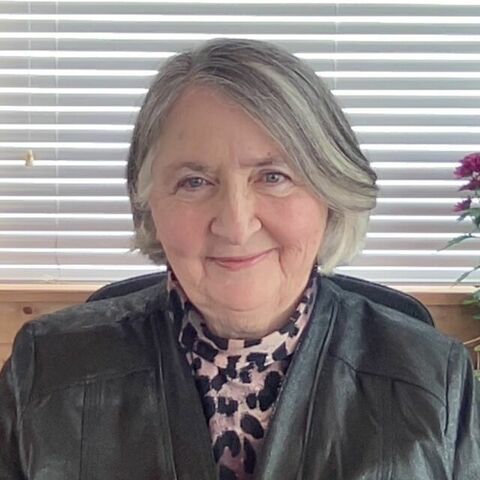
Over the years what I've really discovered in my own body and also in working with other people is that it's very important and it's really the key to freeing ourselves from traumatic memory is if we can be present in our own body.
I thought we could do a practice that would integrate some of that philosophy of really welcoming an open-hearted welcome to whatever it is that's arising in us.
So tune in to your body,
Your breath,
Thoughts in your mind and to your being.
Today we're working with open-hearted welcome.
Notice what comes up for you when you hear those words.
There could be a lot of different contexts for that.
It could be an open-hearted welcome to a person,
To an experience.
We're more open-hearted welcoming to things that are pleasant or joyful.
And sometimes as a practice we're able to be present with something that's a little bit more difficult.
And when we say open-hearted welcome we're also not saying that we think this should be the way it is.
It's not that we're saying it's okay with me that it's this way.
It's okay with me that this happened or it's okay with me that I'm feeling really tight in my body around this.
It's more that we're acknowledging this happened or this is the experience and I am working with welcoming all that is.
And as we're checking in with ourselves an open-hearted welcome would mean there's some openness in our heart center maybe.
There's some invitation in our mind to the experience,
To the person.
You could put your hands on your heart and say those words open-hearted welcome and what comes to mind.
And I just had an impulse to bring my arms open.
What does that feel like to open your arms and open your heart?
Bring your arms back a little bit from your center.
Breathe.
What does your body want to do then?
You might notice that there's a little bit more of a willingness to breathe in so deeply.
There seems to be an open body component to open heart.
Notice your body,
Notice your breath and notice the thoughts in your mind.
And one of the most powerful ways that we can work with this practice of open-heartedness or our thankfulness for what's here is to work with energy and sensation in our body.
We know that trauma is stored in our body as sensation and feelings.
And we also know that a lot of that is tight,
Contracted,
Sometimes painful.
And tight contracted and painful aren't usually what we want to welcome.
We usually welcome calm,
Soft,
Ease,
Feeling delicious,
Feeling open-hearted.
If you were to bring up for the purpose of this inquiry,
Bring up something that's a little bit difficult for you.
Maybe it's something that you have trouble accepting.
Maybe it's a memory of being bullied in the past or feeling not included.
Maybe it's,
I'm anxious about moving back out into the world now that things are opening up.
Doesn't feel safe enough to me to do that.
Just to notice what's your experience as you think about something difficult and notice it in your thought stream,
As well as was there any change in your breath and what's happening in your body?
What's the energy of that in your body?
And as you notice that,
Notice the location.
And if there's a feeling of overwhelm and that you don't want to go right into it,
It's really fine to work around the edges.
You could pull your perspective back so that you're aware of your whole body and the space around that sensation or energy.
For instance,
If you're working with a feeling of fear in your stomach area,
You might go right into that and notice,
Does it move?
Is it still?
Do you have an image of it?
And it's also completely fine to take a step back and notice all the space around that.
Keep your eyes open.
That can be very helpful when we're working with these more difficult inquiries.
And that can help us to anchor into the room.
You could look around,
Just reminding yourself through your eyes that your body is safe.
And then come back into your experience with this energy that's arisen,
Something difficult,
Scary.
It could be a memory.
It could be something you're thinking about in the future.
And then let's come right into the energy,
Bringing our attention right into the energy.
Notice the space around it and notice that wasn't here before and now it is.
And we know that there will be times going forward when it won't be here.
So there's space around the sensation in our body and there's also space in terms of time.
It's not always present.
And notice the qualities of the sensation.
How would you describe that?
Is it hot or cold?
Is it moving or still?
Does it have a color?
And if you have an image of the sensation,
And some do and some don't,
It's just the way our brain works.
You could work with that image like a picture.
Put it on the wall on the other side of the room.
Put it in a frame.
And notice if the image of that sensation feels threatening.
You could take your eyes around the outside space.
Do all of those tools that we have for working with images.
And then come back into the sensation.
And one of the questions that we could look into,
Is this a familiar sensation?
And if it is,
What are some early times that you remember this sensation?
So some of these sensations we've known in our bodies for decades.
And it might be the clenching in the jaw.
It might be a feeling of heaviness in the chest.
Or a column of contraction in our throat that makes it feel hard to breathe.
And then notice,
What's your sense of its motive?
Like why is this sensation here?
And in particular,
It can be helpful to ask,
Is this sensation here to hurt me?
Does it have a maliciousness about it?
Is it trying to cause me trouble or pain?
And if that is the case,
Then look to see,
What are the thoughts that are coming with that that gives it that feeling?
And again,
You could work with those like you would any thoughts.
Put them into a frame,
Tap on your forehead.
And if it's not here to hurt you,
If it's not malicious,
Then why is it here?
So often we interpret something that's painful as something that's bad or something that's malicious.
Especially if it's something like a feeling of tension or tightness through the throat and chest where we're having trouble breathing.
It makes sense that it could feel threatening.
If that's happening or something like that,
Notice your breath.
Notice,
Can your breath still get through?
Even a very tight sensation doesn't physically construct our breath.
What we're doing is eliciting some energy that comes up when there's something difficult.
And then we're working with it in a mindfulness practice while we're aware of it in this moment.
We're looking where thoughts come in as words or pictures.
And energies are stored trauma in our body.
And we're curious.
So if it's not here to hurt us,
What is it here for?
Almost always it's here because there's some attempt to bring something to our attention.
This energy wants us to be aware of something.
And it might be that it wants to protect us.
Don't go off guard.
This could happen.
So this is our brain,
Our unconscious mind,
Operates through sensation.
This could be a warning.
Don't loosen up.
Keep your guard up.
Keep your hypervigilance up.
It's not safe.
If that's the case,
Then we could really work with our conscious level mind.
Again,
We're orienting to the space we're in.
We're noticing that our body's safe.
And we might also be inviting in more of a,
I'd like to know more about this.
Why are you here?
And notice if there's any impulse to push it away.
And that could be that your mind goes into a flight response.
You just start thinking about something else.
There could be a fight response where we kind of get angry.
Maybe we go on a bit of a rant in our mind about something.
We could go into a freeze where we're just kind of dull and foggy.
Disconnecting from our body again,
Which is a really helpful and common strategy as a child.
And it's part of what leads to this stored trauma,
Is that we disconnect from ourselves,
We dissociate.
That's part of how trauma works for everybody.
So it's not like we're doing something wrong.
It's just we could look at it now and go,
Do I still need to dissociate from this?
And notice your body and breath.
Notice the sensation.
And the sensation,
No doubt,
Has changed a lot.
Sometimes it's quite intense.
Sometimes it moves around different parts of the body.
It might get kind of lost for a bit,
And we don't really notice it,
And then we can sharpen our attention on it again.
We want to counteract that impulse to push it away.
There's something about the energy that we want to know,
We want to invite in.
One of the ways that we could do that is through the thank you phrases.
Paying attention to the energy or sensation,
As though you're talking directly to that energy.
Thank you for arising.
Thank you for being here.
We don't have to mean it.
We could just say it,
Maybe as an aspiration.
Why would I want to actually welcome this energy?
Sit with that question as well.
I'm talking directly to the energy.
Thank you.
Thank you for coming.
Thank you for arising.
Thank you for bringing yourself to my attention.
Thank you for letting me know there's something here.
There's something wrong,
Something I need to attend to.
I'm letting the words drop and just sitting with that energy,
With that intention.
I'm open-hearted and welcoming.
I'm glad you're here.
I love you.
And you're really welcome to be here and to stay as long as you like.
I might have turned away from you for decades and now I'm not.
I'm doing a practice of being open-hearted and welcoming so that you can feel that you're welcome here.
I want to know you.
I want you to know you're welcome here.
And then we just attune to our experience.
We notice if our mind has wandered somewhere else and we bring it back.
Letting yourself be aware of the sensations,
Energies in your body.
And offering them this warm,
Open-hearted welcome.
Thank you for coming forward.
I love you.
You're really welcome to be here and stay as long as you like.
I want to know why you're here.
What is it you want me to know?
And sometimes we notice a sense of an age.
It might be yourself at a younger age when there was something going on that was scary.
And we might talk directly to that one.
You're not alone anymore.
I'm here.
And you are welcome to be here.
What happened to you then was not your fault.
And I'm sorry you were so alone and you had to handle that on your own.
And now I'm here and you are welcome to be here.
And I'm sorry I wasn't always here to listen before.
And I am now.
You are welcome to be here.
And then again,
Let the words recede a bit and bring your hands to your heart.
Sit with that open-hearted welcome.
All of me is welcome.
My heart is open.
Let yourself feel into that for a moment and set your intention to return to this.
Just to be aware of the energy that's in the body and to offer an open-hearted welcome to whatever it is that's here.
Again and again and again until it really knows the truth of that.
Thank you.