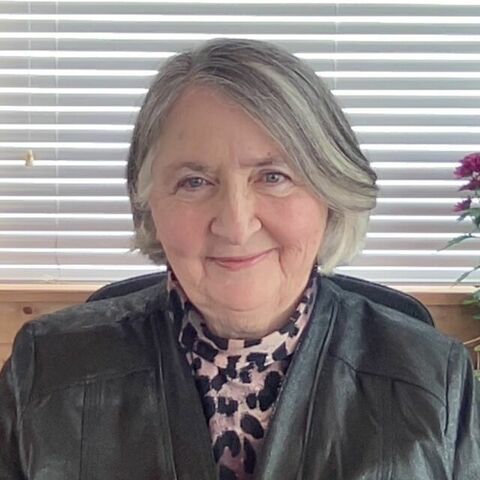
Still point method is something that uses a couple of really specific tools.
One of them is on sensation.
And one of them is for thoughts.
Acknowledging that it's difficult for us to be in our body because of stored trauma.
So anything that we weren't able to process at the time that it was happening gets stored as sensation,
As energy.
If you were to think about just anything that kind of makes you uncomfortable.
Bring a thought to mind.
Maybe it's a look on someone's face or argument you had with somebody yesterday or whatever that might be.
As you're thinking about it,
Notice what's happening in your body.
There's always some kind of response in our body.
So if we're in kind of a dissociated state or a deep freeze,
We might not really notice.
But then when we tune in.
We can,
Oh,
Okay.
When I think about that,
My shoulders kind of go up around my ears,
Or I get that feeling in the pit of my stomach.
And so that's what we're going to work with today.
It's a guided somatic inquiry,
Somatic meaning in our body.
So let's start with just noticing on a general basis what's going on in our body.
Let go of whatever thought that was that we were just working with.
Oftentimes when we're working with the sensation,
It's not a surprise.
It's something that we've been pretty familiar with over time.
And sometimes we even might go back into,
Oh,
I remember this when I was in grade two or some other time when we were a child.
So that can be some evidence that,
Wow,
These sensations have been here a long time.
Even though there's a lot of individual variation.
Within one person,
We tend to have a lot of similarity.
A lot of continuity.
Another way of getting to know ourselves is to know what's going on in our body.
And that could be the places that are habitually tight.
Or it could be the non-physical energy sensations that we're quite familiar with as well.
And also that we usually want to avoid because there's something about them that is related to a safety,
Not feeling safe.
Let's notice just on a physical basis what's happening in your body.
Take a few deep breaths.
Let your shoulders relax.
You might breathe out through your mouth,
Breathe in through your nose.
And then notice the whole of your back body.
Notice the back of your head and neck,
Your shoulders.
Many of us carry tension in the upper back and shoulders.
So if that's your holding spot,
You can move your shoulders around.
Release.
Let yourself notice that.
Back of the neck,
The upper back.
Very common places where we store our attention.
And notice also the back of your arms and legs.
Are you settled comfortably in your body?
If you're holding yourself a little bit forward,
Like you're ready to jump into action,
Notice if you could settle yourself back.
In the front of the body,
There's a couple of places where it's very common as well to hold tension.
One is the forehead.
And eyebrows.
We worry we knit our brows.
You could lift your eyebrows up,
Let those soften.
The mind will settle down a little bit usually when we soften our forehead.
And then come into the jaw,
The hinges of your jaw,
And you could move your lower jaw around.
Just notice if you could relax the hinges of your jaw.
And then,
Of course,
Also soften your mouth.
Tongue.
Lips.
We often have a tightness or we are clenching our teeth.
But also the jaw can be a place where there's that ephemeral energy,
More of a trauma-stored energy.
Relax your throat,
Bring your attention into your throat and then the sides of your neck,
Your shoulders.
Another very common place where we're tight is the shoulders.
As you come down the front of your body,
Notice your chest,
The muscles of your chest and the muscles of your stomach from your lower rib cage down through your stomach area.
Notice if you're breathing diaphragmatically.
Breathing diaphragmatically,
It feels like an expansion of the belly area on the inhale.
And then letting the muscles of your belly soften on the exhale.
And again,
A lot of times trauma will tighten that whole area up.
It's hard to breathe.
We often hold our breath as well in the trauma,
Which becomes habitual.
So it's not like there's something right now that makes this.
And hold their breath.
It's just there's a habit in the body because of ongoing tension and fear.
So notice that,
Notice the physical places in your body where you tend to hold.
Restore tension.
Where you're tight.
Let them relax as much as you can.
And then let's go into the energy,
Sensations,
Feelings,
That layer of experience in the body.
Now we're not really so much working with tightness through the upper back,
We're working more with and energy.
The stomach might be kind of relaxed now that you've tuned into your breathing,
But there might still be some kind of an uneasiness or an edginess.
It might be heaviness in your heart or a cold.
Clenching in your teeth,
But also kind of an energetic tension there as well.
So let's scan the body.
Notice what's the energy in your head right now.
Just notice what's there.
There might not be anything particular in your head.
Or it might be more of that physical stuff.
OK,
I'm frowning.
I could relax my eyebrows.
And then go down into the mouth and jaw in particular.
Is there any energy in your mouth,
Your jaw?
Sometimes the throat is very activated.
Even when we're not speaking,
There's movements of vocalizing in the vocal cords.
We're going to solve that.
And then as we come down into the chest,
This is the heart area,
We often feel emotions here.
We can manipulate that a little bit by bringing in a thought of something that makes us feel happy.
Just as an illustration of how this works.
If you were to think about someone or something or some place.
Makes you feel joy.
Bring that to mind for a moment.
Maybe visualize their face or a place.
Remember the warmth of their hug.
And notice what that feels like in your chest.
Might be an excitement,
Might be a lessening of tension,
It might be some warmth.
Sometimes people have images of sensation as well.
And then if you come down into your belly area,
There's a lot of activity around the navel center,
The belly button,
And into the lower part of the gut as well.
This is our gut instinct.
And oftentimes there's an uneasiness or a fear.
Pretty ongoing,
It might get stronger,
It might kind of dissipate a bit.
This is part of the reason why many people are uncomfortable putting their attention into the breath at the belly.
We have a lot of metaphors for that too.
Like a gut punch,
Even though it might not be physical,
It feels like it.
So as we're noticing on that.
You can also notice the whole body energy.
Sometimes there's a restlessness in the body.
So let's bring your attention now into the locate and describe.
Part of working with sensation and energy.
So we've kind of scanned the body now.
We're a little bit aware of what the energy is in the body.
And as we're doing that now,
Bring your attention to whichever energy feels like it could use some attention.
Maybe it's the strongest one or the one that you're like,
Oh,
I don't know about that.
I don't know if I want to feel that.
It feels awful.
It feels like dread or sadness or something.
So in this part of it,
We're not really wondering or thinking about what it means.
We're noticing it like we would notice it if we were in a science experiment.
Can you describe that sensation to me?
So one of the things we might describe is the location.
I'll just use an example of something in the heart area.
So in the heart area,
It might be kind of a small thing,
Like fist size,
Or it might be a larger energy that goes out to the front of your body.
Maybe if you tune into the back of your body,
You could feel it there too.
A lot of energy is contained within the physical body space and sometimes it pushes out or goes out into the outside areas.
Notice so i've got this area in my chest for instance.
And what's on top of the energy?
Does it go up into your head?
Does it go out of your head,
Up into the air?
Or is it pretty much contained in the chest area?
What's happening below that?
Is it down into your belly?
Is it all the way to your toes?
Or is it really just in this kind of ball of energy or sensation in the chest area?
So notice the location and the edges of the sensation.
A lot of sensations taper off,
So we feel them quite strongly in the middle and then at some point they're not there anymore.
And if anything gets a little bit too intense with focusing on sensation.
You can always put your attention to the outside edges where you don't feel it.
So if you have a feeling of something in your chest and it's starting to get too much,
Then just bring your attention to the areas of your body where you don't feel it.
Up into your throat or head or mouth.
Out into your hands or fingers or someplace where you don't feel it.
So we're working with titrating.
We move in a little closer.
And if it feels like too much,
Then we move back a bit.
We notice the space around the outside edges.
What are the qualities of this sensation?
Sometimes this sensation is hot or cold.
So notice if there's a temperature in this sensation.
There's no right or wrong answers to any of these questions.
We're just exploring.
Is it hot or cold?
Is it moving or is it still?
A lot of energy moves a little bit.
And does that feel OK?
Sometimes when energy moves,
It feels like it might be more harmful or dangerous.
Is there movement and if there is,
Does that feel okay for that to be moving a little bit?
And anytime this is feeling like too much,
You could bring your attention to the outside.
You could also just open your eyes and look around.
You could hold your hand.
Kind of reassure yourself,
I'm here right now.
I'm doing this inquiry into what's going on in my body.
And I'm not lost in sensation.
I'm here.
I'm witnessing it.
That's what the scientific angle is about.
We're witnessing.
What does it feel like?
What are the edges?
Is it moving or is it still?
Do you have an image of the sensation?
Sometimes people will describe it looks like an iron bar or Looks like a swirl of energy,
Like a tornado.
Notice if you have an image,
And if you do,
And sometimes it's helpful to look at that as an image for a moment.
And just put it up in your mind's eye or open your eyes and put it on the wall.
Put it into a frame and look at the image.
And if the image feels like there's some kind of intensity there,
If it's threatening.
Put it in the frame,
Look at the empty space on the outside.
Take your eyes around the outside space a few times.
One direction,
A few times in the other direction.
Look back at the image.
Images are colors and shapes that the mind interprets.
Sometimes it can feel a little bit more powerful when we have an image that's related to the sensation.
So it can help to do that.
So now we're coming back into this really paying attention to the sensation again.
We have the location.
It might have moved.
It might have shifted.
Energy has a way of doing that.
So we could notice,
Oh,
It's a little bit bigger now,
Or a bit smaller,
Or it's softer,
Or.
It feels a little bit calmer.
You could just notice that.
And as you're paying attention to the sensation in your body,
Does it feel painful?
Does it hurt?
Sometimes whatever's going on in my heart area,
It feels kind of like it's moving,
It hurts.
Sometimes there's a pain that feels kind of sharp or dabbing or hot.
So notice if there's pain involved in this sensation.
Does the sensation hurt at all?
And if so,
How would you describe that sensation of pain?
And keep awareness of your body,
Keep breathing.
And if you were to just tune into that sensation directly now.
Does it feel like that energy is here to hurt you?
Does it feel like it's malevolent or has bad intentions?
But sometimes with pain especially,
Or movement,
It can feel like there's something wrong,
That it's here to hurt me.
But when we actually look at it,
Is that true?
If it feels true,
Then there's some thoughts that are involved in that.
So if that's the case,
You could put the thoughts up onto that frame on the other side of the room.
You could tap on your forehead.
But otherwise,
If you sit with that,
What is it that gives me that sense?
Why is it here?
If it's not here to hurt me,
Then why is it here?
In all the work that I've done with myself and with other people,
It's never turned out to be here to hurt me,
Especially after you look at that.
It is always there's something here that needs to be attended to.
This is the star Trami.
This is the feeling of,
This was stored at a time when I was in distress,
When I was hurt or feeling threatened.
And so that's what makes it feel uncomfortable.
But actually,
All it is is hot or cold,
Moving or still.
It has a location.
It has edges.
I can put my attention into the sensation.
I can put it on the outside of this sensation.
And I can notice,
Okay,
If this sensation is here to alert me to something,
Or sometimes it's like a warning,
Like,
Pay attention,
That voice.
That you were thinking about just now reminds you of the contempt in somebody else's voice earlier in your life.
It's a warning.
Our nervous system,
Which communicates with us through energy and sensations,
Is saying there's something going on here that you need to pay attention to.
Oh,
OK.
So let's sit with that for a minute.
Why is it here?
And as we're working with that,
We're not trying to figure it out with our mind,
With our brain.
We're just kind of putting the question out and then listening.
Why is it here?
Sometimes we might ask or notice,
Is there an age involved in this?
Like,
Did I feel this when I was a child or younger in my adult life?
Is this familiar?
The way our brain works is it associates things that happened in the past with something that might be of concern now.
So if we're feeling this sensation,
Very often it has its roots in our history.
And here it comes now for us to look at it.
We might notice if we could welcome it.
This is part of me.
This is part of my memory that's coming up as a sensation.
Sometimes when I get back into really sitting with the sensation,
There's that 12-year-old or that three-year-old or there's something in me that's still feeling scared or hurt.
But now I'm an adult and I can stay present.
Sometimes we can stay present really clearly and kindly and compassionately.
We're really here.
Other times it's a bit much,
So we might back away a little bit.
Well,
You know,
I'm not going to push it away,
But I'm not going to go that deeply into it right now.
Right now I'm just going to breathe.
Notice my body again.
Notice if it's not here to hurt me.
Then I don't need to repress it,
I don't need to push it away.
And this curiosity of what is it that's going on in my body,
What is my body trying to communicate to me,
Really helps to heal that split between the brain and the rest of the body.
Over time as we do this just gentle sitting with curious about welcoming the sensations in our body.
We start to feel known to ourselves.
We start to feel heard and seen.
And really that's all we want.
We just want to know that younger part of ourselves just want to know that they're not alone anymore.
That whatever was happening to them is witnessed now.
And our adult self can be here for ourselves in a way that we couldn't have been before.
So we tune into our body,
We maybe move around a little bit,
Take a few breaths.
Just let yourself kind of settle in.
What does that feel like in your body now?
We're coming to the end of the practice.
We're not going to finish and kind of go into it anymore.
With these short dips into the body,
Bearing witness so we're here in this moment we're aware that our body is safe right now we have all these tools we can look around the room we can hold our hands we can notice our feet our seat We can breathe,
We can back away from it if it's getting too intense so that we can go into it a little bit more.
We have this amazing toolkit of practices.
And we also have this willingness of,
You know,
If this is what's stored in my body,
There's a couple of reasons why it would be helpful for me to be more proficient at being with that.
One is that we feel more integrated.
Another is that these energies and sensations don't trouble us so much anymore.
We notice them sooner.
We're more willing to kind of sit with it and maybe put a hand on our heart and go,
I don't need to push you away.
You're welcome to be here.
It's a little uncomfortable,
But I have time.
I'm just going to sit with that for a minute and breathe.
So this practice of tuning into our own signals from our own nervous system,
Our own unhealed trauma,
The stored trauma in our body is a powerful practice.
We can do it for a few minutes.
We can sit for longer if we have time.
But just to keep aware of in this moment,
I know what's going on.
I'm aware of the sensations and energy.
I'm looking at it,
Not disengaged,
But really engaged and as a witness,
I'm stable here.
And I know how to work with this.
I know how to be with myself.
And I'm kind of curious about what's going on in there.
I've found over the years that I don't have any fear of sensation in my body anymore.
And a lot of the sensation has diminished considerably as well.
Once it's seen and heard and attended to and feels connected,
Urgency goes out of the sensation.
So thanks for coming along on this somatic practice of connection of our whole system,
Our brain in our head,
Our knowing in our heart,
Our gut instinct,
That we can allow all of that to be here.