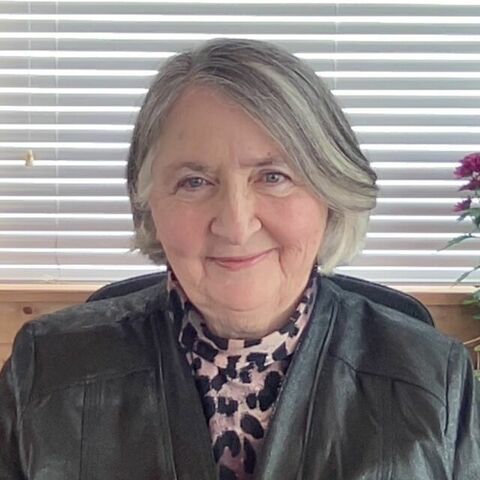
Today was a warm day,
And I got to do my laundry and hang it out on the line,
And some of the pieces that weren't quite dry are still hanging up here.
But my whole house smells like sunshine when I bring them in and hang them up,
And I always really enjoy that.
In addition to having my clothes clean,
I can enjoy the smell and the memory of all of the times I've put sun-dried sheets on my bed and that delicious smell.
Little things that probably most people experienced several decades ago,
And it's a little bit unusual now.
Notice your forehead,
Eyebrows,
Your eyes,
Mouth and jaw.
What are you grateful for in your head and face?
Behind the forehead,
In that rocky skull,
We have that brain that we probably really appreciate how it functions in some ways,
And in other ways maybe not as much.
Just to notice that we're here and our brain is functioning well enough that we can come on and do a practice.
And that we have enough experience witnessing our thoughts,
That at least a lot of the time we're not carried away in them without noticing.
And when we witness thoughts,
We could appreciate the thoughts,
Or we could interrupt if it's a stream of alarming or catastrophic thoughts.
And we appreciate that our nervous system has a big impact on the brain and the thoughts that we think.
And perhaps we're not at war with our nervous system anymore.
We're just like,
Okay,
It's trying to let me know something.
And now I know what to do to come back into a more accurate perception of what's going on right now.
I know how to bring in spinder thoughts if there's an inner critic going on.
And the last probably 10 years,
I'm 72 now,
I've noticed that I can't recall words sometimes as easily as I used to.
And so my practice is to not get frustrated by that.
That word is hidden away somewhere and it'll come back or it won't.
So having less stress in our relationship with our brain is very helpful.
Our brains tend to not work quite as well when we're stressed.
So as you pay attention and notice that what's going on in your brain and what are your thoughts about your brain?
Our brains are so essential.
It's understandable if we have worry about our brain and our brain health.
So we come from our brain to the forehead,
Eyebrows and eyes,
From tissue to muscles,
Let your muscles soften a bit.
One thing that is so clear as we do these practices is how everything is one.
We have a mind body and our brain talks to the forehead muscles apparently,
Because when we're worried,
There we go with our crown.
And when we're looking around and noticing gratitude or noticing that people,
The beings,
Experiences that we enjoy,
Everything in our body tends to soften.
We notice the sensation of air as well as the aromas in the air.
As we breathe in,
It's a bit cooler.
As we breathe in,
The air is warmed in our lungs,
It goes into all these little tiny areas and even just in the space of a couple of seconds,
That air warms up.
And so as we're breathing out,
I don't really sense it until it gets into my nostrils on the way out.
And on the way in,
I can feel it through to the back of my throat.
Sometimes those nuances of our experience can be helpful as a focus.
Our brain doesn't get so bored.
Our default mode network tends to be wandering and it's helpful to train our brain to be present.
Keep bringing our awareness back.
Notice your mouth,
Your jaw,
Your tongue,
The hinges of your jaw,
Notice your ears.
Notice the associated thoughts about all of that.
When I said notice your ears,
I had a little flash of,
I don't wear earrings often anymore.
The brain is always just throwing in these little tidbits of information.
And some of them are pretty neutral and some of them could have more intensity.
I also have tinnitus.
That's not very much fun.
And through practice,
I've been able to train my awareness to not focus on the tinnitus on the sounds and to not be mad that I have tinnitus or not be aggressively hating that I have it.
It's another fruit of practice that we can be with what's here.
And I feel so grateful for that.
When I've had my tinnitus checked out,
The first thing they say is,
Have you tried meditation?
We can't really do much about the sound,
But you could do something about your relationship with the sound.
Notice what happens now as you're coming down into your neck and shoulders,
Front of your throat.
If you are clenching your teeth,
Or if you've got a lot of thoughts going on in the mind,
Quite often your vocal cords are a little bit engaged.
You might be sub vocalizing.
If you could let your throat really settle and be still,
That also helps to still the mind.
As you're breathing in,
Maybe make a little micro movement or a large movement with your shoulders.
Bring them up a little on the inhale,
Releasing on the exhale.
Or you might bring your shoulders way up and then shrug and let it go.
Make a bit of noise.
You might stretch a little.
One shoulder forward,
The other one back.
There's something to release tension in the neck and shoulders.
You could turn your head.
There's such a connection here in the neck and shoulders and upper back between the muscles in our nervous system.
And for most of my life,
Until I started meditating and yoga helped a little bit,
Probably for the last 10 years,
I haven't had chronic tension in my neck and shoulders.
And that's because I've really worked with the sensations in my body.
And it takes time to do that.
We don't have to be there.
We don't have to have no tension in order to enjoy a softer experience in our body.
As you're inhaling and exhaling,
Let your shoulders soften.
Let your upper back soften.
Notice the energy,
Sensations.
We might be shielding ourselves through the back,
Through the front of our chest as well.
And even as we bring our attention to that and allow that to soften,
We could also appreciate the persistence of our nervous system,
That we have a protective mechanism that alerts us and tries to help us.
Notice how you're breathing.
If you're breathing diaphragmatically,
The stomach area softens back towards the spine on the exhale.
And then the softer muscles,
We can breathe in a little bit more deeply.
And breathing in and breathing out,
Let yourself be soothed by the motion and by the flow of air.
Ideally,
And the most relaxing way,
And the healthiest way actually physically as well to breathe is the continuity in the breath.
So to allow your stomach to soften as you're exhaling,
And then be willing to take in an in-breath,
Move right into the in-breath.
And when you finish breathing in,
Be willing to let go into the out-breath.
In another two or three or five seconds,
You're going to have another influx of oxygen.
You don't have to hold on to the stale air.
Let's take a few moments to focus on that rhythm of the breath,
The nourishment as we breathe in,
The release and letting go of the exhale.
Smooth,
Even,
Continuous flow of breath with awareness.
You might notice a specific situation with your breath.
If you have a cold or something's going on and it's hard to breathe,
Then that's a temporary situation.
When that clears up,
Oh,
There's such a relief,
I can breathe again.
Notice the relief of just focusing on the breath.
Our nervous system loves to know that,
That we're breathing.
And the calmer and more continuous the breath,
The more we're reassuring the nervous system.
It's safe enough for me to take a deep breath,
For me to make some sound,
For my body to move.
And if you notice when you're working with this awareness of breath,
That you're holding your breath,
Then how could you cultivate a warmer,
More patient relationship there?
We develop the habit of holding our breath because we're scared.
And even though that doesn't serve us,
That's one of those instinctual things that happens.
And with awareness,
We can really focus on smooth,
Continuous diaphragmatic through the nose and with enough volume to nourish our body.
And at the same time as we're working towards that,
We can also be very patient.
Sometimes it takes a while to shift from a very tightly held chest breath,
Or if we're holding our breath,
Those habits really settle into the body.
But with kindness and patience,
We can turn that around.
And most of the time,
We'll notice that we're breathing with more ease.
And when we're noticing that we're lighter and the breaths are shallower,
Offer ourselves some kindness and patience.
There must be something going on that's elevated my level of concern.
And one of the things that happens when we feel fear or anxiety is that we tighten up and we hold our breath.
Moving the shoulders around again,
Releasing tension out of the upper back,
The chest,
That can help.
You might move your shoulders and your arms up over your head as you're breathing in,
Do some stretching.
And then we can also bring ourselves into noticing,
What is it that's going on in my chest or my gut that's causing this tension,
This shallow breath?
We come back to looking around,
Is it something that's a present moment threat right now?
It's very unusual if that would be the case,
Not impossible,
But of course,
Our mind tends to go with,
Well,
What if,
What if?
But even as we look around and we notice,
Actually,
I feel safe in this environment.
So what is it that's causing this level of tension,
This increased type of vigilance?
And we don't have to look too far in the world to figure that one out.
That might be a large communal experience of fear and anxiety.
And it can also be we're experiencing something going on in our personal life.
We have a lot of underground activity here at times.
And one of the best ways to work with that is to allow ourselves to feel it and not to take over,
Especially not to take over in thoughts.
Catastrophic thinking tends to wind us up,
Which it's meant to do,
It's meant to alert us.
Ruminating about the past tends to bring us into a shame of a freeze.
We want to stay here in this moment.
If you were to focus on what's going on in your torso,
Which is usually where the action is,
Is there anything here that you could work with?
Just be present with.
We have a lot of feelings about things,
And that's good.
It means we're alive and we're paying attention.
And we could work with those.
Let ourselves know how we feel,
What we're thinking.
Let ourselves know what is our response to our life right now.
And we can also make a note of that to come back to through the day if you were to just check in with your breath.
Am I breathing enough volume?
If not,
I could breathe a little bit more.
I could check in with the sensations and energy,
Certainly with the thoughts in mind.
Really feel into that.
What is it that I could allow to be here with some ease?
And also to be aware of my whole body.
We didn't spend much time on the arms and the legs,
But we could bring them in now.
Notice your neck and shoulders,
Your arms,
Your hands,
Your fingers,
And fingertips.
That can be a lovely pathway of softening to let our awareness flow.
On the out-breath,
Let that area soften,
Just like a big wave down and out through your fingers.
Notice your legs.
Are you sitting comfortably?
If you have some agitation in your legs,
You could stretch or move.
Notice your seat.
Notice that you're grounded.
And notice what has changed and what's the same in your experience now compared to 20 minutes ago.
What has changed in your relationship with yourself?
Perhaps there were moments of opening or softening,
Patience.
And then coming into our heart,
Noticing what's here.
As we're coming on and people were wishing a happy birthday to me,
It feels really warm in my heart.
And I also know that it feels warm for other people as well.
We enjoy wishing each other well.
So that's something that we could savor.
I feel like a gift in the world.
Without being arrogant,
I love that I'm a gift in the world.
I wish that for everybody that you would know that about yourselves.
May this year bring renewed hope.
Hope that you have some wonder and joy in your day.
And for those of you who are facing some kind of challenges,
That you're able to move through those with some ease.