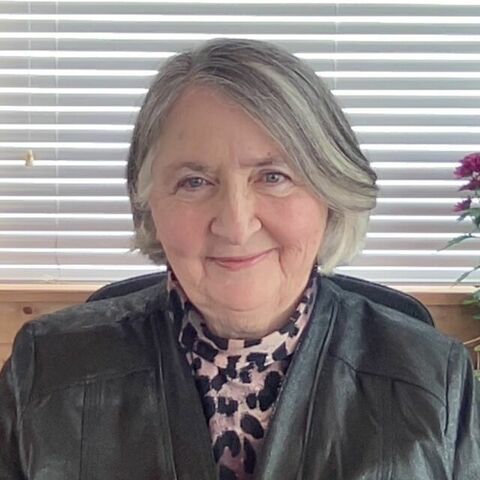
How can we be in this world as challenging as it is and maintain some nervous system stability and also some healing?
We're here doing a practice that could be a bit difficult.
We need to have a balance around what we let in so that we're not pretending to ourselves that everything's fine and also not letting it in so much that it overwhelms us.
Also letting it in a way that we can work with it effectively.
Resma Menekum,
They are a somatic experiencing practitioner,
A therapist,
Wrote the best-selling book,
My Grandmother's Hands.
I really like his approach.
It's all about the body and the nervous system.
Looking it right in the eye,
What is it that's going on?
His new book,
The Quaking of America,
It's a tough topic,
Definitely,
As was My Grandmother's Hands,
Where he was working with racialized trauma.
He works with these difficult issues that affect us all so that we can understand the dynamics a little bit better.
His main priority is to help everyone build resilience and strength.
The Quaking of America,
An embodied guide to navigating our nation's upheaval and racial reckoning.
He's an American.
It's so difficult right now to be in this world with all of the intensity that we have.
A settled body and a settled nervous system where we're not in hypervigilance all the time,
Where we're aware that there is danger and that it's not immediately in this moment,
So we could give ourselves a rest.
We could take some time to build up resilience.
As we have more ability to stay present,
To breathe,
To lower the level of hypervigilance,
Then we have more capacity to be real,
What's going on in the world,
And not have to avoid it to be able to take it in,
In a way that's not overwhelming.
When we are in these situations where we're feeling threat,
Which definitely we have many different types of threat right now,
Then we go into a nervous system response,
A survival response,
A fight,
Flight,
Freeze,
Or fawn.
Our nervous system is always looking around to see what's my situation.
Right now we might be looking at it on a more country level or a global level,
But we also look at it in our personal relationships.
Am I safe right now where I'm sitting?
It happens on all of these different levels.
When we're experiencing there's a heightened level of threat,
We are not able to stay really present and metabolize our discomfort as clean pain.
When we have had some kind of immediate activation,
We want to be able to use something like shaking or cyclic sighing or all of those different things.
We want to be able to safely discharge that energy so that we can come in and do inquiry.
One of the quotes of the book is,
We don't get to choose between pain and comfort.
When we try to choose comfort,
We are actually choosing dirty pain.
Dirty pain meaning we're trying to get around something,
We're trying to not feel it.
Clean pain,
We're going through something.
There's something going on and we're present.
We're acknowledging it and we're working with it.
Healing and growth involve discomfort.
Refusing to heal and grow also involves discomfort.
It can have a negative impact on ourselves,
Our life,
And also we can really see that in the world around us.
People who are,
We might say,
Not doing their own personal work,
Meaning they're in a survival response.
They don't have the capacity to connect with us as a human being.
It causes a lot of problems,
A lot of the pain in our culture.
Emotional pain as well as physical pain and fear,
We accept it,
We work with it,
And it becomes a fuel for growth.
The capacity to really stay present and to work with what was going on.
We metabolize our trauma by presence.
Presence meaning right now,
If you were to look around the space that you're in and notice,
Is there anything too dangerous in the space right now for you to stay?
If there was,
You would go and deal with that.
But as we look around,
What we're seeing and what we're knowing and experiencing in our bodies,
We have a level of alarm and hypervigilance might not be accurate to this very moment in time.
What does it feel like to be sitting here and feeling alarmed and knowing in fact there is cause for alarm,
But right now do I feel safe enough to work with it?
We metabolize trauma that way.
We resolve conflicts.
One of the really important teachings from the Polyvagal Theory,
Stephen Porges and Deb Dana,
Talk about we have to be here in the present moment and not in a state of hypervigilance or alarm,
Not in a survival state,
In order to feel compassion.
So compassion for ourselves,
Compassion for others.
A big part of the work that I do is always to be here in this moment with an accurate perception of what's going on in the moment.
And what's going on right now is that we're stirring things up a little.
We're looking at something uncomfortable,
But that's what clean pain does.
There's something here that we need to be clear about.
We need to be able to feel it.
This helps us to build resilience and strength and the confidence as well that we can handle this.
The alternative to that is that we feel kind of overwhelmed.
We feel like it's no use.
We're hopeless.
We need to work with this in a way that builds that confidence,
That resilience.
Our body settles.
We become more aware that we're not in an experience of threat right now.
As you're looking around the space that you're in,
You could let your eyes take that in.
Take a few breaths.
Let yourself settle.
Our meditation teacher used to say,
The greatest gift you can give the world is a peaceful mind.
I would also say now,
And a settled nervous system.
But when we have all of these things that are going on in the world,
We need to take them in and we need to be able to metabolize them in a way that's going to be okay for us.
The energy that we might have used for suppressing or for being in a fight response,
Being in a survival response is freed up then.
So we don't have to have our shoulders tight for protection.
We could relax our body.
We could breathe and we could live.
The goal of healing is that we enjoy our life.
Dirty pain is when we try to avoid feeling something.
And it feels like urgency,
Avoidance,
Blaming,
Hypervigilance.
There's all these ideas and experiences we have of,
Everybody should get it together because this is awful.
That driver shouldn't do that.
And that person shouldn't vote that way and all of these things.
And it tends to make us hard-hearted.
We might harm ourselves.
We might go into an addictive behavior,
All in service of trying to avoid the fear or the discomfort or the anger.
That's what happens when we're trying to avoid pain.
And we're pretty successful at it a lot of the time until the price becomes too high.
We respond from our woundedness.
It's not our most evolved self that's yelling at somebody.
We physically run away.
We emotionally disconnect.
We run away.
What happens is that we create more pain.
We're not metabolizing our pain.
We're pushing it away.
We're in the same situation,
The same level of threat.
The clean pain is we bring it in and we work with it.
The dirty pain is we just don't have the feeling that we could get through that,
That we could handle it.
And so we try to push it away.
So this practice we're going to do is a tempering,
Conditioning practice.
Discerning in the sense of,
I could stay here and be present with this.
Is it safe enough for me to do that?
And the tools that we use to strengthen us.
Let's start with cyclic sighing.
Breathe in through your nose twice and then out through your mouth like you're breathing out through a thin straw.
As you're breathing out,
Let your whole body relax.
Let your exhalation continue as long as it's comfortable.
Just let your belly soften as you breathe out.
Let your shoulders soften,
Your mouth and jaw.
And then we're going to go into a practice now of looking directly at what makes us uncomfortable.
In something like this,
You might not want to pick a 10 out of 10,
Although if that's what's coming to mind,
You could work with that.
And we're going to do it for three breaths,
This practice.
So part of what we're doing is experiencing that we can look directly at something and then we can pull back and come back into this moment.
When we're looking at something,
We're bringing up something that isn't comfortable or scary for us or that we judge as outrageous or unjust.
There's a lot of truth to all of that.
We're not denying that.
We're working directly with how does that sit in me?
Bring to mind someone who's living on the street,
The look of disappointment on a partner's face,
Bees,
Something that makes you uncomfortable.
And then we're going to imagine that.
Get yourself settled,
Relax your body,
Take a breath.
Anytime you want to come out of this,
Just open your eyes,
Move around so we're not stuck.
Now close your eyes and imagine that whatever it is that makes you uncomfortable is right in front of your face,
Maybe about a foot out in front of your face.
And imagine that you're looking right at it.
And breathe in,
Breathe out three times as you're paying attention.
Don't look away.
Pay attention.
Notice the image.
Breathe in,
Breathe out.
Once you've breathed in and out three times,
Let that image release.
With your eyes closed,
Your gaze soft,
What happened in your body when you looked at that?
Was there any energy?
Did you tighten up?
Maybe you started to hold your breath.
That would be very common.
We hold our breath when we're dealing with something like that.
Did you notice any impulse to move?
And how easy was it to stay with it?
It's difficult to do that.
He's suggesting to do this every day for three breaths.
And I've been doing it for the last several days.
And it's interesting how it changes.
Some things are really blatant,
And others are more soft or nuanced.
But there's always some kind of energy in the body.
Right now,
What's going on in your body?
Let's do something to work with that.
Stand up and shake if you want.
You could let your body move around.
You could do a few more cyclic size.
Release that out of your body somehow.
Shake your hands,
Shake your legs.
Make some noise.
Let your body shake that off.
Now,
Because we're doing this as an experiment,
I'd like to do it two more times.
If you want.
If you don't,
That is absolutely fine.
Pick something else.
Not a 10 out of 10.
Something that makes you uncomfortable or scary.
Close your eyes.
Let that come like it's right in front of you.
Let the image be here.
And then breathe three times.
Inhale.
Exhale.
As you're looking at that,
Let your body soften as you breathe out.
See the detail of the image.
If it's somebody living on a street,
Notice maybe the cement.
If they look cold,
Re-breathe.
And then let the image go.
And notice how you feel.
Notice your body.
Did you tense up again?
Did you get your teeth?
What's going on in your body?
Was it the same?
Was it different?
So this is interesting partly because we walk around like this a lot.
We walk around with our shoulders up around our ears,
Teeth clenched.
We live in a difficult,
Challenging world that also has so much joy as well.
Yesterday when I was swimming,
I saw a heron flying by and it landed over on the shore just near me.
And it's just like,
Wow,
You know,
There's so many wonderful things in the world too.
And we don't really have the opportunity to appreciate them if we're in a survival response all the time.
Now do something to interrupt that.
So you might get up and shake again,
Or just as you're sitting,
Shake your legs,
Your hands.
You might take some deep breaths,
Bring your arms up.
Let your body move a little.
And look around the room again.
And notice if that situation is in the room with you.
So it's probably present somewhere in the world right now.
Working with the example of people who are not housed,
There's many,
Many people who don't have secure housing.
But right now in the space that you're in,
Just notice that that's not happening right now.
And you might do a little bit more cyclic sighing.
So we have many things we do to reset our nervous system.
As we're coming back into just noticing,
We might put our hands on our heart.
What is the level of threat right now?
And are you feeling kind of open-hearted?
Low enough on the vigilance scale that you could notice yourself,
Notice your open heart,
Or sometimes we'll have a bit of a rant going on in our mind.
Could you now come into breath and softening and into some compassion?
These are hard situations to experience,
And they are hard situations to be present with.
So we could appreciate ourselves that we're willing to try this.
And let's do the third one.
Pick something,
Whatever it is that resonates for you.
Close your eyes,
Bring it right center front,
Right in front of your face.
Like it's sitting there a foot or so out.
Notice the details of the image.
Notice how your body feels.
Stay with it for three breaths.
Notice what happens in your body.
Is there tightness,
Sensation,
Energy?
Let the image go.
Come back now into realizing through our experience that we can do that.
We can bring it in,
And then we can let it go.
So that's very different than doom scrolling on social media,
For instance,
Where we're just going after it over and over and over.
And we're reading all these horrible things and activating our survival responses.
That's not what we're doing here.
What we're doing is letting it in and working with it,
Noticing we can come back into regulation again.
So it doesn't mean that we don't care about these things.
We do,
But we're not running away from them,
And we're not avoiding them,
And we're not getting stuck in them.
If you are inspired to do that clean pain practice,
It's just a couple of minutes.
Whatever it is that's coming to mind,
Look at it,
Breathe,
And then do something to release it.
And over time,
That builds our resilience and our confidence that we don't have to avoid something in order to cope.
We can face what's here to metabolize that and to have that experience.