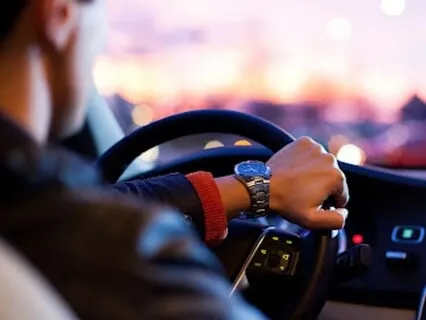
What we're going to work with today is anxiety around driving.
And as I was working with what would be the most helpful,
There's several things that come up.
One is that driving tends to be something that is a symbol of freedom and being an adult.
We feel shame around anxiety generally,
But especially around driving,
It feels like we're a child.
We can't drive ourselves.
We feel like we don't have any agency.
So I think it's really important to look at our nervous system because this is clearly,
Any kind of anxiety and fear clearly has something to do with our nervous system.
As we have general,
More hypervigilance in our nervous system,
Things that used to be a little bit difficult for us are going to be more difficult.
There's going to be more anxiety than there used to be.
So if we look at three years ago this month in North America,
We started seeing COVID and people are being encouraged to stay at home.
So you're safer at home,
Shelter in place.
We didn't know at that time much about how it was spread,
But as it was becoming clear that it was spread through other people's breath,
Social distancing became a thing.
But what happened was we had an extended period of time of at least several months and for all of us,
At least some degree of social distancing and business is not as usual for the last three years.
And that happened on top of everything else that's hard in our nervous system.
So having these experiences of it's safer to not be out in public,
We can't trust other people had a deep impact on our nervous system.
So that's part of the context of as we're looking at this.
So the idea that will help,
The practices that will help are anything that helps us to build resilience in our nervous system.
And when we build resilience in our nervous system,
The level of threat comes down and our neuroception,
Which is our perception of safety and danger,
Becomes more accurate.
All of the things that we do,
Grounding and orienting tools,
Emergency practices,
Breathing,
Holding our own hand,
Tapping on our forehead,
Putting images into a frame,
Working with our eyes open,
Taking our eyes around the outside.
All of those things will help us to have more accurate neuroception and somatic mindfulness.
The inquiries that we do,
That I do,
Are also a way to see what is the reality of the situation.
So our fears and beliefs can be from direct experience driving or from indirect experience.
Direct experience might be that we've been in an accident.
And some people have been in a series of minor accidents,
I have,
And other people have been in serious accidents.
So whatever our body has experienced,
We can't talk ourselves out of knowing that.
And often the appropriate level of vigilance and care and concern gets off kilter.
We become inaccurate in our nervous system.
We have a predictive brain that has a negativity bias that's always looking for what's dangerous here.
Oh my gosh,
Oh no.
We go into catastrophic thinking.
Those kinds of things ramp up the level of vigilance.
So grounding and orienting practices can help to bring us down.
It can help to self-regulate.
So we're going to do some of those.
So two tools that we use a lot,
And if you're familiar with me,
You'll know these tools already,
Is one is tracing and framing.
So we put an image into a frame.
And if it's,
I'm not safe driving,
It could be an image of that.
It could be the words like they're written out.
We put them into a frame.
We notice that we have words or an image,
A frame,
And then there's space on the outside of the frame.
So we do this with our eyes open,
Put it on the other side of the room,
Like you're looking at something,
And then take your eyes around the outside space a couple of times in each direction.
So that bilateral brain stimulation is very helpful in letting our brain know that in fact that's not something that's going on right now.
The other thing that happens is when we have sensations or energy,
Which fear and anxiety we feel in our body as well,
Then that can feel like they're attached to those words or to the images.
So we could notice the location of the energy.
When you think about driving,
Do you feel an overall anxiety?
Your whole body feels kind of restless.
Sometimes we have a feeling of like something in the pit of our stomach.
So we can notice what is the location?
Where does it end?
Energy doesn't go on forever.
Even if it's in our whole body,
It's not across the room.
It's not 20 feet away.
So when we can bring ourselves into it,
It's specific.
We can notice where is the edge?
Is it hot or cold?
Is it moving or still?
So I have a lot of these practices in other places on Insight Timer.
We could see them.
So as you're looking at the energy and sensation of our inner body,
How that is linked to the thoughts in the mind,
It makes us feel like they're more real.
Just like we looked at the image and the space around the image,
We can notice the space around sensations as well.
All of these ways we can work with thoughts and with sensations.
We can use breathing practices.
We can hold our own hand.
All of these things we want to do is to stay grounded in the present moment.
In the present moment,
You're not driving,
You're not in danger.
We're doing an inquiry to see what's going on in your nervous system.
So notice when you think about driving,
What are the thoughts that come to mind?
Some of these are true.
We don't know what's going on with other people.
We can't always trust that people are awake and alert,
That they're not drunk,
That they're not overly tired.
We don't know for sure what's happening with other people,
And that's true.
We also don't know if sometimes people will have a feeling like,
I don't trust myself.
What if I have a panic attack or a flashback and I'm driving?
So this kind of work that I was talking about with our nervous system of,
If you have panic attacks,
It's natural for your predictive brain to say,
Well,
If you had one when you were at home,
Maybe you're going to have one in the car,
And then it's going to be a disaster and blah,
Blah,
Blah.
And it kind of goes on from there.
So we can do work aside from driving.
We can do work on,
If you're having panic attacks or if you have high anxiety,
It's really helpful to regulate your system and let yourself come back into self-regulation on a regular basis.
And what that will do is it will give you confidence.
Two things.
One is with this somatic awareness,
I know what's going on in my body.
I notice I'm starting to hold my breath.
I notice I'm starting to go into higher anxiety or panic.
And then before it gets too far,
I can bring myself back.
I can regulate again.
And we also have the experience then of what works the best for us.
So cyclic sighing,
That deep double inhale,
Long,
Slow exhales,
Really effective for some.
Holding your own hand,
Feeling our seat and feet,
Looking around the room for cues of safety.
All of those are really reliable for general anxiety or panic attacks.
And then we can also apply that to the car if we're driving and we feel like there's something going on.
Sometimes it feels scary to be in control of something so powerful that could hurt other people.
Sometimes we have a feeling of I'm okay on a side road,
But I'm not okay on an interstate,
Or I always go around the long way so I don't have to go over that bridge.
There's a lot of different ways that that might work.
And then we can also apply that to the driving.
So we can work with all of those.
It's important to work with regulating our nervous system.
That's at the root of what will help with all of this.
And then from the more regulated,
Stronger,
Resilient nervous system,
We'll have more strength to cope with something specific like anxiety around driving.
So we're going to do a slow motion walkthrough again.
We did the last week with social anxiety.
So some of you are familiar with that.
So take a moment to just kind of settle yourself into whatever chair you're in.
Look around the room.
Notice cues of safety in the room that you're in.
You could hold your own hands.
I really like that one.
Actually,
It feels like there's warmth and support.
And then let's start going into a visual.
As you're doing this,
Keep in mind that you're here doing a practice,
That you're not actually in your car,
You're not actually going to hurt somebody.
Nobody's going to swing into your lane.
There's no danger here.
What we're doing is a visual walkthrough to see what it is that's of the most concern and how can we regulate and have the experience in our nervous system of calming ourselves and regulating.
So one of the first steps,
And you just feel free to adjust these for what's coming up for you,
Is I pick up my keys and I look outside.
I notice my car is out there.
I know I'm getting ready to drive.
And notice how you feel in your body at that step.
So just thinking about going on a driving trip can cause a lot of anxiety in our body and the fear might start to rise.
We could notice what it is,
What specifically,
What are the images specifically that are coming up,
And what are the specific feelings and sensations in your body.
So is it that you started holding your breath?
You could take a few deep breaths in,
Out breaths.
You could really notice how you look,
Like take a step back so you're not looking out of your own eyes.
See yourself.
I'm standing by the door.
I have the keys.
I can see my car outside.
Look at that image and if there's something about that image that makes you feel uneasy or feels dangerous,
You could pause here,
Put the image in a frame on the other side of the room.
Very helpful to keep our eyes open for all of this.
Notice what that experience is.
The image is there.
It's in a frame.
There's space on the outside of the frame.
I can see myself standing at the door.
I've got the car keys.
I look worried and maybe there's a caption on it.
What if I crash or something?
So you might have words in there too.
And then look at the image.
Notice it's in a frame.
Notice there's other things around the image.
So if you have it on a wall on my wall,
I have a plant.
I have some pictures.
I have windows.
I can see my fridge.
Notice what else is on the wall over there and then shift your eyes from what's inside the frame,
Everything else that's on the wall and then focus again on the inside of the frame and broaden your awareness again and then come right back into the image again.
And now this time,
Notice the image,
The frame and the space around the frame.
Bring your eyes up to the space just above the frame.
So you're not looking directly at the picture anymore.
And take your eyes around that empty space a couple of times in each direction.
Physically move your eyes around that space.
Take a couple of deep breaths and notice when you look back at the image,
What is your experience with that now?
So you could do many times on each of these steps.
If there's still quite a feeling of activation,
You could take a long time here.
You could do that many times.
And once it starts to feel like you're a little bit more settled,
Then let's go to the next step.
So I'm opening the car door.
I'm sitting in the driver's seat.
I haven't started the car yet.
And see yourself.
So you're not looking out of your own eyes.
See yourself sitting in the car and notice the cues of safety.
Notice that you can lock your doors.
Nobody can get in.
Notice that you can look around.
Is there anything alarming through the windshield?
If you look around the sides and the back of the car,
And then as you take that step back and see yourself with the car,
You and everything in your surroundings,
Is there anything dangerous there that would be causing this if you're feeling anxious about it?
So probably there's not a lot of danger right here in this moment before you even start the car.
However,
You might have a lot of anxiety.
So bringing our neuroception,
Our perception of threat into more accuracy is helpful right now.
There's actually nothing scary right now.
I'm planning ahead that something scary might happen.
But right now,
Take a couple of deep breaths,
Hold your hand,
Feel your seat,
Get comfortable in your seat too.
Adjust yourself so you're comfortable and really feel the support of the seat.
Feel your feet.
You can put your hands on the wheel.
Notice what you feel like and take a few minutes here if you want.
And then when you're ready,
Come back into the next step.
So we start the car,
Drive to the end of the street,
And we turn onto a busier road.
Whatever you're visualizing,
Give yourself a moment to see that next step.
Now see what's coming into your mind.
So you can use all of these tools like framing.
You could also just tap on your forehead,
Take your attention away from the images and to the sensations,
Sound of the tapping.
You could notice if there's sensation in your body.
Generally,
We work with the images and thoughts first,
And then we go into the body and notice where is the sensation,
What does it feel like.
Notice if it's accurate.
So when you're thinking about or visualizing driving to the end of the street and turning onto a busier road,
I mean,
There might be situations where you're on an interstate and people are tailgating you or acting aggressive.
There might be situations where you could go a different route or something like that.
But when you're looking at the situation,
You're not actually in any danger right now.
What we're doing is we're using the predictive quality of the brain to predict what we're scared of,
To let us know what we're scared of,
What could go wrong.
And then we're looking at that,
We're noticing this is an image,
This is a sensation or energy causes in my body.
And regulate,
You could put your hands on your heart,
You could tap yourself down,
Kind of tap your body.
Notice what it feels like,
Oh,
I'm in a body,
Actually right here.
You could look around the environment you're actually in,
Look around the environment for accused of safety.
So we're pushing ourselves a little bit and then we're coming back into regulation.
So when you're ready to take the next step,
You could visualize something that's a little bit more alarming that you're more scared of.
So if you were to think about there's a bridge coming up,
A lot of people get worried about going over bridges.
But for you,
It might be something like that's totally easy,
But it's something different.
Just notice what comes to mind when you're thinking about this and let yourself see that,
Let yourself visualize that.
And as you're doing that,
Notice that you're looking at an image.
So if you're looking at a bridge up ahead,
Notice the guardrails are in place,
Guardrails are very strong.
Notice there's no accident on the bridge or if there is an accident,
Look at that.
And well,
That's the case,
What would I do then?
All the traffic would slow down.
I'm not going to be pushed off the edge of the bridge into the river.
So notice what's coming up in your mind that might be alarming.
We're doing this walkthrough so that we can allow ourselves to settle.
Work with the images.
What is it that's alarming about the images?
What is your brain predicting as the worst case scenario?
And then work with the image.
Put it in the frame,
Take your eyes around the empty space a few times each direction.
And notice that you might be feeling more anxiety as you're doing that.
That's normal,
It's common.
And as you're visualizing this and as you're working with this in real life too,
You might also bring somebody supportive with you.
So you could have a friend with you,
Not someone who's going to backseat drive,
But someone who's going to be supportive.
You might have some favorite music on.
Music can help distract our mind from some of the catastrophic thinking.
Nothing that's distracting or kind of that's going to pull you out of awareness,
But something that's calming and something you enjoy can be helpful.
And as you're breathing and as you're looking at this,
Imagine that you're bringing your shoulders up.
You could do this in your body as you breathe in.
And then as you breathe out,
Let your shoulders release.
Breathing in,
Let your shoulders release.
Let yourself feel into that.
Let your body relax.
Even as you're looking at images that might be what's causing this fear or anxiety.
So catastrophic thoughts are just images.
They're not reality.
They might have taken bits and pieces,
Like a dream will take bits and pieces from real life,
Put them into some kind of scenario.
But right now in this moment,
You're not actually in any danger and neither is anybody else.
Notice that you could imagine that you're calm and alert and that you're driving safely.
What's the actual level of danger right now?
So let's move into that.
Imagine that you're having a good experience driving.
And this might be something you very much remember from the past.
And maybe sometimes now you enjoy it.
Maybe also the anxiety has gotten to the point where it's really hard for you to enjoy driving anymore.
As you're looking at that,
Take a few deep in breaths,
Long exhales.
And imagine or visualize yourself driving.
You're confident,
You're secure,
You're alert,
You're driving well,
You're safe.
Other people are safe.
And imagine that you're just going along,
Whatever the issues are,
You see them.
Even if someone's swerving in front of you,
You might slow down a little bit.
If you are worried about an interstate,
Maybe you're not on an interstate,
Maybe you've gone on a secondary road.
So let yourself have an enjoyable experience in your mind for a moment.
Feels good to be out.
You've got that freedom of being able to go somewhere you want to go.
Notice what you're seeing.
There's no danger in your sight.
We're not visualizing a scary drive in the ice conditions or something.
We're visualizing a good,
Regular drive where there's nothing going on.
And as you're pulling up to your destination,
Notice what that feels like.
You stop the car and maybe you're going to see a friend and they're standing on the sidewalk waiting for you to get out of the car.
And notice that you've arrived safely.
What does that feel like?
We pull up,
Maybe it was a little bit nerve wracking,
But then we made it through okay.
We used our eyes,
We regulated our body,
We made it through okay.
Notice what that feels like.
You're getting out of the car,
You've had a good experience.
So part of what's helpful for our nervous system is to have a good experience.
And in this situation,
We're deliberately visualizing a good experience.
But what happens that makes it so hard to drive is that our nervous system is imagining all kinds of negative experiences.
So what if this happens?
What if that happens?
Someone mentioned pedestrians or dogs or pets or something on the sidewalk.
What if somebody jumps out in front of me?
Am I going to be able to respond soon enough?
So we have a lot of different things that our nervous system through hypervigilance presents to us that we act as though they are true.
We respond to them as though they are true because that's what our mind does.
And so by counteracting that a little bit with a positive visualization,
That can also be really helpful.
So as we're coming kind of towards the end of the somatic inquiry,
We might want to practice this a while,
Like take some time and really notice what are the thoughts that are coming into my mind that are so alarming?
These are catastrophic thoughts for the most part,
Worst case scenarios.
These are not things that are going to happen every time you get in the car.
So it's true that sometimes somebody might be texting in front of you.
And it's also true that you can notice that you could stop and let them go by.
You could avoid a collision by being extra alert.
So when we're calm and regulated and alert,
We have a lot of ways to protect ourselves.
And the more hypervigilant we get,
Regular vigilance,
Appropriate vigilance is great and hypervigilance actually makes us less safe.
So doing these regulating practices can actually increase the safety that we have.
We can use our eyes now,
Right now,
You can look around the room again for cues to safety.
But also when we're driving,
You could just be paying attention,
Looking around,
Noticing what's happening around us.
So maybe not to be arguing with somebody in the car with you.
If somebody is a backseat driver and they make you feel anxious,
Maybe leave them at home.
Like try not to drive in situations like that.
Try to be well rested.
Do some guided practices or breathing practices or something before you get in the car so that you're feeling more steady and more confident.
Make sure that you're not overly tired,
Over hungry.
If you're worried about something,
See if you could leave those worries behind while you're driving so that you can be really present.
All of those things are helpful.
And then the other thing is to acknowledge how hard it is to be an adult in our world and how much of a responsibility it is to drive and to be responsible for our own safety and life and somebody else's and the people around us.
And that when we have a really hypervigilant alarmed nervous system,
That's the cause of this fear and anxiety around driving.