Welcome to the Habits of Leadership podcast brought to you by Cut Through Coaching.
Helping leaders and their teams to thrive professionally and personally.
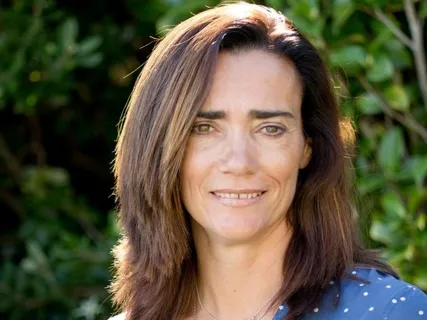
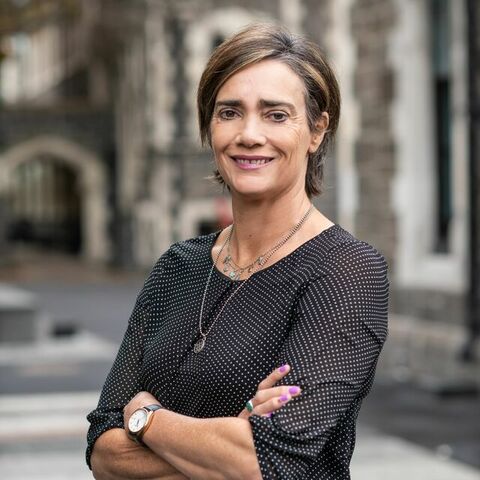
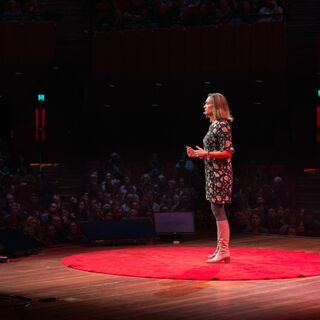
In this episode of the Habits of Leadership we chat with Dr Lucy Hone about the tragic death of her daughter in a car accident.
If this brings up issues for you,
You'll find a link in the show notes to crisis support lines in your country.
Hello and welcome to episode 30 of the Habits of Leadership.
My name is Dan Hasler and joining me today is my colleague from Cut Through Coaching,
Mr Tim Perkins.
G'day Dan,
How are you?
I'm very well mate,
How are you?
I'm very well today.
Excellent.
So not a lot of people know this because you told me that you weren't going to tell anyone but I'm going to tell everyone right now that you're working on a book.
And tell us what that book's about Mr Perkins.
I'm so glad that my secret is safe with you Dan.
Yeah I am working on a book.
I've been working on it for a little while and will continue to be working on it this year and who knows for how much longer but I'm working on a book around the idea of the relationship between resilience and mindset and how people's mindset dictates the way that they respond to adverse situations.
Yeah right and so for part of the research for that book you have been chatting to various people from all walks of life.
That's right,
I'm doing interviews with lots of different people from,
As you say,
From all different walks of life so you know some of those interviews have included someone who's a Holocaust survivor,
A wonderful old lady,
Someone who lived through apartheid South Africa and white South African working with the black South Africans and trying to help before escaping herself.
And then more recently as we're going to discuss today a really interesting interview with a woman named Dr Lucy Hone who had a terrible tragedy in 2014.
So tell us a little bit about Lucy.
So Lucy is a really interesting person.
She's originally British.
She lives in New Zealand in Christchurch and she has a background,
She's got a PhD in positive psychology which we're going to explore a little bit during this interview today that you can hear snippets of today and she had an opportunity to put her positive psychology training into practice because she went through a horrible process of tragedy and grief and slow recovery from the loss of her daughter in a terrible car accident.
So you said that we're going to hear snippets of this interview because you chatted to her not for the podcast but for your book but then we listened to the recordings and we thought oh it might be worth sharing some of that.
As my technical advisor Dan,
You helped me with the podcast of this and then once we realised that we had some really interesting and valuable information here particularly because as some of our listeners will know we did a webinar last week based around the concept of resilience and that really landed extremely well with people.
A lot of people are really trying to come to terms with how they manage their response to this COVID-19 madness that we all find ourselves in and resilience is such an important thing for us and for our kids.
So yeah the timing of this with Lucy,
It seems a good time to share some of what Lucy had to say from that interview.
So back in 2014 Lucy's daughter was involved in a car accident and the first snippet we're going to hear is just sort of how Lucy was feeling in the immediate aftermath of that.
Yeah so they were going away on a holiday with some family friends and at the last minute in a situation that's not unfamiliar to most of us I'm sure it's all too familiar this story really.
Her little girl Abby asked if she could go with her friend who was going in another car,
One of the other families and that turned out to be a terrible situation.
Lucy's very good friend and a woman named Sally and Sally's daughter was also killed and Lucy's daughter Abby the three of them were killed in that accident.
And this is Lucy describing how she felt when she heard.
I sort of feel fairly terribly.
I'm not really ashamed of it but I'm not thrilled about the fact that what went through my head right then was right,
Didn't see that coming.
Now that's going to be the rest of our life story.
But it's in a quite a pragmatic,
Realistic way.
I mean I you know then on top of that that kind of rational pragmatism was all the physical nausea,
Dry mouth,
Wanting to you know get away,
Walk,
Caged animal,
Lying on the ground walking,
You know just a lot of physical stuff going on as well as the pragmatic and I went and phoned my sister.
Anyway so we then got in the car,
Police car and the dear man Craig drove the four of us.
The four hour journey home,
In fact they swapped us over to another police car that was Christ Church based halfway and I think we got to the hospital at 3am.
And then that is,
And my sister's lot arrived pretty much at the same time as us.
And that's certainly you know grim because then you have to go to the morgue.
So hearing there from Lucy,
You know we're nearly six years after the event now and although her response may sound quite pragmatic in that aspect of the process,
She was very upset when she was talking to me afterwards.
So I mean the reason you're chatting to Lucy for your book though as you alluded to before is the idea of her mindset and her resilience in this circumstance and what I found particularly interesting from listening to the conversation you had and also you and I both heard her speak at a conference a couple of years ago is the fact that she's used a lot of the principles that we talk about and we use in and around positive psychology in order to help her grow from this in a sense or certainly at the very least get through it but in another way almost you know grow.
That's right so completely unrelated to this prior to this all happening Lucy was very interested in the world of positive psychology,
So interested to the extent that she went and studied at the University of Pennsylvania under the really big guns of positive psychology,
Marty Seligman who,
Professor Martin Seligman who's the father,
The coiner of the phrase positive psychology and some of the others that you'll hear Lucy mention in a minute and really what they're exploring is what are the character traits of people who are able to have a high sense of well-being,
People who respond in resilient way to situations and how can those characteristics be taught,
What sort of characteristics are they and how can they be taught and so she learnt about a lot of this stuff in a very textbook sense and it all made perfect sense to her at the time but what she really discovered afterwards was a slight dissonance that she had between once you've actually got to put these into practice and she's really had the opportunity to put them into practice but this next little bit we'll hear from her is a little bit about her studies there.
I went to study with Marty Seligman and Karen Riewicz and Chris Peterson and all the rest of them but Karen Riewicz is probably the most instrumental person actually on that course in terms of resilience because she wrote the comprehensive soldier fitness training programme and so she was one of our lecturers while I was there and so I really feel like I learnt everything about resilience from her and then what they do well there is that of course it is a holistic model and so it is all that we have Barb Fredrickson who was our positive emotions lecturer and Chris Peterson around strengths and Shane Lopez around hope.
Yeah so Karen is the kind of real-time resilience person but on top of that when I came to write my book really all of it folds in and I'm thinking a lot about that as we're creating a lot of real-time resilience strategies,
Webinars and tip sheets for people right now for all sorts of organisations and community groups and it's all of those things I learnt there.
So you start to hear her exploring some of what happens in this as she referred to it this holistic model of resilience and this idea of positive emotions and so this is the PERMA model that some of our listeners would be familiar with which is the work of Maddy Seligman around this idea of understanding our strengths,
Recognising what our strengths are and then as she mentioned there some work around hope as well and what it is to have a hopeful personality and developing that hopeful personality and how that can assist us in you know in what we're describing here,
The story we're telling here with Lucy Hone is a story of really horrific trauma and the resilience that's required to respond to that but then the same principles apply in much more day-to-day sort of resilience that's required as well.
And then you go on to talk about the I guess the analogy that she can draw between how she was feeling in that time but then since obviously 2014 particularly living in Christchurch you know they've gone through the earthquakes,
They've gone through the shootings and now you know dealing with COVID-19 it's quite interesting to hear how Lucy talks about observing what she's seeing in Christchurch.
Yeah and what she talks about here Dan is this idea of when things go really wrong for people they look for,
We try to make sense of things so we look for security,
We look for comfort,
We look for our version of safety which is about trying to make sense of the world and trying to protect and look after what it is that gives us structure and a sense of safety and reduces our sense of anxiety and of course that ties in beautifully with what we're all going through now with the COVID-19.
I mean that's what I've learned in Christchurch is and I'm right here again with just all these different phases that you go through,
The honeymoon phase and everyone desperately trying to do things you know that's what all the buying of toilet paper is about,
It's just people controlling what they can control.
It's not really their fault,
It's how we're hardwired isn't it to get ready to nest and hunker down and protect our young.
So yeah she sort of gives an idea there that you know there's some interesting psychology going on for all of us here as we're trying to think about how we're going to get through these coming months and this is a classic response to this sort of uncertainty and the anxiety that comes with you know a lack of certainty which doesn't sit well with us,
We like certainty.
Yeah of course and people you know are criticising people who are going out and stockpiling and you know I guess to some degree perhaps rightly so particularly when we've had assurances that you're not going to run out of stuff and we'll be able to provide but I know we've not caught it there but in your conversation you were both reflecting on the fact that people who are criticising people for doing these things probably don't quite understand it's a perfectly normal human reaction.
You know I can't control the future but I can control how many rolls of toilet paper I have in my house right now and it's almost an absurd example but it's a very real one which we've all seen.
Yeah and I think what's upsetting is more in this particular situation around the toilet paper although perhaps we don't articulate it so well is a sense of selfishness which has really got nothing to do with the hoarding of it,
The hoarding itself is a natural psychological response,
I'm not going to have enough,
I'm feeling anxious about the future,
What can I do to support myself and protect myself and my family but the way it's playing out is a selfishness and as you pointed out there Dan you know we've been assured there won't be,
I don't know how many people have actually run out of toilet paper,
I haven't come across anybody yet that's actually run out and you know even if we do in the short term I don't know how big a drama it is but this is more about the psychology of trying to have control over our lives.
Yeah okay so from there you then really explored this idea of what she referred to as acute and prolonged kind of trauma and again it's an interesting analogy because in this part she's actually talking in the first instance about the earthquakes but then you could probably quite easily see that as you know we're probably all feeling an acute challenge now but let's be clear it's going to be fairly prolonged as well.
Yeah so it's really interesting the analogy she uses and the fact that she is from Christchurch New Zealand is particularly pertinent because the earthquakes in Christchurch,
The fallout of that is still happening and will happen for many years still to come,
This is a very prolonged traumatic experience for those people who are involved.
The death of Lucy's daughter Abby was a very different experience to that you know the actual accident was an acute situation,
The aftermath of which is obviously far less acute but in a sense it's a really interesting one to try and explore because with the earthquakes in Christchurch one of the things that Lucy talks about is the fact that which many of us probably didn't know,
I didn't know,
There were 10,
000 aftershocks and so people lived with this horrible sense of if I go to bed tonight am I going to wake up safe,
If I sit down to dinner now with my family are we going to get through this meal safely,
You know is the floor going to come out from underneath us,
Are we going to be separated,
Will there be death,
Will there be destruction and it's that awful guillotine hanging over people's heads which is a different sort of resilience is required to deal with that and as you say there's a good parallel with what's happening with COVID-19 now because this is a sustained difficult anxiety that we're feeling as opposed to you know what happened in Abby's case.
One of the most interesting things for us all is to live through a prolonged,
An acute and prolonged disaster so you get the anxiety from the moment and you know honestly I don't even think any of my Kiwi mates understood the aftershocks we would get but we got over 10,
000 aftershocks and we had something like six earthquakes over a magnitude five so those are really nasty substantial earthquakes that really make you think oh my god am I going to die in this one and so they you lose your sense of security you know you're you're there's lots of associated losses around that and then you get the long-term recovery phase which is just you know just the feeling helpless for so many people when they can't get their houses rebuilt and so it has been really very interesting from a professional point of view.
So as you as you hear Lucy talking there recognising that you know these sort of things happen in many guises and and but the actual skills that we could put into action to cope with those and and what we're going to hear her talk about now is this very simple sort of technique that she uses where she talks about whether the behaviours the actions and the thinking that we put into place are actually going to be beneficial for us are they going to be helpful or are they going to be harmful?
Oh and I love this because I mean the title of our podcast is Habits Habits of Leadership so things that you can actually do and obviously whilst Lucy's talking about you know a particularly extreme case hopefully one that you know we never have to deal with but unfortunately people do on a daily basis what I'm hoping will come out of this is that people will recognise that we have a choice about how we respond to things on in almost every moment right?
Yeah that's right Dan because she actually talks about resilience literacy here and in order to develop those habits that you're referring to it's about recognising having the language having the thinking that allows us to respond in a way that is deliberate and chosen and the choice that she specifically refers to here from the outset is this idea that in the very early days after this horrific accident when the fellow who was driving the car that ran into the car that killed the three people is going to court and she and her husband encouraged to go and sit in and give a witness statement a witness impact statement and to come face to face with the guy who has in effect killed their daughter and this is obviously a horribly confronting consideration for her and what Lucy does here that really is extremely helpful and as Dan said a minute ago there this is something for us all to potentially take something from is instead of just being caught up in a lack of choice she stands outside of this and asks herself a very deliberate question will it help me or will it harm me to actually go into the court and see this man and what benefit could there be for me and so she realises she has a choice and she makes a decision we're going to hear about that now.
It is a good example that court case Tim because I think it was the first time that it made me realise that my training was at odds with the traditional grief literature and recommendations because we had victim support come and see us and they brought the victim impact statements that we had to fill out and then they told us so you have to fill out these statements and then you come to court to read them in front of the driver and I remember looking at the statement going oh my god even the statement is horrible I don't want to do that it was all about just dragging up all the awful things and the fact that they assumed that we would go to the trial and that was probably the first time I remember thinking oh actually just is that going to help me or is that going to harm me and what could we be doing that would be more helpful in that time and so I guess with all of my work what I'm really seeking to do is to help some people not everyone but some people realise that they can be active not passive participants in their grieving process and where that comes from is this huge body of literature that shows that the ways that we choose to think and act have a huge impact on how we manage to navigate trauma and adaptation to loss so just recently for example in the last week one of the activities I've been doing with HR people and middle managers is just getting them to just saying to them okay so the way we choose to think and the way we choose to act have a huge impact on our resilience at times like this so just for a moment sit down and think about one way that you have thought that has boosted your resilience this last week and one way that you've acted that has boosted your resilience this past week and look at those and can you see how those things have made those choices have made your journey through this really challenging week that bit easier so we've been kind of having that conversation and then I've said to them actually turn those into a grid so that this is the top half is resilient thinking and now challenge yourself to think also what is one way that I have thought and one way that I've acted that probably hasn't helped my resilience so you know is that your immediate diet and is that staying up late is it drinking too much wine talking to people who have just got really overwhelmed you with detail that hasn't helped you and then getting them to look at that quadrant so they've got you know thinking on one side acting on the other and then resilience above the line and non-resilient thinking below the line and so okay so look at that and go okay which of these ways of thinking and acting is helping or harming you in your quest to get through this particularly challenging time as best you can yeah I really you know love the idea that you can control you can make a conscious decision as to what you're about to do is that going to be helpful or harmful and what I particularly get from what Lucy's saying here is a lot of the times you know when we're talking about these things we're talking about somewhat if we're being honest you know as a as the objective person in an organization who've gone in to help them or whatever often you think this is a pretty trivial issue that you're choosing to get really head up about here you know what have you thought about as she talks about that getting above the line so to hear somebody talk about being able to make a choice like that over something so devastatingly you know challenging for me that's that's the real kicker for me and and recognizing the world if it works here I guess the challenge is is it a personal trait or is it something that can be learned and obviously Lucy's life's work is about giving the message and giving people the skills that absolutely it can be learned and it can absolutely impact the way you live your life yeah that's right and she she is of the belief that some people have natural traits that are going to predispose them to being more resilient people however as you say there Dan can it can it be taught and absolutely as you say it's her it's her life mission these days to teach that and some people are going to be able to pick it up better than others and some people it's going it's going to help everybody whatever level they pick it up at but if we go back to her making that choice it would appear to me to be the most natural thing in the world for somebody who's been through such a horrific ordeal as she said you know in the research that she's done the worst trauma that an adult can face is the loss of a child you would have to think that Lucy has every right to absolutely fall in a heap to get into bed and pull the covers up and never want to get up out of that bed what she's taught all of us through this is the idea that she wants to be she wants to own the grief she she wants to be in charge of it yeah you're right Tim and I think you know we're going to round out this podcast with possibly what I think is one of the most beautiful messages that came out of certainly when I was listening to the recording of your conversation this just this hit me square between the eyes because you know I'm we mentioned just briefly there about you know above and below the line and one of one below the line behavior that we often talk about is you know blaming and let's be honest you would absolutely feel entirely you know in the right to be blaming the person who was you know caused this this trauma in our life and yet remarkably Lucy and her family almost refuse to blame and she was telling a story of her son who really articulated the the desire not to blame he wrote the most beautiful piece on Facebook straight afterwards to saying anybody who blames the driver simply doesn't get it and it's just so beautiful and he was just 16 four days after she died it's just like a family forgiveness thing that then united us and and I think he's a real family strength of ours is fairness and yeah wanting to to understanding that having some compassion actually I haven't really thought of that but it is combined with compassion isn't it he didn't mean to do it that's the compassionate bit which I've never really it's more than just forgiveness it's the empathy of understanding that he didn't intend to do it I felt awful for him and we had three children two boys and a girl just like us pretty similar age you actually and one of the things that people write to me about a lot is is not blaming others and after the my book came out out and whenever it was we had so many messages from people saying oh you just talking about not blaming the driver has changed my life you know I had some family bus stop at Christmas five years ago and I've just realized that it is really harming me there's lots and lots of stories of people knowing that forgiveness is the only way forward what an extraordinary thing to say that forgiveness is the only way forward and the incredible empathy that Lucy displays there when she's talking about the driver and when you know she she states that he it wasn't his intention to do this this is the last thing that he wanted and it's ruined his life as well and she actually communicated with the driver for a while after this accident and I think I'm always interested in what people carry as a result of feeling slighted and the negative impact on the person who does that carrying and with Lucy and her family they they just seem like the most incredibly evolved people I mean as she said her boy was four days shy of 16 years old when he made that statement and I think for both of us Dan you know as parents of young kids you know it's just such incredibly impressive behavior he sounds like a very advanced soul that boy and and I think that he'll be all the better for it because he's chosen to let go yeah absolutely look obviously we took out only very very slim pickings from your interview there but if people want to hear more about Lucy's work or find out more what would be some good places to go looking yeah so Lucy works for the New Zealand Institute of Well-being and Resilience and if you look up that NZIWR we'll put a link in the show notes we'll put a link in the notes and that that tells about her personal story and then also gives you access to the book that she's written about the death of her daughter and I know linking there as well and another point of other fair few webinars together as well at the moment particularly around obviously dealing with COVID-19 in particular yeah that's right yeah good job mate I'm keen to see how that all comes out in your book which nobody is supposed to know about yet but yeah look we touched on some pretty heavy gear there so if that episode has brought up any issues for you if you're in Australia you can call 5 line on 13 11 14 and we'll also put a link to a list of crisis lines that you can access no matter what country you are listening in from but as we always say if you found that conversation worthwhile then there's a fair chance that someone you know will so feel free please to share it as far and as wide as you can also please make sure to like the podcast subscribe to the podcast and comment on the podcast because doing that just makes it easier for other people to find us yeah and I'm also doing more interviews for this book that we're trying to put together Dan so if anyone who's listening in has a story that they think would be really valuable for me to know about about someone who has shown real resilience not necessarily through tragedy through all sorts of situations but someone who's showing resilient characteristics and and a mindset that allows them to move on through adversity then please get in contact with me the best way is just through the podcast website habits of leadership.
Com hit us up on the podcast page there and there you can also submit questions for upcoming q&a episodes and make suggestions for guests that you might like to hear on the podcast but until next episode cheers Tim thanks very much Dan and take care take it easy.