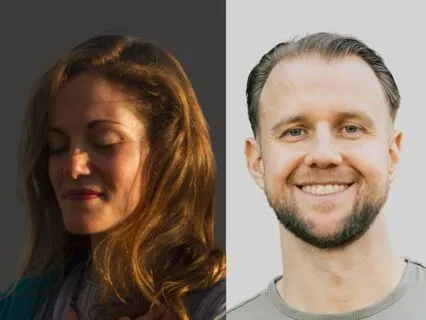
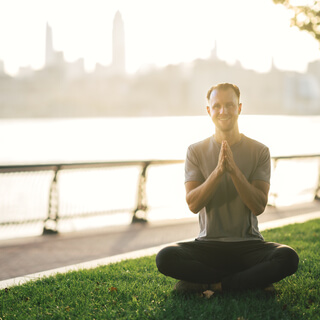
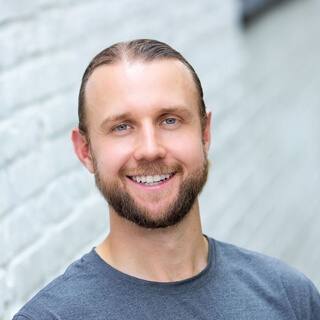
Today we have guest Hilary Jackendoff.
Hilary grew up in South Jersey,
Which if you're a native to North Jersey like I am,
You know South Jersey by its more appropriate name,
Pennsylvania.
Hilary Jackendoff is a Los Angeles-based ashram-trained yoga nidra and meditation teacher and teacher trainer and human design reader.
In 2008,
She began studying tantric yoga and spent two years formally training while living at an ashram in Australia.
Hilary aims to demystify ancient wisdom,
Providing accessible,
Pragmatic approach to spirituality.
When working or practicing with Hilary,
Expect a blend of no-nonsense,
Apical wisdom,
Non-hierarchical learning environment,
Playful irreverence,
And plenty of laughs because spirituality doesn't have to be so serious.
I think I'm speaking too much of her bio,
But I'm just going to continue.
Hilary offers yoga nidra trainings,
Meditation teacher trainings,
Teacher mentorships,
Online classes,
Human design,
Self-inquiry coaching,
And corporate wellness solutions.
She was a founding teacher at the Den Meditation and co-creator of the studio's meditation teacher training,
As well as a Wanderlust Festival teacher.
Her work has been featured in Refinery29,
Newsweek,
Well and Good,
Business Insider,
And Good Morning America.
She shares practices on Insight Timer,
Yoga International Aura,
And Yoga Wake Up.
Hilary,
Welcome to the show.
Thank you for having me,
Lou.
Wow,
I don't know that I've read that full bio in a while.
It's always funny hearing our bios read back to us in some ways.
Oh my gosh,
I have so many different versions.
It's ridiculous.
I don't even know where that one is.
If you get to the point of ever having a bio,
For me personally,
This is such an elitist thing in some ways.
It's such a frustrating thing when someone asks for a bio and I need to change it and whatnot or make it fit this one thing.
Anyway,
We're going way off a side tangent that I wasn't expecting to go on.
Hilary,
I want to start a place where you're an expert in and where last week we were supposed to have this conversation.
For multiple reasons,
I'm glad we actually waited until this week,
But you were explaining that how you woke up,
You weren't feeling that good,
You didn't get a good night's sleep.
I'm so curious,
Knowing that you have a background with sleep and sleep issues,
What is not sleeping well for you?
I ask this because for me,
It's way different than when Kelly,
My partner,
When she doesn't have a bad night's sleep.
She's like,
Yeah,
I woke up three times and fell right back asleep.
To her,
That's a bad night's sleep.
What is not sleeping well for you?
What does that mean?
Well,
I've had sleep issues my entire life since early childhood.
I couldn't sleep out at people's houses.
Going on vacation,
I always had trouble sleeping.
This has just been a long theme of my life,
Which is a big reason why yoga nidra has been such a powerful practice for me.
Most nights I sleep,
I would say eight to nine hours.
Not a good night of sleep for me is sleeping six hours.
It varies.
If I'm going through something stressful in my life,
If I'm on deadlines,
Deadlines for me really mess with my sleep,
External deadlines when I'm doing projects for companies or creating content.
That typically results in an insomnia cycle that leaves me deeply reliant on yoga nidra during the day to find that restful presence that I actually need to deliver on the deadline.
But I would say that generally a bad night of sleep for me only happens once a month thereabouts.
Sometimes it's around the full moon.
Sometimes it's with my lady cycles.
So there's different factors that influence it.
Last week,
I don't know what happened,
But I was just not having it.
We had people in to do work at my house the previous morning and coming that morning.
Anyway,
Super boring.
I didn't realize how big of an issue it is until having my own bout of insomnia starting December of 2020.
It's really interesting because it was actually after I had one of the most healing sessions I've ever had with a coach.
That night,
I didn't sleep a wink.
There was so much energy moving.
For whatever reason,
I think that reorienting of energy for months,
I had multiple sleepless nights and most of the time couldn't fall asleep until 4 or 5 a.
M.
Maybe I got two hours of sleep.
It was miserable.
I mean,
I was still able to function and it was still a really fun time in my life.
But I just have grown a deep appreciation for the ability to fall asleep and for how much I was taking for granted that cycle and that routine.
And so it sounds like for you,
Has it been insomnia?
How has insomnia impacted it or is it more on like,
Yeah,
I guess,
Tell me more about that.
Well,
I mean,
Like I said,
Insomnia for me comes in cycles.
So usually,
I'll have a few big insomnia cycles a year and they're often correlated to external pressure,
Which human design will talk about that,
I'm sure,
Very much an undefined root situation for me.
And so there's that aspect of it.
It's also if there's,
I've experienced like three,
Four months about of insomnia after a trauma,
Which was really,
Really,
Really just brutal.
And again,
Yoga Nidra was the only thing that gave me any respite from that pain.
And yeah,
I do not take for granted sleep at all.
It is.
And also after socializing,
Like you were saying,
Like that energy running through your system,
After I'm in large social gatherings,
If I go to,
I went to a comedy show the other night,
If I go to a concert,
If I go to a big party,
This is again,
Human design based.
Like I understood this after I started learning about my chart,
Because it never made any sense to me.
My whole body buzzes with other people's energy.
And it takes me hours and hours and hours to fall asleep.
Whereas usually when I'm in sort of my normal,
Normal cycle,
I'm asleep.
You know,
I play wordle at night,
I read maybe two pages,
And then I'm out.
But out,
But if I've been around a lot of people,
Or if there's external pressure,
They both trigger major insomnia.
It's funny.
Now a day is if I'm out past 10 with a group of people,
The next morning,
I feel like I'm like I'm hungover.
Like it's a wild experience.
The whole day is shot.
And I don't even drink alcohol anymore.
Yeah.
Yeah,
No,
I don't drink either.
And it's,
It's that it's like this feeling of an energy hangover.
And it's so hard to explain to people.
Like,
If I if I stay at the party,
Like I have this facial expression that my husband,
Josh can read.
And he says that I turn and like something changes in my face,
Like my eyes glaze over,
I get starry,
I look like,
Like,
I look like shut down,
Like,
Like a robot that like lost power.
And he's like,
Oh,
You turned,
Okay,
We'll get ready to go.
But the point,
But I actually need to leave before I turn.
And that's really,
Really hard to find that,
That point of,
Of that threshold,
That line and not cross it and leave before,
Before it becomes energetically essential.
So I'm working on that,
Actually.
So I feel so similar to that,
But I don't want to ask you about if that's related to us,
We'll talk about human design more in a second.
But you mentioned yoga,
Nidra,
Nidra,
Nidra,
Maybe you can tell the proper way to say it.
But from what I understand,
I think the question that I'm just going to ask you that I'll ask you here is,
When I've done yoga,
Nidra,
From what I understand,
You're connecting to like a restorative,
Not necessarily sleeping,
But it's giving you the effects potentially of sleep.
Let's saying if you're doing it during the day,
Tell more about that.
And how is it different than a body scan?
They're good questions.
Okay.
So,
You know,
I always try to couch it a little bit because the benefits of yoga,
Nidra,
In terms of,
You know,
Rest and restoration are really dependent on your nervous system's ability to feel safe enough to let go and down regulate.
So if you are in a serious state of anxiety,
If you are,
You know,
Not feeling safe in your environment,
If you are not feeling safe in your body,
You're not going to go very deep in practice.
So it's always worth taking time to kind of set yourself up for success,
So to speak,
You know,
With meditation practices,
We kind of,
We don't really set ourselves up for success,
Right?
In,
At least in the yogic tradition,
You meditated after you had worked through tension and energetic blockages in the physical body through asana,
Yoga,
Postural yoga,
Pranayama,
Breath work,
Different energetic locks in the body to sort of move things around.
And then you would meditate.
And now we kind of just like plop ourselves down on the cushion,
Or as in the case of yoga,
Nidra,
Lay ourselves down on the floor and expect that we will be able to drop into a deep state of meditation.
And fact of the matter is that's not really how it works.
Right.
So I do recommend for folks,
If you really are seeking restorative benefits through yoga,
Nidra to take time to prepare,
Right.
To do a little bit of stretching,
Maybe light a candle,
You know,
Like play your singing bowl or what have you like do things to actually calm yourself down,
Like hands on the heart,
Get some oxytocin flowing,
Ground yourself in your body,
Um,
And then start.
And then once you move into your practice,
If your nervous system feels safe to let go,
If it doesn't typically what's going to happen is you're going to spend most of the practice in alpha brainwaves.
So you're still going to have a nice relaxing time or alpha brainwave predominance,
I should say,
Because the brainwaves are always fluctuating and there's like all of them all the time.
But if you do drop deeper,
You're going to access theta brainwaves and potentially delta brainwaves in a very short period of time.
So in say a 20 to 40 minute yoga,
Nidra practice,
You might access theta brainwaves and delta brainwaves even multiple times.
And in a sleep cycle,
It's about an hour and a half.
And you're in a sleep cycle,
You're going to access theta and delta brainwaves.
You're going to access alpha brainwaves of course,
But in a much longer period of time.
So in a yoga Nidra,
It can feel as though you slept for two to three hours,
That hour and a half sleep cycle kind of being a minimum,
If that makes sense.
So it all depends on our body's ability to actually like surrender into that in order to receive like the most benefits.
Yeah.
And just a heads up,
Your screen is multicolored and your face is not there.
Thank you for telling me.
I had a client who this happened to and she didn't tell me.
Let me see.
I mean,
It's very pretty back now.
Let's see.
All right.
We're going to go old school then.
There we go.
There you are.
Thanks for letting me know.
No problem.
My camera just goes.
Yeah.
My,
My special camera just goes off.
And for whatever reason,
I do not have a special camera.
And sometimes I'm like,
I should really get a special camera.
So yeah,
Basically it does depend on your body's ability to drop into a relaxed state.
Right.
So,
But over time your body learns to access the parasympathetic nervous system more and more quickly.
So your nervous system gets more and more familiar with the state of rest,
The state of relaxation and can down-regulate into that parasympathetic more and more quickly.
And you begin to feel safer and safer letting go.
And then additionally the practice,
You know,
Like we can't escape the stress of daily life.
It's just not like,
I cannot stand the narrative in like the wellness community of like,
And it's getting less prevalent,
But just this illusion that all these practices make us somehow immune to stress rather than give us the tools to re-regulate when we are experiencing the inevitable stresses of life.
So yoga nidra very much does that as well.
So like as sort of a daily wellbeing practice for your nervous system and for every aspect of your being,
You know,
It's going to release tension from your body,
Which is going to make more energy available to you.
Because when we're holding tension in our muscles,
We have less cognitive capacity available to us.
So we're literally using our energy,
Our physical and mental energy to keep our bodies tense in a state of,
You know,
Anxiety.
And,
And it also clears stress hormones from your bloodstream and it releases dopamine,
Significant dopamine release tool with yoga nidra as well as oxytocin,
Serotonin,
Like you're getting all of the good hormones through your practice.
Yeah.
Beautiful.
And I've done yoga ninja with Hillary.
And so she's definitely,
She had a lot of free practices that you can find on insight timer online.
So definitely check that out if you're interested or need some support and sleeping.
I know something that I don't often do,
But I quote unquote should do when I'm having a tough time to sleep is listen to something to help me put me to sleep.
Yeah.
Yeah.
It can be used as a sleep aid if you're not sleeping and either it will put you to sleep or it will help you access rest so that when you wake up in the morning,
You know,
You're not in this like completely frazzled state of just like being in your head,
Like with a tense body all night,
You,
You actually feel refreshed.
Yeah.
It's,
It's traditionally not used as a sleep practice.
Like it's a whole thing in the yoga ninja community.
It's like,
It's very divisive to use it for sleep,
But it's sleep is found.
You're a renegade.
I'm a renegade,
But sleep is foundational to health and I've struggled with it my whole life.
So like,
What kind of a person would I be if I didn't share the tool that,
You know,
Has been so beneficial because of traditional narratives,
But you asked what is different about it from a body scan.
And I just wanted to quickly address that.
So a body scan,
Typically like a mindfulness-based body scan typically goes pretty slowly.
And there's sort of this like prolonged focus on each area of the body,
Which is really beautiful.
And you can gain,
You know,
A new level of awareness of your body through a body scan.
And you also can,
Of course,
Access more relaxation in your muscles,
But yoga ninja employs something akin to a body scan called a rotation of consciousness,
But it's,
It's much quicker.
And the speed of it is meant to move you out of the thinking mind.
So,
Whereas with like a body scan,
Where you're sort of holding attention on the lower left arm for some time,
Unless you're quite an advanced meditator,
You're not holding attention on the lower left arm for very long.
You're in your thoughts and then you're like,
Oh,
I forgot the left,
Lower left arm.
Right.
And it's this practice of returning,
Which is beautiful and builds focus and builds,
You know,
That,
That gray matter in the brain.
But with yoga ninja,
You're moving quite quickly from part to part.
And it's kind of like,
You're just lightly touching each part with your attention.
One of my teachers called it psychic acupuncture,
And it's just this sort of like little energy touch.
And you're moving so quickly that the mind doesn't have space to get lost in thought.
So it's moving you from the prefrontal cortex to the sensory motor homunculus from like the thinking mind to the feeling mind.
That's such a great metaphor.
Psychic acupuncture,
Right?
So I'm really curious about your background,
Because you've done something that at one part of my life,
I question if that's what I should do in the sense of joining an ashram or a monastery and leaving everything and just meditating or whatever that might be.
So what happened to bring you to the point of,
I'm committing to doing this,
I'm baking this,
It's a big,
It's a big shift,
Big step.
Well,
It didn't really feel like a big step at the time,
It felt like the only step,
Like I didn't have,
I didn't have any other options.
And it also was just my heart's calling at the time,
Like,
And,
You know,
I think the,
Like you said,
I should go join an ashram,
Live in an ashram.
For me,
It wasn't,
It was,
It was this natural evolution,
Like it wasn't,
It was my next step.
So when I sort of came to my,
The yogic lineage where I,
That I trained in and was initiated in,
When I came to my lineage,
It became really clear very early on that this was,
Like,
I felt compelled to follow this thread.
And the further I went into the practices and into the lineage and into the sangha,
Into the community,
The further I wanted to go.
So training at the ashram,
It was either train in Ohio and nothing against the center in Ohio,
Run by lovely people,
But it was either train in Ohio or train in Australia.
There were two places in the world at that time that offered this full two-year teacher training.
And Australia was like,
You know,
I was in my twenties,
Like,
I'm not going to go to Ohio.
I'm going to go to Australia.
So,
And I was planning to just be there for the residential portion of the course at the particular ashram where I went to do the training.
And then I was actually planning to go and live at a different ashram of the tradition down in a different part of Australia.
And literally the day that I got to the ashram,
I was like,
No,
I'm going to do the full two years here.
And like,
So most people in Australia who were studying locally would come for the residential portions for like a two-week stretch and then they would go home and we would all like be doing our work together in like the online forums.
But having been initiated into the lineage and having gone to India and spent time with the gurus and like really entrenched myself in this tradition and felt this sense of being at home in it,
I was like,
Oh,
I live here now.
I live here and I'm not going anywhere.
I'm going to do this whole training right here and I will be a resident of the ashram.
But it is a common misconception that you are spending all your time meditating.
You are working.
Yeah.
Yeah.
It's not just a long meditation retreat.
Not a retreat.
It is poke at your ego.
Yeah.
Your ego getting poked by,
You know,
The first year that I lived there,
There were around like 35 full-time residents.
And it's like,
You're just getting poked by 35 different people in all the different parts of your ego and all of your different triggers getting activated.
And it's this process of learning how to re-regulate yourself and how to let go of the,
How to let go of the ego,
Even just,
You know,
A little bit.
Yeah.
What part of the ashram life did you enjoy most?
The people.
You know,
Like I left my lineage sort of in the way that I teach and the way that I offer practices and based on various things,
Spiritual traumas and what have you conversation for another day.
But I like my teachers were my friends and the people were just incredible.
Like,
I mean,
I love Australians so much and it was,
You know,
And there was like a playfulness to,
You know,
It wasn't a serious environment.
Like people coming to the ashram from the outside perceived us as serious.
Cause we're running around in robes and chanting ancient mantras and running fire ceremonies with mandalas of colored rice.
Not that that sounds serious,
But like,
You know,
Elaborate Vedic and tantric rituals and very esoteric practices.
And these were the practices that we were leading for visitors as well as,
You know,
Independent of,
Of visitors being present,
But we were perceived as being super serious.
People that stuck around for longer got a sense of what it was about and people that would come regularly,
Like every month.
You know,
So it was a beautiful community of regular visitors that had been coming for years and years from the Sydney area.
And I got to know over the two years,
Many of whom I'm still friends with,
But the teachers and the residents,
Like we had a good time.
We had a good time.
Like even during like meditations,
Like my,
One of my teachers would guide yoga,
Nidra,
And he would be like having a beer on the beach.
That'd be a visualization.
You know,
It wouldn't be like a visualization that he would do for visitors,
But when it's just the ashram residents,
Like,
You know,
Everybody was,
They were chillers.
They were chillers.
The,
The,
The,
I went to two,
Two week long meditation retreats.
And although you're not talking to each other that I,
That being in community,
There's such,
It was such a relaxing,
There's such a peace I found to it that I have not really experienced elsewhere.
I think I'm a very elsewhere.
I think I'm a very rogue,
Independent person that I'm imagining.
I mean,
Living,
It's a whole different experience living with some,
Someone or,
You know,
Living in a group for two years.
What did you like least about it or do not like about it?
And maybe that goes into the,
The realm of spiritual trauma that maybe.
No,
Spiritual trauma came later.
That came after I left.
That's a different,
Well,
I also want to say what I really loved about it too.
Like the sides,
The people and the people were,
You know,
Created this,
But it was chanting would sing Kirtan and chant mantras.
We would sing Kirtan three times a week and chant mantras every single morning.
And I have been to see,
I have chanted with,
You know,
The world's most renowned Kirtanists and they're great,
You know,
Like Grammy award winning Kirtanists,
Grammy nominated Kirtanists.
Like they're amazing.
They're amazing,
Beautiful heart-centered Bhakti yogis.
But the Kirtan at the ashram was off the charts.
It was a party.
It was like a devotional party.
And we would like,
I mean,
We would get down.
I love it.
I was at a Kirtan on,
On Friday night,
Actually.
And I've been learning to play piano and I'm a singer too.
And I'm like,
Why am I not doing this more?
Like,
It's really inspired me.
I'm about to go get the harmonium.
I'm about to like really just start my own kind of just practice because I love it's such an absorption into,
Into the mantra.
So yeah,
That's,
That's,
That's super fun.
And it's really,
Really powerful,
But like devotional practice and meditational practice.
So yeah,
That was game-changing.
Like I haven't found any Kirtans since leaving the ashram over a decade ago.
No,
Just about a decade ago.
Haven't found any that have held a candle to the shenanigans we would get up to.
There's probably not many you can find in LA anyway.
I mean,
There's a,
There's a lot,
But it's like,
It's different.
It's just different.
Yeah.
So anyway,
I think you said,
Oh,
The,
The hard parts.
I mean,
The hard part honestly was feeling like I was under a microscope at least my first year feeling like everyone was assessing everything I did.
And maybe that was just my perception,
But also it wasn't like,
You know,
Like,
Like,
Where were you in the Sadhana Hall this morning?
I didn't see you there.
I'm like,
Oh my God,
I had one sleep,
One sleep in.
It's just this constant awareness of where everyone is at all times,
Like the senior residents.
And yeah,
It was really hard.
Like also the self-judgment that I had around not having the same amount of energy as most of the people.
So like the yogic tradition really celebrates austerity and,
You know,
As a tapasya,
Right.
As like a measure of building discipline and building character and releasing your attachment to your desires,
Your preferences,
And the sort of approach around your personal practice in the yogic tradition is like,
If you're not up to it,
You're not up to it,
You're not up to it,
You're not up to it,
You're not up to it.
In the yogic tradition is like,
If you're not up every day at five o'clock in the morning,
And you're not spending an hour and a half and doing your mantras,
Doing your asana,
Doing your pranayama,
Your meditation,
And you're not ready to go and just like energize purely through the prana built from your practice,
Then you're a bad yogi.
And that narrative was very much felt,
Maybe not explicitly,
But implicitly.
So there was a lot of self-judgment that I was navigating around what my energetic bandwidth actually was and what was perceived as appropriate.
Is that what led you to leaving or was just the two years completed and you were like,
Okay,
I'm bringing this.
What's that?
Visa.
Ah,
Yes.
I was planning to go back.
I was planning to spend six months in LA and hang out with my brother and my nephew and like,
You know,
Make some money because I didn't have any.
And then I met my husband the week that I moved to LA.
Nice timing.
Yeah.
I know for myself,
I feel almost like I'm missing something not being aligned or fully in a lineage.
Like I do believe that of the transmission of a lineage of a teacher.
And I'm curious as someone who has immersed herself in a lineage and maybe,
Again,
You don't have to go into the story,
Have stepped away from it.
Like,
What do you think about someone that's on a spiritual path?
And they're thinking about like,
Who is my teacher?
What lineage should I follow?
Is there power in following it?
Or is it power like me?
I like a lot of things and I like a lot of things at different times and I get excited about one thing and then I'll move to the next thing and I'll move to the next thing and then I'll all kind of find the connection.
So this is a question I like to ask a lot of people because I'm just curious because I feel like there's maybe some self-criticism in some ways of like not being,
This is what I stand for.
This is the energy that I'm in.
This is what I'm receiving.
So I'm curious your thoughts on that.
Yeah.
So,
Okay.
So first of all,
I definitely feel like I received a lot from my lineage in terms of teachings,
In terms of teachers,
And in terms of the actual energetic transmission of the initiations that I took from the,
From two different initiating gurus in the lineage.
Like that was a full Shakti blast for lack of a better expression.
So I want that experience,
The Shakti part.
Like,
I'm like,
I read about it.
I'm not going to lie.
Like it,
It did feel like there was real transmission,
Especially with my second initiation,
Um,
When I got my spiritual name and it felt like it gave me direction.
It felt like it gave me purpose,
But at the same time,
My path for the last 10 years has been about learning how to trust myself,
Learning how to trust my own intuition,
Learning how to be without a teacher.
Um,
So I've done both and I think everyone's path is different.
Everyone's path is,
Is,
Is unique to them.
And I think the ultimate lesson that we all need to leave lead,
Um,
The ultimate lesson that we all need to learn on the spiritual path is that lesson of trusting ourselves and,
You know,
Not blindly taking the word of a teacher or a teaching or a lineage and outsourcing our authority.
And that's part of why I love human design so much is because that system is about learning how to trust yourself and stand in your authenticity and do what is correct for you rather than what,
You know,
An outside influence like a lineage or a teacher might tell you is correct for you,
Because there is a lot of that.
There's a lot of shadow and spiritual communities where teachers who are sometimes encouraged through their students.
And sometimes it's just who they are,
But their spiritual ego has grown so big that they become that sort of,
You know,
Like,
Oh teacher,
What should I do?
I will tell you what to do,
You know,
And that can feel really,
Really good for people that are at a certain point on their path,
But it also can become very,
Very dangerous.
So even though it feels good,
It is,
You know,
If anyone listening is seeking those easy answers,
Um,
Outside of yourself,
If that is where you are right now,
And that is what you want,
I am not going to tell you not to do that,
But at a certain point,
You'll have to find your own answers.
So I think that there's,
There's value in any path,
Teacher lists,
Lineage lists,
Or teacher lineage.
But if you're in this space of seeking,
And you're in this space of,
Should I find a teacher?
Should I find a lineage?
Should I go live at an ashram?
That should base thinking is your first indicator that,
You know,
You might want to let things unfold a little bit before you go and renounce all of your possessions.
You know,
Like just that,
That stupid phrase,
When the student is ready,
The teacher appears like that is true.
That is really true.
Like whether it's in the form of a book or a YouTube rabbit hole that leads you to something that just profoundly awakens,
Whatever it might be,
Like there is value in letting things unfold,
And not,
You know,
Yeah,
Yeah,
That's so that's such a great way to think about it.
If you're even asking,
Should I do this,
That that's a clue that maybe you shouldn't.
That's,
That's good.
That's really good patience to like the spiritual is a lifetime,
You might find your teacher at 50.
Mm.
Amen.
That's great.
I want to say actually,
Because you had posted that picture the other day of Adya Shanti's book.
And Adya Shanti is like a very dope on lineage teacher,
Like unaffiliated,
You know,
And he has had his teachers,
Of course,
But like,
That dude is legit.
He actually did a retreat,
A silent retreat at the ashram when I was living there.
And there were a lot of people,
Different spiritual teachers like that would kind of come in and out celebrity yoga teachers and Adya Shanti was grounded.
He was such an easy person to support,
Like from the back end,
Like the hospitality side,
Like as the retreat center administrator,
Like it was actually me at that point,
Like it was like me and one other person that was like holding down the fort during his retreat,
Like a 10 day silent retreat with like 200 people.
And he was amazing.
Like,
There was no diva diva.
I was,
I won't name names,
But you would know who this teacher is.
But I went to like a weekend retreat that he was giving and it was actually an invite by the yoga studios owner for me to come.
And I kind of got a little back door invitation in a way where I got to hear about like the people that were helping host it.
And they were telling me like this,
This guy,
I so much judgment,
I still have judgment towards him in different ways.
I don't even know why I went,
But where he's like,
He needed to have his like chocolate croissant just right in the morning and like his coffee in this way.
And like,
Was upset about this thing.
I was like,
How is this person like,
Do like,
It doesn't make sense.
And so maybe I'm a lot of that.
A lot of that.
It's so interesting.
I mean,
I see it in LA too.
Like it's,
Yeah.
But it really,
Yeah,
Really lifts the veil.
You're like,
I don't need to learn from you.
Right?
Really?
I was like,
I went down there thinking I was like,
Maybe there's something here.
Like he's definitely,
You know,
He's definitely has a brand and successful.
And so maybe,
And I even talked to him and it was,
There was just nothing like it was so such a repellent energy for both of us.
It seemed like where I was just like,
Get me out of here.
Um,
Before we go into,
Before we go into human design,
You mentioned you have a spiritual name.
I don't know if this is like a TM thing where you can't say your spiritual name,
But I'm,
I'm so curious of if you can share it,
What it is.
Yeah.
So the,
The sort of notion of a spiritual name is it's meant to,
Do you know about like what the reasoning is?
No.
I mean,
The way that I'm thinking of this is like your confirmation name.
Like if you're growing up Catholic and which is mine is Francis and I feel very connected to St.
Francis.
So like my best friend at the time and I took each other's names,
Um,
For confirmation.
So,
So a spiritual name is meant to serve as a mantra to remind you of your highest potential.
And so like at the Ashram,
Everybody goes by their spiritual name.
And I have many,
Many friends who go by their spiritual names outside of the Ashram as well.
Um,
I actually,
Uh,
I gave that human design workshop last weekend and a woman came up to me and was like,
Oh,
You're friends with my sister,
Linda.
And I was like,
Linda,
Linda.
And she's like,
You're Ashram friends.
I was like,
I had no idea what her name was.
I had no idea.
I thought Linda was going to be our spiritual name.
And I was like,
Hey,
That can't be right.
No idea.
Um,
So,
So at the Ashram,
Everybody goes by their spiritual name.
And so that was no exception.
Um,
So my,
My second initiation,
I took a spiritual name and sort of like a next level Sanyasin initiation,
Like yogic renunciate,
Um,
Just committing to deeper study,
Deeper self inquiry.
And the name that I got,
I'm really building the intrigue,
The name,
My name is Om.
And I was initially really intimidated by that.
Um,
Because Om is in the yogic tradition,
It's called the Pranava or the primordial sound.
It's the sound that the universe made when it was brought into creation.
And it's the sound that underpins all of existence.
So it's this very big,
Very big thing.
Like there's a whole Upanishad about the mantra Om,
The Mandukya Upanishad.
Um,
And it's actually,
I learned later,
I didn't get the full picture on yoga Nidra while I was living at the Ashram,
The teachings that were delivered were kind of limited.
And so after I left over the years,
I really broadened my understanding.
And I learned that yoga Nidra is very closely linked to the mantra Om.
It's about the mantra Om represents all of the states of consciousness,
The waking,
The dreaming,
The sleeping,
And the state of consciousness that is yoga Nidra,
Which is called Turiya.
So the mantra Om in its symbolism,
Like the actual symbol of the mantra and in the different sounds of the mantra are said to be four sounds correlated to the four states of consciousness.
So it's,
It's like very closely linked to yoga Nidra.
And at this point,
When I received my name,
I had no idea that I was going to,
You know,
Move to LA and make up a job for myself and end up basically specializing in yoga Nidra.
So there it is.
Yeah.
Not to continue side questions,
But I,
This is fun.
This is why I do this podcast.
You're,
You're in reawakening my yogic days in the sense of like,
I was a yoga teacher,
Yoga teacher.
So I was more yogic philosophy.
Again,
I tend to jump from different traditions and things and whatnot.
And I know what's the proper way or what's your way of Om because some people will say,
Oh,
M some people will say a U M it's a U M.
So it's hard to chant it like acapella by yourself.
But it's,
It's meant to have three different sounds that correlate to the three different states of consciousness.
So it's that waking state is represented by the,
Ah,
The dreaming state is represented by the,
Ooh,
And the deep sleep state is represented by that.
And then the sound,
The silence that follows is represent is representative of Turia,
Which is the state of consciousness.
That is yoga,
Nidra awareness and deep sleep.
Beautiful.
Yeah.
I love that.
So shifting into a topic that is new ish to you in the scheme of things I believe,
And that is human design and two years now,
Three,
Three.
Okay.
So I love all these different tools,
Personality typing,
And I'm just,
My personality is I can,
I can receive a lot of different things.
And I love,
I love that.
And I love learning in different ways.
And the one that I never really got great readings on,
Or I never felt super connected to was astrology.
Like I,
I believe it,
Like it would be interesting.
Like I'm so open to it.
And so when human design was connected to astrology,
I had my doubts and some skepticism and I wouldn't say I was skeptical about it,
But I was just like,
Oh yeah,
I'll check it out.
But I did a reading with Hillary and I am completely blown away how much it's not like astrology in the sense that I understand it and how much it affirmed my own personality.
And it's something that I'm continuing to dig a little deeper in and it's really been a fun exploration and understanding.
So I think just starting with that for anyone that's listening that hears it connected to astrology and is like,
Well,
Astrology is not for me.
It's never worked for me.
Like to give it a chance,
And even though it's based in astrological terms,
Because it is on like a birth date and whatnot,
I just want to say that right off the bat and give you Hillary a chance to,
I guess,
Speak to maybe that difference in astrology and human design and why you found it as a powerful tool for you.
Yeah.
So first of all,
I really appreciate that little disclaimer because there's a lot of folks in the spiritual wellness sort of space,
Personal development space that are super open to this stuff.
And there's a lot of people that aren't.
And never trying to sort of force it on folks that aren't,
But I will say,
My husband was very much one of them,
By the way,
And I definitely forced it on him.
But I mean,
You have to,
Yeah.
I was going all the way into a brand new system for over the pandemic,
But he was super skeptical,
Super skeptical.
And over time,
Started to see the patterns and over time started to even be able to read people's auras,
So to speak,
And determine their energy type without just like apropos of nothing,
Just be like experiencing their aura and being like manifesting generator,
Definitely a generator,
Probably a projector.
So he could just,
He started to really kind of explore it as well.
So it's been an interesting process in my house,
But so human design is really out there.
It's really out there.
It's a synthesis of a number of different mystical systems and it sort of creates this composite chart of your,
Of information based on your birth time,
Your birth data,
And then information based on about three months before you came into the world.
So sort of this,
Like when the soul entered the body kind of narrative,
It's like an imprinting almost,
Which really,
My logical mind like really struggles with a lot of this,
But I've been testing it out and I've been testing it out so hard for three years with like everyone I know and doing as many readings as I can and like paid and unpaid for three years.
Like it's been,
And the flashes of recognition when I share these,
You know,
Often highly specific details with people and they just look so relieved.
They look,
They feel so seen.
So yeah,
I've been testing the theories and that that's how it was for me,
Honestly.
Like I realized that I'm not answering your question and I'm going to go back to it.
No,
It's great.
This is all helpful stuff.
This is open throat.
Coming back before you go back to it,
Just because it came up and I might lose it is I also tried out and try out gene keys.
Like I got a reading,
But I Kelly had the book and I was like reading through it and it was difficult for me to understand.
And is there any relation to gene keys or is it different?
So gene keys was developed or downloaded however you want to think about it by a fellow named Richard Rudd,
Who was previously very,
Very closely associated with human design,
Like the formal sort of human design community that emerged after the system was created.
So Richard was,
Was associated with,
With human design in its early days.
And the gene keys really is,
So there's 64 gene keys and there's 64 human design gates.
So those little numbers,
One through 64 that you see in various places on your chart,
Whether they're colored in or not,
Those are the 64 gates in human design that became the 64 gene keys.
And to go back to that sort of,
How is it different from astrology?
I'm going to go there and then to the gene keys.
So astrology,
I,
I,
I got into astrology when I was like 12,
Because my parents wouldn't,
My mom wouldn't let me get therapy.
Um,
Um,
So I just started down like the path of self-inquiry.
I didn't have a TV.
So I just like went to the new age section at Barnes and at borders at the time.
And,
You know,
Went all in on my,
My astrology.
And I learned a lot about myself through astrology.
I learned a lot about my personality.
I learned a lot about my sort of characteristics as like my strengths,
As well as my shortcomings.
Like it was really helpful sort of affirming information to help me understand who I was to have a context to understand who I was to make sense of things.
But human design is a little different from what most people get out of astrology because it is really actionable for daily life.
And it provides these really grounded,
Accessible,
Like pragmatic strategies and tools to help you manage your energetic bandwidths,
To help you become aware of limiting beliefs,
To help you become aware of your natural strengths,
To help you become aware of your uniqueness and stand in your authenticity,
Fully accepting and loving yourself while simultaneously seeing the other in that same way,
Seeing people that you're in relationship with,
Seeing your,
Your parents,
Your family members,
Your children,
Your partner,
Your friends,
Seeing them through this lens of recognizing their uniqueness and what is correct and true for them and realizing that it may not be what is correct and true for you.
And so it allows for this.
One of the names that that's sort of thrown around in the human design world is the science of differentiation.
So it's about learning how we're all different,
How we're all unique and how we're all divine and learning to accept and embody our authenticity and live life from that place of truth,
Rather than that place of trying to be like the other or trying to be,
To get the other,
To be like you,
If that makes sense.
Yes.
And I found huge benefit in things like Myers-Briggs and Enneagram.
Myers-Briggs specifically in understanding my relationship and ways me and my partner are different and how that affects our own,
Just having more non-judgment to the,
To her partner,
Which is why I'm open to all different personality typings.
I think they're super,
Super helpful.
And I'm seeing also how human design,
I can see the light,
Like the layers of how it connects to the end,
Like how it connects to my Enneagram and how it connects to Myers-Briggs.
Like they're the same thing in some ways.
Like they're saying a lot of the same stuff in different ways.
So it's super fascinating.
Super fascinating.
Yeah.
It's like,
Those are just more subjective self-assessment that depend on you truly knowing yourself.
Whereas human design is showing you through this more objective lens of like,
This is the map.
This is your blueprint,
So to speak.
This is what you're working with.
And it can be expressed in this way or this way,
Right?
Like there's like an elevated expression.
There's a lower expression of this energy.
There's a should-based thinking and there's a wisdom portal.
Like there's,
It shows you sort of where you are in relation to what you naturally are working with.
That is,
It's a useful,
It's a useful,
Unique lens.
That's a great distinction because you're right.
Cause the other types,
You have to have a level of self-awareness to one,
If you're taking a test,
Answer the questions correctly.
Cause you might answer questions based on how you think you want to be.
Right.
Or in the case of the Enneagram,
Like me,
Once I read my type,
It was just like a whole smack in the face.
And for Enneagram specifically,
It's more,
Enneagram feels like a lot of hard pills to swallow.
Like you don't read the Enneagram and be like,
Yay.
Like it's more like,
Oh damn.
Like,
Yeah.
Like it's like,
It's for me at least it was like,
Oh man,
Like this is hard stuff to look at,
But it's so true.
And so I think there's,
There's a balance.
I haven't felt that at all with human design.
It's actually just confirmed my awesomeness in some ways.
Cause that's also how I tend to skew my readings.
So that's Hillary's readings.
Maybe if you go to some other readings,
They're going to tell you that.
I mean,
I actually do like with more advanced readings,
Like when I work with people,
Like a second time or a third time or something,
Like we do talk more about the shadow.
Like when people are brand new to it,
It's like,
Here are the basics.
Here's your energy type.
Here's how to work with that energy.
Here's what your most challenging limiting beliefs likely are.
And let's explore how to work with that energy,
But it can get very shadow,
But it's like,
It's very fun to be in the shadow with something that gives you the,
Like that something was something that shows you where to go with it.
Like,
I,
I just did like a mini reading for someone that came to my workshop last week.
And you know,
I,
I took a look at her chart after the workshop and it was a human design for self-love workshop.
And we had already gone over like all of the basics.
And then she like brought up her chart with a question.
And I was like that channel right there,
That line right there.
And I think you,
You have it too,
Actually,
Um,
The channel of judgment.
And I'm like,
That is,
That is a collective energy.
You were meant to apply that judgment to,
You know,
That critical eye,
That analytical eye,
You're meant to apply that to things outside of yourself.
You're meant to apply that to the broader world.
It's not meant for you.
And she's like,
Oh my God,
Oh my God.
It's not meant for anybody else either.
Like,
You know,
Cause like,
You can just see it.
Like,
You know,
That people are expressing the energy in certain collective or tribal channels in an individual way.
And they're turning that energy in on themselves and,
You know,
Tearing themselves down with it or tearing others down with it.
Like there's a,
There's a channel of the struggle.
There's an energy that makes you want to fight.
And I've seen it for people showing up in their partnerships.
And it's like,
That is not for your partnership.
That's to fight for other people.
That's to fight for the little guy.
Like you are meant to be advocating with that.
Not that's an Enneagram one or an eight,
What you're describing.
Yeah.
So it's all interrelated.
Like it's just beautiful new ways to look at yourself,
But that little tangent,
I can't help it.
Um,
With the gene keys.
So astrology,
Human design sort of shows you these practical ways to apply,
You know,
Different information to your daily life and find that greater sense of self-love and self-acceptance,
Um,
And staying true to yourself.
And then the gene keys is a contemplative path.
So the gene keys is like,
It's pretty tough to find actionable ways to work with the gene keys,
Like off the bat when you first come to it.
But the notion in the gene keys is like,
You can go,
If you have a particular,
If you have a prominent gene key in your chart and a key placement,
The notion is you can go from the lowest expression of that energy to the highest in an instant.
So it's this sort of fluid understanding of in each moment you have access to your shadow and you have access to your light.
And that is the way it is.
That is the way it always will be.
You will always be dancing between the shadow and the light and the awareness of when you're in shadow can be all that is necessary to bring you into your light.
So there's this really beautiful,
You know,
This beautiful spiritual practice in the gene keys that you don't really find in human design,
At least not for a while,
But the gene keys offers you like some really deep contemplations that,
You know,
You can begin to really see the presence of the shadow.
See,
I am pretty into the shadow,
Um,
Expressing in so many different elements of your life.
Like my main life lesson to learn is,
Um,
Focused around conflict to peace.
And there's so much there for me on so many different levels.
Like I can see,
You know,
The shadow expressions of trying to keep the peace.
I can see the shadow expressions of trying to avoid the conflict,
Right.
A fear of conflict,
Um,
And learning how to create,
How to have healthy conflicts that actually create peace rather than further conflict.
Like anyway,
It's really cool.
Really,
Really cool.
What you're saying in the genes keys,
As far as like the,
This was a question I was going to ask for human design is with Enneagram,
There is levels of integration.
So,
You have like your number,
Either is it at like a healthy integration and performing at,
They typically say there's like nine levels of integration or disintegration where from any level from like you're super healthy and you're embodying kind of the most beautiful parts of that type and it'll look a certain way.
And then if you go down the levels of integration,
You can see where more shadowy elements would come in and this is how you might be manipulative or super disintegration.
Now we're getting into like sociopathic sort of,
Uh,
Things that could potentially be happening when I'm,
When I'm hearing you that potentially gene keys offers that in relation to the human design,
But human design doesn't necessarily offer that on its own or it does often some shadowy.
It definitely offers a lot of shadow work,
Uh,
Opportunities like,
But it it's,
You have to sort of get the basics down.
Like,
You know,
It was like for us when we were in your session last week,
We talked a lot about the two of us being non-energy beings,
So to speak in that we don't have this,
The same access to consistent energy that most of the population of the world does.
And,
You know,
Needing to prioritize our rest,
Right?
Like needing to prioritize,
Um,
Taking care of our body on an energetic level.
And that,
That is something that's very foundational,
Right?
So like when you first come to human design,
Learning how to work with the bandwidth of your energy type,
Right?
So for generators and manifesting generators,
Learning how to value your energy and not give it away just because you have it.
Whereas for us,
It's about learning how to be incredibly discerning because we don't have it or we don't have a lot of it.
So those are like sort of the foundational basics of like caring for yourself,
Practicing self-love based on your energy type and honoring your energy and honoring your natural bandwidth.
And then you move into understanding the strategy and the authority of your unique chart.
And you learn to understand the limiting beliefs and the should-based thinking that are housed in your chart and how they show up and gain that awareness in daily life.
And then you sort of go deeper into things and you can sort of see like there's shadow in your gifts too,
Like the limiting beliefs or shadows,
Right?
That's a little shadow work.
But there's also shadows in your gifts.
Like I think you have a defined mind if memory serves,
Right?
Defined mind.
You have a defined mind?
Yeah,
I think so.
I think that was what the manifesto up here,
The color.
Oh,
No,
You don't.
You have a defined throat.
Yeah.
But like my husband,
For example,
Has a defined mind.
I'm just going with this one.
And the defined mind is like super logical,
Super rational,
Super linear.
And it's such an incredible gift,
But it can also lead to mental inflexibility and not being able to see other people's points of view because you're so reliant on the consistent way that your own mind functions that you can't have space for any other perspectives.
So it's like there's the shadow contained in that gift and you have a defined root.
So a defined root can actually put pressure on other people who lack that definition in their chart.
You can put a feeling of pressure on people to do things faster,
Even unconsciously.
So it's not like you're like,
Go faster,
But it's an unconscious energy that you have to take responsibility for because it can create challenges for the other.
Yeah.
So there's so,
So much there.
Would you say I love attention?
And I just gave a talk to high school students this morning,
And I love performing.
I love the feeling of about to step on stage and like what I have to find within myself to connect and find center and the rehearsal and connecting with an audience.
And I think I read in your bio or the way that you talk to even students is like not being a sage from the stage,
Being a guide from the side.
And I feel sometimes like I like both in a way,
Like it just feels natural.
And there's,
I'm very aware how that creates an inflated sense of self and there's pitfalls in that.
So I mean,
I don't know if that relates to the manifester at all in a shadow,
But I know that that's something that like,
I can't help but enjoy that of like that.
I'm the center of attention and I'm holding the energy.
And so,
But I also see,
See the narcissism in it.
Well,
I mean,
I would say two things,
Just like quick look at your chart.
I would say two things.
One,
That is manifester in their power.
That is not shadow manifester.
That is a manifester who is not afraid of being larger than life.
And that is a manifestor that is not afraid of taking up space.
One main thing that most manifestors struggle with in terms of their conditioning,
Which in human design is like you're sort of limiting beliefs,
Like how society or your family has sort of pushed you down and made you think you should be a certain way.
Most manifestors that I know do not believe that they have access to their power.
Most manifestors that I know feel small and don't know how to get bigger.
So I would say that's actually massive alignment and you have a defined throat.
So you have a strong and powerful voice and you know how to speak intuitively,
You know how to speak with clarity and with presence in a way that makes people listen.
And that's an enormous gift to have as a speaker.
I do not have that.
I am rambly as fuck and it is hard.
As you've heard during this interview,
Like,
I'm like,
I'm sure if you prepare,
Like thing is I,
This is an hour of scripted content.
So if you had to prepare,
Maybe,
But I also understand.
You'd be surprised.
You'd be surprised.
I always riff and rant.
I can't not.
But the other thing that I would say about your specific chart is that undefined heart will center,
Which is this,
Which 70% of people have approximately most people is the general gist.
So it leads to an inconsistent self sense of understanding of your own worth and value.
And in,
In that inconsistent sense of,
Of worth and value after experiences where you are taking up space and where you are the center of attention and where you are receiving accolades,
That validation,
That external validation,
That attention can create sort of a temporary hit of like that,
That can keep you sort of going.
Right.
But that's,
I wouldn't say that necessarily like,
Because now that you have an understanding of,
Of what that energy is in the chart,
You can hold it with a lighter touch,
Right?
So you can sort of hold it and be like,
Oh,
That's my undefined heart will center wanting to,
You know,
Receive that,
That attention,
That validation,
Because that really makes me feel expansive and energized and good.
And when you can hold that and like,
Realize what's happening energetically,
Rather than believe that you need to feel that all the time in order to have that sense of,
Of value,
It takes the charge out.
And you're just like,
Oh,
I got,
I got such a great hit.
And that felt amazing.
I'm not going to feel that maybe next week,
You know,
And that's okay.
And if you don't get the hit,
I used to make a story of shame.
They hate me.
Oh my gosh.
I used to teach yoga classes.
And you know,
After class when no one would say,
You know,
Good class,
I'd be like,
Oh my God,
It must have been a bad class.
I'll never come back.
Yeah.
And like,
Yeah,
When you don't get that validation,
Not attaching it to anything meaningful,
Being like,
Oh,
I didn't get the validation that time.
Yeah.
So not to make this into a,
I'm going to be booking another session with Hillary.
So we don't use our time here to work on my stuff.
But I think you've spoken to it,
But maybe just specifically speaking to it,
How can human design help someone live their purpose or live with purpose in,
In the way that they're trying to bring their gifts to life?
How can human design help them?
One,
It can give them the freedom to realize those places in their,
In their energy body that where they're vulnerable,
Right.
And they can sort of start to see those areas of should-based thinking those areas of limiting beliefs those areas where they feel less than where they're comparing and despairing.
And they can gain a greater acceptance of that as an energetic vulnerability rather than something that's intrinsically wrong with them.
And that in of itself can give permission for them to step into their gifts,
Realizing that the energetic vulnerabilities that they feel are not indicative of anything that is wrong with them.
And from that space of freedom,
They can start to sort of release that negativity bias that they have towards themselves and gain a greater awareness of their strengths,
Gain a greater awareness of their uniqueness,
Gain a greater awareness of that secret sort of feeling inside that they've always had about what they're here to do and give themselves permission to step into that.
Like this is what human design does at least with the,
With appropriate levels of self-awareness.
I would say it,
It gives you permission to be yourself.
If you've been making yourself small,
You know,
For projectors,
Like I'm a projector.
And so as my husband and a lot of my dear friends,
Projectors are sort of meant to see things a little differently than people,
But because we,
Our naturalness is seeing things differently.
We never realized that seeing things differently is our superpower and that people ask us for our perspective because they really want it and really need it.
And withholding our perspective and withholding,
You know,
Like for example,
On social media,
I do this all the time.
Like I hold back saying the things that I'm thinking and saying all of the things that I've written down over the years.
Cause I'm like,
Nobody,
Everybody knows that already.
Everybody knows that.
Yeah.
Rest is not linked to your,
Your self-worth.
Yeah.
You should learn to trust yourself.
Like all of these like little things that I write about all the time,
Just in my notes app,
Like rambling.
I'm like,
I'm not going to share that.
Like that's people have said it before.
They like,
It's not important.
They know it.
And actually like,
No,
I should,
Because the way that I will say it has the potential to be supportive and impactful.
But I suffer from that,
You know,
Resistance to stepping fully into that gift sometimes like we all do.
Right.
And then when I remind myself,
I'm like,
No,
Just post it.
Just say the thing.
Like it's going to hit somebody.
Yeah.
So it's stuff like that.
Like it,
It gives you,
It gives you permission to recognize what you're really bringing to the table and why it matters.
And that no one has ever incarnated as you before with the same energetic configuration,
With the same sort of nurturing influences over the course of your life.
No one has ever been you and your gifts matter.
Amen.
That's a big part of why I think I want to do or I'm doing this podcast and a big thing in my own life and being a guide for is people's gifts.
And maybe that's also me skewing the manifestor side in the sense of,
Of like,
I feel like there's just so much to bring to the life,
But I also deeply believe that everyone has,
Has some essence of a way that they in some,
In a more broader sense,
In a way that they relieve the suffering of the planet in their own unique way.
Um,
Could not agree more with that.
Yeah.
It's whether it's on an individual level or whether it's on a collective level,
It's like,
If you have the privilege of being able to do this self-inquiry work and this growth work and the shadow work,
If you have the privilege to be able to focus your time,
Energy,
And resources on understanding who you are and why you are and what you're here to do,
You have to do it and you have to bring your gifts forward because that is the only,
What else is there?
Yes.
What else is there?
Yeah.
Yeah.
Speaking of when you do start bringing your gifts forward and the wild west of the spiritual entrepreneur slash teacher coach world.
And I know,
I know I've seen you call out different people or practices.
And every time I see posts like that from you or stories like that from you and me,
I reflect on how I'm showing up in business.
And so I appreciate you for doing that.
And I'm curious,
I guess the heart,
The,
The question is,
What are you seeing?
What do you see in the spiritual entrepreneurship world that is a problem and what,
Yeah,
Let me just start with that.
And I'm sure that can open up a can.
What do I see in the spiritual entrepreneurship world?
That is a problem.
I see a lot of people who are exploitative in terms of pressuring people using FOMO based marketing techniques,
You know,
Yeah.
Pressuring people into committing to programs,
Committing to trainings instead of finding ways to make it accessible because people,
Anybody that's looking for support from spiritual entrepreneurs,
Such a shitty term.
So gross.
It's like your soul's calling.
Like you don't have any other choice.
This is not easy work and it is not lucrative work from the majority of practitioners.
And yet there's all these people on the internet that are like,
Make six figures as a,
Yeah,
You can make six figures in very certain marketplaces and offering very high value services after many,
Many years of hard work.
Like,
Anyway,
That's,
There you go.
That's a little bit.
But,
But the people that are seeking out resources from spiritual teachers,
Wellness entrepreneurs,
Healers,
So to speak,
I hate the word healers.
They're very vulnerable.
They're very vulnerable people.
They're at a moment of transition where they are broken.
Many of them,
I should say,
Many of them,
They're at a moment of transition in their lives where they're,
Where they are confused,
Where they're suffering in many different expressions of,
Of that reality,
Right?
Mentally,
Physically,
Spiritually lost and spiritual entrepreneurs,
A huge number of them are not operating in integrity or really holding that at the forefront of their awareness.
They're like,
How am I going to meet my quarterly goals?
Like sucker is born every minute.
Let me pick them off.
And this is not everybody,
Right?
But this is very much like the social media culture of spiritual entrepreneur,
Where,
You know,
It's like,
I saw like a meme a while ago.
And it's like,
I meditated and I had a great experience.
I'm going to become a meditation teacher.
And it's like,
It's like that,
You know,
It's like,
Oh my God,
I tried something last month and I went to three classes and now I'm ready to build my business.
I actually just had,
Like,
I had this come up with a young fellow who was brand,
Basically brand new to human design and was coming to me asking me questions,
Not paying me.
And then I see his,
His Instagram profile and like,
And I drew a boundary.
I was like,
Look,
You need to book a session,
Man.
Like this is too much.
Like I was so proud of myself.
And then I see his Instagram thing and I'm like,
And he's like human design readings.
I'm like,
Follow me.
And he's charging more than I am.
Yeah.
Charging more than I am.
And he's like in his early twenties and he's like,
In my DMS asking me questions.
And I'm like,
This is the problem.
This is the problem.
Dilettantism,
Lack of integrity,
Inability to understand the ethics of what it means to actually hold space for people.
And yeah,
This is the problem.
Well,
That's an extreme example,
Especially someone's asking you through DMS,
But it's this,
It's this fine line that I I've walked in my life.
And I also promote in many ways of when,
What's the line between giving yourself permission through experience to learn and feeling like you have to wait for someone to say,
Okay,
Magic wand,
You've done a year of study.
Now you can go.
And this is more,
And this is,
I think more understand the manifesto.
Like I don't like rules.
Like when people would say like,
No,
You can't start that now I'm a big,
Like jump and build your parachute on the way down.
So,
Um,
You know,
Let's just do it with integrity and ethics.
Yeah.
And be honest about where you are in your path.
So it could be like,
Hey,
I just learned about human design.
Best way to learn is teach it.
I'm teaching,
Just being very transparent about where you're at.
Right.
I would just DM this woman,
Hillary.
She gave me all the information and I want to give it to you for more money,
Just being very clear about it.
It's like,
Okay,
I'll pay you.
And also like,
But also realizing that if you are in a position,
Whether it's as a coach,
Whether it's as a meditation teacher,
Cause like I used to be super hard line about like,
You need to do a training if you're teaching meditation.
And like most people teaching meditation or not teaching advanced tantric practices that require,
You know,
Really,
Really firm ethical boundaries around what you're offering.
Most people are like,
Sit down,
Relax your jaw,
Breathe in through your nose out through your mouth,
Let your abdomen soften and feel your body.
I don't know how much training you need for that.
Like,
Yes.
Like if you're,
If you're positioning as a mindfulness teacher,
Like you need to understand the depth of the tradition of mindfulness and you need to understand where it comes from.
But like,
If you're a yoga teacher and you're just tacking on a meditation at the end of your classes or the beginning,
And it's sort of in that vein of like,
Bring your attention to your third eye,
Visualize a candle flame.
Like,
I don't know how much training you need.
Like,
I'm okay with that.
I'm okay with people claiming their power and leading simple practices,
But in general,
If you are positioning as a coach,
A yoga Nidra teacher,
Yoga Nidra is a different ball game.
Like you need to be trained for that for sure.
Um,
But code,
The coaching industry is very amorphous,
Right?
Human design industry is very amorphous,
But you need to be aware that everything you say to people who are vulnerable holds a different weight because whether you see it or not in yourself,
You are being perceived as the expert.
Even if you're just two steps ahead,
You are being seen as the expert.
And I believe that there needs to be really clear communication around,
Around the fact that you understand that and taking yourself off the pedestal so that no one can put you up there so that everyone can hold whatever you share with discernment and recognize that nothing is meant to be taken as truth to be internalized,
But information to be considered,
Contemplated and explored.
Like I believe that there is on the part of the facilitator,
You need to realize the ethical responsibilities of this.
You need to realize the position people are putting you in.
Even if you don't realize that they're doing it,
They are and teaching from that space,
Holding space from that space,
Bringing humility,
Not bringing any level of overconfidence,
Not bringing any level of definitive truth.
So yeah,
I feel pretty strongly about it.
It's,
It's important.
And,
Um,
It's something that it feels like in the last few months,
Like I've been just seeing a lot of walls fall down in the coaching industry in different ways.
And so it's,
It's definitely the more that I actually look at myself with it.
I'm like,
I'm,
I'm,
I'm,
I'm good for the most part.
Like I'm saving for the most part.
Like I was like,
It was,
It creates a lot of,
It was creating a lot of fear in me and like,
Oh my God,
Am I doing something wrong?
Exactly.
And then as I talk more about it with people and as I reflect more about myself,
It's like,
No,
For,
For I,
I'm pretty confident I have been,
Yeah,
I'm definitely not pressuring anyone to do anything.
Um,
Yeah.
So it's just been interesting.
It's been something I,
It's been top of mind for the last two,
Three months.
Um,
And yeah,
It's,
It's,
It's fascinating.
And I love,
You know,
I love the,
I love this work and I love,
I think like our mutual friend,
David Gandelman,
Like I love the business.
I love the creation.
Like I love the,
The,
Just the energy of that.
And really I've been reflecting on not letting like being in service to that more than in service to a dollar amount.
And I find that the dollars,
They come,
They come when I can be in service to that and obviously pay awareness to that,
To obviously the financial realm too.
So it's,
Um,
It's a fascinating thing.
And I appreciate you being someone calling,
Let's say calling out or calling forward or speaking to it because it's something that I know for me who doesn't like any conflict and to not,
Um,
Yeah,
Not speak to it.
Yeah.
You see,
You see how I can go hard towards the conflict though.
Don't you?
Yes,
I can.
Yeah.
But like,
That's the process is like,
I know that I need to say these things in a way where they can be heard and in a way that doesn't create further division in a way that actually creates peace.
And it's really hard.
It's really,
Really hard.
Like there is a lot that I don't say because I don't know how to say it in a way that is at the level of skillfulness that I want to say it.
Um,
Cause it is the wild West in this,
In this space.
And there's a lot of harm being done.
And you know,
Teachers like you,
Coaches like you and like a lot of other people in my community are doing it really well and are doing it from the heart and are doing it.
Having been actively immersed in their own growth work and understanding the process and the vulnerability,
Um,
That their clients are experiencing.
Like there are so many beautiful ways to do this work ethically and responsibly and powerfully.
It's just,
It's not at the forefront of what people are talking about.
It's what tends to be at the forefront is turn your coaching evergreen course into a $3 million revenue.
Like I did last week.
Yeah.
And it's like that it's,
It just changes the frequency of what people are offering.
And you know,
The notion that spiritual entrepreneurship is some get rich quick scheme.
It's laughable.
If that's how you're doing it,
It's not a long-term plan.
The bottom's going to fall out.
You're going to have people coming forward and sharing your,
Your,
It's not.
And I've seen,
I've seen people run that,
You know,
It took,
It took me five,
Three,
Or I think four years before I even made like a livable wage.
I think I made like 36 K after like four years of working on figuring it out,
But I've seen people start and they like,
Whoa,
They like,
They went high really quick and they're no longer around.
It's,
It's really interesting.
Like that in some ways,
The universe can handle that.
And I think to like the car,
The karmic effect of doing something out of integrity,
A lot of people thriving,
A lot of people thriving.
I know a lot of,
Yeah,
There's like some coaches that have been doing,
Yeah.
LA is weird.
I'll leave it at that.
And I'm not going to name any names accidentally,
But it's yeah.
You just,
Anyone can be good at business.
Right.
Anyone can be good at business.
There are tried and true formulas in business.
You know,
You throw enough dollars at ad campaigns in the right,
You know,
Methodology,
Methodological method.
Oh my God.
Like the right methodology.
And since you have the right systems in place and you have your copywriter and you have your videographer and you have the things in place and you do business,
Right.
Anybody can make good money.
Like it's business is an industry in of itself.
Business is a skillset.
Yeah.
But when you're overlaying those business skillsets on a discipline like coaching or,
You know,
In the spiritual space and you don't have that ethical foundation,
You're going to do real harm.
It's not somebody buying a blanket off of Amazon or something like,
And you're making millions of dollars off of this snuggly blanket.
Like,
Because you're so good at business.
Like you see shark tank,
Like all these people on shark tank,
Like last quarter I made $6 million.
And it's like with a product-based business,
A service-based business is very different.
A product-based business.
People know what they're getting.
You're not doing harm.
They're paying the money.
They're getting the thing and they're moving on and you're crushing it.
Service-based business.
You are either positively or negatively affecting their lives and their psyche.
Yeah.
It's a,
It's a lot to hold.
And I have been so grateful to be in this space and want to encourage anyone listening to ask yourself.
I think many of us,
I think the real ones get into it because of that pure level of service and money,
Greed.
I've looked at some of my own greed and in recent times,
And it's a real trap.
It's a real thing.
You hear about it all the time.
So,
I just want to encourage you if you're listening to,
Yeah,
Really what's coming through is your heart.
Doing things not because you want the laptop digital nomad lifestyle,
Right?
Doing it because you actually want to help people and in that realm if it is true.
And that's actually one,
Maybe one last question relating to that.
If people are trying to do that in their life,
They're trying to build a business and it's just not working.
Would you equate that potentially to like,
They're misaligned in their human design.
Like they're,
They're trying to be this when it's like,
Well,
Actually you're probably maybe that,
Or is it just staying in the game?
I'm a big believer of like,
Just stay in the game,
Stay in the game.
I mean,
Look,
If you know what your gifts are and like this work is hugely rewarding.
I could not do anything else.
I've been doing this for a long time now.
And like you said,
Like it takes a while sometimes to make a livable wage.
I would say,
Don't quit your day job.
Let your,
Let your spiritual entrepreneurship business,
Whatever that iteration is,
Right?
Let it build over time and don't put pressure on it.
And don't put pressure on yourself because it's going to change the frequency of what you're offering.
And it's going to make you show up in a way that isn't aligned with your authenticity and isn't aligned with your integrity.
And that's not going to feel good.
And it's not going to feel good for the people that you're trying to serve.
And chances are,
You're not going to be able to find those people.
If you're coming from that frequency,
Or at least you're not going to be able to have a meaningful longstanding relationship with them as clients or students,
Because it's,
It's just not going to be available.
Like it's just not going to be there.
Like they'll come,
They'll try you out.
Maybe they'll pay you some money and then they'll go.
Whereas if you don't have that pressure on,
On your business and on yourself,
You'll,
You'll be able to offer your,
Your services and your gifts from the heart and people will feel it and they will stick around and you will have a long standing sustainable career,
Not just a business,
You will have a vocation,
You will have a meaningful,
Purposeful existence that rewards you.
And it's,
It will be beautiful.
But,
But I think that for a lot of people,
When it's not,
When you're not getting the traction,
That's when you start to fall out of integrity.
I don't necessarily think it's a time to quit.
I think it's a time to be patient.
Yeah.
Yeah.
Yeah.
Awesome.
Well,
Thank you so much,
Hilary.
You are the real deal.
I'm happy and grateful to know you and be connected on this journey.
So thanks so much for,
For spending the time.
Me too,
Lou.
This has been amazing.
Yeah.
And I'm really excited to see how this podcast unfolds because this is,
You were born for this,
My friend.
Thank you.
Thank you.
All right,
Friends.
We'll see you next time.
Thank you so much for listening to this podcast.
If you've gotten this far,
It would mean the world if you take some time and leave a review,
Let me know what you thought.
Let me know how these episodes are landing for you.
It helps others find it.
And I look forward to connecting with you very soon.
Lots of love.
I'll beat my drum for you.
I'll sing my song for you.
I'll clap my hands to the beat that transforms into.
I'll beat my drum for you.
I'll sing my song for you.
I'll clap my hands to the beat that transforms into.
The music you heard is a song called Nova by River Roots.
Thank you so much for listening.