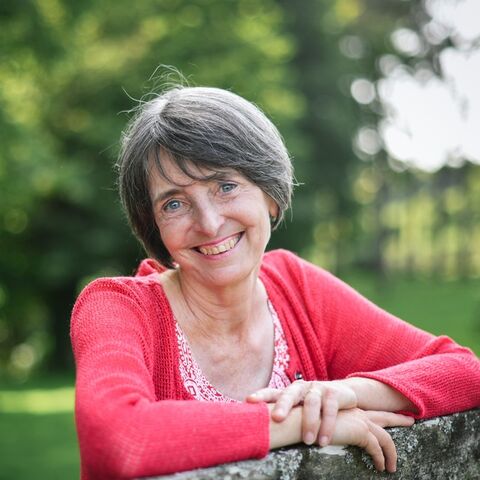
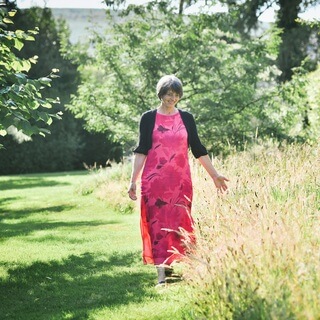
Hello and welcome to Five Minutes in Nature with me Liz Scott where every day in February I take you outside on my walks and listen to nature's wisdom.
And today you find me walking up a lane that takes me up onto Dartmoor and it's a very cold February day,
One of those damp days where the cold seems to seep through my clothes and right through my skin into my bones.
It's just that damp coldness that has me shiver.
And today I'm looking at the theme of listening to nature and I mean listening with my ears in particular but just listening generally.
And I feel a bit of a sadness really because there's a lot that I love in nature but there's so much that I don't know.
It's as though nature is this friend that I don't know intimately.
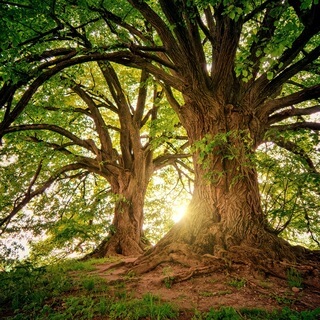
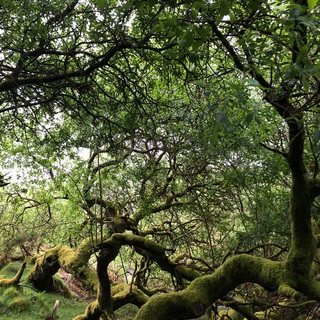
I don't know the different types of trees as I look at their bare silhouettes against the skyline.
I don't know the different types of lichen and moss that grows.
I don't know the bird song that I can hear every morning which is beautiful at this time of year and I don't know individually which birds are which.
And I think I became acutely cognizant of this,
Quite sad actually yesterday,
When a friend of mine told me a story and it was a story about her,
She's called Kate,
She took a friend out for a walk on Dartmoor and the friend of hers was visually impaired so she couldn't see clearly and so Kate took her on a walk on a footpath that was a good footpath beside a man-made leet.
And a leet is a waterway that's been constructed and often will siphon water off from a stream or a river.
In this case the leet was created by Sir Francis Drake in the era of Elizabeth I to take clean water down to the city of Plymouth.
So this was a good walk,
It was beside a good footpath,
It wasn't rocky,
It wasn't too undulating and it was really perfect for this lady who was visually impaired.
But one of the things that Kate became acutely aware of and she shared it with me in this story as she was telling me yesterday,
Is that this lady who was unable to see had the most extraordinary ability to hear this leet and to hear the water in the leet in a way that Kate just couldn't hear,
Even though she was hearing the same thing.
And so the lady would say at this point in the leet I can hear that there's a little waterfall or that the water is deep or the water is shallow and she was able to tell what the water was doing purely by her sense of hearing.
And I was really captivated by this story because Kate had all her senses working and yet she couldn't distinguish or hear what this lady had heard,
Even though she was hearing the same thing.
And it just had me feel quite sad really that when I go out in the mornings and I hear the beautiful bird song,
I can't really distinguish which bird is which.
I'm trying,
I'm trying to learn and trying to find out if I can distinguish a robin from a blackbird from a thrush.
But at the moment it's really hit and miss for me and it feels like I'm a foreigner in a country that just doesn't really know the language.
I just wish that I could know the tree that I'm standing beside at the minute,
What tree it was.
Without the leaves on it's nigh on impossible for me to tell.
And I just feel a sadness really that in this modern world that I live in,
This cushioned world where I have a house and I have food and I'm in a job that I enjoy and I see people,
I just feel sad that even though I love nature,
As I love nature,
I am not able to speak her language and that really feels sad for me,
Really sad.
I feel like I've been deprived,
Deprived of learning the language of nature.
I don't mean to be melancholy today,
It's more of just a sadness that I wish this was something I had been taught and I wish this was something that was just a part of my world.
But I don't give up,
I am trying,
I am going to continue to learn birdsong and learn about nature around me and I'm hoping that one day I will be able to recognise and distinguish birds and trees and plants,
Just because I can recognise them from seeing and hearing them.