Long ago,
Before we knew how to write,
Our stories swirled in the winds.
Every blue moon and sometime sooner,
The winds would collide.
Stories long forgotten slid to the earth and slipped into the dreams of the sleepers below.
And for a moment,
They remembered once more.
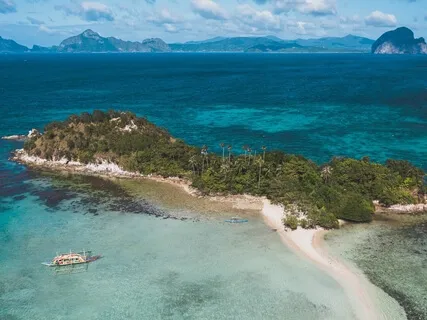
In the history of the island,
No single person has ever had more power than Bako.
When he lived,
Part of the village was filled just with fishers and their families.
They were experts at reading the waters,
And the foreman could tell a full day away when the schools would be near the village.
The fishers were organized and prepared.
The daily catch from this half of the village fed not only the island,
But several others that were nearby.
Bako wasn't quite old enough to go out with the other fishers,
But he was just as good as any of them.
His mother was a master fisher,
And he had learned from the very best.
All of them knew the signs,
The stillness,
The strange colors in the sky,
And the lurching and hiccupping of each layer of the ocean.
Within days,
They would be holding on to each other in fear as a hurricane stomped over the islands.
But the foreman knew,
As did they all,
That an incoming hurricane stirred up the fish.
Perhaps a day or so before it roared over them,
The foreman woke everyone in the middle of the night and called them to the boats.
Tossing and hauling nets in a midnight fish was always dangerous,
But no one knew what the danger that night would be.
Waking up half a village is chaotic at best,
And not everyone made it to the shore at the same time.
One boat remained when Bako's mother reached the sand.
It had been beached for repairs,
But everyone else had left without her.
She carefully pushed the boat into the water and then climbed in.
She could see moonlight through the cracks made by the weather-warped boards.
She grabbed an oar,
But it snapped in the middle almost immediately.
An early storm wave slapped the side of the boat.
The broken oar burst through the side,
And the water rushing in,
Along with the wave,
Pulled the boat over.
In the dark,
No one saw her go under,
And no one noticed she was missing until the fishers came back in the morning and saw what remained of the boat.
The foreman said a few brief words,
Left a flower and a fish by what remained of the boat,
And since the hurricane had missed the island,
Called everyone back to go fishing.
Bako stood on the sand next to the wilting flower and stinking fish,
And couldn't believe that this was all a person was worth.
Baking in the sun,
He finally moved to the shade of a palm tree and wept.
When the fishers returned that evening,
Just before sunset,
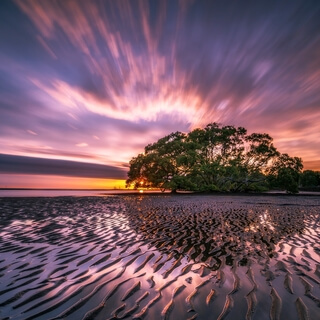
They found the beach transformed.
Dug deep into the sand,
Certainly not by a hand or stick,
Was a symbol they had never seen before.
A perfect circle,
Several men wide,
With a perfect square held inside.
In the middle was one unremarkable stone from the beach.
The foreman saw Bako under the tree and asked him what had happened.
Bako explained that he had fallen asleep after they went fishing.
When he woke,
He was shocked to have noticed the symbol.
The fishers started whispering to each other,
But the biggest outcry came when one of them realized there were no footprints in the sand.
Everyone started talking about what the symbol meant.
Bako didn't bother to stay with the fishers,
Who would so carelessly dismiss his mother,
But stand on the beach squabbling about a drawing.
And the fishers were too engrossed to notice that he had left.
But when Bako returned in the morning,
He found several dozen villagers kneeling around the symbol and chanting.
He sat under a tree and listened as they explained and celebrated that the circle represented a woman,
The square was the village,
And the stone was the holy messages of the spirits.
Arguing began as variations were proposed that the stone was the woman,
The square was mankind,
And the circle was the everything.
Throughout the day,
People came to the symbol.
Some left offerings to the drawing,
And others came to study it for deeper meaning.
Bako listened to dozens of theories,
All stated with vehemence and conviction,
And later in the day,
The symbol gained names.
He heard it called the All,
The Stoniff,
The Spirit Circle,
And countless others.
After the evening meal,
Over a hundred people came to stand by it as the sun went down,
Sighing in spiritual rapture that the symbol made the experience somehow different.
When Bako returned in the morning,
The entire village was crammed onto the beach,
Some of them up in trees.
During the night,
The thousands of footprints from the day before had disappeared,
And the stone had seemingly slid a foot to the west.
There was no whispering now,
Only loud statements of everyone declaring what they knew to be the truth.
Bako waited for them to shout out all of the conviction and fervor that they had,
But it roared like a river that never dried up.
He walked,
Unnoticed,
To the center of the symbol and grabbed the stone.
Hundreds of villagers gasped,
But none of them moved toward him.
Although his body was still slight,
He used every bit of strength he had and hurled the stone toward the mountains.
The beach had gone completely silent,
Until,
Off in the distance,
Everyone could hear the stone land.
The foreman thundered toward Bako,
But stopped before stepping on the symbol.
How dare you,
Bako,
He shouted.
How dare you deface this sacred sight?
It's the beach?
The last piece of land my mother stood on before she died,
Bako replied.
That has nothing to do with this holy place,
The foreman yelled.
Would you like all of the things I've drawn in my life,
Asked Bako,
To pray at them and chant and forget about my mother.
So many villagers sucked in their breath at once that a wonderful spirit of the wind had to pull the air back in the other direction.
You couldn't have drawn this,
Said the foreman.
It's too deep and there were no footprints.
This is something sacred.
Bako didn't reply.
He walked out of the circle to the wreckage of his mother's boat and pulled out what was left of the broken ore.
He took it to the circle,
Thrust it into the sand,
And drew an identical loop around the symbol.
Then he dropped the ore,
Went over to a palm tree,
Grabbed a few fronds,
And swept his footprints away.
Why did you do this to us,
Asked the foreman hoarsely.
Why did you forget my mother,
Replied Bako.
Everyone was so obsessed with how many fish were caught and working like an army that you forgot everything else.
You all forgot what it means to have someone care about you,
And you forgot to care too.
Bako,
About to cry,
Sat down hard on the sand.
My mother had meaning.
What is the harm in reminding you that there is meaning in the world?
Even if none of you agree on what it is,
For a few days you all believed and you saw something meaningful.
You didn't stomp on the sand to get to the boats.
You felt the sand with your feet and remembered nature and possibilities.
You shared something besides work.
I don't see the harm in making a drawing in the sand.
What all of you did with it is on you.
One of the women Bako had seen praying two days earlier stepped forward.
What does the symbol mean,
Bako?
Is it a woman,
The village,
And the spirits,
Or one of the other meanings?
Bako nodded politely to the woman,
Returned the oar to the wreckage,
And walked home.