All right,
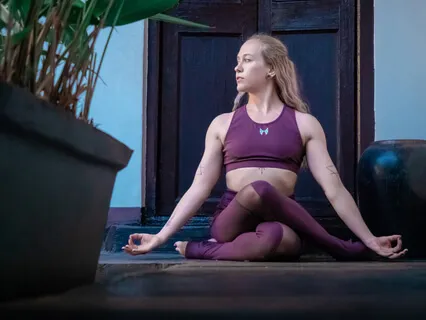
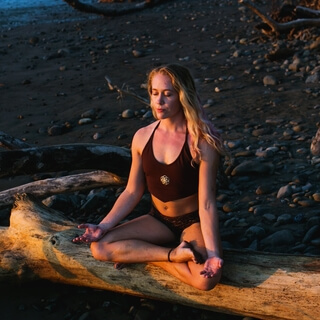
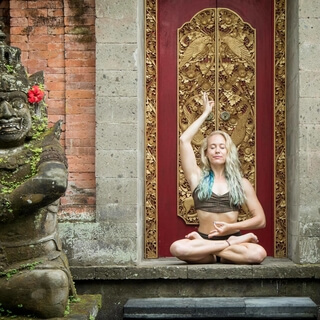
So I do recommend that you have something comfortable to sit on.
We will be here for about half an hour.
So I recommend that you elevate your hips.
If you have a cushion or some pillows,
You can sit your hips up a little bit higher and cross your legs or feel free to come to a kneeling position.
If you need some back support,
That's also fine.
I'm not super strict on this.
So if your back is hurting,
Please just take support that you need.
It's also fine to sit in a chair.
I don't recommend that you lay down,
Especially in the morning,
Because you may fall asleep.
So do try to stay awake.
If you do feel that you get dizzy at any time,
Then of course you can lay down.
Okay,
So just begin to allow yourself to settle in.
Bring your hands onto your knees and allow the eyes to blink closed as you're ready.
Soften the muscles of your face.
Allow the hips to ground down into the earth and feel your spine rise out of the hips and create some length.
And just begin to observe your breath here.
Allow the lips to gently press together.
The tongue just hangs in the mouth.
The jaw is soft and easy.
And you simply just begin to observe the character of your breath in this moment.
So the first thing that we work on when it comes to our pranayama practice is to just observe our breath and to work on our respiration,
Our actual breathing,
Before we move on to the techniques.
So as you settle in here,
You can just begin to notice how the breath feels through the nose,
Or if you feel the breath travel elsewhere in your body.
And you can simply just observe its depth,
Its shallowness,
Its texture,
Or its temperature.
And as you observe the quality of your breath,
You may sometimes be distracted by thoughts that wander through your mind.
And that's okay.
It's totally normal.
When that happens,
Just gently redirect yourself back to witnessing your breath.
And also in the beginning here,
You may notice a relationship between the thoughts that you're having or even emotions you may be sensing and the quality of your breath.
And if this doesn't make any sense to you at the moment,
That's fine.
But for example,
You may find the breath feels a bit shallow.
Perhaps there is some thoughts racing through the mind.
Or if you feel the breath is a slow,
Steady rhythm,
Perhaps you embody an empty mind.
You just allow those thoughts to spill out completely.
Now during our practice,
We'll keep the breath in and out through the nose.
So now take your tongue and place it just behind your teeth on the soft palate.
This is our tongue lock position.
Make sure that the jaw stays soft and easy without a clench at any time.
Spine stays lifted and long.
Now begin to consciously deepen your breath and just observe what it feels like to deepen your breath.
How does this happen naturally for you?
Does your breath start at the bottom or the top as you inhale?
Where does your breath start on the exhale?
Just observe for a few moments as you gently lengthen your breath in and out.
Now go ahead and place one hand right over your belly.
So we'll begin to work on our three-dimensional breath.
As you inhale,
Feel the belly and the abdomen expand into the hand.
And as you exhale,
It condenses and contracts inward toward the spine.
Find a deep belly breath again as you inhale and then squeeze all the air out of the belly as you exhale.
Take one more deep belly breath here and then take your second hand just over your floating ribs.
We'll move into the second part of the breath.
This is into the thoracic spine,
Thoracic breathing.
As you inhale,
Fill the belly and fill the bottom lobes of the lungs.
And then exhale,
Feel the contraction of the ribs,
The floating ribs as they move inward,
Navel to the spine.
Exhale.
Inhale again from the belly to the rib cage.
Exhale,
Squeeze all the air out.
Now take the hand that's on your belly and place it over the center of your chest.
So now you can breathe from the base of your belly and all the way into the top cavity of your chest.
Fill your heart space completely as you inhale.
And then as you exhale,
Squeeze all the air out of your lungs from the top to the bottom.
You really condense and contract everything.
Feel yourself expand like a balloon as you inhale.
Exhale,
Squeeze all the air out,
Become totally empty.
One more breath like this.
And so we've been working now on expanding the breath forward and back and up and down.
Now we'll move into the sides.
So lateral breathing.
You can place your hands just around your bra line.
So if you need a visual,
You can just peek your eyes open for a moment.
So you want your hands to be just on the side of your body where your ribs are.
Your elbows will probably be out to the sides.
That's okay.
And so as you inhale,
You'll feel how the ribs expand out to the sides.
And then as you exhale,
They condense in.
And as we do this,
We want to make sure we continue to keep the spine nice and erect.
Again,
Inhale,
Exhale.
So now you can feel the breath moving forward and up and out to the sides as you inhale.
And as you exhale,
It comes in and down and in from the sides as you exhale.
So we just use these touch cues in the beginning so we can sense the breath in our body.
And when you feel pretty good about that,
You can release your hands and continue to breathe in this way for a few more moments.
If you need a reminder,
If you feel that you lose feeling the breath in one of those areas,
Just take your hand back there as you continue your 3D breath for just another moment.
And every time that you inhale,
Just imagine that your torso is like a beautiful chalice and you want to fill this chalice with the most precious and nourishing liquid,
In which case this would actually be air,
But we'll just imagine that it's liquid,
The most crystalline water.
So you really fill up the torso,
This chalice as you inhale,
You drink it in.
And then as you exhale,
Gently pour the breath out,
Squeeze it out completely.
And now we'll begin to work on harmonizing the breaths.
We want to equalize the breath first.
So we'll begin with Samavriti.
We'll take a four count inhale and a four count exhale.
Empty your lungs completely and inhale one,
Two,
Three,
Four.
Exhale one,
Two,
Three,
Four.
Inhale one,
Two,
Three,
Four.
Exhale one,
Two,
Three,
Four.
Inhale one,
Two,
Three,
Four.
Exhale one,
Two,
Three,
Four.
Inhale one,
Two,
Three,
Four.
Exhale one,
Two,
Three,
Four.
Inhale one,
Two,
Three,
Four.
Exhale one,
Two,
Three,
Four.
Inhale one,
Two,
Three,
Four.
Exhale one,
Two,
Three,
Four.
Inhale one,
Two,
Three,
Four.
Exhale one,
Two,
Three,
Four.
Inhale one,
Two,
Three,
Four.
Exhale one,
Two,
Three,
Four.
Inhale one,
Two,
Three,
Four.
Exhale one,
Two,
Three,
Four.
Inhale one,
Two,
Three,
Four.
Exhale one,
Two,
Three,
Four.
Inhale one,
Two,
Three,
Four.
Exhale one,
Two,
Three,
Four.
Inhale one,
Two,
Three,
Four.
Exhale one,
Two,
Three,
Four.
Remember to keep the quality and depth of your breath.
Tongue glued to the roof of your mouth.
Spine nice and long.
Okay,
So next we'll take five rounds of box breathing.
So for this technique,
We'll inhale for four counts.
Hold the breath for four counts at the top.
Exhale for four counts and hold the breath for four counts at the bottom.
So this will be our introduction to breath retention.
But anytime you feel uncomfortable with this,
Please just revert back to the Samavritti practice where you just inhale for four counts and exhale for four counts.
Okay,
Empty your lungs completely and inhale one,
Two,
Three,
Four.
Hold the breath for four,
Three,
Two,
One.
Exhale one,
Two,
Three,
Four.
Hold the breath for three,
Two,
One.
Inhale one,
Two,
Three,
Four.
Hold the breath for three,
Two,
One.
Exhale one,
Two,
Three,
Four.
Hold the breath for three,
Two,
One.
Inhale one,
Two,
Three,
Four.
Hold the breath for three,
Two,
One.
Exhale one,
Two,
Three,
Four.
Hold the breath for three,
Two,
One.
Inhale one,
Two,
Three,
Four.
Hold the breath for three,
Two,
One.
Exhale one,
Two,
Three,
Four.
Hold the breath for three,
Two,
One.
Inhale one,
Two,
Three,
Four.
Hold the breath for three,
Two,
One.
Exhale one,
Two,
Three,
Four.
Hold the breath for three,
Two,
One.
Exhale one,
Two,
Three,
Four.
Hold the breath for three,
Two,
And one.
Allow your breathing to return to a natural place.
Just observe for a moment.
Okay,
So you can open your eyes.
For the next practice,
We'll do a precursor for Nadi Shodhana.
So,
Nadi Shodhana is known as alternate nostril breathing.
We'll start with single nostril breathing.
So,
We'll make the mudra with the right hand.
So,
We'll tuck the index finger and the middle finger down,
And then you'll use the right thumb to close the right nostril,
And then the right ring finger to close the left nostril.
And then,
You'll inhale through the left nostril.
So,
You'll inhale through the right nostril,
And then you'll exhale through the left nostril.
So,
You'll inhale through the left nostril,
And then you'll exhale through the right nostril.
You can choose either one that's comfortable for you.
We'll just start with the single nostril first.
So,
You'll breathe in,
And you'll close the right nostril,
And exhale out through the left.
And we'll just inhale through the left,
Then you'll close that nostril,
And you'll exhale through the right.
Then you'll close the right,
And you'll just go back to the left side.
Inhale,
And then close.
Exhale through the right.
Close.
Inhale through the left.
Close.
Exhale through the right.
Again,
Inhale left.
Exhale.
That's one more like this.
Now,
You'll keep the left side closed,
And we'll inhale through the right.
Close with the thumb.
Exhale through the left.
Close the right.
I'm sorry.
Close the left.
Inhale through the right.
Close the thumb.
Exhale left.
Again,
Inhale right.
Close.
Exhale left.
Again,
Inhale right.
Close.
Exhale left.
Last one.
Exhale.
Okay,
Take a rest for a moment.
So,
We're going to take 12 rounds of this,
And I'll show you how you can count it.
So,
You're going to count it using your own fingers.
So,
You can start with your index finger and your thumb together.
So,
You'll go one,
Two,
Three.
So,
You just tap.
One,
Two,
Three,
Four,
Five,
Six,
Seven,
Eight,
Nine,
Ten,
Eleven,
Twelve.
So,
To practice Nadi Shodhana,
We're going to alternate sides.
So,
One full round will be left and right,
Then right and left.
So,
It will look like this.
Inhale left.
Close.
Exhale right.
Inhale right.
Close.
Exhale left.
So,
Then when I get back to the left side,
Then I just move my thumb to my second knuckle here.
Then I will go again.
Inhale left.
Close.
Exhale right.
Inhale right.
Close.
Exhale left.
So,
We'll do this together,
And as we do this,
Let's aim for,
If you want to try a five count breath,
You can also count your breath.
If that feels like too much to count your breath here,
Don't worry about it,
Especially if you're new to this technique.
You just want to understand the technique first.
If you've done this before,
You can try a five count breath.
If you want to stick with four counts,
That's also fine.
Okay,
So we'll close the right nostril.
Exhale completely through the left,
And inhale left.
Close.
Exhale right.
Inhale right.
Close.
Exhale left.
Change the finger.
Inhale left.
Close.
Exhale right.
Inhale right.
Close.
Exhale left.
Change.
Inhale left.
Close.
Exhale right.
Inhale right.
Close.
Exhale left.
Change.
Inhale left.
Close.
Exhale right.
Inhale right.
Close.
Exhale left.
Change.
Inhale left.
Close.
Exhale right.
Inhale right.
Close.
Exhale left.
Change.
Make sure you continue to use your full lung capacity.
Inhale left.
Close.
Exhale right.
Inhale right.
Close.
Exhale left.
Change.
Inhale left.
Close.
Exhale right.
Inhale right.
Close.
Exhale left.
Change.
Inhale left.
Close.
Exhale right.
Inhale right.
Close.
Exhale left.
Change.
Inhale left.
Close.
Exhale right.
Inhale right.
Close.
Exhale left.
Change.
Inhale left.
Close.
Exhale right.
Inhale right.
Close.
Exhale left.
Change.
Inhale left.
Close.
Exhale right.
Inhale right.
Close.
Exhale left.
Change.
Inhale left.
Close.
Exhale right.
Inhale right.
Close.
Exhale left.
Inhale left.
Exhale right.
Inhale left.
Exhale right.
Inhale left.
Exhale right.
Inhale left.
Exhale right.
Inhale left.
Exhale right.
Inhale left.
Exhale right.
Inhale left.
Exhale right.
Inhale left.
Exhale right.
Inhale left.
Exhale right.
Inhale left.
Exhale right.
Inhale left.
Exhale right.
Inhale left.
Exhale right.
Inhale left.
Exhale right.
Inhale left.
Exhale right.
Inhale left.
Exhale right.
Inhale left.
Exhale right.
Inhale left.
Exhale right.
Inhale left.
Exhale right.
Inhale left.
Exhale right.
Inhale left.
Exhale right.
Inhale left.
Inhale left.
Exhale right.
Inhale left.
Exhale right.
Inhale left.
Exhale right.
Inhale left.
Exhale right.
Inhale left.
Exhale right.
Inhale left.
Exhale right.
Inhale left.
Exhale right.
Inhale left.
Exhale right.
Inhale left.
Exhale right.
Inhale left.
Exhale right.
Inhale left.
Exhale right.
Inhale left.
Exhale right.
Inhale left.
Exhale right.
Inhale left.
Exhale right.
Inhale left.
Exhale right.
Inhale left.
Exhale right.
Inhale left.
Exhale right.
Inhale left.
Exhale right.
Inhale left.
Exhale right.
Inhale left.
Exhale right.
Inhale left.
Exhale right.
Inhale left.
Exhale right.
Inhale left.
Exhale right.
Inhale left.
Exhale right.
Inhale left.
Exhale right.
Inhale left.
Exhale right.
Inhale left.
Exhale right.
Inhale left.
Exhale right.
Inhale left.
Exhale right.
Inhale left.
Exhale right.
Inhale left.
Exhale right.
Inhale left.
Exhale right.
Inhale left.
Exhale right.
Inhale left.
Exhale right.
Inhale left.
Exhale right.
Inhale left.
Exhale right.
Inhale left.
Exhale right Okay,
So let's just take three rounds of this.
Close the right nostril.
Empty through the left side.
Inhale left.
One,
Two,
Three,
Four,
Five.
Hold at the top.
One,
Two,
Three,
Four,
Five.
Exhale right.
One,
Two,
Three,
Four,
Five.
Five.
Inhale right.
One,
Two,
Three,
Four,
Five.
Hold at the top.
One,
Two,
Three,
Four,
Five.
Exhale left.
One,
Two,
Three,
Four,
Five.
Inhale.
One,
Two,
Three,
Four,
Five.
Hold at the top.
One,
Two,
Three,
Four,
Five.
Exhale right.
One,
Two,
Three,
Four,
Five.
Inhale right.
One,
Two,
Three,
Four,
Five.
Close and hold.
One,
Two,
Three,
Four,
Five.
Exhale left.
One,
Two,
Three,
Four,
Five.
Inhale left.
One,
Two,
Three,
Four,
Five.
Hold at the top.
One,
Two,
Three,
Four,
Five.
Exhale right.
One,
Two,
Three,
Four,
Five.
Inhale.
One,
Two,
Three,
Four,
Five.
Hold at the top.
One,
Two,
Three,
Four,
Five.
Exhale left.
One,
Two,
Three,
Four,
Five.
And release.
And again,
Just observe for a moment in a nice and quiet place.
And then when you're ready,
You can open your eyes for a moment.
So,
So far,
We've been working with balancing pranayamas.
Now we're going to do a vitalizing or energizing pranayama.
So we'll work on Kapalabhati next.
So for this one,
You'll take percussive exhales through your nose and you want to pull the belly in.
So this will be very quick.
And the inhales,
Don't really worry so much about the inhales.
They're quite passive for this technique.
So some people know this technique as the breath of fire.
However,
It actually translates to the skull shining breath because it helps to cleanse the frontal lobe.
So when you do have your eyes closed,
You can just direct your internal drishti or your internal gaze to your ajna,
Your third eye,
The space between your eyebrows,
Because we want to bring this internal fire up through the central channel of the body as the point of this exercise.
So you can place one hand on your belly first.
And when you take a quick exhale through your nose,
You'll just notice that your abdomen probably naturally contracts in.
If it doesn't,
Then I don't know,
You might not be alive.
But then we want to make it quick and we want to make it a little bit more forceful.
So let's just start with 10 rounds together here first,
Just one hand on the belly.
And you'll just take a big inhale and you'll just pump the abdomen back.
Two,
Three,
Four,
Six,
Seven,
Eight,
Nine,
Ten.
So I'll just show it to you if that was unclear to you.
Inhale.
So you should really hear your breath for this one.
Maybe for the other ones,
Your breath was a little bit more quiet,
But now you will definitely hear your breath.
I sometimes feel sort of like like a bull about to go charging,
You know,
And it's like has like the steam coming out of its nostrils on like a cartoon or something like that.
That's just what I think of whenever I do this one.
I'm like,
I'm getting ready to go and fire up the engines.
So let's try it again.
This time we'll do 30 rounds so you can keep the hand on the belly if that's convenient for you.
Otherwise,
Just rest your hands on your knees.
Let's take a nice long inhale.
Here we go.
Three,
Four,
Five,
Seven,
Eight,
Nine,
Ten,
Nine,
Eight,
Seven,
Six,
Five,
Four,
Three,
Two,
One,
One,
Two,
Three,
Four,
Five,
Six,
Seven,
Eight,
Nine,
Ten.
Breathe normally,
Breathe naturally.
OK,
We'll take that one more time.
So 30 rounds or three rounds of ten.
Here we go.
Inhale into your lungs completely and just notice the temperature of your body.
Notice the rate of your heart,
The blood flowing through your body and just feel the energy moving up from your abdomen up through your spine and into your crown.
And again,
You can allow your eyes to open and we'll move now into the next category of pranayama to finish off our sequence here.
So these are called tranquilizing pranayamas and it's to promote tranquility,
Not like you're taking a tranquilizer,
Although these will help you for sleeping if necessary.
So so first we'll start with Brahmari and we'll make the Shanmugi Mudra.
So you'll place your thumbs in your ears and your index finger on your eyebrows.
Your middle finger can go right under your eyes,
Your ring finger just below your nose,
And then your pinky finger can go right around your lips,
Right at the corners of your mouth.
OK,
So you'll plug your ears and you'll inhale through the nose.
Keep the tongue on the roof of the mouth and you'll exhale and hum.
And so you'll feel the vibration throughout your head.
So let's take five rounds of this.
And when you make the hum,
It's like a hum.
It's like a hum sound,
Like the letter M.
So just take five rounds on your own.
And when you're finished,
Just drop your hand so that I know you're finished.
OK,
And so to finish off our sequence today,
We'll practice Shitali.
So this is a cooling breath.
So for this technique,
You'll inhale through your mouth and exhale through the nose.
So this is one of the only techniques that you breathe in through the mouth.
So for this one,
You can either curl your tongue or you can purse your lips like you have a straw in your in your lips.
So I cannot curl my tongue.
Doesn't make me or you any less of a yogi.
You can't curl your tongue.
So if you curl your tongue,
You just stick it out and you'll just inhale through your tongue.
Otherwise,
You'll just go through the lips like this and then you'll just close and then exhale through the nose.
OK,
So we'll take five rounds of Shitali.
So exhale through your nose,
Inhale through your mouth,
Exhale through the nose again,
Inhale through the mouth,
Exhale through the nose,
Inhale through the mouth,
Exhale through the nose,
Inhale through the mouth,
Exhale through the nose,
Inhale through the mouth,
Exhale through the nose.
And just observe how you feel for a few moments.
And then from here,
Let's bring the hands to heart center,
Anjali Mudra,
And we'll just chant Aum together one time.
Empty your lungs completely as you exhale.
And inhale for Aum.
And enjoy the sound of that vibration throughout your body.
And exhale,
Release your hands and slowly open your eyes as you're ready.