Hi,
I know that you have powerfully called me into your world because you are ready to support yourself and others in moving beyond the stories of your past without having to relive the memories attached to what you are letting go of.
Are you sick of your own shit and the ways that you hold yourself back from just finding out- Hi my love,
I know something about you.
I know that you have powerfully called me into your world because you are ready.
You're ready to support yourself and others in moving beyond the stories of your past.
And you're ready to do that without having to relive the memories attached to what you are letting go of.
It's true,
Right?
You're sick of your own shit and the ways that you hold yourself back and you're really ready to find out who you might be in your own life without all of the emotional baggage that you've been carrying for far too long.
My love,
It's time to put it down.
The Somatic Activated Healing Method,
Better known as the SAR method,
Is a revolutionary wellness practice combining the healing modalities of somatic movement,
Rhythmic breath work,
Positive affirmation and dynamic meditation as developed by my teacher,
Sar D.
Simone.
Being a certified healer and teacher of this transformative modality has given me a front row seat to the way it truly has the power to resolve past trauma,
Process present pain and fortify resilience for the future.
This is life changing and I know because I practice every day too.
Want to try it out for yourself?
I have a free session waiting for you on my website right now.
You can access it and hit play whenever you are ready.
You'll find it at www.
Lenamoxon.
Com and initiate yourself into the next chapter of your own life.
It's truly time to thrive,
My love.
Let's go.
Hello and welcome.
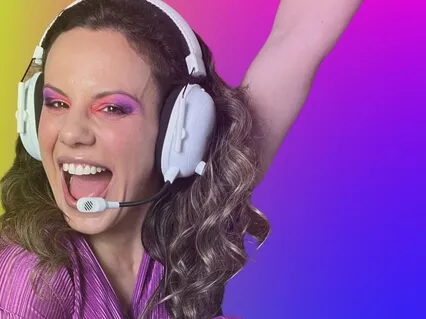
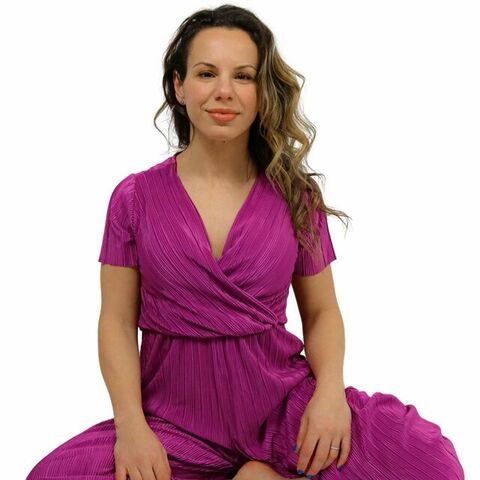
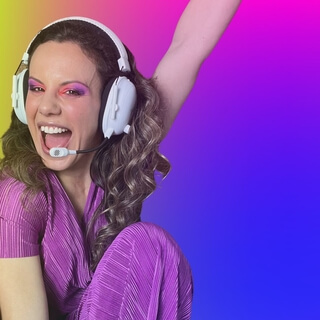
My name is Lena Moxon.
I am a certified somatic activated healer,
Self-expression and life purpose coach.
And today I'm coming through with a bit of a cheat sheet for you.
This is a what you need to know kind of session in a space that can be really overwhelming.
So today I'm delivering you a session called Your Body Has A Lot To Say,
Are You Listening?
And basically it's Nervous System 101.
And I just mentioned before,
This can be a really overwhelming topic.
We're seeing so much information being made available to us in the mainstream now.
Pretty much everywhere you look,
There's a book or a podcast or an Instagram post about it,
Which is great because this is really helpful information.
But sometimes too much information can actually just become a burden and turn us off because we just feel like it's all too much and we don't know what to do with it.
So today I'm going to simplify it for you.
Okay.
I am in no way a psychologist,
A psychiatrist,
A scientist.
I'm not claiming to be,
But I'm a woman who has devoted herself to understanding the energetic body,
The emotional body and how we can really come home to ourselves and activate our innate healing capacity.
And so I invite you into this today.
I'm going to move through it with ease.
This isn't going to be a long kind of session.
This is just,
As I said,
A cheat sheet,
A place for you to kind of get what you need in this space to understand how to take the first step to best supporting yourself and being in deep connection with your body.
So let me begin by saying that we are all at war in ourselves,
Particularly in this time,
In the society that we live in,
In the way that we are all living in.
You know,
We're just simply not in alignment.
And there are parts of us that are conflicted and it's causing a whole lot of commotion,
Trying to validate themselves and discredit other parts.
So there's parts of us that,
You know,
Are present to the moment,
Tapped in and tuned in to potential possibility,
Love,
All of that stuff.
And then there are other parts of us that are traumatized,
Are living this fear-based,
Perpetually stressful existence.
And because of this,
Our feelings don't always match our actions.
Our body often craves something sometimes that our brain says is impossible and our brain won't honor the knowing of our soul.
So there are all of these parts to us,
Right?
Our brain or our mind,
Our body and our soul,
All sort of competing and pulling us in different directions.
And as human beings,
I guess in our lives,
What we're trying to work out is how do I come into alignment?
How do I live in a way that feels congruent and in integrity?
What I think,
What I say,
What I believe,
What I feel is in alignment and I move through the world with a certain confidence.
How do I do that?
And because we're pulled in all of these different directions,
Because there are all of these parts of us,
All coexisting,
But operating independently within us,
It can sometimes feel like we're just a mess,
That we're at war within ourselves.
Here's a beautiful quote that I love from Steve Bidoff that summarizes this.
Noticing the non-alignment of your life,
Even if it makes you weep with despair,
Is part of the healing.
You don't have to consciously know what to do yet.
That will emerge.
A human being,
Like any living creature naturally seeks unity in all its parts and the universe does too.
Wonderful quote that summarizes beautifully for us that yes,
We are at war within ourselves.
Yes,
There is this conflict and chaos within us,
But inherently at the base of our being,
Because we seek unity,
If we can just allow the innate healing capacity within us and the wisdom within us to arise and take the lead,
Right?
There is potential there.
Love is at our core.
It's our essence.
It's our nature.
It's our destiny.
And so this is an optimistic workshop or session that I'm presenting for you today.
We are acknowledging the problem of being human fully,
Particularly a busy woman in a busy world that is very noisy.
We're acknowledging that.
We're not bypassing that.
I'm not trying to discredit that or dilute that in any way,
But we are directing ourselves towards the potential and possibility that is just innately within us.
So let's talk about the way the nervous system is actually supporting us in coming back into alignment,
In activating all of those innate healing capacities that I keep mentioning that are within us.
So put very simply,
The nervous system creates one continuum of energy within our bodies,
Ranging from highly active states.
So think about like when we're really reactive or we suddenly panic about something,
Right?
We feel like tense and manic and urgent to extremely passive states.
So think like when you're lethargic or depressed or just feel flat,
Right?
And pretty much anywhere in between.
It's our nervous systems that is mostly responsible for that experience that we are having.
So our nervous systems are not something new.
It's not something we've developed.
It's something that has always existed within human beings.
And as humans in our prehistory,
There were many dangers that required a highly sensitive and tuned set of sense to stay safe.
So our nervous system had a really important job and our body,
You know,
Had an even more important job in alerting us to when there might be danger around.
So it could have been,
You know,
We're talking about our prehistory,
Right?
Not last week,
Last year,
Like hundreds,
If not thousands of years ago.
A flicker of movement in grass,
The sound of sticks breaking underfoot,
The quietening of birds.
We reacted first,
The bodies,
And then our brains got busy figuring out what to do.
Run,
Hide,
Scream,
Or relax.
Whatever it was,
The body was what responded first.
And this tells us that because we are human beings,
We have this innate super sense within us that the body has actually been designed in this way.
Our brains take information coming in through our senses and process and assess them almost instantly,
Long before we have time to think or reason,
Right?
This is happening every second of the day as you absorb all sorts of complex and subtle information.
And there's this part of you determining what's important for you to notice.
Because if you think about it,
Think about how much information we're taking in all the time,
It's absolutely impossible for us to focus on everything that's happening around us all the time.
So there is this part of us within us,
Perfectly designed,
Beautifully designed,
Wondrously designed,
That helps us to know what is important for me to take notice of.
Before neuroscience explained this properly,
It might have been called our intuition or our sixth sense.
So put simply,
Where we're at is that we have a guidance system that is brilliant,
It's subtle,
And it's extremely powerful.
But,
Here's the big but,
In our modern world,
We have pretty much forgotten that this internal sensory system even exists.
We haven't even been raised or educated in how to tune into our own microcues.
I don't know about you,
But I was never sat down within my family home or at school and told just how incredible my body was in terms of interpreting information from the world around me to act as a guidance system.
Our bodies are amazing and they're always communicating with us,
But if we don't listen,
Our bodies begin to shout.
You know,
For 11 years,
I was with my first husband and intimacy between us was always a bit of a struggle,
Always a problem,
A bit of a disconnect.
It just,
It wasn't great,
Let me just say that.
You know,
And my body actually started to really resist it in a way that made sex painful.
It was uncomfortable.
My whole body resisted the experience.
Why?
I wasn't treated poorly,
But I just genuinely wasn't in the right relationship.
I wasn't completely devoted and committed to this man.
I was constantly questioning myself,
My life,
My relationship.
And even though I was going about my life,
Pretending that everything was fine and just playing my part and doing my thing,
The body knew,
The body spoke,
The body was being defiant and acting in rebellion to what I was just allowing for myself.
And after that relationship ended,
I've never experienced discomfort or pain when having sex again.
That's a very clear example,
Very specific example,
Very intimate example I have of the body communicating,
Of the body trying to tell me,
Hey,
What are you doing in this relationship with this partner in this one life you have?
You don't want to be here.
But you know,
I ticked all the right boxes in terms of like,
This is who he is,
This is what I want,
This is what we can have together.
Yes,
Yes,
Yes.
Enough time had passed.
I was too invested.
I stayed,
But my body,
Like I said,
Was in defiance,
Was in rebellion to this.
Our body is always speaking to us.
So what's going on for us as modern women?
What's going on within our bodies?
When we feel like we are not safe,
Our nervous system responds in a variety of ways to give us the energy we need to move away from what it perceives as life threatening danger.
OK,
So if we are stressed,
Overwhelmed,
Scared,
Whatever it is,
Right,
If we feel like we're not safe,
Our body generates those emotions,
Those sensations through the use of our nervous system and the cues that it fires off to our body for our heart to beat a little faster,
Our palms to get sweaty,
Our breath to get shortened,
Our pupils to dilate.
A whole lot of things happen within us to support us in that moment that we feel that we are in danger.
But the difference is danger isn't always life threatening,
Right?
As modern women,
It's very unlikely and unusual to think that a tiger is going to be chasing us and following us.
But we're experiencing fear and danger as if it is life threatening just in the lives that we are living.
So what's the last thing that has threatened you?
And I say this gently because there are people in certain situations where maybe their life is being threatened.
So I say this with a whole lot of humility and a deep awareness and understanding that I don't know who exactly I'm speaking to.
And if you were a person that is in fact in danger and your life is being threatened,
Please know that you can reach out and I will support you in getting the support that you need.
But for most of us,
God willing,
The things that are frightening us,
The things that feel threatening are not really that threatening.
A phone call from a private number,
A rude comment on an Instagram post,
Having to speak publicly,
All these forms of discomfort that manifest as like threat and danger within our body are having an impact on us,
Right?
Because our body stores this trauma.
Anytime that we kind of like tense up or we're frightened or we're scared has an impact on our nervous system and then has an impact on our energetic bodies,
Our emotional bodies,
What is stored within us.
Pretty much every human being has been impacted by trauma.
I'm very confident saying that at least in our online society,
We are all impacted by secondary trauma because we're exposed to too many news clips of horror and tragedy.
As a minimum,
We're seeing that day in,
Day out,
Day in,
Day out.
Psychology and psychiatry once focused only on how the mind was affected by stress,
Drama and trauma.
But today we have a much wider approach and this is why I'm showing up as a somatic healer into this conversation because today research has shown us overwhelmingly and obviously that the body reacts and changes in response to lived experiences.
The key to healing trauma and experiencing greater levels of satisfaction,
Connectedness and joy lies in learning to listen to our body's call for help and us answering that call.
Evolutionary psychology gives evidence as to why we are the way we are based on evolution.
So we adapted to survive,
Therefore we picked up on responses to potential stresses in order to keep us safe.
Okay,
We've covered that already.
And we needed to develop a quick response without using the brain to quickly react to a decision.
That's what I mentioned when I was talking about,
You know,
In the past,
In our prehistory,
A snapped twig would elicit an immediate response and we're having certain immediate responses in our lives now for things that aren't so dangerous,
That aren't life threatening,
But yet the impact is the same on the body as if we were just about to die.
And then we're going on in our day because of course we weren't just about to die and we're not really processing that within the body,
But the body is traumatised,
Right?
So there are four main types of fear,
Stress,
Trauma responses and these are all involuntary responses in your nervous system just based on how you react to stresses.
Okay,
We don't really get to choose them.
They're just evolved within us based on our lived experience and probably some sort of genetic coding what was already there.
Okay,
So there's four main types.
Think of how a lion reacts versus a zebra versus a turtle versus a fawn,
Right?
This is going to help us visualise these four main types of response.
So a lion will attack,
A zebra will run,
A turtle will just hide and a fawn connects to their mother.
As humans,
We have developed similar traits.
When we're facing trauma,
And let's just quickly go over the fact that there are many types of trauma,
Big T and little t is the way that it is referred to in a lot of the literature and a lot of the teachings.
So because trauma can be experienced in a variety of ways,
We know that when we use the word trauma,
It is kind of this like big umbrella term for a lot of things.
Big T trauma accounts for things like abuse,
Abandonment,
Death,
War,
Sexual assault and other life altering experiences.
However,
Little t trauma still impacts us.
This might have been bullying,
Insecurity,
Parents fighting and other experiences that we have had that our bodies have responded to as trauma.
Even though they're not classified as being serious,
A big T trauma,
They still both trigger a response in the body.
And so even if your life has been like pretty good,
Very like lucky up until this point,
Quite privileged,
It's still important that you realise as a human being,
Your body still needs your support in being able to process the emotions that have just been stored simply because we are living lives.
And none of us really are getting through life without being impacted by it in some way.
And it's not all good,
Right?
That's not depressing.
That's just like true.
That's just real life,
Right?
Here is quite a long document that you can have a look at that really explains this in great detail.
A trauma response is the reflective use of over adaptive coping mechanisms in the real or perceived presence of a trauma event.
Okay,
So that's another thing that's really important to understand,
Right?
We develop these adaptive coping mechanisms in a real or perceived presence of a trauma event.
So whether something is real or not,
Doesn't matter,
The body is still responding.
Our body responds to what we're thinking about,
What we're imagining,
What we're visualising in the same way as if it was even happening.
Okay?
So let's go over these different types of trauma response very quickly.
The first is fight.
You might have a fight response if you have a fiery personality.
It's often seen in entrepreneurial warrior archetypes,
Right?
Some of the characteristics are they're defensive,
They might have a tight jaw,
Clenched teeth in the moment of fight,
Right?
Not just every day.
This is like when you're in that adaptive response.
They may have a desire to physically punch or kick something.
You know,
We correlate it with anger,
Rage,
Being controlling,
Reactive,
Critical,
Explosive,
Narcissistic,
Right?
And it might sound like,
You know,
You're in fight mode if you're saying or hearing somebody say things like,
Stop telling me what to do.
Don't you start with me.
You don't know me.
I'll get you first.
All of that,
Fight,
Fight response.
Then there's flight,
Right?
Usually we categorise this as someone who is,
You know,
Quite airy in their personality.
Often the artist,
Researcher,
Entertainment,
Entertainer,
Excuse me,
Archetype has a more predominant flight response.
We usually categorise this in a way that relates to anxiety,
Panic attacks,
Running away,
Being avoidant,
A shallow breath.
People that have abandonment wounds often activate a flight response under stress or trauma or fear.
They're quite restless.
You might notice darting eyes and inability to focus,
Escapism,
Self-sabotage,
Perfectionism,
Fidgeting,
Feeling trapped,
Lightheadedness.
It might sound like,
I need space or leave me alone.
It might look like ghosting,
Somebody that's finding new job after new job or avoiding hard conversations and just doing the work,
Right?
That's usually a pretty clear indicator that somebody is in flight mode.
Then there's freeze.
Usually categorised by,
You know,
People that have earth personalities,
Earthy types,
And they're often the nurturer archetype.
We see freeze in the way that people become indecisive.
They don't trust their decision-making.
They feel stuck.
You can literally have physical stiffness in the body.
They might have a really hard time breathing because they hold their breath.
They might ask other people what to do to avoid taking action.
They go round and round in circles just talking about the same thing again and again.
There's a lot of disassociation.
Maybe there's no emotion at all and they just feel blank,
They feel numb.
Maybe they use TV or social media or other addictions to numb out.
They might have a tendency for emotional eating.
They might experience a sense of dread and they often can just say like,
Nothing seems real.
You might hear them saying things like,
I just don't have the energy.
I can't.
I don't know what to do.
I'm exhausted.
I'm busy,
But they're actually just distracting themselves or they might just be silent and give you no response.
And then our fourth adaptive response to trauma is fawn,
Right?
Often correlates with the empath or highly sensitive people.
We usually see them as being the people pleasers.
They repress and deny their feelings.
They can often gaslight themselves.
They look to others for how they feel.
There's a never ending quest that they have to be accepted.
They want everybody to like them.
They avoid speaking their truth.
It feels like they don't have an identity.
They feel depleted and exhausted a lot of the time.
And the moment someone's angry,
They try to appease them.
Often they can have difficulty with boundaries.
It might sound like,
I'm all good.
I'm fine.
Or they might constantly be asking other people,
Are you okay?
I just wanted to check in.
They might not be able to do things or cancel or deny things because of other people's needs.
So it could sound like,
I can't because my family,
My husband,
My community needs me for this.
They might just make decisions based on wanting people to like them or that they don't want drama or conflict so that they let things slide.
Now you can have more than one adaptive response and,
You know,
Different responses may show up in different times depending on the scenario.
It also depends on the real or perceived consequence of our actions.
In some situations,
You might feel more safe fleeing in another fighting,
In another freezing,
In another fawning.
It's not like you always respond to things in the exact same way.
And we often have two that we tend to oscillate between.
Now if you find yourself in any of these states and you know that it's not useful and you want to bring yourself back to the present moment,
I just wanted to offer up today in this conversation a very quick and easy way for us to do something about noticing that we're in one of these states,
Noticing that something has occurred and we've been triggered and now we're in this reactive state,
Which doesn't allow us to be present.
And we want to come back into the present moment because that's where choice is.
We're going to come back into the body because that's where choice is.
In the present moment,
We actually have agency.
And so how do we get there?
How do we get out of those states that actually make it really hard for us to make conscious choice?
It's a very simple practice.
It's called the 5-4-3-2-1 practice.
And I share this with you because for most able-bodied people,
This is something that you would be able to activate and do pretty much anywhere.
So we look for five things I see in my environment around me.
So right now I can see my desk chair,
My bookcase,
Bottles of water,
Window,
Computer screen,
Right?
So you're literally asking yourself to just look around the space that you're in and see five things and name them,
State them.
Then we go for four things I feel.
My hair,
Pushing back firmly into my chair,
My feet planted on the ground,
Maybe my ring on my finger.
Then you go for three things that you can hear.
Birds outside,
Maybe it's fingers tapping away on computer keys,
Sound of a fan whirring in your office.
You can make sounds if you have to.
It doesn't really matter if there isn't a sound available.
You can make a sound.
The point is bringing a concentrated mind to it,
Your awareness to it,
Your focus to it here in the moment.
Then we go for two things I can smell.
I can smell my coffee,
Might be moisturizer on your hands.
Literally,
You can just pick up random objects and smell them.
Again,
It's about bringing mindfulness,
Awareness,
Focus to the moment and using the senses to help us to do that.
And then one thing that you can taste,
Right?
And if you can't taste anything,
You can just like use a calming mantra,
Like just breathe.
Or you can tell yourself feelings change moment by moment.
5,
4,
3,
2,
1.
You do those things,
Right?
You're here,
You're in the moment,
You're focused on what is.
And usually you've just created enough space within you to now respond rather than react to whatever it was that pushed you into that adaptive response,
One of those four responses,
Fight,
Flight,
Freeze or fawn in the first place,
Right?
You're here,
Back,
Present in the moment,
Willing to make a conscious choice,
Trying to make a conscious choice.
It's not always easy,
Of course.
Often we need support to do that.
But regardless,
This is a practice that will pull you back into the moment.
And in the moment,
We have the best opportunity to make conscious choice rather than just be reacting from that adaptive reactive response.
The thing that I think is most beneficial is a regular practice of somatic activated healing,
Because it allows us to know how to regulate ourselves in real time.
How can I be within the body?
The SAR method,
Which was a method created by Sazi Simone,
Is a revolutionary wellness practice.
And it combines the healing modalities of somatic movement,
Rhythmic breath,
Positive affirmation,
And dynamic meditation.
And this is a practice that we do regularly.
It's something that you're guided through.
And it literally teaches you how to be in the body.
Because for the most part,
When we're reacting to something that causes stress or fear or anxiety or worry or panic in the body,
We kind of vacate the body and we get very caught up in looping thoughts that we ruminate on that only just create a greater energetic charge behind those feelings of fear,
Anxiety,
Panic,
Worry.
What somatic activated healing does is gives you ways to get back into the body.
Quite literally,
We're teaching you the coordinates back into your body so that when you notice you're storifying or you're efforting or you're just caught in rumination and worry and looping,
And it's all getting a little much,
Right?
You know you have these specific strategies to get you back into the body.
And the somatic activated healing practice actually helps you to be with whatever is there within the body.
Often we don't want to be in the body.
That's where the panic is.
That's where the fear is coming from.
That's where it started.
Somatic activated healing teaches you how to get back into the body and how to work with whatever is arising.
So if this is something that you have trouble with responding to whatever is going on within you without reacting and just vacating or just getting caught up in all of the manic thoughts that are created in a moment of stress,
Of trauma,
Of triggering,
Then somatic activated healing is definitely for you.
And I would encourage you,
I have a 15 minute quick video for you to watch on specifically what the SAR method is so you can have a greater understanding if this is going to be for you.
And if it is,
I would love to support you.
I create custom sessions for my clients.
I offer group offerings.
There's regular practice we do as community,
As a group of people who are looking to really support themselves in working with the emotional body,
Right?
This is revolutionary because when we work with our emotions truly and we can begin to heal what is within us,
We increase our capacity to just meet the moment from a place of presence rather than reactivity.
All right.
The final thing that I have to share with you are some resources that I encourage you to get,
Connect with,
Borrow from a library if you are interested in learning more about your nervous system,
Where trauma is stored in the body.
I suggest any of Pete Walker's books.
Pete Walker is the author's name.
He's the pioneer of this work.
I also have suggested here the book,
What Happened to You,
Which is a co-creation by Dr.
Bruce Perry and Oprah Winfrey.
It's also a great audio book.
If you don't like reading,
This is one I definitely suggest as an audio book.
The Body Knows the Score,
Which has fast become kind of one of the recommended readings in this space by Bessel van der Kolk.
And finally,
I really enjoy and appreciate the work of Steve Bidoff.
His book,
Fully Human,
Explores the body in a way that is really relatable.
There's a lot to work with there.
And I suggest that as necessary reading for anybody looking to develop a stronger connection and relationship with their body in this life.
I thank you so much for connecting and I honour you for looking for ways to deepen your connection with your body,
To become a person who responds rather than reacts to what is going on within them and around them.
And I encourage you to stay in touch with me.
I have plenty of resources to support you in being fully expressed within yourself and within your life.