Hello there.
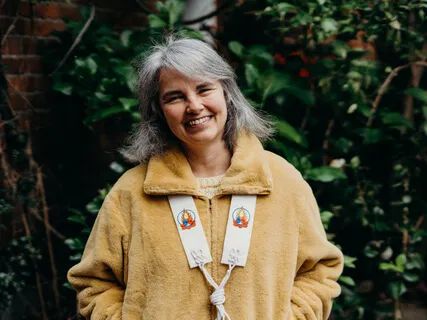
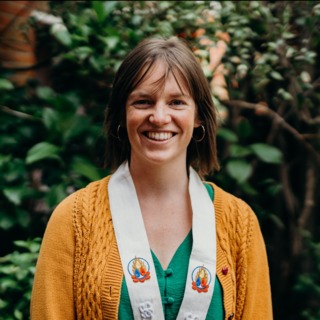
This is Sabetra Matti recording from the London Buddha Centre.
And in today's meditation,
We're going to learn to cultivate the opposite of any unhelpful states of mind that arise when we're meditating.
So if we're feeling sleepy,
We're going to try opening our eyes and bringing our attention up higher in our body.
If we're feeling anxious,
We're going to really practice sitting still.
If we're feeling annoyed with someone else or ourselves,
We're going to practice cultivating patience.
If we find ourselves hankering after something,
Whatever it is,
We're going to practice cultivating contentment.
So as ever,
We're going to take a moment,
Allow a minute so that you can get yourself comfortable,
Get yourself set up to meditate.
So yeah,
We'll just take a minute for you to do that now.
Okay,
Good.
So hopefully you're sitting comfortably now.
So as ever,
We'll just begin by closing our eyes and as ever really starting with the body.
So just really feeling the contact of your body with the chair you're sitting on or the cushions and with the floor as well.
So if you're sitting on a chair,
Making sure your feet are flat on the floor.
And then really feeling the contact of your body with your chair.
See if you can get a sense of more and more of your weight dropping down through the chair or cushions and through the floor.
I like to imagine that the whole base of the posture is like a big sack of rice or sand that someone's just come and put there on the floor.
And all the little grains of rice or sand are gradually finding their level,
Settling down.
So the whole base of the posture becomes more and more stable,
Imperturbable.
And then from that stable base,
The rest of your torso is rising up.
You're spine rising in its own natural curves.
Strong yet flexible.
Head just poised and balanced.
If you want to,
You can just move your head a little from side to side,
Back and forward,
Just letting your head come to rest at a point where it just feels balanced.
And then see if you can allow your shoulders to soften a little.
You can't force your shoulders to soften.
See if you can allow the face to soften a little bit more.
You might have noticed by now that our faces have got lives of their own.
We soften them,
But then a few minutes later,
We find they've tensed up again.
That's okay.
That just means we can just keep softening the face,
Keeping enjoying the sensation of the face softening.
And in the same way,
You can keep softening the hands.
Softening the fingers.
Softening the hands.
And keep softening the belly.
Now,
Once again,
Just noticing that your body is breathing.
So no need to make any effort to breathe.
The body just breathes by itself.
All you need to do is follow the breath.
With your attention.
With your awareness.
Trying to get closer to the actual sensations.
So you see that now what you're feeling now,
Is CHRISTilling.
If you find yourself distracted,
Start to notice the where your mind is going.
Particularly if it's going somewhere unhelpful.
We can use that as a cue to cultivate the opposite.
So if you notice where your thoughts are anxious thoughts,
That's usually accompanied by a sort of restlessness in the body.
See if you can relax into a deeper sense of stillness in the body.
If there is any impulse to fidget or move,
It's a cue to soften the body more.
In this way,
You're directly working with a tendency to anxiety.
Just not feeling like there is any real other commotion.
If you notice that your thoughts are sort of being annoyed,
Going over arguments,
Being annoyed with someone else or even being annoyed with yourself.
And we can use that to cultivate patience.
Again we can do that directly in the body.
Irritation and annoyance will be accompanied by tension in the face,
The hands.
So we can soften that,
Soften the face,
Soften the belly.
There we go.
If your thoughts are thoughts of hankering after something,
Fantasizing about some future pleasure.
It may feel pleasant to do this,
But it won't deepen our meditation.
To deepen the meditation we can cultivate contentment.
We can do this by noticing any pleasurable sensations in the body,
Here and now.
Touch of one hand on another.
The pleasure of just sitting quietly here with nothing to do.
So we use these thoughts of hankering as a cue to cultivate contentment.
And if we find we're drifting off,
Even falling asleep,
Then we can cultivate alertness.
You can even open your eyes.
You can bring more uprightness into the posture.
Lift your chin slightly and allow your back to straighten up.
So again and again in the meditation,
Just notice any unhelpful states of mind,
Unhelpful thoughts and use these as a cue to cultivating the opposite.
In this way you're actually using the unhelpful thing to train your mind,
To train your whole being.
So just sit quietly doing that for the next few minutes.
Okay.
Keep working with your mind.
Keep training your mind.
And now for the last few moments,
Still sitting still with your eyes closed,
Just relaxing any efforts you're making.
Just sitting.
Not trying to do anything at all,
Just sitting in awareness but with no particular focus.
Awareness like a lamp lighting up your whole experience.
And then when you're ready,
In your own time,
Opening your eyes and bringing the meditation to a close.
And then as ever,
See if you can just take a few moments pause before cutting on with your day.