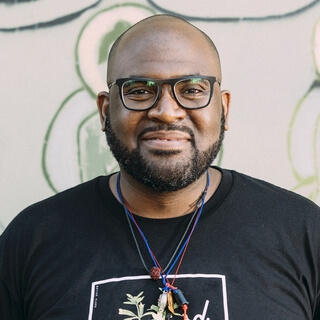
By giving the presentation.
So Lama,
Thank you for coming.
Okay.
Okay.
Okay.
Okay.
Okay.
Okay.
Good afternoon,
Everyone.
Thank you so much for having me on this really beautiful campus,
And on this really beautiful day.
It's so nice to be at an academic institution where I'm not a student at.
So I'm very happy not to be stressed out about being in the class and writing a paper and avoiding my professors.
So it's so interesting that I kind of go around talking about mindfulness and meditation since I think when I was most of your ages,
Maybe in your 20s.
So when I was in my 20s,
Meditating and being silent was the last thing I ever wanted to do.
Actually,
You couldn't sometimes get me to shut the hell up.
So if meditation was about talking all the time,
Then I would be a master.
Instead,
I found it very difficult for me to be present to my own experience,
To my own body,
To my own mind,
And to my own heart.
Because one of the things that I did,
I used communication talking to actually distract myself from my own experience.
I was the last person I wanted to be around.
Kind of like coming up and growing up because of so much of the ways in which I internalized systems of oppression,
Self-hate,
And self-depreciation.
And so when I found myself perhaps around the age of 24,
Really falling into severe depression,
Severe clinical depression,
One of the tools that I was given was that of mindfulness by a local community spiritual healer.
So when you're desperate,
You just find yourself in places.
And studying with this healer,
The core of coming out of this depression for me was actually learning how to be present to my experience,
To be present to my own mind and to my own body.
I tried to meditate before,
Hated it.
Some of you maybe relate to that.
I could sit for 60 seconds.
I could do a good minute.
And then once that minute hit,
I was like clocking every second,
Looking at the clock.
And as soon as I hit a minute,
I would just run out of the room.
I was responding to a lot of peer pressure because I was around people who were doing good things in their lives.
I know that's not the case for all of us.
So I was responding to the peer pressure of meditating and doing therapy.
And back then I was like,
Oh,
This isn't fun.
So I gave up that pursuit of meditation and stopped submitting to all the peer pressure to be a better person because who wants to do that?
And then once the illness got really bad,
I kind of opened up to the possibilities of meditation when they were presented back to me as one of the key ways that I would experience a kind of a healing from the things that really haunted me and bothered me.
So like sitting here at this point,
Having done years of retreat and years of meditation,
Talking about meditation and mindfulness,
It's kind of far out.
It's actually a little bit unbelievable.
But one of the things that I think I got bit by was this extremely profound experience of developing relationship with myself.
Not relationship with myself as I was being created and projected on by a larger social structure.
Not myself as a black queer person who was deeply and brutally othered by the social structure,
But myself meaning who I was beyond all the ways in which I was told I was or who I was told I was.
So developing an intimate connection to my own basic value,
My basic self-worth.
And that was a very personal experience.
It was a very direct experience.
And it was an experience that taught me for the first time to develop and to own and to be fierce about my own agency.
That actually I have this profound power to be who I need to be in the world,
Not to succumb to other people's interpretation of me.
So that was really my introduction into mindfulness,
Was as this tool to transcend this relative suffering,
This relative discomfort,
By actually learning how to pay attention to who I really was.
And that's really actually going back to the roots of the Buddhist-based mindfulness,
The Satipatana,
Which I think you've all studied,
Is really the original project that the Buddha presented,
Was how do we return back to who we are,
Not get distracted or get lost in these projections around self or around things that have no meaning ultimately for us.
So this is where I'm coming from,
This integration of two very important parts of my life,
Before early on social justice,
Activism,
Organizing,
And then transitioning into meditation,
The religious life,
And then hitting another extreme of becoming holy.
And I would,
It happens to everyone,
I think this idea of holiness that you're like,
You're gonna somehow live beyond the world,
That the world no longer is gonna touch you.
If you become religious,
Then the suffering of relative living is actually no longer relevant.
So when I was really immersed in my training in Buddhism,
I realized,
Oh,
I'm actually still suffering from racism and homophobicism.
From racism and homophobia and classism.
I was also still actively participating in structures of violence for people around me,
Particularly structures of violence where I was projecting my own physical ability,
Engaging in different kinds of privileges.
And that was something that I had to learn to take responsibility for.
So I definitely entered into this period where both of these extremes,
Activism,
Meditation,
Buddhism,
Religion,
Had to come back together,
In a way get married.
And this is this really uncomfortable,
Vulnerable,
Tense,
But beautiful and intriguing space that I find myself navigating right now.
And it's definitely not a space where I feel comfortable,
And nor should one feel comfortable doing this work.
So I think once we find ourselves comfortable,
Then we actually stop paying attention in certain ways.
So everything that I engage in,
Especially today as I sit here with you,
Engaging in this dialogue is just,
It's this really interesting dance that I'm doing.
In this moment of paying attention to my own body,
To my own mind,
To my own thinking,
And looking at the ways in which I'm trying to navigate my own experiences,
I'm trying to pay attention to your experiences,
I'm trying to craft a way of being right now,
In public with you,
Where I'm actually trying to cut through the various ways in which I may communicate different kinds of violence,
Emotional,
Psychic violence.
And this is what I think is part of the project of mindfulness,
Just to always do this interrogation of saying,
How am I in this moment?
How am I with people around me?
How am I,
What am I feeling?
Because I can have an awareness of everything that's happening in my experience,
And it's not comfortable,
You know?
But nor is it something I want to avoid.
So,
Moving on this afternoon,
I think one of the things that comes up for me,
And something that kind of hit me,
I guess over the past day or so,
Is this idea of haunting.
So haunting,
What is it like to be haunted?
And it's October,
It's Halloween coming up,
So this is a thematic talk,
A seasonal talk.
But haunting,
When I say haunting,
What does that evoke?
What do you think about with this word haunting?
Memories,
Difficult memories.
Something you can't get rid of.
Fear,
Fierce,
Hollow.
So as some of these things are being called into the space,
What are you feeling?
What does this further evoke in your experience?
Hollow,
Fear.
You know,
We always seem to frame haunting in the negative,
Because that's the only way we understand haunting,
You know?
We don't want to be bothered.
This is creating suffering for us,
Discomfort.
We're not comfortable with this.
So when I think about haunting in relationship to our practice of meditation and mindfulness,
For instance,
I really feel as if part of our practice is to allow mindfulness to haunt us.
Like a ghost,
A spirit that won't ever go away.
Every time we turn a corner,
There it is.
Every time we look back,
There it is.
It's like our shadow.
It's always our shadow,
It's always this unaccounted,
Uninvited guest that's always telling us to remember.
Look.
That's really uncomfortable.
I think about the early roots of mindfulness within the Buddhist scriptures,
The Sati Patana,
Which I think some of you for the class have read and studied.
The Sati,
Which in the 1800s,
Sati,
Began to be defined as mindfulness.
But it's really not a strict translation of that word,
Sati.
Sati actually,
The connotation of Sati is remembering.
So coming up in mindfulness circles,
And in a way I'm kind of new to mindfulness,
But as I was coming into teaching mindfulness and training in mindfulness in secular circles,
Mindfulness was something that,
It was like,
Okay,
Let's be mindful.
Let's pay attention,
Let's be present,
Which isn't that exciting.
Who wants to be present?
Being present sucks.
So I was like,
Okay,
But I'll do it because this is what we're doing now.
And when I began to actually study more critically and study and actually deeply,
Deeply posit the practice of mindfulness in my body,
And then I came into contact with the early roots of mindfulness in the actual scriptures,
This idea,
This presence of remembering really triggered the idea of mindfulness.
Really triggered a reemergence of this practice.
So we are remembering,
We're returning to,
Not to being happy and content,
But we're returning to all the things that we habitually avoid.
We return,
We remember,
We gently,
Kindly turn our attention back.
We remember that we've lost our way.
We've strayed from ourselves,
We strayed from having a dialogue with our experiences,
So we gently turn back to remember.
And that ghost is always there,
That ghost always reminding us.
So we are actually remembering who we actually are,
Who we really are.
Because our minds wander,
So our attention wanders off and gets lost,
And it starts getting invested in all these structures.
Then all of a sudden,
We're these people with egos and with degrees,
I'll just skip forward,
You have degrees,
And then you think you're someone in the world.
And then I think sometimes when we think we're all of these things,
We start believing in it.
We think we're really complicated,
And we think we're really complex,
But once we start turning ourselves back,
Our attention back to ourselves,
We begin to see,
Oh,
You know what,
I'm actually not that complicated.
And that I could live a different life if I could actually keep remembering over and over again that I'm not this chaos,
This mess that I'm always in,
But I'm actually a much simpler,
Direct,
Open being.
So remembering in this way actually becomes an ethical act.
So the practice of remembering of what we would call mindfulness actually is an act of ethics,
Because we're remembering what's good.
We're remembering what's wholesome.
So when we turn our attentions back,
When we remember some of the things that we're really uncomfortable with,
You may say,
Well,
How is that wholesome and good that's not good and wholesome?
Actually,
When we remember these really unpleasant parts of our experiences,
We actually gain this incredible opportunity to think and gain this incredible opportunity to develop a different relationship to these things.
We gain this incredible opportunity to develop a spaciousness and a wisdom that comes out of the spaciousness to make different choices.
And then making different choices,
The good and the wholesome arises.
So when we start thinking about applying some of this understanding to the way we understand social violence,
Power hierarchies,
All the isms,
How do we practice mindfulness in a way that we can actually privilege the wholesome and the good,
Because I am actually not so interested in practicing mindfulness in a way that cultivates happiness,
Which is what every book on secular mindfulness will tell you that you should be happy,
You should be less stressed,
And there's all this great research out there.
But I think that having the goal of being happy is something that diminishes the liberatory and the transformative practice of sati.
The goal is to practice what's good and wholesome from developing a relationship to what's good and wholesome then this whole range of experiences begins to emerge.
So the goal isn't to be happy,
The goal is to privilege what's good and wholesome and to develop a relationship to doing that and to investing in actions,
Thoughts,
And words that promote what's good and wholesome.
But we only do that by first privileging an attention to the things that we're really uncomfortable with or all the ways that we're not privileging and practicing the wholesome and the good.
Because if we go and we say,
Oh,
I'm gonna take this class,
I'm gonna do this meditation,
So I just wanna feel happy,
Then you're actually engaging in some ways in a kind of bypassing.
Because we can fabricate experiences of happiness.
I do it all the time,
I just turn on Hulu and Netflix.
I just go have some ice cream somewhere or I just randomly buzz through some app and we can just create happiness,
You don't need mindfulness.
You can get high and get happy.
But that's not sustainable happiness,
That's not authentic happiness.
We only create the foundations for authentic happiness,
Again,
By first of all understanding the choices that we're making to privilege what's not good and wholesome.
And so what's good and wholesome is not a judgment,
It's not this value thing,
But it's actually saying that what's good and wholesome is what's conducive to ways that you can decrease and diminish acts of violence against yourself and against others.
And I have a very expansive understanding of violence and people hear violence,
Physical violence,
No,
There are all kinds of ways in which we practice violence.
And one of these really subtle,
But actually one of the most intense forms of violence that we commit for ourselves and actually one that we perpetrate for others is that of shame.
Shame is such a pervasive act of psychic terrorism.
I think one of the most destructive things that we could ever say is,
You should be ashamed of yourself.
I just think that's like shooting someone.
So when we actually are practicing remembering,
We go back and we remember,
Oh,
This is actually shame,
It hurts,
You know?
And I've practiced in such a way,
Maybe that I've repressed and covered up all of this pain around being shamed.
So when I go back and remember that that's there,
Then maybe I actually trigger a lot of discomfort,
And that doesn't feel happy.
It doesn't feel fun.
It's not a day at the park.
But when I bring my mind back to shame and remember that,
Oh,
I am engaging in these ways of marginalizing myself and judging myself,
And really shame is fear-based.
So really digging into fear,
I'm actually hurting myself.
And when I'm not connected to that experience of hurting myself,
Then I'm not connected to the ways in which I hurt others through the same strategies.
So I think that's the way that we can do it.
We can do it through the same strategies around shame that have hurt me.
So there's no empathy.
When there's no empathy with ourselves,
There's no empathy with others.
There's a performance of empathy,
Which is kind of like wandering in the dark and trying to say what's right,
Trying to feel what's right.
But if there's no connection to self through the act of remembering and looking,
Then how can we actually truly have an insight or feeling,
You know?
So when we actually turn our attention back to what's difficult,
Then we are actually have this agency to make different choices.
We actually are able to say,
You know what,
I think I'm gonna stop doing X,
Y,
And Z.
I think I'm gonna find help,
You know,
In these other ways,
You know?
I think that I'm gonna stop saying this to other people around me,
Because I know what it feels like when it's said to me.
So if we don't remember,
If we don't return back to that,
How can you ever have that wisdom arise,
You know?
And when we start making different choices,
Then slowly this kind of contentment begins to arise.
And that contentment is learning how to be simply at home in your own body,
In your own experience.
Not that the suffering goes away,
Not that the discomfort goes away,
But you have a very different relationship to it.
You're not so engaged in pushing everything away,
But you're allowing this ghost of remembering to haunt you.
And you actually begin to welcome the haunting,
Because you know that if you're not allowing yourself to be haunted,
Then maybe you won't ever be able to make different decisions on how to be free from suffering and discomfort.
And I think that as I kind of move through my own life and through my own work,
You know,
People always come to me and they're like,
You know,
I really need a really basic strategy in order to confront some system,
You know?
Let's just hypothetically say that patriarchy is a problem.
It's a list of things we can go with,
But I'm sure like we can agree that this is actually a system that creates tremendous amounts of violence for us and has for centuries and centuries and maybe will for the foreseeable future,
You know?
So people come to me and you know,
And they ask me to write things and to talk about patriarchy,
You know?
And I can,
You know,
Definitely say,
Yeah,
We need to,
These are the things that we need to set up.
These are the accountability things.
These are the people who need to take responsibility.
These are the trainings.
These are the workshops you can do.
These are all the consultants that can come in if you're doing organizational work to do X,
Y,
And Z.
That's awesome,
But actually when I'm more interested in the roots of patriarchy within our own experience,
The ways in which we've been conditioned and trained to dominate,
Not just others,
But ourselves,
You know?
So the ways in which we've kind of been conditioned into and we've been born into these ways of being deeply informed,
That we actually begin to play out over and over again and we think,
Oh,
Dominating is this is how it's supposed to go.
And if we're not being haunted by remembering,
By mindfulness,
Then we'll never know that we're actually engaged in these systems of dominance.
And then people come to you and they say,
Well,
You've said this thing,
You've done this thing,
And this is how I experience.
And you go,
What in hell are you talking about?
I just said this thing.
And we have such a disconnect because we're not being haunted.
We're not paying attention to the haunting of remembering,
Of looking.
So we actually have to,
First and foremost,
Develop again this returning back to our own experience and understanding,
Oh,
I am actually deeply engaging in this way of being in the world,
Which for me on one hand seems very natural,
But I'm getting some signals from the world that this is actually not so natural.
Okay,
You know,
No one is born patriarchal,
No one is born racist,
No one is born an ableist or anything like that,
But we are born into conditions and we're born into systems that begin to condition us,
Not when we were born,
But actually before we were born.
So as we were being carried and developed in our mother's stomach or our father's stomach,
Because trans men are having babies,
So when we're in someone's body and being developing,
There are already social causes and conditions that begin to inform us in that moment of what kind of care our parent is receiving,
What our parent has access to in terms of education,
And that all deeply impacts our development in the womb and definitely as we're born,
We're born right into the systems that begin to condition us,
They begin to program us.
So mindfulness,
Our sati remembering,
Is actually this very direct,
Profound way in which there's a deprogramming that can begin.
And certainly this deprogramming is easier and it's more effective,
Of course,
If it happens early on in our lives,
But it's actually never too late to remember,
To go back and to develop a fundamental,
Direct relationship to not,
Not to the programming,
But to our basic worthiness,
Our basic goodness,
The self that is actually not about perpetuating systems of violence,
But that self that's actually,
Whose goal is simply to be,
Just to be,
Not to dominate,
But simply to be in the world.
So let's,
I'll leave you in a short practice.
So I will evoke a haunting for you.
Not like a spell or ritual,
But if you want that,
I am trained in some of that as well,
But maybe you won't appreciate that.
So I think some of you will,
Well definitely some of you are already meditation teachers and mindfulness teachers,
But some of you,
This may be something that you engage in as an instructor or as a teacher moving forward in different careers and so forth.
So as you develop this,
Your pedagogy,
As you invite people into practice,
One of the things that is so important for us to do is to invite people to remember their bodies,
First and foremost,
Not,
Oh,
Pay attention to your body,
But to say,
Oh,
I have a body,
And my body wants to be in a certain way right now.
So now just sitting in your chair,
Standing up or wherever you're doing,
Ask your body,
What does it need right now?
And you're not meditating,
You're just asking,
What do you need?
Do you need to stand up?
Do you need to lie down?
So as you stand up,
You need to lie down.
So it's as simple as what do I need right now?
Body,
What do you need?
And there's a space that opens up and allow yourself to listen to the messages your body is giving you in this space,
Just trying to communicate.
And what is the story your body's trying to tell you right now?
So my body isn't your body,
And your body isn't the body of the person next to you.
Your body is uniquely yours,
And so that means that your body has a very unique narrative about where it's come from,
Where it wants to go.
Our bodies have all had very different experiences in life,
Very different conditionings.
For some of us,
Our bodies are not safe.
For some of us,
Our bodies are the last place that we want to be right now.
So if that's the case,
How do you simply honor that?
How can you honor just simply saying,
You know what,
My body isn't safe for me right now,
So I want to make a choice and practice agency.
Not to maybe fall into my body,
But to skirt around the edges,
Maybe bringing attention to the soul,
Maybe bringing attention to the surface of my body,
The skin,
Or to any part of the body that's easier for me to pay attention to,
To be present with and to hold.
And maybe you are able to be in your body right now,
And if so,
Where is your attention being drawn?
Where are you being led to?
What are you being led to remember in this moment?
And wherever you're being led to,
Is it comfortable?
Is it uncomfortable?
Is it neither?
Do you notice the ways in which you're really grasping on,
Holding on to something?
Does something feel really good and you just fell right into that?
Or maybe it doesn't feel so good and maybe you're doing everything you can to get away from it.
Notice the energy of your basic intention right now,
The energy of pushing away from our grabbing on and pulling towards.
Notice that tension that arises when you actually notice it.
Noticing that push and pull,
That tension that arises when you actually notice it.
Noticing that push and pull.
And can you relax a little?
And in what ways can you come into this space of just simply saying,
You know what,
This is okay?
You may be filling into something and you say,
You know,
This is okay.
To accept a sensation or an experience doesn't mean that we condone it or we celebrate it.
It simply means that we accept that it's actually happening.
That's it.
This is happening and that's it.
And can you continue to relax even more,
Filling the seat under you,
Filling the floor under your feet and allowing your body,
Your weight,
To be held by the floor,
Held by your seat?
And so maybe now allowing your attention to wander somewhere else.
Maybe you want to notice your energy level right now.
Are you feeling tired?
Are you feeling active and energized?
Are you feeling basically neutral?
Just notice that.
And if you're feeling fatigued or tired or drowsy,
I wonder if you can notice how that feels in the body and notice how that feels in your mind.
But at the same time,
Can you keep your attention,
The energy of your attention,
Very sharp and firm?
We can remain really attentive,
But we can also feel into and notice the pull of fatigue and drowsiness.
And at any point,
It's okay to take a break and to refresh your practice.
If you're feeling frustrated or numbed or zoned out,
Just take a short break and just shake it off.
And renew our meditation.
This is not a marathon,
Actually.
So it's okay to take breaks and return back to this moment.
So we now return our attentions now to the practice of contemplation and reflecting.
So we bring our attentions to our minds,
To our thoughts,
Our emotions.
And always in the background,
We still remain aware of the body.
So focusing on the mind itself,
But remaining aware of the body.
But just noticing our minds and just noticing the basic movements of mind,
In particular,
Our thoughts and our feelings and looking at how things move back and forth and the currents of emotion.
Maybe you're noticing a kind of stillness right now.
Or maybe something feels really solid,
Like there is an emotion there that seems just very planted and set.
Just noticing.
Allow yourself to be curious.
This is your mind,
Your body.
So be very curious.
Be as curious about our own minds and bodies as sometimes we're curious about other people's bodies and minds.
And can you be kind as well as be curious?
Can you be gentle?
Can you not judge yourself or blame yourself for having thoughts and emotions that seem uncomfortable?
Can you be kind as well as be kind?
So now that we're in this space,
We can actually move into our work of contemplating and reflecting.
So in this space,
I want you to bring to mind,
Recall,
To remember,
First,
A moment or a situation where you said or did something that hurt someone.
Allow this experience to be something that isn't so heavy,
Something a little milder.
So recalling those memories,
Those experiences,
And as you actually begin to live through those memories again,
Noticing your body,
How did you feel?
Did you notice you were doing something in the moment or did someone come back and tell you that what you had done or said was hurtful?
And notice how the body is reacting.
And if you want,
You can actually place a hand on the part of the body that you feel is experiencing this remembering and this reflection the most.
And what are you feeling?
Can you name the feelings?
Can you name the quality of the emotions?
Can you be curious?
And just as importantly,
Can you be kind and gentle?
Notice how you're attempting to run away.
In a way,
Notice the shutting down,
The ways in which you're trying to cover up what you're feeling in your mind and body.
Maybe you're trying to distract yourself.
Maybe you're thinking of something else.
Maybe you're calling me a profanity in your mind.
Just notice.
Let yourself be haunted in this very moment.
Can you relax right now?
Can you give perhaps the uncomfortable sensations you're experiencing right now lots of space to be right in your experience at this moment?
Is this hard to do?
Is it easy?
Just notice.
If you were attempting to communicate to someone right now in the space that you find yourself in,
Would it be easy to communicate,
To talk?
Could you be present to experience as a mind and body and also be present to communicating in a way that's kind and direct?
Could you listen to others feeling this in the moment?
Just noticing.
Just allowing yourself now to take a break,
To refresh your meditation,
To let go of this particular contemplation.
As we return back slowly to our last contemplation,
Just noticing the weight of the body,
Noticing the seat holding your body,
Noticing the floor under your feet,
Noticing the foundation holding you.
Imagine that all the tension,
All the stress in your body and mind are being released and drained down,
Down through your body,
Into the seat,
Into the floor.
Letting the foundation,
Letting the earth have the nervousness and the anxiety.
Just relax.
So we bring our attention back now to the minds for our last contemplation.
And this time,
Recalling a moment or a situation where you felt hurt.
Maybe someone did something or said something,
But again,
Something mild,
Something not so heavy.
But just remembering something,
Returning back to something and again,
Feeling your body in this remembering.
Where are you at?
Where do you feel this experience in the body?
And what are you feeling in your mind?
Can you name the emotions?
Can you name the feelings?
Can you name the quality of the emotional energy?
Again,
Being curious,
But also being kind.
Not pushing yourself,
Not judging yourself,
But just noticing.
But not poking or delving into.
How are you attempting to run away from this experience?
What are you doing to cover it up?
Can you give both the experience of the mind itself and the body lots of space to be in?
And if it feels too much,
Returning your attention to the seat,
To the floor,
Feeling the weight of the body and the seat,
Feeling the feet on the floor.
Just feeling something solid.
Is this experience too much for you?
Is it overwhelming?
And what does too much and overwhelming mean for you?
Experiencing this in the moment,
How easy do you think it would be for you to communicate what you're experiencing?
To someone else?
How easy would it be for you to listen to someone else's experience where you are right now?
How do you feel about this experience?
So allowing yourself to let go of this remembering,
This returning.
Allowing your attention to fall back to the seat,
To the floor,
To the weight of the body and the seat,
To the floor under your feet.
Resting in that sensation of being held by the floor and seat.
And when you're ready and are able to,
Returning to being present in community in this room,
In this moment by opening your eyes.
Not looking around,
But just opening your eyes if your eyes are closed.
Just noticing what you're seeing,
What you're experiencing.
Taking a few deep breaths down through the diaphragm as if you're breathing down to the very floor.
And exhaling as if you're pulling the air from the earth itself.
In and out,
Deep,
Heavy,
Large breaths.
And raising your arms above your head,
Shaking it out,
Letting go of some of this energy,
Some of the tension,
Some of the trauma that was brought up.
Shaking throughout the body,
Shaking the legs even.
So this contemplation,
This exercise is something that is important to do and this is directly related to how we begin to undo systems of dominance and violence by learning how to come directly into contact with the ways our avoidance of our basic reality tends to breed acts of dominance and violences.
On other bodies.
Essentially the ways that we avoid our own experience are the same ways that we enact violence on other people.
Microaggressions,
The ways in which that happens,
You know,
Often comes from experiences of actually not having any connection to what we're experiencing.
So one of the words that we often use and mindfulness and especially other circles around movement,
Especially yoga circles is embodiment or disembodiment.
So this,
This state of awareness of body being disconnected from the body itself and in academic environments,
University settings,
That's really the situation that we all deal with this being deeply disembodied.
We're neck up,
As we would say,
So we're in our heads,
We're in our minds.
And so when we're in our heads and in our minds,
We're disconnected from how the body and what the body is experiencing.
So we kind of wander through the world committing certain things over and over again because we actually are not listening to our bodies.
Our bodies are always telling the truth because the body doesn't know how to do anything else except experience itself.
So we're listening to the body.
And when we practice bringing awareness,
Mindfulness into the body,
We're practicing embodiment.
So which is really dangerous for a lot of reasons.
One,
You're going to slow down.
So you're not going to get all your papers in on time.
You're not going to go to all the classes,
Living experience.
But that's actually the strategy.
That's part of engaging in anti-violence,
Anti-oppression work is to actually come into the body,
To listen to the body and how the body is registering different impacts in the world.
Once we feel it,
We say,
Oh,
This is what's happening.
I shouldn't do that.
I shouldn't go here.
I shouldn't be in a relationship to this person because my body is saying,
You know what,
They're kind of messed up.
Or when I say things and do things,
This is how I feel and this is what I sense coming back to me from other people around me.
Maybe I shouldn't do that.
So if we're interested in bridging our mindfulness practice with the work of social justice,
Which I think is really important work to do,
Then we actually have to start asking these questions and returning to our bodies.
So I'd like to open up the space for questions now.
So if anyone has a question or if not,
I'll keep talking.
I have many more hours of meditation instructions to offer.
Days,
One could say.
Years even.
This is just the tip of the iceberg.
And also want to say how lucky and fortunate you all are to be able to take a class on the tradition of meditation.
Meditation,
I say consciousness studies,
But you know the span of how this science developed,
You know,
Over many,
Through many communities,
Many countries over centuries.
I think this is such an important tool that you're being trained in.
I think that this will deeply enable you to to deepen our practice if you choose to deepen our practice and to choose a tradition of meditation or mindfulness that best suits you.
If you choose to be on this class.
So it's tremendous work that's being done here.
Yes,
I have a question.
Yep.
Yep.
Yeah,
Because it probably is on fire.
So it's like you're probably not making that up.
This is probably something real that's happening.
Actually,
California is on fire.
So it's actually,
Actually very accurate.
And so I think we feel overwhelmed when when we actually are not spacious enough.
So we get our attention gets really small or rather our awareness.
I'm going to start.
I'm going to say awareness,
Our knowingness gets really small.
And then that's how we get overwhelmed.
You know.
So how do we promote strategies or rituals that actually can trigger the spaciousness because a lot of us aren't doing that right now.
So our rituals and strategies are staying in tune to social media and the news,
You know,
Which is not a strategy that's going to trigger spaciousness.
That's actually as we explored in this meditation exercise,
You're going to get triggered to shut down and to avoid and you get numb.
And that's what you're experiencing when you feel overwhelmed.
You're just numb and shut down.
You actually want to get wide around it to experience the disappointment.
And I actually call this heartbreak.
So how do we just acknowledge that our hearts are breaking?
We're deeply disappointed.
We're frustrated.
We're angry.
But most importantly,
We're just hurt.
We're hurt,
You know,
And allowing ourselves to be in that hurt actually will help us to be much more present and actually will help us to have more space to know what to do and not to feel helpless,
Which is what overwhelming being overwhelmed actually breeds is a sense of helplessness.
I can't do anything.
There's something you can do.
It may not be this grand thing of like going out and doing,
You know,
Leading a march or like toppling governments,
Which I encourage you to do still.
But sometimes our basic action is actually helping the people around us.
Like if we take responsibility just for making sure people around us are OK,
If we can actually enact strategies of self-care that revolve around us not being so triggered and hopeless,
Then we can actually begin to see a different kind of movement happening.
You know,
So we're in a resistance,
But we need to refocus the resistance in terms of like helping our neighbors,
You know,
Developing relationships with the people down the hall,
You know,
Learning how to to connect to people that we're seeing all the time.
That's how we're going to actually get through this by communicating openly and honestly and by admitting where we are emotionally and psychically.
You know,
And and it's OK to be upset.
It's OK to be angry.
You know,
I think that that's a sign that you care,
You know,
But you have to channel that into something that's productive.
You know,
Not just sit on it and I just sit with it and bottle it up.
You know,
I feel,
You know,
I feel like hopeless sometimes and I just feel like,
You know,
This is just like all bullshit.
And,
You know,
I just want to I sometimes I don't want to leave my house.
I don't want to like go outside and I'll I'll fast from news and social media,
You know.
But I know also the strategies and the rituals that I can use in order to sit with everything that I know that in a way what I experience is kind of an illusion.
And that like I actually am capable of moving in the world in a way that's kind and compassionate,
But also hold the space for the wisdom that arises that says that maybe I won't actually see what I hope to see in the world.
So then that brings in the grief in the morning.
You know,
Oh,
I won't ever see it end to the system.
Again,
You don't condone it,
But you accept it.
This is how I'm feeling.
This is what the evidence suggests.
You say,
OK,
I'm still going to do something.
You know,
And whatever you do will have to be enough because if you're doing everything you can do,
You can't do anything more.
But I don't believe we're all doing what we can do.
So that's like the whole part for me.
It's like,
Oh,
I don't think we've reached our potential as a community of people.
And that's my role in the world is to help people meet that potential.
Using mindfulness.
I'm just curious about your.
Yeah,
Like I had to be convinced to teach mindfulness.
It was literally friends coming to me and saying,
Rod,
You mean you would be really good doing this.
And I was like,
Well,
I don't believe in mindfulness.
I believe mindfulness is like Santa Claus.
And it just over and over people kept coming to me because I had this idea of what mindfulness was,
And it was like a white centered,
You know,
Hetero kind of like capitalist system.
I was like,
I can't engage in that.
I have enough of this with my own tradition.
Like,
Why do I want to get involved with something else that breeds the same things?
And so my introduction to mindfulness,
I mean,
I was you know,
We have mindfulness and,
You know,
My tradition to and Tibetan Buddhism,
But we never called it mindfulness.
You know.
But when I started getting affiliated with inward bounds,
Mindfulness education and started collaborating with some of the teachers in that organization on different projects,
I just really found those teachers to be really realistic about their practice.
And it gave me a different exposure to mainstream mindfulness,
A very heart centered kind,
A more Buddhist based mindfulness,
You know,
And that really started changing my mind.
And then I started getting a formally affiliated with the organization and started teaching with them.
And then that led into all these other avenues of doing mindfulness.
And I really had to come to this understanding of teaching mindfulness from the way that's authentic for me,
Which is like I think of it as intersectional,
Economical mindfulness.
You know,
So I teach in secular spaces,
But it's never main secular mainstream mindfulness is still ethical based mindfulness with compassion and kindness thrown in.
You know,
So that's kind of the line that I drew.
If I'm going to do this,
This is what I'm going to do.
I still teach,
I still teach Buddhism and I still teach in my tradition as well.
Yep.
So I do all of that.
You know,
And it's possible everything.
Everything is is connected.
I think that's,
You know,
When you want to bridge like a secular life and a spiritual life,
You have to understand there's this communication happening and that we can be deeply spiritual and deeply connected to beliefs.
But it doesn't have to be something like we're just kind of wearing.
I mean,
I am wearing stuff,
But like you have to be something that we're like always communicating.
This is who I am.
This is what I believe in.
Actually,
I believe that the spiritual path is actually deeply communicated through the ways you can simply be in a space that's nonjudgmental,
That's kind,
That's direct,
And that allows people to be themselves.
As long as that being themselves doesn't enact violence on other people.
So that's my understanding of spirituality and how I bridge secular and sacred together.
You know,
So I don't actually create separations.
This is the this is exactly how I am.
No matter where,
No matter if I'm giving a ritual,
Like I'm wearing the same thing,
No matter if I'm like sitting in schools and universities in front of students.
You're talking about this is the same thing I would say anywhere.
You know,
I have the privilege to do that,
Too.
And most people don't.
I have a privilege because I have a I have these credentials,
You know.
So I'm not just training something I have like degrees and like years and years of background in this.
So I get this and I have a book,
Too.
So people know what they're getting.
That's why I'm saying,
You know,
We're going to get you call me.
There's a lot of things I don't get,
You know,
People like we don't want that kind of mindfulness.
I say,
OK,
Absolutely.
Any other questions?
Be afraid.
Uh huh.
Yeah.
Yes,
I surprised myself every time I stand in front of people with what comes out of my mouth.
But but more specifically,
I the ways in which I trust myself and where it leads me is always really surprising.
Like the choices.
Sometimes I can walk into a space and say,
You know,
I'm not going to do this.
I'm not going to do that.
I'm not going to do this because I feel like people aren't ready for that or they're not interested.
And I surprise myself by going right into the things that I said I wouldn't do.
You know,
I surprised myself in the way that I challenge people and I challenge myself on the spot.
You know,
That makes it exciting.
This is what makes this interesting for me.
Because I'd never have anything planned.
I kind of feel it out.
I feel everything out and I just go with the feeling.
And that comes from a deep trust in yourself.
I think that's a way that we can be authentic in the world.
Yeah.
Thank you.
Right in the very back.
Uh huh.
Yep.
Yep.
Yeah.
And so if you look at those are all I mean,
If you come to like something like tomorrow night that I'll do or something on Friday,
The talk on Friday night,
It's going to be the same process.
I'll show up and I just feel things out,
You know,
Roughly around the theme that I suggest.
I think that's so it's so exciting to do this.
This this kind of work,
This kind of like just showing up and you're going to be like,
You know what,
If I just completely fall on my ass,
I'll just do it.
You know,
Uh huh.
In the very back.
Yeah.
Yeah.
Yeah.
That kind of calling out this or the calling out culture,
You know,
I often see it as being really unkind.
Like it's very you have to be very skillful,
You know,
To to call people out.
I've not preferred that the calling in,
You know,
And for me it's not calling in.
It isn't necessarily like,
You know,
You pull someone to the side,
But more calling in is like I call myself out first.
You know,
And I look at my intentions,
You know,
And I look at why I'm doing something.
Now look at what I'm trying to perform in front of an audience in order to make me seem like a really bad ass,
You know,
Critical thinker and active as a whatever.
I just see that happening over and over that our credentials.
We earn our credentials to the ways in which we're able to take people down publicly.
You know,
And I think that comes out of our own frustration,
You know.
So,
You know,
When I engage in this,
This practice of calling out,
It's more like.
The same that,
Yeah,
Like I do the same things like if we can implicate ourselves and say,
Yeah,
I think the same way I do the same thing and,
You know,
Stuff around patriarchy that I'm engaged in publicly and in private is always like,
Yes,
I'm a cisgender man as well.
And I do.
I commit acts of psychic violence,
You know,
In the system.
So I acknowledge myself also because I care for you want to bring this to your attention as well because I want you to decrease your own acts of violence around you as well that you're a part of,
You know,
I think that can be really kind and really direct.
But it's not like,
Oh,
You're like messed up.
You're fucked up.
You know,
You need to get your shit together.
You know,
That's not going to breed openness.
But just always had to.
So yeah,
So sometimes I slip into that right,
You know,
Sometimes I get really petty.
You know,
And it's fun.
Then I scale it back,
You know,
And I scale it back and say,
You know what,
This isn't my best self.
I'm putting for this is my frustrated self that needs to go,
You know,
And breathe somewhere,
You know,
And not take out all my frustrations in the world out on this one person.
You know,
That's what that's what happens.
You know,
Someone missteps and you're like,
OK,
This is my chance to unload,
You know,
From my relationship with my parents on like all this is one second.
This is my chance to get rid of this shit.
You know.
Yeah.
So thank you for that.
You know,
I think we just in the community,
We need to like we need to create communities of care and self care.
And that begins to impact the ways in which we're creating violence,
The ways in which we're calling out people.
We're just not being cared for.
Our communities,
You know,
Our groups are so we don't see self care as being vital to the movement or to resistance work.
We see it as being a distraction.
We see it,
You know,
Sometimes it's being co-opted by other systems.
But we need to start investing in that,
That work,
You know,
Like when we come together,
How are we taking care of ourselves?
How are we relating to one another?
How are we supporting one another?
Not just about,
OK,
Let's get together and get this this work done.
You know,
Let's organize this.
You know,
Let's get our analysis together.
You need to relate to one another and let each other be vulnerable and let each other cry and be wounded.
And,
You know,
Especially marginalized communities,
We don't know how to do that.
We're so deeply traumatized,
You know,
So deeply traumatized right now.
We don't know how to work with the trauma.
But there's so much material now.
You know,
There's so many books,
There's like videos,
There's so many trainers,
There's so many community leaders emerging with this ethic of self care that's decolonized self care.
You know,
But often people are just afraid of it because we think if we start the work,
The work of healing and self care,
Then we will lose our superhuman ability to be pissed off.
You can still be pissed off,
You know,
Like,
Believe me,
You're still be pissed off,
But you won't be depleted.
And the work,
You know.
Thank you for that question.
Yes,
Mehta.
I love how I know everyone's names.
Not everyone,
But.
This isn't a very well formed question.
Okay.
But the exercise that you led,
You know,
A fair amount of it was about from this place,
Can you communicate to the other person in a way that you didn't use this word,
But is more embodied and true and authentic.
And I've been practicing for a long time,
And I still need to practice a lot.
But my experience is that it's really,
Really tricky when someone else is doing something that you're experiencing is violent,
And you're trying to communicate it and name it,
And you're feeling hurt and angry.
And so some of that emotion is coming out validly and you're naming it,
And the other person is like,
Not going to go there.
Not going to admit the feeling is either in,
You know,
Victim mode or aggressor mode,
Or,
You know,
They don't practice.
And I find that the only thing I can do is either go,
I'm not going to get into this time,
Or just go,
All right,
You're in pain,
I'm in pain.
That's the best we're going to do right now.
So just whether you have any insight,
Those dynamics are so common.
Yeah,
It's very,
Yeah,
And I see it all the time.
Yeah,
And it's so hard.
Like,
Even if you're really doing the practice within yourself,
The chances of having it go well are relational,
Especially with someone who's hand in eye and doesn't want to go there and doesn't practice.
It's tricky.
I think one of the things that I practice is by just saying,
OK,
I'm going to communicate what I'm experiencing.
You may just completely,
You know,
This may be like off your screen,
But I believe I'm planting the seeds,
You know,
So you can't ever say that no one ever told you this,
You know,
So there's no excuses around that.
Like,
So I'm experiencing this is violent.
Yeah,
You know,
I'm experiencing this.
I'm telling you this,
You know,
You can ignore it.
But here it is,
You know.
And then after that,
We get so really invested in giving away our agency to other people to heal us.
You know,
Like we have to someone has to apologize to us most of the time they won't because most of the most of the time they won't even know.
Or most of the time they won't take responsibility for that.
You know,
So I actually learn to let go of that,
You know,
That need for someone to acknowledge what they've done,
You know,
And to say,
You know what?
You're in a whole lot of pain right now.
And I can spend a lot of time trying to get you to be aware of that or I can reinvest that energy into taking care of myself.
You know,
That's a whole nother conversation.
You know,
We,
You know,
We want to hold people accountable exactly.
You know,
But we can do accountability work and also take care of ourselves.
You know,
One of the theories that I have that is that,
Like,
For instance,
Like on racial trauma.
So in my experience,
I was thinking,
You know,
Especially during writing radical Dharma,
It was like,
So what if the system of racism was completely abolished?
You know,
There was no system of racial superiority anymore.
Would I still be traumatized?
And yes,
You know,
There wouldn't be the system of pressure like perpetually,
But I would still be lost in the cycle.
You know,
And so that helped me to really understand that,
Like,
Actually,
I have some agency to start disrupting racial trauma in my experience.
And I can start creating boundaries around me that limits the ways in which racial trauma is impacting my own body.
You know,
And I started doing that more and more,
You know,
And it started to work.
You know,
So it's quite possible because we won't see the end of these systems in our lifetimes.
You know,
But we have to start creating the space and the structures to start feeding ourselves,
To nourishing ourselves.
And we can do that within the system.
And again,
So much there's so much work coming out around this right now.
Like Joy DeGruy,
You know,
Dr.
Joy DeGruy,
Who wrote Post Traumatic Slave Syndrome,
You know,
Like she offers this plan and she has a workbook now.
And like she does all these trainings that she's like,
OK,
You can actually start healing,
You know,
Racial trauma and start reinvesting that energy in some of these modalities and still actually be working out in the world to end these systems as well.
And that's why I hope to be engaging in as well,
Too,
In this work is saying that,
Like,
You can be active in the work of social justice,
But you can also be doing the work to undo these acts of violence that you're perpetuating as well.
Are you a victim to in terms of trauma?
I think meditation is the root of that for me.
Mahamudra.
So it's the spiritual part of this for me.
It's like,
OK,
What's the nature of reality?
And that's what really helped me create space in this.
You know,
What am I creating?
What am I engaging in?
What am I believing in that shouldn't be believing in?
You know,
I think is every time you're saying in this situation that I was carrying to that contemplation,
I think in the other person I was envisioning the impasse was the inability to hold the violence they were doing themselves.
That's really what it was.
That's just different.
And that takes a lot of spaciousness to say that,
Oh,
This person just hurt me.
They hurt me because they're in a lot of pain.
That's an advanced practice,
Which is going to take time to get to.
You know,
That's not like the beginning practice.
But over time,
There's a spaciousness that develops and you're actually able to have some sense that when someone does something,
Says something to me that creates this hurt,
Then a thought can arise that says,
You know what?
You're maybe doing the best that you can right now.
You know,
I'm not letting people off.
I'm just saying that you're responding to your conditioning right now.
And then you ask yourself,
What is your role then as a victim and disrupting the impact of someone else's conditioning on your body?
And then you take us another step and say,
What are the boundaries around that?
Whose work should I be doing and how much of other people's work is my work?
And how much of the work of myself am I avoiding by being so concerned with other people's work?
You know,
One of the boundaries that I said is that like it's only so far I'm going to argue with you.
You know,
It's only it's only so long.
It's only so much energy I'm going to invest in this.
And if I go beyond that limit,
Then I actually start hurting myself.
When we have Richard,
We have some more time or we want to wrap up.
OK,
All right.
Questions.
Yeah.
OK.
In terms of addressing some of these issues,
Why do you see the balance of kind of fostering kind of carrying the virus to try to get to others versus building resilience in yourself?
Yeah.
Obviously,
The self as much as the destruction.
Yeah.
I think resilience for oneself is I prioritize.
So my resilience,
I prioritize.
I think one resilience directly contributes to what you can do to create communities of resilience.
I don't think that we can do certain kinds of work if that work isn't being done in our own experience.
You know,
Like analogies like I can't teach someone to drive a car if I don't know how to drive a car.
Like I can't teach meditation if I don't meditate,
Even though people do.
But like you can't you shouldn't you shouldn't teach meditation if you don't have a meditation practice.
So I can't you can't start trying to create communities of care when you don't know how to care for yourself.
You know,
So let let your body and let your own work lead you into the work that needs to be done within the world.
I think I was going to talk to you about the big block.
What do you think is kind of the biggest lesson you learned in the last three years?
Oh,
So many things.
God.
Just one thing.
Yes.
We have about five more minutes.
OK.
OK.
Last question and then we'll.
I think so some of the top things.
One,
I realized what self-love really was.
And it was it was nothing I could have imagined without having that experience that was so that we all so distracted in the world.
And that to be in a space where there's very limited distractions,
Where it's just silence,
Like all of the stuff just comes up to the surface.
You know,
So I realized the work that has to be done around self care and self-love,
But also realized that I can survive myself.
I can survive all the things I think I've done to hurt myself and others,
And I can sit through it and survive it.
I won't be eradicated.
And I think lastly,
The uses of silence,
The purposes of silence.
If you want to read more about that,
I would read Audrey Lloyd,
Especially in Sister Outsider,
Where she talks about like the uses of silence.
You know,
And I haven't read it until after retreat.
And I was like,
That was exactly my experience.
You know,
So how important silence is,
But also how silence can be violent as well.
You know,
So I learned what that meant.
You know,
I learned that silence wasn't always ethical.
You know,
And right that sometimes I had to use,
You know,
Harsh words,
You know,
Also sometimes I had to shut the hell up.
You know,
So that was the three things.
Yeah.
It wasn't a vacation.
That's what people say.
Oh,
It must have been nice.
It must have been like camp.
Now it's like,
No,
It was like,
You know,
Being skinned alive and then being told to be happy about it.
Because,
You know,
You have this incredible opportunity to be skinned alive.
Yeah.
And okay.
So I think that's yeah,
I think that's it.
Thank you,
Everyone.
So we need to make it a moment.
And what I think we'll do is we'll go back to our classroom with Mama Raj.
Does anyone have questions?