Meditation is not always easy to access.
It can feel hard to just sit there and do nothing.
The breath is a direct tool to connect with our physiological state of being.
For this reason,
It's a great send-off into a meditative state.
This practice is a simple breath awareness and diaphragmatic breath pattern.
If at any point any of the techniques offered don't feel right or are stressful,
Please stop and breathe in any way that feels good to you.
To begin,
Find a comfortable place to be.
You don't have to sit.
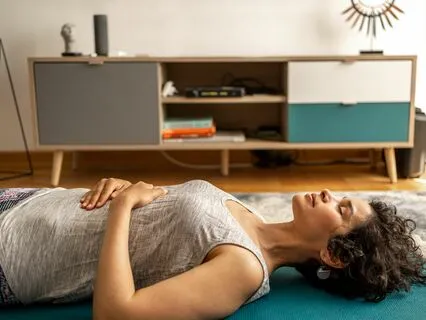
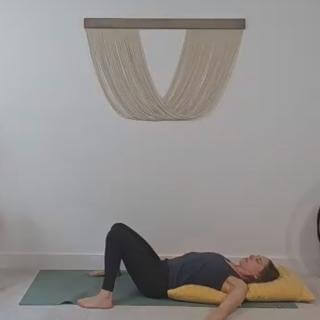
You could lie down.
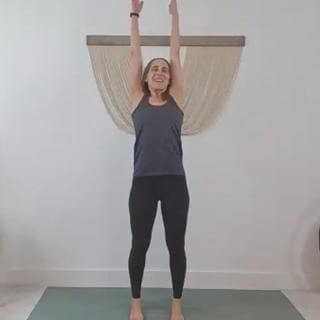
You could even stand.
If you are sitting,
You're welcome to sit up on a height,
Sit in a chair,
Or even against the wall.
But know that sitting is not the most important thing.
Comfort is.
This practice can be done with your eyes open or your eyes closed,
Or a combination.
So you choose what's right for you.
Feel free to take some movement first.
Any little wiggles,
Any stretches that would help you to feel more comfortable and more prepared to get into a quieter and more still place.
There are many ways to practice pranayama,
Or breath control,
And this practice will be very simple,
Drawing attention to the way the breath is moving in and out,
And engaging your diaphragm muscle to find a breath that's more soothing than the day-to-day breath that's often chest-focused,
Rapid,
And unconscious.
Begin by breathing in and out through the nose if that's comfortable.
If it's not,
You can breathe any way that works today.
The nostril breath is preferred because the nostrils warm and moisten and filter the air.
You can notice this by tuning your attention in now to the temperature of the breath as it comes in through your nostrils,
Compared with the temperature of the breath as it moves out through the nostrils.
Take a few breaths to notice.
Compare the temperatures of in-breath and out-breath in your nostrils.
You may notice that on the inhalation,
The breath feels slightly cooler in the nostrils compared with the exhalation.
As you're observing your breath,
Notice what else is happening in your body.
Relax your eyes,
Relax the forehead,
Soften your jaw,
And release the root of the tongue.
Relax shoulders and neck,
And tune into any places in your body where you may be holding on and don't need to.
Invite a release there.
Now simply observe with this relaxed body the breath moving in and out through your nose.
The moment you bring your attention to the breath,
You may find it already changes.
That's okay,
But just do your best to practice awareness of the breath right now.
Observing the inhale and following the exhale.
Know that your mind is going to wander if it hasn't already.
That's totally okay.
The practice of mindfulness is noticing when you've wandered so you can come back to right now.
Watching the inhale,
Watching the exhale.
If you're finding it difficult to stay with it,
Tune into your body's signals,
Your somatic sensations.
Noticing the contact that your legs are making with the chair or the floor.
Noticing the slight movement in the chest and the ribs with each breath in and out.
Again noticing the temperature of the breath as it moves in and out of the nostrils.
Now you'll begin to deepen the breath a bit,
Moving beyond awareness into an active manipulation of the breath.
This is pranayama,
Breath control.
As you begin to do this slow deepening,
Picture your diaphragm muscle,
Your breathing muscle.
It's a dome-shaped or parachute-shaped muscle at the base of your ribcage.
Separating the contents of the ribcage from the contents of the abdomen.
Each time you inhale,
This dome shape pulls down to allow for more space,
More volume for the breath to come into the lungs.
Picture the descending of the diaphragm when you inhale.
Each time you exhale,
The diaphragm muscle returns to rest back to the dome or parachute shape.
If it helps,
You can place your hands at the base of your ribcage in a dome shape.
And when you inhale,
You can press your hands down.
When you exhale,
Return them back to their resting dome shape.
Your lungs take up almost the whole space of your torso.
They're so big.
Use your full lung capacity with this diaphragmatic breath,
Drawing the breath deep into the lungs.
Releasing the effort of breath on each exhale.
As you engage a diaphragmatic breath pattern,
You may notice a slight rising and falling of the belly.
You can't breathe into your belly.
There are no lungs there.
But the process of using the diaphragm muscle,
Taking a deep,
Slow,
Calming breath naturally results in movement in the abdomen.
Continue working with this breath for a little bit longer.
And now feel the three-dimensional quality of your lungs.
So you're not just breathing and expanding the front body,
But also expand the sides of your ribcage,
The back of your ribcage.
With every exhale,
Let go of the effort of breath.
Take a few more of these diaphragmatic breaths,
Noticing the physiological effect on you.
Perhaps a calming,
A quieting feeling.
This breath is the antidote to busyness,
To doing.
And with your next exhale,
Release control over the breath,
Returning again to simple breath awareness,
Resting in a state of mindful presence for a little while longer.
Notice as your next inhale comes in through the nostrils,
And watch as the exhale goes out through the nostrils.
Picture where you are in the room and visualize your relationship to the objects around you.
If your eyes are closed,
Begin to flutter them open,
Visually reorienting to the space you're in,
Tuning into your sense of touch and noticing places of contact with the support beneath you.
And if it feels good,
Invite in any movements as you start to make your way back from this practice.
Notice how you feel,
Having used breath as a springboard into meditation and mindfulness.
Thanks so much for practicing,
And I'll be with you next time.