Welcome to our Balance Path.
This is a program that models how to balance anxieties and low moods.
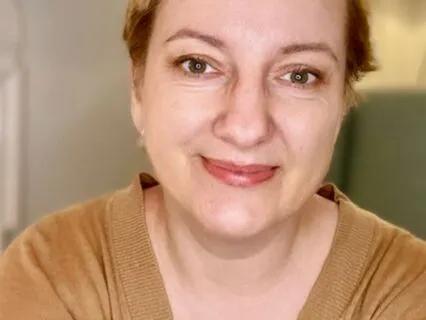
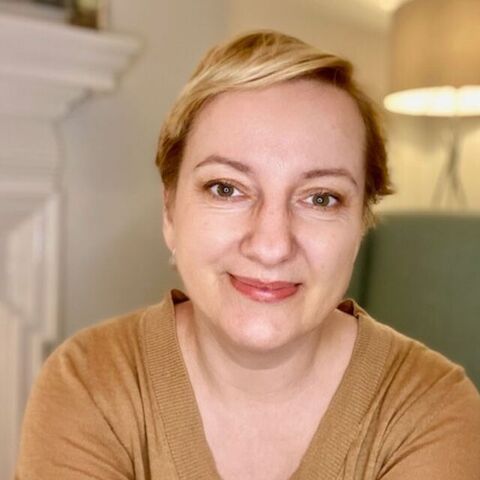
I'm Kasia Maków-Kohl,
I'm a psychotherapist and I'll be your guide so you can get your emotional equilibrium back,
So you can stay balanced,
So you can get your joy back and breathe with joy again.
This whole program,
Part one and part two,
Will guide you how to stay balanced for life.
It's going to guide you through techniques when you can manage your mental health the way you need,
Because not the one is in trouble who feels,
But the one who doesn't know what to do with the internal world.
You can use the program the way it suits you.
You can use it when you're walking,
When you're commuting,
And you can use when you're relaxing in the evening for your bedtime routine,
When you're lying in bed and listening to your content.
This slow pace of sessions imitates the reflective atmosphere of psychotherapy sessions.
I hope you can listen to it a bit like you would be listening to the radio in the evening and I hope it's going to create for you a moment when you can pause and reflect.
After each session,
You might need to journal,
To write your thoughts and to keep some sort of notes on how your journey is going.
Stay relentless in commitment to the Balance Program and I promise you will be able to spread the sparkle of joy again.
In the program,
First we're going to focus on sensing your body and noticing sensations and feelings on the inside,
But without identifying with them,
Without merging with them,
So you can learn to observe your thoughts,
Your emotions,
And your body's sensations.
After that,
Step by step,
I'll be guiding you through,
In the first part,
Through balancing your feelings,
Including anxieties,
And I'll be bringing psychotherapeutic concepts to expand your knowledge and awareness of your internal world.
In the second part,
We will be processing losses,
We will be engaging with your inner child,
And we are going to keep practicing and deepening your engagement in the techniques to stay balanced for life.
Have you heard that there is a wisdom in the body?
First,
We're going to learn sensing our body and our physical sensations and noticing them.
If we compare our internal world to our solar system,
With planets and stars and the sun in the center,
You might imagine that your inner self is a bit like the sun that spreads the warmth on the planets and stars.
So,
I'll be inviting you in the program to notice the planets and the stars and treat them with compassion and warmth.
I'm going to invite you to notice the space in between them as well.
Philosopher and psychologist Eugene Gendlin,
Who worked at some point with Carol Rogers,
He and his colleague studied why some psychotherapy clients improved,
Why many others did not.
It was found that successful therapy was not determined by the therapist's techniques,
Orientation,
Or even a relationship,
Relationship between a psychotherapist and a client.
What did make a difference was what the client was doing internally.
Counselees who improved were regularly checking on the inside for a whole bodily felt sense of their situation.
To be honest,
This comes to me as a relief.
I have been practicing psychotherapy for over a decade and sometimes I felt slightly guilty of not being able to stick to one technique.
I have always gone with counselee's felt sense,
Deepening it.
And we're going to use here Gendlin's term,
His term felt sense,
That's how he called the felt sense in a current situation.
And that felt sense is not like one single emotion.
The felt sense of a situation or problem when it first forms is typically vague and unclear.
Eugene Gendlin called it a murky zone.
I would call it cloudy or foggy.
You can sense that something is there,
But it's hard to get it into words exactly.
It's that holistic sense.
And it contains within it much more than we can easily think or emotionally know about any situation.
Once you get to that felt sense,
Even if you experience painful situation,
There is sometimes a sense of release,
Release of tension,
And some clarity might follow,
Possibly even easing of tension.
And that easing of tension might tell us that we have made contact with a deeper level of ourself.
Gendlin and his followers called the technique focusing.
Gendlin found that imposing others' ideas of how we should be or how we should deal with traumatic experiences,
And even insights about what causes us our problems,
Won't bring us much change.
The therapeutic change is bodily and it feels good even if the content we're dealing with is painful.
The International Focusing Institute wrote on their website,
Resolving our problems usually comes in small,
Successive steps of contacting the felt sense and waiting for it to bring something new to our situation.
The Balance Program will offer you that.
Our first technique that we're going to use in this part is focusing.
We will be focusing on our felt sense through transformative meditations.
I would add that the felt sense is a bit like feeling holistically your whole solar system on the inside.
And also the space,
The space between planets and stars and stars.
Please don't over-identify with any of the planets,
For example sorrow or loss.
Just stay with what is,
The way it is.
If we identify with only one of those planets,
We can lose the holistic sense of the whole and the beautiful vastness that there is between planets and stars.
In my experience,
Once we come to some realization that there is the beautiful vastness,
Peace,
In our internal world,
We learn to balance our feelings and a joy will emerge in all our actions.
At the beginning of the program,
Balance Path,
We're going to just notice our internal world and focus on our sense of self.
We're going to direct our attention to the breath and to our upper part of our stomach as a way of focusing attention.
I'm going to finish this session with Gendlin's thought who said,
A felt sense is an internal aura that encompasses everything you feel and know.
Everything you feel and know about the given situation and at a given time,
Encompasses it and communicates it to you all at once,
Rather than detail by detail.
See you in the next session when we're going to practice focusing.
See you soon.