Hi,
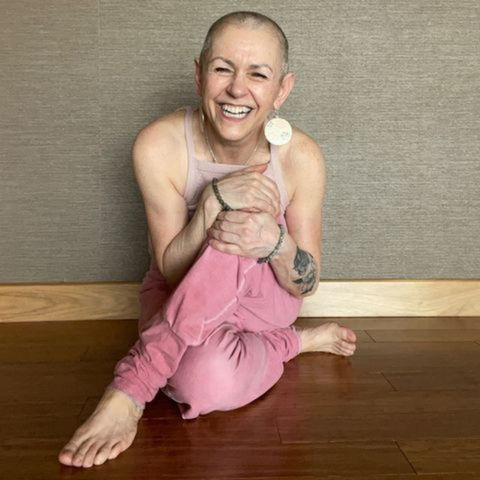
My name is Karen.
Thanks for joining me today.
Today's practice is an insight meditation,
Commonly known as vipassana.
Meditation is practiced under a broad banner of either mindfulness meditation or the very specific definition of insight meditation.
And each practice or style of meditation serves a different purpose.
But I'm reluctant to use the word purpose or even try to attach any direction because meditation is not really that.
If you have a purpose or a goal,
That's probably the last thing you're going to actually arrive at.
If you meditate with the directed intention of achieving something,
You'll have removed that from any likelihood of achieving anything other than frustration.
Mindfulness meditation is used to train the mind to remain focused and aware of a specific object.
The object awareness might be of the breath or a candle flame or a sound.
But the focus of the meditation is to remain focusing on the object,
Noticing if and when the mind wanders,
And then returning again and again to the object of focus.
And insight meditation is used to practice the ability to sit in stillness while noting the present time experience within each breath,
Without judging the experience as either good or bad,
Right or wrong,
Simply noticing what is the experience as it unfolds.
And so while the attention rests lightly on the breath,
The mind is tracking the experience while it occurs,
Encouraging non-reaction to the various stimuli that will invariably come up.
So if you'd like to join me,
Perhaps find a place that's a little bit removed from the general chaos of the house or the office.
And for this meditation,
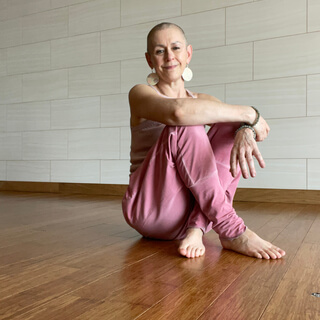
You can remain seated in a chair or on a cushion on the floor,
Arranging yourself so that your knees are slightly lower than your hips to encourage a nice,
Easy breath,
So that there's no particular effort drawing breath in or trying to slow or alter the breath as it moves out.
And if you're in a chair,
Arrange your feet so that they'll be placed flat on the ground itself.
In a cushion,
You might tuck your feet up underneath you or lightly cross your legs at the ankles.
Your eyes can be closed or open.
If open,
Let the gaze itself be softened and slightly downward.
Let's just take a few moments to begin to connect with the intention of arriving right here,
Right now,
To this present moment.
In this present time moment,
Perhaps you are experiencing the sensation of your body resting in a chair or on a cushion,
Noticing that point of contact where you can feel the feet on the floor or perhaps tucked up underneath,
Just aware of the weight of the body as it sits here.
You might notice the sensation of the clothes on the body.
Breathing in,
You might become aware of the shifting of the fabric on the belly,
The sides or back of the body,
The shoulders.
You might also notice various sounds as they rise and fall all around you.
The mind isn't looking for sounds or noises.
Like your breath,
Sound comes and goes.
As you allow these sounds to come and go,
Is there a certain mental state such as calmness or anxiety?
Does the mind appear to be sharp or dull?
Not judging any of these things as right or wrong,
Good or bad,
But simply noticing what's present.
To begin this vipassana practice,
Start to allow your attention to focus on the breath.
You can choose a particular spot within the body where you feel it most vividly as the breath is moving in and out.
It might be at the tip of the nose or the belly,
The sides of the body or in the lungs.
Allow the breath to move naturally.
If the breath is deep and resonant,
That's fine.
If it's short,
Shallow,
That's okay too.
With each breath in,
There is an expansion and a contraction as you breathe out.
Vipassana is traditionally studied from the tip of the nose.
At the nostrils where you can feel the air just gently moving in,
It might even tickle as you become aware of it.
There's a coolness coming in and perhaps a little bit warmer as it moves out.
And you can choose to change from one spot within the body to another.
The focus still remains on your breath.
There's no need to force anything.
Just let your awareness rest here,
Collecting your attention and placing it right here on the body breathing,
Dialing into the sensation how it feels to breathe from the very start of the inhalation through to the end of the exhalation.
And when the mind wanders,
Just invite it back.
Invite it back to the sensation,
To this one breath,
The one breath that's right in front of you.
And without frustration,
Coming back.
When we notice that our mind has wandered,
When we recognize that we have become distracted,
In fact,
This is showing us that we are increasing our abilities to remain focused.
We're strengthening this ability to be mindful and to build on that focus,
Always returning to this one breath in front of you again and again.
Begin to expand your awareness to know what is arising in this experience.
So we're still keeping a resting awareness on the breath,
But we're allowing our mind to more expansively take in what's happening right now in the body.
So continuing and keeping your awareness resting lightly on the breath,
Perhaps you can notice another experience in the body that might be calling for your attention,
Bubbling up for your awareness.
It could be a tiny tickle or an itch,
A tingle,
Or even a place of discomfort.
You might also notice the sensation of breath within the body,
But not within the airway passages,
Tingling within the feet or the hands.
You can imagine just simply noting it,
Saying to yourself in your head,
Ah,
I'm feeling this,
Feeling.
That's all the description you need,
Feeling.
And so when you become aware of these various changing real-time experiences of sensation,
We're going to use a categorization of them so that we don't get lost tumbling into description or detail.
And so when we feel something,
A tingle,
An itch,
A discomfort,
Whatever it is,
We're simply going to label it feeling.
Continuing with the light awareness of your breath moving in and out,
But also expansively aware of what else might be bubbling up or arising in your body.
And when something seems to be calling for your attention,
Just dial into it for just a moment,
Noting it as feeling.
And now perhaps allow your real-time experience to also include the other of the senses.
It might be smell,
Taste,
Sound,
Even with your eyes closed.
You can be aware of movement or changing light,
Colors even,
Just noticing.
And whenever something arises in your experience,
Whether it's a sound,
You don't need to know what the sound is or what the story is behind it,
But just noticing perhaps in your head,
Hearing.
When the mind begins to think,
It's simply thinking.
You don't need to pursue the thought.
And this is really the core of vipassana or insight meditation,
Patiently awaiting each experience to become known and noticing each of the arising experiences as they happen,
Noticing what comes up and then returning to the breath.
When the mind wanders off,
There's no need to figure out why or to become angry with it or frustrated.
It just happens to be part of the practice today,
That's all.
And it really doesn't matter if the mind wanders off for a few breaths or a few minutes.
Simply recognize when the mind has wandered off and invite it back,
Back to the breath,
Always returning to this question,
What is happening in my experience at this moment?
I would like to speak to the ending of meditations,
Not just vipassana,
But all meditations.
It's important that we don't just open our eyes and run off and begin the rest of the day.
Instead,
You want to have a moment of appreciation for whatever insight or moment of mindfulness that you experience,
So that you might retain some of the insight,
Because the practice itself doesn't remain in the chair or on the cushion.
It's very portable.
You can take all of that wisdom with you.
When you're ready to leave,
Slowly and gently open your eyes and re-presence yourself in the room and then take whatever you can from the practice.
Namaste.