Hi,
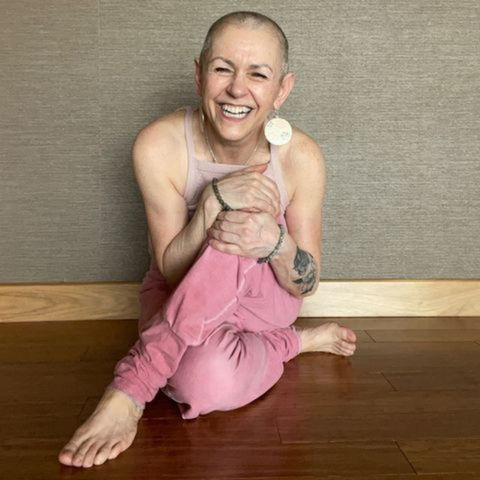
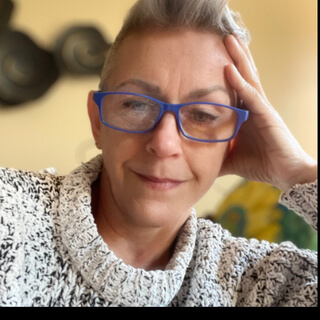
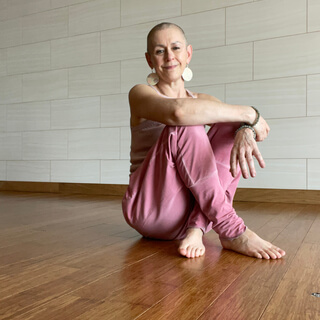
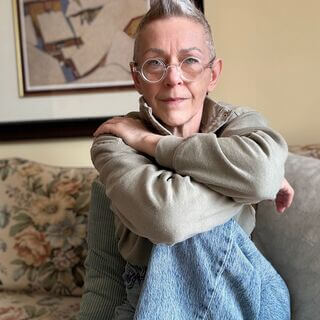
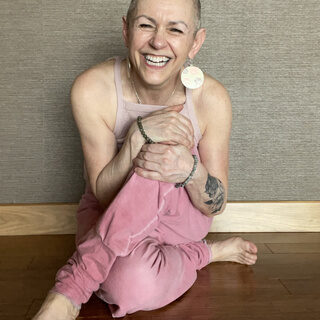
My name is Karin.
I'm really happy that you're here today with me.
I hope that you're feeling well.
The meditation today will offer a lot of guidance.
My reasoning for this is to hopefully help to deepen your understanding of the Buddha's instructions regarding Anapanasati meditation.
Anapanasati was the first subject expounded on by the Buddha in the Maha Saripatthana Sutta,
The great discourse on the foundations of mindfulness.
The Buddha laid special importance on this meditation as the gateway to enlightenment.
And so we're reaching toward awakening,
Which isn't passive.
Too often,
We limit our appreciation of Anapanasati to simply be passively mindful,
Aware of things around us,
But not responding or reacting to them.
But the Buddha was very clear on this point.
The pursuit of this state of awakening is not necessarily passive.
While seated,
We're being asked to become more mindful of the breath.
But as the Buddha explained,
The purpose of right mindfulness is to create a space in which skillful qualities will rise and unskillful ones will fall away.
And this requires discernment.
Anapanasati is a practice of discernment.
The Buddha defines discernment as penetrating knowledge of arising and passing away,
Leading to the right ending of struggle and suffering.
So while you're passively watching things come and go without reacting,
You are discerning cause and effect.
Because the Buddha doesn't list the breath as one of the elements or properties of the body itself,
It's classified as a tactile sensation.
And therefore,
The breath becomes a means to feel the body from within.
There are breath sensations felt everywhere,
Some externally as well.
Some of them are a lot more obvious than others.
But you're learning to get familiar with all of the different parts of the body,
Which also can help you to understand the interconnectedness of all things.
And so if you'd like to join me,
Arrange yourself in a comfortable seated position,
Either sitting on a cushion on the ground or in a chair with your spine tall but relaxed.
If seated on a chair,
Place both feet on the floor and set your knees a bit lower than your hips.
This just helps to keep your breath a little easier.
Allow your eyes to gently close if you're comfortable with that.
And if not,
Turn your eyes downward with a softened gaze.
Breathe in deeply and exhale completely,
Letting go any stale energy.
And begin to notice your breath,
Where it feels most vivid in a physical sense.
This may be in the belly,
The chest,
The throat or the nose.
Begin to notice the inhalation and the exhalation from that space.
Breath coming in,
Breath moving out.
And just rest there for a bit without trying to change or alter the breath.
Simply observe it.
You'll notice that your breath is constantly changing.
Again,
We're not trying to deepen or shorten any breath at this moment.
Instead,
Allow yourself to sit in awe and wonder in the presence of the body's infinite wisdom,
Knowing exactly when to breathe in and how much.
And notice its open-mindedness to let all the breath go.
So now,
Begin to control the breath,
Discerning if the breath is long or short.
And then begin to play with it,
Play with the breath,
Trying other variations.
Notice what feels best,
What feels right to you.
Heavy,
Light,
Fast,
Slow,
Deep or shallow.
Trying to discern what feels good.
Every step is a training of discernment,
And that's a skill that you develop.
You're learning to discern what is the cause and what is the effect or the result.
You begin to realize that some of your actions give rise to better results than others.
As the Buddha explained,
Mindfulness is a means to understanding what is skillful and what is not.
When you become awakened to what is a good seed,
You attend to it just as you would a flower.
You nourish it.
And what you discern to be unskillful,
You let fall away.
You're not just watching things coming and going.
You're studying them,
Even judging them,
If you will,
But only to understand them better.
Getting that sense of cause and effect.
You might say that this is a bit like karma.
Karma,
Good,
Bad,
Neutral,
Has brought you here today.
We understand that past karma is the force toward any outcome.
But karma can also act almost instantaneously.
Begin to breathe in a little more energetically now.
Perhaps visualizing the breath as a warm orb of light.
Imagine that each in-breath causes the beautiful orb to grow and expand.
Becoming warmer and moving in waves.
Spreading outward,
Washing not only over the body,
But through the body,
Through the tissue,
Muscle,
Bone,
Connective tissues,
Fluids of the body.
So we observe the breath with greater skill.
We discern the breath.
And if your mind wanders,
While we sit for the next few moments,
Gently invite your mind back to the breath.
Always coming back to the breath.
We're training the mind to maintain a singular focus on the object of the sensations of breath.
Our breath expands and touches every tissue of our living body.
You experience the interconnectedness of all things from this relatively precise lens of your own breath within your body.
Reflecting on the interconnectedness of all things in the body,
We come to better understand that,
As the Buddha said,
If we were simply recipients of past karma,
We're unprotected.
Our entire existence would be determined by the past karma.
But now we can appreciate,
Through the experience,
That our present input impacts.
The Buddha compares mindfulness and concentration practice to a way of developing skills involving judgment,
Which,
Of course,
Can be applied to our day-to-day life.
We can choose to give power to skillful actions or unskillful actions.
You're training yourself.
First,
To be aware of the whole body as you breathe in and as you breathe out.
And with that expanded awareness,
You're invited to move throughout the body,
Noticing it.
You're learning how each part of the body relates to the breath.
Getting familiar with the parts of the body.
You might notice places where there doesn't feel to be breath moving easily.
Keep with that space.
Continue to breathe into it.
You might notice some changes.
The breath connects to everything.
It's not limited to the breath channels of the head and chest.
Breath travels on the bloodstream.
Once you're able to hold your awareness on the whole body,
Then the next step is to keep it because there's a tendency for your range of awareness to shrink.
And so you're keeping it broad and open.
That's how the mind creates thought worlds.
How it focuses on one little spot in the body,
And that becomes the seed.
State of the becoming mind.
And that's how we slip into our past or are pulled into our future.
And so we build that awareness of the entire body.
And then we let it slip away.
And so by breathing energetically,
We're not going to fall asleep.
We keep that full body awareness of the breath.
Awakened,
Alive,
And present.
And so you keep reminding yourself.
The full body.
The full body.
And now we're going to start to calm the breath down.
To calm the focus.
And so as the breath moves back to its natural rhythm,
Once again,
Begin to notice that each breath is different.
And begin to notice the transitions between the breath.
How different even the transitions can feel.
And notice the changes after the exhalation.
And then allow yourself to sit in that space.
You might at that moment choose to refine your area of the body to study.
You might at that moment decide to refine your focus.
Drawing your attention to the tiny triangular base below the nostrils.
To the upper lip.
The sensations there are very subtle.
If you're struggling with that,
You can study the breath moving in and out.
From the nose itself.
The nostrils.
If you become distracted,
Just come back to the breath.
Again and again.
And so now breathing in and out a little more energetically.
Just to waken up the mind.
In case it got a little sluggish there.
And when you're ready,
Allow your eyes to gently flutter open.
May you be well.
May you be loved.
May you be respected.
And may you know that you are worthy of that.
May all sentient beings be happy and free.
Namaste.