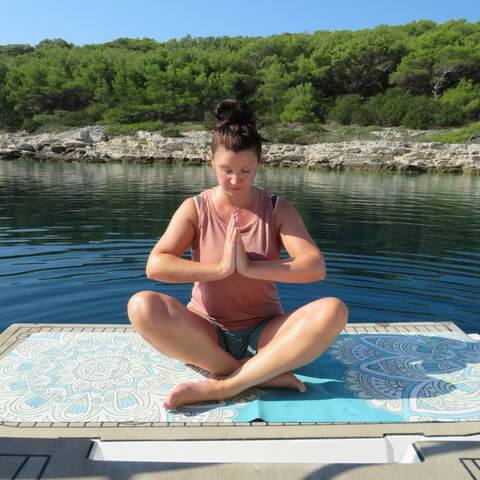
Okay,
So we are focusing on the full yogic breath,
Otherwise known as the free part breath.
So just get in,
Sat comfortably to start with,
Or you can lie down if you prefer.
And the benefits of the full yogic breath are that it calms you,
Reduces stress and anxiety.
It also reduces muscle tension and it can improve the functioning of the lungs,
Making sure you're using them to full capacity and improving the flow of oxygen into the bloodstream.
So before we start,
Just notice your breath at the moment,
Just getting a sense of the rate and rhythm of your natural breathing,
Not trying to change it anyway.
Just noticing where you are,
Where your mind's at and just focusing on letting go of any distractions for the next few moments and really focusing on the breath.
And any time you become distracted,
Thoughts popping into the mind,
Just notice it and bring yourself back to the breath as many times as you need to.
And if you're uncomfortable at any point,
As we start to focus on changing the way that we're breathing,
Just return to either the belly breathing,
Which we'll start with,
Or just breathing normally and naturally.
Don't continue with any discomfort.
Okay,
So we're going to start with taking some deep breaths through the nose into the stomach area.
Now you're not actually breathing into your stomach,
But if you place a hand on the abdomen,
It will feel as if that area is filling up.
So deep inhalation through the nose,
All the way into the stomach area,
Feeling that expand like a balloon and then exhaling through the nose,
Bringing the belly back towards the spine.
We'll take about five of these deep belly breaths.
Really feeling that expansion against your hand on your stomach.
And then feeling the navel return towards the spine when you exhale.
And on your next inhalation,
Breathe into the belly area as we have been doing.
But when that feels full,
Breathe in a little more,
Allowing the ribs to open,
Feeling the bottom of the diaphragm opening up.
And then as you breathe out,
Try to breathe out from that area of the diaphragm first,
Relaxing your ribs,
And then allow the breath out from the belly with the navel coming towards the spine.
So just trying to have more control and focus on exactly which muscles are moving,
Which areas are involved in the inhalation and the exhalation.
We'll take about five breaths in that way,
Filling up the belly and then filling up the bottom of the diaphragm,
Allowing the ribs to open.
And closing your eyes if that feels more comfortable,
If it feels that you can focus more,
Maybe getting a sense of trying with your eyes open and your eyes closed to see the difference.
And next,
It might be helpful if you place a hand on the top of your chest towards your collarbone area.
We're going to breathe into the belly,
Then fill the bottom of the diaphragm,
Opening up the ribs,
And then take some more breath in all the way up to the top of the chest and the collarbone,
Filling that space completely.
When you exhale,
We're going to try to exhale from the top of the chest first,
Followed by the lower part and followed finally by the belly with the navel coming back to the spine.
So really using the whole capacity of your lungs,
Breathing into the belly,
Then opening the ribs,
And then opening the chest all the way up to the collarbone.
Breathing out from the collarbone area,
Allowing the ribs to relax and then allowing the belly to empty the navel coming back to the spine.
We'll just take about five breaths like this.
And when you're ready,
Just return into breathing normally again,
Noticing how your mind feels,
How your body feels,
And just noticing what you experienced during the full yogic breath.
Take care.