Hello,
This is Dr Jo Ablet from Flow Clinical Psychology.
This is a traditional yogic breathing practice,
A pranayama,
Called the B breath.
And it's a really good practice for accessing the parasympathetic nervous system and stimulating the vagus nerve,
Which really helps to get us into that rest and digest nervous system state,
Calming the mind and body.
And I'm just going to ring a bell at the start and the end of the practice so that you know when we've completed.
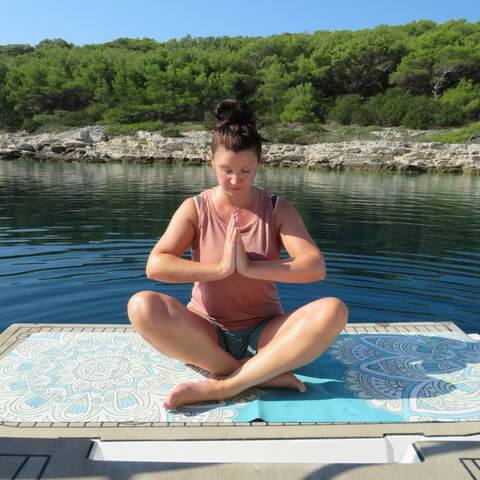
So sitting comfortably,
You can do this lying down if you really need to,
But if you can do it sitting in whichever position is comfortable for you,
That would be ideal.
Feeling the point of contact with the body and the surface that you're on.
And then just bringing your attention to your breathing.
Just noticing the natural rate and rhythm of it initially.
And then we're going to be taking some nice deep breaths all the way into the body.
So maybe noticing the breath entering at the nostrils,
Feeling the chest expand and feeling the abdomen expand as well as we use the whole of our lungs,
Allowing the whole of the diaphragm to expand and contract.
Feeling the belly round and expand on the in breath and feeling it drop towards the spine on the out breath.
And then from this position of nice deep breathing,
We're going to start to hum as we breathe out.
So the exhalation will be done as a humming sound,
Almost like a bee,
So that we're going to really feel that vibration in the chest and maybe in other areas of the body as well,
The throat.
So we're going to take a deep breath in,
Fill in our lungs and then hum it out.
And then we're going to take a deep breath in.
So you'll notice that the mouth is closed and the exhale is coming out as you hum,
Feeling that vibration in the chest and the rest of the body.
And if it feels comfortable,
You can also add intensity to this by placing the palms of your hands over your ears.
This will make the sound of the humming more internalised.
If this doesn't feel comfortable when you do this,
Just release your hands again.
Some people like that intensity and some people don't.
So we'll just have a try at that.
Taking a deep breath in again,
Fill in the lungs.
And just continue for as long as you want to or need to.
And then just allow your breath to go back to its normal rate and rhythm,
Hopefully having deepened it a little bit.
Just continuing with the rest of your day.