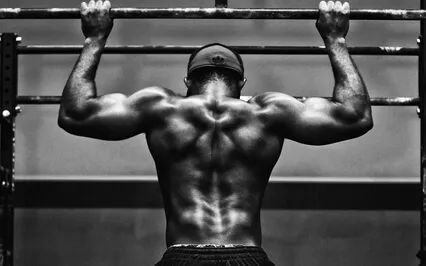
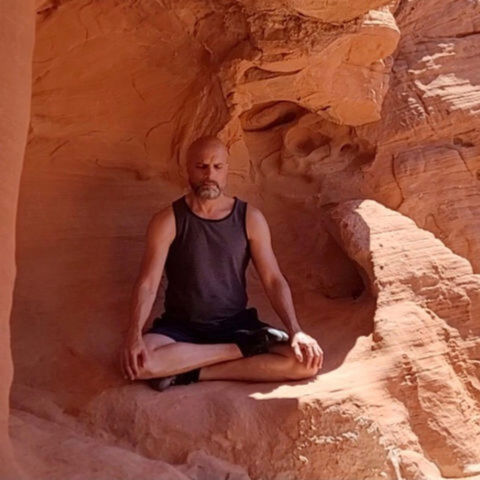
I start the day with an hour of meditation and breath work,
But sitting for extended periods of time,
Even in meditation,
Is not good for the body.
Sitting raises the risk of heart disease,
Diabetes,
Stroke,
High blood pressure,
And high cholesterol.
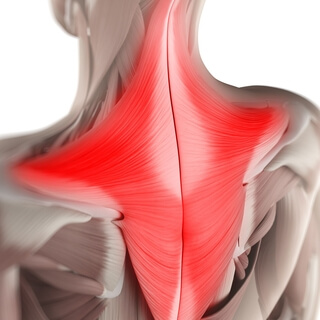
Sitting stresses the muscles of the back,
Neck,
And spine.
It's worse if we slouch.
Moving throughout the day does the body good,
And I'm standing as I record this,
Practicing what I preach.
Meditators and yogis practice asanas,
Walking meditation,
Qigong,
Tai chi,
And other exercises to stay fit.
Movement is integrated in many contemplative traditions.
Some mystics like the whirling dervishes dance their way to ecstasy.
In the Hindu tradition,
Gods and goddesses are said to dance as a way of expressing the dynamic energy of life.
Early styles of Indian classical dance,
Bharatnatyam,
Odissi,
Kuchipudi,
Katakali,
Katak,
Mohini Atam,
And Manipuri are meditations of sorts.
Pastures known as karanas require intense concentration and are considered vehicles to the self.
This talk is divided into parts.
In part 1 I share the research on the benefits of exercise.
In part 2 I offer evidence-based prescriptions and contraindications for exercise.
In part 3 I share the 9 elements of a well-rounded exercise regimen.
Well-rounded program trains for flexibility,
Mobility,
Functionality,
Strength,
Balance,
Pliability,
Hydration,
Diet,
And rest or recovery.
I uploaded a talk on sleep,
So I'm not going to get into too much detail here.
And while diet is fundamental to good health,
I thought it deserved special attention.
Like exercise,
Meditators attend to diet,
Which is as integral to mindful and holistic living as sleep is.
So I'll upload a separate talk on that.
Part 4 I'll share how to integrate mindfulness into your routines and how science informs our practice.
I'll also look at some of the traditional forms that were most often used by contemplatives for millennia and some of the mechanisms that explain how they work.
So that whether it's yoga,
Tai chi,
Martial arts,
Or high-intensity interval training,
You can get the most out of your workouts by remaining present and focused.
As for my background,
I'm an educator by profession and was a physical fitness instructor for many years.
I apply science-based protocols,
But the science is still emerging.
That said,
Overwhelming evidence exists that lifelong exercise is associated with a healthier life span,
Delaying the onset of some 40 chronic conditions or diseases.
Those who are physically active have lower blood pressure,
Higher insulin sensitivity,
And more favorable plasma lipoprotein profiles.
It's not only good for the body,
Exercise is good for the brain.
It promotes learning and memory,
Improves the quality of sleep,
Counters the mental decline that comes with age.
Exercise improves mood and can be more effective than some drugs for treating depression and anxiety.
It's a very powerful stimulus to the induction of neurogenesis in the adult dentate gyrus,
Which contributes to remodeling hippocampal synaptic circuits and to enhanced cognitive functioning.
Many people with depression or anxiety turn to non-pharmacologic and holistic interventions like exercise and yoga,
Meditation,
Tai chi,
Or qigong.
Diet analyses and systematic reviews have shown that these interventions can improve symptoms of depression,
Anxiety disorders,
Panic attacks,
Post-traumatic stress.
So those are the benefits.
Now,
Part two,
I'll talk about dosing,
Contraindications,
Intensity,
Frequency,
And types of exercise.
As with drugs a doctor might prescribe,
Dosing is extremely important to get the beneficial effects of exercise.
There's evidence for prescribing exercise in the primary and secondary prevention of pulmonary and cardiovascular diseases,
Coronary heart disease,
Chronic obstructive pulmonary disease,
And hypertension.
Metabolic disorders like type 2 diabetes,
Obesity,
Insulin resistance,
Muscle,
Bone,
And joint diseases like rheumatoid arthritis,
Fibromyalgia,
Chronic fatigue syndrome,
And osteoporosis,
Some cancers,
And depression.
Now,
Even if exercise is an effective therapeutic agent for all of these diseases,
As with any medicine,
The dosage,
By that I mean volume and intensity,
The frequency of administration,
By that I mean how often you practice,
The number of sessions per week,
The type of exercise,
By that I mean aerobic versus resistance exercise,
The systemic and psychoactive effects and contraindications,
Side effects of exercise,
All of this must be taken into account to achieve the best outcomes.
For instance,
Both resistance or weight training and aerobic training have been shown to be of benefit for the control of diabetes,
But resistance training may have greater benefits for glycemic control than aerobic training.
So given a choice,
If I'm pre-diabetic,
I might just hit the weights a little harder than I would aerobic training.
There are a number of caveats in order.
First,
As always,
Consult with your doctor.
What I share here should not be taken as medical advice.
I'm not a doctor.
I'm an educator.
That said,
Here's some of the research.
For patients with coronary heart disease,
Exercise is contraindicated.
That means exercise is not advisable until the condition has been stable for at least five days.
Other heart conditions like aortic stenosis,
Pericarditis,
Myocarditis,
Endocarditis,
Fever,
Severe hypertension,
These are all contraindications to exercise.
In other words,
You shouldn't be doing them.
Strenuous exercise can cause acute injury to coronary plaques,
Leading to occlusion of coronary arteries.
The risk of primary cardiac arrest is increased during single bouts of vigorous exercise.
So if you have a heart condition,
You don't want to go and start doing something really intense.
But over time,
Habitual vigorous exercise is associated with an overall decrease in risk.
In patients with asthma,
Pause in training is recommended when an acute exacerbation occurs.
In cases of infection,
Pause in training is recommended until the patient has been asymptomatic for a day.
After which training can resume slowly.
Regarding muscle,
Bone,
And joint diseases,
Osteoarthritis and rheumatoid arthritis,
For example,
Exercise is contraindicated in cases of acute joint inflammation.
If you have,
For example,
An Achilles flare-up or Achilles tendonitis,
You don't want to stop.
Treat it.
And once the pain goes away,
Then resume your training.
In cancer patients being treated with chemotherapy or radiotherapy,
Exercise is contraindicated.
Again,
Not recommended when leukocyte,
Hemoglobin,
And thrombocyte concentrations fall below certain levels and temperature is above 38 degrees Celsius.
It's 104,
100.
4 degrees Fahrenheit.
In diabetic patients,
Both types one and two,
Exercise should be postponed if blood glucose levels are too high.
In patients with hypertension,
High-intensity training should be avoided.
Intensity matters.
Moderate intensity exercises are those in which heart rate and breathing are raised,
But still it's possible to speak comfortably.
Brisk walking is an example.
It's been found that 72 minutes of moderate exercises,
Like brisk walking,
Per week,
Which averages to about 10 minutes per day,
Is sufficient to provide some improvement in fitness.
However,
At this low exercise dosage,
Cardiovascular risk factors like blood pressure,
Lipid profile,
And weight do not improve.
So gradually,
You'd want to move into what's called zone two cardio.
These activities are much more intense.
Heart rate is higher.
Breathing is heavier.
But conversation is still possible.
It's just a little harder.
Now,
More is not necessarily better with exercise.
It's been found that long-term vigorous endurance exercise training may in some cases promote adverse cardiac remodeling and produce a substrate for cardiac arrhythmias.
Even though moderate levels of exercise have been found to be consistently associated with a reduction in cardiovascular disease risk,
There is evidence to suggest that continuously high levels of exercise,
Like running ultra marathons one after another,
Could have detrimental effects on cardiovascular health.
When prescribing drugs,
Physicians typically start with the minimum effective dose.
If the patient does not respond,
This initial dose may then be titrated or adjusted upwards until you get to the maximum dose.
Similarly,
The intensity of aerobic training may be titrated in healthy people.
Unfit people can get significant improvements in physical fitness with a low training intensity,
While those with a higher fitness level need a greater level of exercise intensity to achieve further improvements in fitness.
These guidelines are generally recommended for young to middle-aged adults.
But as with medicine,
Special consideration should be taken when prescribing exercise for people with special needs,
Such as the elderly,
Children,
Pregnant women,
Overweight or obese patients,
And patients with chronic diseases.
The effects of exercise training on brain function have received a lot of attention in recent years.
In the early 80s,
Exercise was shown to increase beta-endorphin concentrations in the blood.
Endorphins have been linked to a variety of psychological and physiological changes,
Including mood state changes for the better,
Altered pain perception,
And exercise-induced euphoria.
Researchers also found increased expression of neurotrophic factor in some brain areas.
Increased expression of these factors is related to better memory and improved cognitive function.
So move on to part three.
Here I'll share the nine elements of a well-rounded exercise regimen.
A well-rounded program trains for mobility,
Functionality,
Strength,
Balance,
Pliability,
Function,
Rest,
And diet.
So let's start with functionality.
Unlike sports-specific movements like pitching,
Weightlifting,
Or distance running,
Real-world movements involve whole-body biomechanics.
Machines one might find at the gym isolate and train specific muscles,
Usually along the sagittal plane,
That is,
Up and down.
We curl up and down,
We squat up and down,
Bench up and down,
Press up and down.
Our day-to-day movements,
However,
Are usually functional,
Multi-jointed,
And multi-planar.
We move up and down.
We also move laterally,
Or side-to-side,
And diagonally.
We rotate.
Sometimes we're off balance.
Sometimes we're carrying a load.
It could be a baby,
A bag of groceries,
A bag of fertilizer,
A bucket of water.
We're bending and squatting and contorting our bodies this way and that.
Our movements are complex,
And there aren't machines to train the body to stand,
Like on the third rung of a ladder,
Balancing a heavy sheet of drywall overhead with one hand,
While trying to drill it into the ceiling joists with the other.
This partially explains why athletes are prone to injury if their training is not well-rounded.
Rotator cuff injuries,
For example,
Are very common.
Rotator cuff is a group of muscles and tendons that surround the shoulder joint,
Keeping the head of the upper arm bone firmly within the shallow socket of the shoulder.
Now,
There are specific exercises we can do to train the three heads that make up the shoulder and these smaller muscles within the rotator cuff.
At the gym,
Most beginners train only along the sagittal plane.
They're doing shoulder presses or other exercise that hyperextend the shoulders,
Like upright rows,
Which contributes injury.
There are functional movement exercises we can do.
I'd recommend consulting with an experienced trainer or physical therapist for exercises you can incorporate into your workouts.
Flexibility.
Stretching increases range of motion and flexibility,
Can help improve performance.
Stretching decreases stiffness and lowers the chance of injury.
Stretching can be of two types,
Dynamic or static.
Dynamic stretches are usually used as warm-ups.
For dynamic stretches,
I practice chi gong and tai chi exercises.
Stretching statically involves stretching a muscle as far as it can go and relaxing into it.
I like yoga asanas or poses for static stretches and hold them for 30 seconds or more.
When I get to the edge of a stretch and feel I cannot go further,
Sensory neurons called intrafusal muscle fibers send an electrical potential or signal from the muscle to the spinal cord.
Another signal is sent from the motor neurons within the spinal cord back to the muscles to contract.
Now,
This safety loop is designed to bring the muscle back into a prescribed range of motion,
Ensuring I don't overstretch,
Damage the connective tissue,
Or overload the muscles.
It's a protective biomechanism and helps prevent injury,
But it also restricts my range of motion.
So,
I can redefine and extend those parameters by relaxing into the stretch,
Breathing calmly into it.
If I breathe and relax into the edge,
Not judging my performance,
Not comparing myself with others,
A population of neurons called von Economon neurons within the brain structure called the insula integrates information about my somatic experience or my bodily experience.
It evaluates as,
It'll evaluate that as good or bad,
Then route this information to other parts of the brain.
So,
If I lean into an uncomfortable stretch and interpret the discomfort and unpleasantness as something good,
I can override this to some degree.
This process allows me to lean into discomfort and reinterpret a seemingly unpleasant experience as positive.
So,
That's a tip on practicing on stretching and yoga.
So,
For mobility,
I use yoga,
Qigong,
Tai chi.
Again,
Mobility exercises train range of motion around the joints.
But my favorite mobility exercise is dance.
I incorporate dance into my exercise routine,
But as a training,
It's very different than the kind of movements one might see on the dance floor.
As a training,
I dance to improve elasticity and mobility,
To strengthen fascial tissue,
To improve cardiovascular and respiratory health,
And of course,
For fun.
When we dance,
We move along multiple planes of motion,
Side to side,
Called the frontal plane,
Up and down,
The side gentle plane.
We twist and rotate,
Spin and pivot along the transverse plane.
And moving along multiple planes of motion is better for the body than moving along a single plane.
The functional movements of dance strengthen the body's structural fascia.
Fascia refers to connective tissues.
These are bands that hold the body together,
Connecting muscle to muscle,
Bone to bone,
And muscle to bone.
Fascia is elastic and supple.
It helps the body absorb and distribute force.
So,
When I dance,
I move every body part and every joint along multiple planes of motion,
And I do this mindfully.
When we dance,
All this fascia needs to be elastic,
Resilient,
And strong enough to accommodate the dynamic,
Multidirectional movements of dance.
Fascia adapts when exposed to movements that cover all planes of motion.
Training on machines or free weights doesn't offer the same stimuli to create adaptations in the fascia.
When I'm working out,
I don't dance like I'm at a club.
Sometimes I practice mild breath holding.
Short breath holes simulate the effects of high altitude training by inducing both a hypoxic,
Hypoxic means lack of oxygen,
And hypercapnic,
Or high carbon dioxide level response.
These two effects lower sensitivity to carbon dioxide,
Increase endurance,
Reduce the discomfort and fatigue from lactic acid buildup,
Increase the oxygen carrying capacity of the blood,
Improve breath economy,
And improve VO2 max.
So,
When I'm dancing,
I'm also giving the vestibular system a workout.
Within the inner ear are two organs,
The utricle and the saccule,
Which help us maintain balance.
They use small stones and a viscous fluid to stimulate hair cells to detect motion and orientation.
This is the vestibular system.
When I throw myself off balance,
I force the vestibular system to reorient.
If we're not intentional,
We lose our ability to balance as we age.
So,
Balance training sends robust information to the brain about the relationship between the visual world and the vestibular system.
It also forces the body to correct.
These micro movements strengthen the kinetic chain from the feet up the legs to the core muscles and the rest of the body.
The vestibular system is also wired to the limbic system,
Which is involved in processing emotion.
It could trigger the rush you feel when you're on a roller coaster or in a Tesla rocketing from zero to 60 in 2.
7 seconds.
It also triggers the nausea and dizziness you may feel after spinning in circles.
Interestingly,
Children love this sort of play,
Roller coasters,
Carousels,
Spinning,
But the older we get,
The less we enjoy these kinds of movements.
Balance degrades with age if not trained,
So you'd want to incorporate it intentionally into your routines.
When I dance,
I'm also giving the brain a workout.
The brain houses a map of the body's orientation,
Helping direct movement through space.
This awareness of the body's position,
The force,
And motion is called proprioception.
Proprioception is mediated by neurons located in the muscles,
Tendons,
And joints called proprioceptors.
Different proprioceptors detect distinct kinematic parameters like joint position,
Movement,
And load.
Proprioceptive signals are transmitted to the brain where they're integrated with information from the vestibular,
Visual,
And motor systems to create an overall representation of body position,
Movement,
And acceleration.
The feedback from these proprioceptors stabilizes body posture and coordinates body movement.
Proprioceptors have thicker gray matter than controls and the superior and middle temporal gyri and precentral gyrus.
They also have greater white matter diffusivity in the corpus callosum,
Corticospinal tract,
And superior longitudinal fasciculus.
Long-term dance training is associated with brain plasticity in both gray and white matter regions associated with motor and auditory functions.
In studies where dance was used as therapy or as an intervention,
Participants showed significant improvements in several aspects of brain function involving cognition and sensorimotor performance.
In one study,
Researchers found that dancing led to larger volume increases in more brain areas,
Including the cingulate cortex,
Insula corpus callosum,
And sensorimotor cortex compared to conventional fitness activities.
Dancing was also associated with an increase in plasma BDNF,
Or brain-derived neurotrophic factor levels.
BDNF is a molecule that plays a key role in plastic changes related to learning and memory,
By the way.
Dancing significantly increases levels of osteocalcin.
Osteocalcin is a versatile hormone secreted by the bones.
It regulates whole body metabolism,
Reproduction,
And cognition.
Studies suggest that osteocalcin acts as an antigeronic hormone that could prevent age-related cognitive decline.
By contrast,
An absence of osteocalcin resulted in profound deficits in both spatial learning and memory.
Increased anxiety was also associated with a decrease in osteocalcin.
There are other important aspects related to dance that are worth mentioning.
The cerebellum synchronizes,
Or entrains,
Body rhythms to music.
In an instant,
The brain makes calculations related to balance,
Spatial awareness,
Intention,
And timing in the brain's sensorimotor region.
The posterior parietal cortex translates visual information into motor commands,
Sending motor-to-motor signals to the premotor cortex and supplementary motor areas.
The putamen is involved in metric motion,
And the superior parietal lobule gives spatial guidance to our leg movements.
So you're giving the whole brain a workout.
Now,
Dance is athletic and artistic.
It's emotive.
In her book Move,
How the New Science of Body Movement Can Set Your Mind Free,
Caroline Williams writes that light,
Expansive,
Repetitive,
And rhythmic movements,
Like those seen in the Jewish dance Hava Nagila,
Can affect mood,
Promoting happiness.
Indeed,
Dancers often express emotions through the body,
Such as happiness or sadness,
And release it.
They give it expression.
In this way,
Dancing can be therapeutic.
The acute care unit of brain and spinal cord injury at Dodd Rehabilitation Hospital uses dance to help patients recovering from central nervous system injury.
In a meta-analysis of 44 studies,
Researchers found that the elderly showed significant improvements in several aspects of brain function involving cognition and sensory motor performance following post-dance interventions.
Dancing is highly social.
When we study other dancers,
Mirror neurons linked to empathy are activated.
Brain activity associated with observing and imaging movements was detected in the premotor cortex,
An inferior parietal lobule,
And was related to how much experience participants had with the dance steps and how highly they rated their ability to perform them.
Next,
We'll talk about pliability.
Pliability training is quarterback Tom Brady's go-to workout.
Tom Brady is one of the winningest quarterbacks in NFL history.
NFL stands for the National Football League for listeners outside of the United States.
Tom Brady is also one of the oldest players in the league.
Pliability speeds muscle repair and recovery.
Bands,
Foam rollers,
And deep muscle work are some ways to increase blood flow,
Improve muscle oxygen saturation,
Cell permeability,
And neuromuscular efficiency.
Hydration is another important but often overlooked pillar of health.
The general advice is to consume about half your body weight in fluid ounces per day.
Water needs increase with physical activity,
So you would want to consume more during exercise.
I work out in the morning and hydrate until about three or four,
As frequent midnight bathroom runs would undermine the health outcomes I'm trying to achieve.
Sometimes I'll add electrolytes to my water.
Beet juice contains nitrates,
Which improve cardiovascular function.
The increase in nitric oxide also improves lung function and muscle contraction.
Beet root juice is best before workout and has been shown to help improve endurance.
Sleep is vital to health and recovery.
I uploaded a talk on sleep,
Which you can access for more specifics.
As far as recovery,
There are many protocols for mice and heat,
Compression socks,
Therapeutic bands,
And supplements like creatine monohydrate or sodium bicarbonate,
Which is baking soda.
Creatine monohydrate aids in muscle hypertrophy,
Strength,
And recovery,
As does baking soda,
Which you can mix with lemon juice and water.
Another important aspect of recovery,
Which I've already addressed,
Relates to the intensity and frequency of exercise.
When I was young,
There was a very popular expression that went viral,
No pain,
No gain,
But research debunks this.
Discomfort,
Soreness,
And pushing to muscle failure is one thing.
These lead to adaptations and improve endurance,
Strength,
And conditioning.
Learning and endurance and growth demand discomfort,
But ignoring pain signals,
Especially chronic pain signals,
Can keep you sidelined for a long time.
If you have a rotator cuff tear and you keep lifting weights,
You probably won't be doing that for much longer.
And if you're a runner,
You have Achilles tendonitis,
But you keep working those hills,
The pain's eventually going to wear you down.
This leads me to the final part of the talk on the integration of mindfulness and exercise.
The body's often likened to a temple.
The 12th century Indian poet and philosopher,
Bhassava,
Wrote,
The legs are pillars,
The body of the shrine,
The head a cupola of gold.
In the New Testament,
It reads,
What?
Know ye not that you're the temple of God and that the spirit of God dwells within you and you're not your own?
In contemplative circles,
We treat the body with respect,
Gratitude,
Even reverence.
We attend to those conditions that promote its well-being.
Sleep,
Exercise and diet,
For example.
We also recognize that this body is temporary and can be a form of attachment and suffering.
Buddhists meditate on the five remembrances.
One,
I'm of the nature to grow old.
I cannot escape old age.
Two,
I'm of the nature to get sick.
I cannot escape sickness.
Three,
I am of the nature to die.
I cannot escape death.
Four,
All that is dear to me and everyone I love are of the nature to change.
This includes health as well,
Strength,
Vigor,
Mobility.
Five,
I inherit the results of my actions of body,
Speech and mind.
So in contemplative circles,
We seek balance.
We take care of the body,
But do not obsess over it as many of us in the West do.
Within this vessel pulses something mysterious and beautiful.
It may be a temple,
But like all temples made of stone,
It's dirt in the end.
What dances within you is something beautiful waiting to be discovered,
But we often make idols out of the temple itself.
Exercising is much more pleasant when performed mindfully.
Traditional practices like yoga,
Qigong,
Tai chi and walking meditation integrate breath,
Mind,
Spirit and body.
But there's no reason I can think of why mindfulness couldn't be extended to running,
Kayaking,
Weightlifting,
Or even blood sports.
Last summer,
I presented at a dojo in Los Angeles and shared meditation and regulatory techniques for dialing down stress,
Improving concentration and focus,
And controlling primitive emotions.
It's easy to stay calm on a meditation cushion.
It's much harder to stay centered when you're getting punched in the mouth.
The roots of martial arts are Buddhist.
The monk Ta Mo traveled from India to China in 527 AD to see Emperor Wu of Liang.
He taught the monks of the Shaolin temple the 18 Buddhist fists,
Which turned into the five animal styles of Shaolin from which all other martial art forms descend.
I was an amateur boxer.
I loved the rawness of it,
The discipline,
The brutality,
The beauty of form,
The intensity of present moment is-ness,
And the power to remain calm and relaxed in the ring.
Most people shy away from pain and violence,
But fighters embrace the suffering.
In Buddhism,
Interestingly,
It's common to see wrathful deities wielding weapons,
Baring their teeth and poised as if to strike.
Meditation enhances a fighter's awareness.
When we answer the ring,
All the neural circuitry and molecules that trigger the fight-flight response are primed.
Acute stress leads to dynamic changes in the brain.
The mind is in a heightened state of alertness,
And the body is juiced on adrenaline,
Ready to fight.
This primitive response was designed by nature.
The fighter intentionally puts himself in harm's way.
Before touching gloves,
He must inhibit his own fear response.
In the Dhammapada,
An ancient Buddhist text,
The author writes,
A wrongly directed mind brings greater harm than any enemy.
A rightly directed mind brings greater good than any other relative or friend.
The one who conquers himself achieves a victory which can never be undone,
A victory greater than that of the mightiest warriors.
Around contemplative circles,
Violence is often regarded as reprehensible,
And rightly so.
Nonviolence is the ideal.
But absent malice,
Hatred,
Anger,
Or ego,
A stiff jab is just a stiff jab.
My opponent and I are challenging each other to dig deep.
There is no ill will behind the punches,
Just a crisp sting.
Absent ill will,
We can transcend anger,
Fear,
And hatred in the ring,
And learn about the mind and its relationship to fear in real time.
All the better if the blows are delivered with loving kindness.
It's not personal,
Any more than the afflictions that torment the body,
Or the circumstances that destroy nations are personal.
Meditation as part of a training regimen can offer the fighter an advantage,
Keeping us grounded in the present and in a flow state.
In a flow state,
It feels as if there is an absence of a doer and a sense of effortless control.
One can maintain calm in the midst of a flurry of punches.
One of the greatest jujitsu fighters,
Named Gracie,
Said that jujitsu puts you completely in the moment when you must have a complete focus on finding a solution to the problem.
This strains the mind to build that focus,
To increase your awareness,
Your capacity to solve problems.
Research suggests that a grape-sized section of the brain called the insular cortex is especially fine-tuned in top athletes,
Helping them anticipate upcoming pressures to adapt quickly.
According to Sandra Upson,
An article published in Scientific American,
The insula can generate strikingly accurate predictions of how the body will feel in the next moment.
That model of the body's future condition instructs other brain areas to initiate actions that are more tailored to coming demands.
So in the ring,
This might translate into timing a counterpunch,
Pivoting inside to cover block and stifle an opponent's defense,
Or waiting for an opponent to wind up and throw before stepping inside and catching them with a hook to the body.
And there's nothing like a blow to the body to test the accuracy of one's predictions and mental models.
Meditation can enhance these qualities of processing.
Experienced meditators or those who receive mindfulness meditation training demonstrated better information processing speeds in an attention task or vigilance task,
Suggesting the beneficial effect of mindfulness training on basic levels of cognitive function.
If we train the mind as intensely as we train the body,
There's less anxiety,
Less mental processing diverted away to worrying or rumination.
These changes occur at the structural level.
There's less activity in those regions that manufacture worry and fear.
More mindful athletes neutralize negative self-talk.
Marathoners,
For example,
Suppress both the physical and psychological markers of fatigue when running and ignore distractions caused by task and relevant information in order to optimize their running performance.
Also given that stress has been shown to influence executive functions and that mindfulness training appears to reduce stress,
It's also possible that mindfulness enhances athletes' executive functions and performance via stress reduction.
And meditation practices have been observed to reduce psychological stress responses and improve cognitive functioning.
Stepping into the ring to fight someone who is there to inflict pain triggers the fight or flight response.
Molecules and brain circuits prime the body.
But absent negative storylines,
Fighting can become play.
When what you fear most becomes play,
Confidence grows.
You learn to remain still in the midst of chaos.
And again,
The fighter Gracie wrote that the biggest gift he had ever received as a martial artist was without question the capacity to be at peace.
Meditation improves pain tolerance.
Experiencing throbbing is throbbing or heaviness is heaviness is one thing.
Pain catastrophizing or labeling sensations as bad adds a layer of what psychologists call secondary pain.
Mindfulness training changes one's physiological response to pain.
One study observed that lactate concentrations decreased significantly following mindfulness training.
Other researchers suggested that mindfulness training decreases salivary cortisol associated with stress.
With mindfulness training,
We learn to be aware of the signals and feedback that some call pain,
But we do this without judgment.
Absent the unnecessary mental chatter,
Pulsing is just pulsing,
Throbbing is just throbbing,
Sensations are just sensations.
Here we're training nociception and interoception.
Nociception refers to the body's ability to detect pain and mobilize a defense response.
It occurs when a nociceptor fiber detects a painful stimulus on the skin or in an internal organ or peripheral nervous system.
The detection of that signal is picked up by receptors at the dorsal horn of the spinal cord and brainstem and transmitted to various areas of the brain as sensory information.
There are two main pathways to carry these nociceptive messages to the brain,
The spinothalamic and spinal reticular tracts.
The spinothalamic tract transmits pain signals that are important to localizing pain.
For example,
If you get hit in the mouth and your lips start swelling.
The secondary pathway,
The spinal reticular tract,
Is important in the emotional aspects of pain.
Interoception is the sense that answers the question,
How do I feel?
In the ring,
Swelling,
Bleeding and pain are to be expected.
The brain registers the hit,
But then ignores the pain,
Allowing the fighter to focus and block and slip and counter the next threat.
Evidence suggests that the anterior cingulate cortex is involved in the processing of pain.
The anterior cingulate cortex acts as a mediator between the rational and emotional areas of the brain.
Studies also provide evidence that the insular cortex receives nociceptive information.
The connectivity of the insula to other areas of the brain may play a complex and multifaceted role in the modulation of pain.
Connections to the insula,
But the prefrontal cortex,
That's the thinking part of the brain.
The anterior cingulate cortex,
Or the mediator,
And the amygdala,
Or the emotional seat of the brain,
Can allow painful information to be integrated with information related to working memory,
Affect and attention.
In the ring,
This process unfolds something like this.
You get punched in the mouth.
The body sends a signal to the brain localizing the pain.
You register a swelling lip.
The brain assesses the damage and determines no serious injury.
Getting hit is to be expected in boxing,
Working memory reminds you.
So you remain nonplussed.
That's affect.
That's attitude.
You shrug it off,
And you reorient attention back to the moment.
Excitatory neurotransmitters responsible for providing energy motivation and focus work in tandem with inhibitory neurotransmitters,
Which filter out unnecessary signals to minimize the pain.
The anterior cingulate cortex signals the release of endogenous opioids to modulate,
Or numb,
Intense pain.
And the amygdala may trigger an off switch for pain.
There are certain neurons that are implicated in this.
Interestingly,
If I'm accidentally elbowed in the lip outside of the ring,
A different process may unfold.
The mind may construct a different narrative of a similar experience.
Getting hit in the mouth with the same intensity.
My response might be different.
I might stop whatever I'm doing,
Wince,
Reach for my swollen lip in pain.
In the ring,
The fighter doesn't stop because little Johnny got hit in the eye.
Meditation is a path to egolessness.
In the fighter's mind,
Sam Sheridan wrote,
From my very first real fighting experience in Thailand,
I saw that the best fighters were the most humble.
But much like jujitsu,
You start to see it as a chicken and egg problem.
Is it that great fighters lose their ego?
Or is it that you cannot become great unless you lose your ego?
Your ego keeps you out of the zone.
Guys who can naturally control big egos do better.
One's greatest rival is the ego.
Many champions have been TKO'd by their outsized egos.
Their careers destroyed,
Earnings lost,
Marriages ruined,
Bodies broken,
Their peace and joy stripped from them,
Like a title or like a belt.
There's no more ruthless or destructive opponents.
You can't square off and go toe to toe with the ego.
It's too cunning and powerful.
It knows all your weaknesses and tricks.
The ego can't abide long in the present moment.
Everything brings us into the present moment.
We prime the stress response and we can leverage it.
One becomes hypervigilant,
Focused.
If we can leave our stories and ego outside of the ring and abide in the moment,
We enter into a flow state.
And you don't have to spar or fight to awaken this response.
Exercise is also a stressor.
I loved working out as much as I enjoyed sparring when I was younger.
I learned to meditate in my teens,
But began to practice earnestly after I met a coach who integrated meditation and sport.
He was a professor at UC Berkeley where I was attending.
He trained Olympic athletes.
I don't remember his name,
But his lessons stayed with me.
He offered a course which I couldn't afford,
But I did attend his free introductory class.
I learned progressive muscle body relaxation,
Body scanning and visualization to improve focus.
There is ample evidence to show that coupling mental imagery with physical training can improve performance.
Mental imagery is widely used by meditators and athletes alike to improve motor performance without overt motor output.
Zen master Shinzen Young also produced these recordings for athletes,
Which I devoured and listened to prior to every workout.
He also encouraged body scanning and mental imagery.
The brain is predictive.
Visualization or kinesthetic motor imagery helps athletes refine their motor skills.
Visualizations are simulations.
Brain regions involved in the simulation partially overlap with brain areas involved in overt motor performance,
Including the posterior parietal cortex,
The cerebellum,
Basal ganglia and the premotor cortex.
Even if an athlete is sitting still on a bench with eyes closed,
Scans show brain activation in motor regions during visualization.
In other words,
The brain responds as if one were engaged in the activity.
This is something meditators know,
Which is why they do certain exercises like compassion training so that when you're in the field,
You can act in a more mindful,
Thoughtful,
Compassionate way.
So another paper published in 2020,
The offer is offered the following suggestions,
Which they extracted from their research on visualization.
To achieve the best results,
Visualization techniques should include the five major senses,
Touch,
Hearing,
Sight,
Smell and taste,
And should consider key aspects such as perspective,
Emotion,
Environment,
Task and timing.
Mental rehearsal or visualization is powerful because the subconscious processes the experience is a real one by firing those neurons that are responsible for skill acquisition.
It makes the person calmer and more adapted to stressful situations and can speed up the learning process.
So these days I run,
Swim,
Kayak and cycle.
I do yoga,
Calisthenics,
Mobility exercises,
Pliability training,
High intensity interval training.
I lift weights,
I dance.
But meditation remains a part of my training regimen.
It's good for body and mind.
To be fully present in any physical activity,
Whether running or pumping iron or lifts our spirits keeps us there.
We're fully embodied,
Fully alert,
Fully present,
Celebrating the gift of movement and the joy of life.
And I wish you good health all the days of your life.