To live mindfully,
We attend two fundamentals.
Meditation,
A good night's sleep,
A balanced exercise routine,
And a nutrient-dense diet are some of the habits that promote not only physical well-being,
But mental clarity,
Improved concentration,
And emotional balance.
I've uploaded talks on these topics.
You can find them here on Insight Timer.
When we look within,
We discover the insights we need to live more mindfully.
Meditators develop interoceptive awareness.
We connect with the body and observe sensations as they arise.
If we're eating poorly,
We feel that.
When we're eating foods that agree with our constitutions,
We learn experientially which foods aid in concentration.
Our gut has its own nervous system,
Sometimes called the enteric brain.
It has over 100 million neurons and 35 neurotransmitters.
Our bodies are home to trillions of bacteria.
They outnumber our cells,
10 to 1.
They're spread across the digestive system.
Most live in the intestines and colon,
Commonly called the gut.
This community of gut bacteria is called the microbiome.
The gut microbiome not only regulates digestion,
Vitamin supplementation,
And metabolism,
But affects brain function,
Neural development,
Immune function,
Pain perception,
And mental health.
It also plays a key role in the stress response.
The foods we eat affect the milieu of our gut flora.
This microbiome plays a vital role in both our physical and mental well-being.
95% of the information received in the gut goes to the brain.
It's not the other way around.
What we eat,
In other words,
Affects our concentration,
Energy levels,
And moods for better or for worse.
Research has shown that the gut microbiota modulate gut and brain functions.
Gut bacteria produce neurochemicals that the brain uses to regulate physiological and mental processes which affect learning,
Memory,
Mood,
And by extension,
Behavior.
90% of the neurotransmitter serotonin,
For example,
Is produced in the gut.
Serotonin,
Sometimes called the calm molecule,
Influences both mood and gastrointestinal activity.
When serotonin levels are elevated,
We feel a sense of contentment and calm.
Serotonin inhibits the amygdala which plays a role in threat detection.
Now it's the serotonin secreted in the raphe nuclei of the brain which modulates mood,
But how well it performs in the brain is impacted by what happens in the gut.
The serotonin levels are elevated and the in the gut.
Tryptophan is an essential amino acid that's a precursor to serotonin.
Foods like whole wheat,
Potatoes,
Lentils,
Oats,
Pumpkin seeds,
Eggs,
Spinach,
And beans.
Adaptogens like ginseng,
Nutmeg,
Or St.
John's wort.
And supplements like 5-HTP increase serotonin uptake.
To promote sleep or rest,
I'll usually time these foods for later in the day.
Gamma-aminobutyric acid or GABA is another inhibitory neurotransmitter that promotes relaxation when doctor calls it the chillax molecule.
Fermented foods like sauerkraut or yogurt,
Nuts like almonds,
Walnuts,
And cherries,
Brown rice,
Potato,
Oats,
Lentils,
Navy,
And lima beans.
And supplements like vitamin B6 or some foods rich in glutamic acid.
To promote clarity and alertness during the day,
I'll consume foods that are richer in protein and fats to enhance the signaling of excitatory neurotransmitters and neuromodulators like dopamine which amplify activity of brain circuits associated with seeking motivation and reward or like norepinephrine which amplify activity of brain circuits associated with focus.
Acetylcholine amplifies activity of brain circuits associated with alertness and glutamate amplifies activity of brain circuits associated with learning and memory.
Tyrosine is a precursor to dopamine.
Foods like almonds,
Apples,
Avocado,
Bananas,
Beets,
Chocolate,
Green leafy vegetables,
Green tea,
Lima beans,
Oatmeal,
Sesame,
And pumpkin seeds,
Turmeric,
Watermelon,
And wheat germ.
And supplements like L-theanine and rhodiola rosea can alter dopamine levels.
Mucuna purians is another supplement I use.
This magic velvet bean is not only a source of protein but of L-dopa,
Another precursor to dopamine.
I use it in my shakes.
Brussels sprouts,
Broccoli,
Peanut butter,
And chocolate can alter acetylcholine levels.
Glutamate occurs naturally in high protein foods such as cheese,
Milk,
Mushrooms,
And many vegetables.
Not only what we eat but when and how often we eat matters.
Meditators were fasting intermittently before it became trendy.
This time-honored discipline gives the gut of reprieve and aids in digestion,
Metabolism,
And sleep,
Which aids in concentration.
Traditionally in the east only breakfast and lunch are served on retreat.
On retreat we practice eating slowly and mindfully,
Savoring each bite.
Not only does this practice ground us in the present moment,
Chewing slowly aids in digestion and promotes satiety.
As an aside,
If you don't care to fast intermittently or can't,
Consider consuming your last meal four hours prior to bed to give the digestive system time to process and shut down.
And there are other benefits to fasting intermittently.
Fasting enhances the activators,
Regulators,
And transcription factors that mediate mitochondrial biogenesis and improve mitochondrial function.
Mitochondria are the key cellular organelles involved in energy production.
It seems counterintuitive but fasting improves athletic performance.
Fasting boosts mitochondrial biogenesis which positively affects exercise performance and recovery.
So I usually exercise before breakfast unless I'm participating in an event,
Touring,
On adventure,
Or exercising later in the day.
When it's time to eat we consume nutrient-dense foods.
Because we take vows not to kill or cause to kill,
Meals are vegetarian and nutrient-dense.
We also take vows refraining from consuming intoxicants.
I've adopted these vows and do not consume meat or alcohol.
Although this talk is not prescriptive,
By principle I can't advocate either meat or alcohol.
There is overwhelming evidence to support the benefits of refraining from intoxicants and sticking to an organic plant-based nutrient-dense diet.
Nutrient-dense foods provide the body with the macro and micronutrients the body needs.
The integrity of the nerve cells in the brain depends on fats,
Amino acids,
And other nutrients which we get from the foods we eat.
When the body's dietary needs are met the brain signals satiety.
We experience fullness.
To support healthy brain metabolism our brains require at least 30 micronutrients.
So we eat until we reach our amino acid threshold.
One reason Westerners tend to overeat is because the foods are so nutrient poor.
We get the macronutrients we need,
The fats,
Sugars,
And carbohydrates,
But not the micronutrients,
The minerals,
The vitamins,
And amino acids.
So as a result we eat more to supply the brain and body with the nutrients we need,
And we often choose the wrong foods.
Fasting helps us identify which foods might be problematic.
We each have our own unique biochemistry,
So I'm not advocating any specific diet.
I follow a vegetarian one,
But don't evangelize.
I eat nuts.
Some listeners may have nut allergies that would provoke inflammation.
I eat plain Greek yogurt.
Some listeners may be lactose intolerant.
I eat grain.
People with celiac disease should avoid them.
I eat fermented foods.
Some may have histamine intolerance,
And I ingest supplements that may be harmful to some listeners.
To determine which foods might be problematic for you consider consulting with a nutritionist.
Request a complete blood panel and food sensitivity test from a functioning nutritionist.
Then start an elimination diet to determine which foods are beneficial and which are not.
By foods we mean food groups,
Grains,
Dairy,
Sugars,
Oils,
Legumes,
Nuts,
And seeds,
Eggs,
Nightshades.
I fast intermittently,
And once a month I fast for three days.
By slowly reintroducing foods after a three-day fast,
I can determine which are causing me discomfort.
This work for me may not work for you.
I'm not a food person.
I'm a food person.
I'm a food person.
I'm a food person.
I don't work for you.
Will Cole,
A functional medicine and integrative doctor,
Outlines an eight-week plan in his book Inflammation Spectrum,
Which you may want to read.
My father introduced me to fasting.
He was a minister and himself the son of a minister who would fast for weeks at a time.
My father was my mentor.
I learned from his successes and his mistakes.
And neglecting his diet was his costliest mistake.
My father died due to type 2 diabetes.
He was diagnosed with the disease at 30.
I was a boy,
7 or 8,
But I understood the seriousness of the diagnosis.
One day I saw him snacking on candy.
I grabbed the bag from his hand.
Dad,
The doctor says you can't eat this.
He snatched them back and yelled at me.
Don't tell me what I can or can't eat.
I learned three important lessons that day.
First,
Most people don't like being told what to do,
Especially when it comes to nutrition.
So I'm just going to share the research with you and you choose what you want to do with it.
Second,
We're all subject to the laws of nature.
My father often preached on healing and laid hands on people.
But without changes to lifestyle,
Prayer won't reverse insulin resistance or lower your blood glucose levels.
It might be better to pray for determination,
Self-discipline,
And the power to say no.
Good health may follow from that.
The third lesson was that once established,
Habits are hard to undo even when we know that we're on the wrong path.
My father started taking insulin in his 40s.
His kidneys failed in his 50s.
He went on dialysis.
He made minor changes to his diet,
But by then it was too late.
Diabetes is a merciless disease that pecks away at its victims rather than killing them outright.
His toes were amputated in his early 60s,
Then his feet,
Then both legs.
He suffered several strokes.
He was partially paralyzed and wheelchair-bound for the final years of his life.
He lost his ability to speak,
Then he lost his sight.
And he had another stroke,
And we brought him home to hospice where he died peacefully on New Year's Eve of 2007.
The health care he received was excellent.
His doctors were exemplary and caring.
Our family remains deeply grateful to all of his clinicians.
My mother and I were his primary caregivers.
We spent many hours in the hospital,
And it became clear to me that our health care system was invested in disease,
Not prevention.
The money is in pills and procedures and treatments,
Not in promoting behavioral change with kale,
Nuts,
Or avocados.
A few doctors will ask you about your diet or exercise routine when you go for your annual physical.
If you're feeling unwell,
Most will ask about acute symptoms,
Run tests,
Diagnose,
And prescribe a drug without addressing root causes.
So suppose you eat fast food for breakfast,
Lunch,
And dinner.
And after several months of this,
You begin to develop any one of the symptoms associated with the Western diet,
Low-grade inflammation,
Oxidative damage,
Insulin resistance,
Metabolic syndrome,
Or hypertension.
The doctor will treat the symptoms,
And the prescription will work for a while.
Without changes to your diet or lifestyle,
Though,
Symptoms will only worsen.
Your doctor may increase your dosage and prescribe pills to treat the side effects from the first treatment regimen.
He or she might hand you a pamphlet or literature on eating right,
But you won't be prescribed a meal plan or given an exercise regimen to follow.
Insurance companies do not reimburse doctors for suggesting plant-based or whole food diets,
High-intensity interval training,
Or meditation.
And neither mindfulness nor nutrition,
As far as I know,
Are embedded in medical school curricula.
And I perused the medical school course catalog for several top medical schools.
Some offer electives,
And a few require a few hours on nutrition,
But it's very minimal.
Despite the advances in evidence-based research on the benefits of certain diets,
There is a dissemination gap of about 17 years for research to be integrated into clinical practice,
According to one 2006 study.
Now,
Can you wait 17 years for the paradigms to shift and for the institutions to change?
Do you have that luxury?
Do you want to take that risk?
Good nutrition can be preventive medicine,
And the prescriptions could be delicious.
But it's on us to research and self-advocate.
I'm an educator by profession.
It's my responsibility to share the research and the facts.
A doctor can save a life and extend the days of her patient,
But a teacher who encourages his students to adopt a healthy lifestyle can also be a partner in preventive care.
Simple life choices,
Like exercise or a diet of whole,
Mostly plant-based foods,
Would have extended my father's life by decades and made doctor's visits mostly unnecessary.
But my father ate the typical Western diet.
Getting sick is almost inevitable if you follow the modern Western diet.
Hundreds of quality,
Peer-reviewed studies have found links between the Western diet and obesity,
Dementia,
Prostate and breast cancer,
Sepsis,
Chronic gut infections,
Inflammation,
Depression,
Anxiety,
And insulin resistance.
The Western diet increases cytokines,
Molecules that promote inflammation.
The Western diet also promotes oxidative stress.
The Western diet consists mainly of red meat,
Like steak and pork and barbecued ribs,
Processed meat like hot dogs,
Burgers,
Bologna,
Salami,
Prepackaged foods,
Which are most of the items found in boxes,
Plastic containers,
Or bags,
Fried foods like fried chicken,
Burgers,
And french fries,
Sweets like donuts,
Pancakes,
Waffles,
Most cereals,
Coffee creamers,
And energy drinks.
The Western diet is low in fruits,
For example,
Blueberries,
Blackberries,
Raspberries,
Goji berries,
Acai.
It's low in vegetables like kale,
Spinach,
Beets,
Broccoli,
Collard greens.
It's low in whole grains like bulgur,
Couscous,
Barley,
Brown rice,
Oatmeal.
It's low in nuts like walnuts,
Almonds,
Peanuts,
And pecans.
Seeds like pumpkin,
Sesame,
Chia,
And flax,
And legumes like red,
White,
Or black beans,
Peas,
Lentils,
Or garbanzos.
Dr.
Uma Naidu,
A nutritional psychiatrist at Harvard Medical School,
Listed five foods to avoid to fight inflammation,
Promote brain health,
And sharpen thinking.
All five figure prominently in the Western diet,
Even those marketed as low fat,
Low calorie,
Or diet.
First is added sugars.
High sugar diets are linked with memory impairments.
The American Heart Association recommends women consume no more than 25 grams of sugar,
And for men,
No more than 36 grams.
Second,
Type of foods to avoid are fried foods.
Fried foods cause inflammation.
Those who consume more fried foods are more likely to develop depression in their lifetime.
Third type of food to avoid are high glycemic load carbohydrates like bread,
Pasta,
Potatoes,
White rice,
Honey,
Orange juice.
Researchers discovered that people who had the highest score on the carbohydrate quality index,
Meaning they were eating better quality carbs,
Were 30% less likely to develop depression than those on high carb diets.
Fourth item to avoid is alcohol,
And fifth are nitrates.
Nitrates are used as a preservative and to enhance color in deli slices and cured meats like bacon,
Salami,
And sausage.
So food affects cognition.
Healthy diet fuels the body,
Provides energy for the brain and nutrients for the cells.
The ultra-processed modern diet,
By contrast,
Fuels the body with cheap sugars,
Inflames the brain,
And causes oxidative stress that damages cells.
There's a cost.
60% of Americans have a chronic disease.
40% have two or more chronic diseases.
Someone will have a heart attack every 40 seconds.
Cancer is the second leading cause of death worldwide.
50 million Americans have an autoimmune disease.
Almost half the population of the United States is prediabetic or diabetic.
Brain health problems are also rising.
20% of adults have a diagnosable mental disorder.
Depression is the leading cause of disability around the world.
Around one in five American children ages three to 17 have a diagnosable mental,
Emotional,
Or behavioral disorder.
Serious depression is worsening,
Especially among teens,
With suicide among girls reaching a 40-year high.
Anxiety impacts more than 40 million Americans,
And Alzheimer's disease is the sixth leading cause of death in the United States.
Since 1979,
Deaths due to brain disease have increased 66% in men and 92% in women.
One in 59 children are now on the autistic spectrum.
There's one underlying commonality between all of these health problems.
Each of these diseases is inflammatory in nature.
But facts don't drive change.
That's why we need meditation.
Meditation promotes neuroplasticity and the kind of self-knowledge and experiential learning we need to make more informed decisions.
Meditation promotes a top-down approach to self-regulation,
Most effective for promoting and maintaining the kind of action we need to take.
First,
It trains interoceptive awareness.
Interoceptive awareness affects our capacity to regulate our emotions and behaviors.
And how we read and interpret bodily sensations influences our well-being.
Meditation not only enhances interoceptive awareness,
It promotes health.
In a recent 2021 study,
Researchers found that meditation can improve the immune response for conditions associated with inflammation.
Researchers found the response to oxidative stress,
Detoxification,
And cell cycle regulation pathways were down-regulated after meditation.
220 genes directly associated with immune response,
Including 68 genes related to interferon signaling,
Were up-regulated with no significant expression changes in the inflammatory genes.
Paying attention to the body,
We get feedback and insights.
The better we get at detecting our body's signals,
The more insight.
This,
In turn,
Helps us make wiser choices from a more embodied place as we respond more thoughtfully to what we put in our mouths.
Meditation is also a tool for rewiring the brain,
Promoting neuroplasticity and the brain's ability to change.
We all know to eat right,
To exercise,
To stick to a sleep schedule,
To save and invest.
But this knowledge is worthless if it's not integrated into our lives.
Basic information about how the brain works can help us interrupt the habit loop.
Habits describe behaviors that have become so ingrained that we perform them automatically.
Habits can become compulsions or addictions.
This is in contrast to goal-directed,
Purposeful behavior in which an action is explicitly performed to obtain a desired outcome.
We can use goal-directed,
Purposeful behaviors like mindfulness to encourage habits that promote well-being and to eliminate those which do not promote health.
Goal-directed behavior,
Like learning to cook nutrient-dense meals,
Is characterized by active deliberation and exacts higher computational costs,
At least initially,
Until these become routinized.
Automaticity allows the brain to free up attentional and decision-making resources.
It's more efficient.
However,
Automaticity can also be detrimental and lead to bad habits,
Compulsions,
And addictions if we are not intentional and firm with ourselves.
Habits,
Compulsions,
And addictions rewire the brain.
Breaking them also requires a rewiring of the brain.
And this brain's ability to rewire itself is called neuroplasticity.
It takes time for new neural connections to form and for familiar and strong ones to weaken until they're extinguished.
The more we reinforce any habit,
Whether good or bad,
The more robust the connections.
Non-reactivity can also become a habit.
Every time we resist temptation,
The weaker those connections become.
We may relapse,
But if we persist,
We can build back a more resilient brain.
The brain can heal itself.
If it's compromised or damaged,
It can make compensatory modifications and reorganize itself.
Now,
Change can be challenging to sustain,
So we leverage the power of routine and of habit.
It's easier to take small,
Actionable steps and build them into our daily routines so that we no longer have to think about them or motivate ourselves to do them,
Any more than we have to think or motivate ourselves to brush our teeth.
Good habits become routinized and require little effort.
This may take time.
Contrary to the popular notion that it takes 21 days to establish a habit,
It can take from 18 days to 250 plus days for the brain to rewire itself,
Depending on the individual and the habit one is trying to adopt or to break.
It took me decades to change my diet,
Even after seeing what could happen to me.
I eliminated pork,
Beef and alcohol in my early 20s,
Chicken and fish in my mid 30s,
And reduced sugar,
Pasta,
Bread,
Dairy,
White rice and most cooking oils in my mid 40s.
Giving up favorite foods was hard initially,
But I reframed the choice by acknowledging that what I was really giving up was inflammation,
Fatigue,
Low energy,
Moodiness,
Stress and illness.
There's still room for improvement and I'm working on it.
That said,
This recovering fast food junkie has come a long way.
A brain structure called a basal ganglia contains circuits that promote both action execution and action suppression.
The basal ganglia runs a go-no-go algorithm.
Experiments suggest that the basal ganglia plays a key role in modulating and gating decisions via the go or no-go pathway.
One part of the brain mediates a go signal.
The other sends a no-go signal necessary for extinction learning.
At the experiential level,
Many of us find it easy to say go to some things,
Whether it's positive like exercise or negative like a donut.
We may find it easy to say no-go to other things,
Whether saying no-go to cookies or no-go to okra.
Within the basal ganglia is another structure called the dorsolateral striatum.
The dorsolateral striatum is active at the beginning and at the end of a habit.
This function is called task bracketing.
The dorsolateral striatum frames events just before we initiate a habit.
Other neurons are active during the execution of the habit.
Task bracketing is like a script that runs when certain conditions are present.
Whether this algorithm runs or not is based on our state,
On how focused,
How resourced,
How calm we feel.
When we're tired,
Distracted,
Stressed,
And spent,
It's easier for the brain to run the go command for cigarettes or alcohol or to take the edge off the anxiety.
It's easier for the brain to issue go for cookies or processed foods that suppress cortisol and alleviate stress,
At least momentarily.
And to issue no-go commands to work out,
To meditate,
Or to prepare a nutrient-dense meal.
So it's important to understand how the brain works,
To understand that there are cue-induced and stress-induced triggers,
And that interrupting these cues and delaying a response is key to breaking habits.
Because once that script executes,
That habit will follow automatically.
This is why you feel powerless to resist the cookies,
The ice cream,
The chips,
The soda.
Once the task bracketed script runs,
We lock in torpedo-like despite all the alarm bells,
The health risks,
Or consequences we know will follow.
Task bracketing is a subcomponent of a complex series of neural processes,
But it's like the first domino to fall in a domino run.
And this process can be interrupted.
Terminating the task bracketed script is like stopping a domino rally by doing nothing.
It's not as easy as it sounds.
Attending to cues and contexts requires vigilance or mindfulness.
Cues can be external,
Certain people,
Places,
Things associated with something that triggers you,
Or internal,
Like a stressor,
An emotion,
Or somatic state.
But know that habit formation is exacerbated by stress.
So wanting to change is an important first step.
Attending to cues and stress-induced triggers is the second step.
Self-compassion will be very helpful here.
Expect to fail forward.
When you learn to identify cues,
Triggers,
And patterns,
You can run a new script to interrupt the brain just before task bracketing.
It starts with a pause,
With a delay,
With response inhibition.
Response inhibition is key to terminating an unwanted behavior.
This response delay terminates the GO signal.
Dr.
Judson Brewer is a leading researcher in the field of neuroscience addiction and mindfulness.
You can find several of his talks here on Insight Timer.
Dr.
Brewer proposes four simple steps to interrupt task bracketing.
Step 1.
Ask yourself,
What do I get from this?
Think of the habit you want to break.
Really imagine the habit.
Then ask yourself,
What do I get from this?
It may feel good or calm you down,
But go deeper.
What does it feel like in the body?
What sensations,
Urges,
Or emotions come to mind?
How rewarding is the activity,
Really?
If I were to eat a jelly donut,
I'd feel an initial rush,
But after a few hours,
I'd feel the crash.
Stiffness in my joints,
Fatigue,
Simmering irritability and excitability.
Step 2.
Try RAIN.
RAIN is an acronym coined by Michelle McDonald.
The R stands for recognize.
By practicing mindfulness,
We become aware of thoughts,
Sensations,
Cravings,
And emotions.
We become aware of our triggers.
During the craving stage,
We may be aware of strong sensations in the body,
A restlessness of mind,
High-end anxiety or other strong emotion demanding to be pacified with this or that.
When it comes,
Welcome it.
Sit with that.
Recognize it.
The A in RAIN is for acceptance.
Allow the unpleasantness to be there without trying to push it away.
Accept it and relax into it.
The I in RAIN stands for investigate.
Investigate the sensations.
Where are they?
How strong are they?
Is there a restless quality,
Tightness,
Tension?
Recognize whatever unfolds without reacting to it.
Dive deep.
Investigate your perceived suffering with curiosity.
N in RAIN stands for non-doing,
Non-reactivity,
Non-judgment.
Here we do nothing.
We resist nothing.
We expect nothing.
We anticipate nothing.
We don't try to feel better.
We just sit with it.
Different meditation techniques train different attentional styles.
The body scan meditation is one of the best techniques for achieving this state of non-reactivity and non-judgment.
You can take this skill off the cushion.
So if I'm feeling stressed and my conditioned response is to reach for a cookie or a glass of wine,
Rather than react,
I can sit with the discomfort and relax into it.
I don't act on my impulses or urges.
The urge arises.
I recognize it,
Accept it,
And investigate it without judgment.
I can feel the sensations.
Tingling is tingling.
Pulsing is pulsing.
An accelerated heartbeat as an accelerated heartbeat.
Shallow breathing as just shallow breathing.
There's no storyline,
Just raw moment to moment experiencing.
Thoughts and emotions will blend with sensations,
But with practice and over time,
We'll see these as discrete processes.
I may feel uncomfortable.
I may feel aversion to the discomfort.
Anticipation may follow.
I may want to quit.
I may want to reach for that cookie.
If,
However,
I can allow this to arise and be and simply watch and feel and stay with the intensity of it,
And embrace the chaos of it,
A different neural process will begin to unfold.
If we can learn to attend to sensations with curiosity and not judgment,
We develop equanimity,
A balance of mind.
Over time,
The brain will change because meditation promotes anatomical and functional brain change.
To live more mindfully is to write executable scripts for the brain to run no matter what,
To exercise no matter what,
To meditate no matter what,
To eat well no matter what,
To sleep well no matter what.
We can do this by visualizing,
By mentally rehearsing an event with particular attention focused on the moments proceeding in action and following the action.
That's that task bracketing sequence.
We anticipate the challenges and imagine obstacles.
For example,
If I have sugar cravings and I know from my experience that I tend to snack on sugary foods when I'm tired or stressed,
I can anticipate this and refrain from buying sweets so that when the urge arises,
There won't be anything in my cupboard or refrigerator to tempt me.
I might snack on a banana or blueberries instead.
Here,
I leverage my own laziness and lethargy.
I may want something sweet,
But not so bad that I want to get dressed and drive to the store for a treat.
So by making strategic purchases,
I can make it easier to follow through on my intentions when temptations arise.
And as far as food is concerned,
They will arise often.
So you can expect that and plan accordingly.
Formal meditation practice also helps with executive control.
We learn to stop reacting with desire to pleasant sensations and with aversion to negative sensations.
Meditation promotes emotional balance.
Diets are hard to change because our emotions and feelings often trigger our food choices.
Negative emotions cause distress.
If I feel guilty because my diet sucks,
The tendency of the mind is to respond to the guilt with aversion.
Guilt is an unpleasant feeling and the mind will orient attention away from the unpleasantness.
We want to feel better and food provides a degree of comfort.
The good is one thing and the pleasant is another.
You'll find this truth in ancient texts and in scientific lectures.
The more pleasure you seek,
The more unhappy you get,
Dr.
Robert Lustig affirms.
And there are biological correlates to this.
Dopamine is a neurotransmitter that helps nerve cells communicate.
Dopamine is an important chemical in the brain's reward system.
Again,
Dopamine is that neurotransmitter which amplifies activity of brain circuits associated with seeking,
Motivation,
Drive,
And reward.
Dopamine levels can be measured.
On an average uneventful workday,
For example,
The brain will secrete around 50 nanograms per deciliter.
40 nanograms per deciliter on a bad day and around 100 nanograms per deciliter on a great day.
Food,
Interestingly,
Increases dopamine levels to 92 according to Corey Waller,
The director of Spectrum Health Medical Group and Center for Integrative Medicine.
Dopamine is excitatory.
The brain functions optimally when it's tickled with dopamine,
Not when it's bludgeoned or flooded with it.
Too much leads to dopamine depletion.
So to protect themselves,
Neurons will downregulate the dopamine receptor such that we need a bigger hit or rush to get the same effect.
Over time,
We build up a tolerance to the sugars,
The alcohol,
And the fatty foods.
Chronic excess reward interferes with contentment.
Again,
The good is one thing,
The pleasant is another.
And many ultra-processed foods are engineered to last longer on shelves and to taste good.
It's good for profits,
But bad for you.
They use additives,
Colors,
Thickeners,
Emulsifiers,
And gelling agents to improve the properties of foods that might otherwise taste bland.
And natural flavors are not natural.
So-called natural flavors may contain solvents,
Emulsifiers,
Flavor enhancers,
And preservatives.
This term has no formal legal definition.
And unfortunately,
The United States has not established clear requirements for natural claims,
And manufacturers are using this term liberally.
So out of principle,
I don't buy products from companies that mislead with doublespeak.
Just tell me what's in it,
And I can choose.
Ultra-processed foods often lack the antioxidants and phytochemicals we find in whole foods.
The nutrients added to foods that have been stripped out during processing are inferior to those found in whole foods.
This is according to Priscilla Machado,
A public health nutritionist at Deakin University in Australia.
Now,
It's important to note that people have been processing foods for tens of thousands of years.
Fermentation,
Pickling,
Milling,
Baking,
Salting,
And brining are examples of processing.
Processing allowed our ancestors to travel greater distances by preserving the foods.
Processed foods allowed them to survive cold winters,
Long droughts,
And harsh famines.
It's also important to note that many foods labeled natural and organic are not.
My sister wanted to improve her diet,
So I took a trip to Nevada to help.
The so-called foods in her pantry and refrigerator were engineered by chemists,
But were labeled natural and organic.
Where in nature do we find soy lectin,
Potato dextrin,
Disodium dihydrogen diphosphate,
And sodium carbonates,
Xanthan gum,
Methyl cellulose,
Sodium stearoyl,
Stearoyl-2-lacitate,
Lactylate,
Whatever.
Calcium propionate,
Dextrose are natural flavors.
These are among the ingredients of just four items in her pantry packaged in boxes labeled organic and natural.
I took a trip to the farmer's market,
An international market,
And a few stores for produce and spices.
Can you recognize these ingredients?
I can certainly pronounce them.
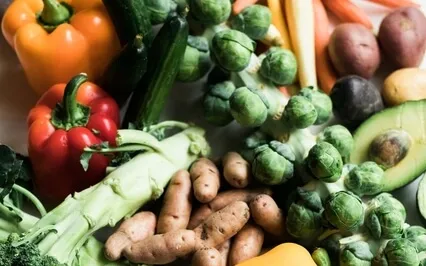
Sesame seeds,
Cucumber,
Onions,
Garlic,
Ginger,
Root,
Turmeric,
Root,
Broccoli,
Kale,
Asparagus,
Eggs,
Carrots,
Beets,
Lentils,
Chickpeas,
Beans,
Mushrooms,
Yams,
Tomatoes,
Cilantro,
Cauliflower,
Black beans,
Spinach.
These are some of the ingredients that went into the dishes and beverages I prepared for her that week.
It was all living food.
You take a bulb of garlic and plant it in the ground,
It grows.
Scoop sodium stearoyl-2-lactylate in the soil.
Is it going to sprout?
Your body knows what to do with a bolus of spinach,
But how does the body react when it doesn't recognize something you ingest that you yourself can barely pronounce?
Like maltitol,
Or is it mal-ta-tal?
We have enough research to answer this question.
When the body recognizes something is foreign,
Whether an allergen,
Pathogen,
Or chemical,
The inflammatory response is triggered.
Inflammation is the body's response to a problem,
Says Dr.
Edward McDonald at the University of Chicago School of Medicine.
And much of what we eat is the problem.
Many of the foods we eat trigger inflammation.
All processed food can cause inflammation,
He asserts.
They can alter the bacteria that live in our gut,
And that alteration has the ability to interact with our immune system and eventually trigger it in a way that leads to chronic inflammation.
Morganella,
Klebsiella,
And other gram-negative bacteria in the gut have been implicated in depression and other diseases.
Their presence triggers the activation of the inflammation response system.
Once these molecules cross the blood-brain barrier and enter the brain,
Microglia are activated.
Microglia,
The resident immune cells of the central nervous system,
Respond to neuronal damage and remove the damaged cells.
Chronic microglial activation is a hallmark of brain pathology.
The brain gets flooded in an inflammatory bath.
Over time,
Inflammation causes neuronal damage through the release of toxic molecules,
Such as pro-inflammatory cytokines,
Reactive oxygen intermediates,
Proteinases,
And complement proteins.
Exercise,
Sleep,
Intermittent fasting,
And diet are simple lifestyle choices that reduce pro-inflammatory microglial states.
Other gut bacteriophages,
Particularly in the caudoviralis order,
May improve executive function and memory.
A good diet has been shown to alter the composition of the gut microbiome.
The microbiome thrives on fermented foods.
Two to four servings daily can do the body well.
Fermented foods are integral to diets around the world,
Not so much here.
But you might find some items at the grocery store.
Kimchi,
Yogurt without sugar,
Kefir,
Injera bread,
Sauerkraut,
Pickles,
Kombucha,
Natto,
Miso,
And tempeh.
Foods that are good for you may take getting used to,
Especially fermented foods.
But the good is one thing,
The pleasant is another.
I don't let my preferences dictate what I eat.
If in my ignorance I could force myself to acquire taste for beer,
I can force myself to drink kombucha.
Processed sugars are toxins.
If I can happily ingest those,
Surely I can ingest foods and drinks that are better for my health.
The good is one thing,
The pleasant is another.
Many ultra-processed foods contain sugars.
Sugars obtained by chemical synthesis,
Such as high fructose corn syrup and invert sugar,
Are common low-cost ingredients of ultra-processed foods,
According to Fernanda Rauber,
A nutritional epidemiologist at the University of Sao Paulo.
Many products advertised as sugar-free contain sugary substitutes.
Ingesting these foods or beverages can be dangerous for those with diabetes.
Many sugar-free labels are misleading.
I remember my father drinking a lot of these drinks that were sugar-free.
Maltitol syrup,
For example,
Has a glycemic index of 52.
Table sugar has a glycemic index of 60.
If a manufacturer substitutes table sugar with a sugar alcohol like maltitol and labels it sugar-free,
The pancreas is still going to secrete more insulin.
Sugar goes by many different names.
Dextrose,
Fructose,
Galactose,
Glucose,
Lactose,
Maltose,
Sucrose,
Cane,
Sugar,
Cane juice crystals,
Honey,
Malt syrup,
Maple syrup,
Corn syrup solids,
Crystalline fructose,
Dextrin,
Diastatic malt,
Ethyl maltol,
Florida crystals,
Glucose syrup solids,
Maltodextrin,
Sucanad,
Agave nectar,
Barley malt,
Blackstrap molasses,
Brown rice,
Brown rice syrup,
Buttercream,
Caramel,
Carob syrup,
Corn syrup,
Evaporated cane sugar,
Fruit juice,
Fruit juice concentrate,
Golden syrup,
And high fructose corn syrup.
These sugars are in products where you wouldn't expect to find them from salad dressing and breads to condiments and pet food.
Even our pets are getting diabetes.
I came across a disturbing study published in the Journal of American Medical Association Pediatrics on the doubling of prediabetes in children 12 to 19 years old.
Prediabetes is a condition marked by high blood sugar levels that have not yet crossed the diabetes threshold.
If we don't intervene,
The children who have prediabetes have a higher risk of developing diabetes and also have a higher risk of all cardiovascular diseases,
The study's author notes.
Type 2 diabetes in turn accelerates aging,
Cognitive decline,
And other forms of neurodegeneration.
A 30-year study which tracked 1,
244 children aged 7 to 15 in 1985 found links between cognition and fitness later in life.
Those children who were more active and fit performed better on cognitive tests than those who were obese in early childhood.
But unfortunately for kids,
Many adults have abdicated their responsibilities and power.
Some shamelessly market garbage to children.
Others wallow in guilt and shame or make excuses for poor choices.
Many educators approach nutrition as if they feared offending some multinational conglomerate or hurting a caregiver's feelings with facts.
I compromise my integrity if I withhold truth.
Consumers must be informed and self-advocate,
Even a 12-year-old diagnosed as prediabetic.
Such are the norms of the times.
If a child is suckered by false advertising into buying an energy bar and vitamin drink,
Marketed as sugar-free from a school vending machine,
And becomes diabetic,
It's her fault and we blame our parents.
We don't examine public policy,
The educational curriculum,
Misleading ads that affect consumers' perceptions,
Or corporate complicity.
According to Harvard's School of Public Health,
The leading causes of death in America,
Heart disease,
Stroke,
Diabetes,
Cirrhosis,
And high blood pressure,
Are largely preventable and could be avoided with the right diet,
Exercise,
And lifestyle.
Complications related to poor health from osteoarthritis to respiratory impairment to the cognitive decline that accompanies old age have been linked to lifestyle choices and diet.
Obesity rates are driven partly by sedentary lifestyles and the consumption of cheaper processed foods.
As an educator,
I'm concerned with the trends I see on the ground.
Childhood obesity is epidemic in America.
Roughly a third of children and adolescents are obese.
Over the past three decades,
The childhood obesity rate has more than doubled for preschool-aged children two to five years old and adolescents aged 12 to 19,
And more than tripled for children aged six to 11 years old.
In the inner city,
Where I started my career,
The statistics were worse.
The disparities in obesity prevalence are higher for Latino and Black children.
Good health is a wellspring of intangible wealth.
If I could encourage students to be good custodians of their health and well-being,
I could spare them and their loved ones the misfortune of ill health,
Both physical and psychological.
Food affects mood.
In a recent study,
Researchers found that young men with a poor diet saw significant improvement in their symptoms of depression when they switched to a healthy Mediterranean diet.
You change your diet,
You change the way you feel.
Many studies have found improved mood regulation and reduced irritability and explosive rage,
Including in placebo-controlled randomized trials of children with ADHD and mood dysregulation.
Changing your diet can affect global change.
The ancients didn't write much about nutrition because foods were locally grown and nutritious.
Today,
We can't be 100% certain that the foods we buy have not been genetically modified,
Sprayed with pesticides,
Contaminated with molds,
Or grown in mismanaged and degraded soils depleted of their nutrients,
Like B vitamins and minerals like magnesium and zinc essential for health.
Agribusiness is the largest contributor to climate change,
More than all forms of transportation combined.
Raising livestock is an inefficient use of limited resources.
One acre of land can produce 50,
000 pounds of tomatoes,
53,
000 pounds of potatoes,
30,
000 pounds of carrots,
But only 250 pounds of beef.
To produce one pound of beef takes 2,
400 gallons of water.
55% of fresh water used in the United States goes to animal husbandry,
Compared to 5% for private consumption.
Globally,
The figure is between 20 and 30%.
The venerable Zen monk Thich Nhat Hanh cited a statistic claiming that if we in the West reduced our consumption of alcohol and meat by 50%,
We could end world hunger.
It's a small sacrifice to contribute to the well-being of others.
Compassion for all living things is at the root of our practice,
Which is why we're vegetarian.
How animals are raised today is appalling.
13.
6 million kilograms of antibiotics are used for livestock in the United States annually to arrest the spread of diseases common in crowded and unhygienic factory farms.
For the meditator seeking to purify the mind of vegetarian or vegan diet is ideal.
The choice is an act of compassion that grows out of practice.
We're aware of what we eat,
Mindful of what we consume.
It takes strong resolve and firm determination to discipline the mind.
Controlling the appetites of the body is one way to strengthen one's practice and resolve.
My father's death was preventable.
The thousands of dollars he spent over the course of his lifetime on junk and processed foods sickened him.
And one of the food companies that engineered the foods he consumed sent him a get well card when he was admitted to the hospital.
One of the multi-billion dollar multinational corporations helped with his medical expenses,
Which crippled the family's finances.
Not one of the lobbyists or lawyers who promoted and defended the interests of the conglomerates shared in the burden of his care.
Now,
Disgust is sometimes considered a negative emotion,
But it can be transformative and move us to action.
We can leverage negative emotions to sustain motivation and change.
And for me,
That's education.
It's better to educate ourselves than to trust the integrity of advertisers,
The goodwill of marketers or the moral codes of elected officials.
A marketer can deceive me with clever packaging,
But in the end,
It's my body that's going to keep score.
The pancreas,
The liver,
The gut microbiota,
The cells and molecules do not respond to clever ads,
But to the chemical compositions of the foods we consume.
Teaching what matters is my tagline,
And what we eat matters.
I can't tell you what to do or how to eat.
I've presented the facts as best I could.
So please do not cede responsibility for your health over to systems,
Clinicians,
Grocers,
Marketers or anyone else.
Don't leave your well-being to chance.
Set your intentions.
Choose well.
May you enjoy good health and vitality.