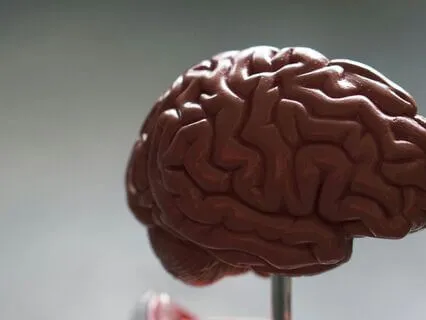
To train the brain with intention and skill requires some knowledge of its innermost workings.
I'll begin with a brief two-minute explanation followed by the practice.
In this exercise,
We will cycle through three neural networks,
The task-positive network,
The default-mode network,
And the salience network.
The task-positive network is a set of brain regions that are active when we're focusing on a goal-directed task that requires conscious attention.
The goal for this practice is to maintain attention on the breath and simply note whether we are on or off task.
When we're on task,
We can feel the touch sensation of the breath.
When we are off task,
The mind will wander.
When the mind wanders,
The default-mode network is active.
The default-mode network is associated with self-referential thoughts,
Autobiographical memories,
Planning into the future,
Or ruminating on the past.
When your mind is off task,
It will return to this default layer.
The default-mode is not problematic.
It plays a role in creativity,
Social cognition,
And long-term planning.
Instead of suppressing the default-mode,
We refine its activity,
Making self-referential thought less sticky or problematic.
The brain's task-positive network and default-mode network work like a seesaw in motion.
When one is up,
The other is down.
When you're on task,
The task-positive network is up.
The default-mode is inactive,
And vice versa.
Maintaining a balance between the two networks is essential for optimal mental functioning.
A third network,
Called the salience network,
Maintains this balance.
It's like the fulcrum or midpoint on a seesaw,
Enabling smoother state transitions from mind wandering to present moment awareness.
When you're off task,
The salience network detects when attention has wandered and signals the need for refocusing.
With that understanding,
Let's begin.
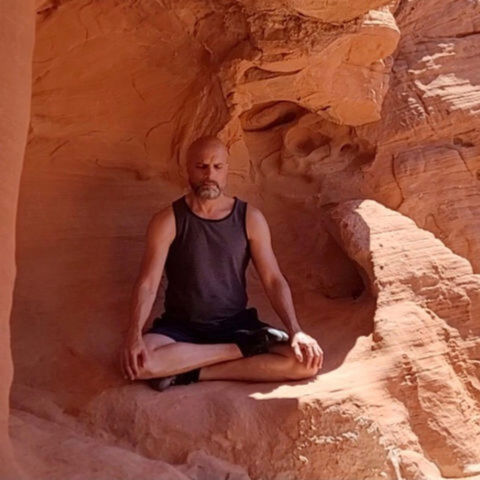
Assume a comfortable but alert posture.
Soften the muscles of the forehead,
The eyebrows,
The eyes,
The jaw,
The muscles around the mouth and lips,
The tongue,
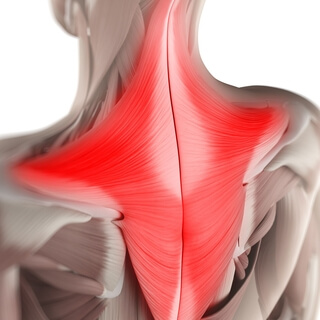
Relax the trapezius muscle,
The muscles of the back,
The breath is diaphragmatic and relaxed,
The abdomen gently rises and falls.
Relax the shoulders,
The upper arms,
The forearms,
The palms and fingers.
Relax the glutes,
The thighs,
Head to toe relaxed.
Relaxing muscles sends signals to the nervous system that all is well.
Scan again from the top of the head to the tips of the toes,
Relaxing any tension,
However subtle.
Keep letting go of the subtlest contractions.
As you relax,
You maintain physiological balance.
Stress hormones are metabolized and cleared from the body.
Relaxed and alert.
Now,
Bring a relaxed focus of attention to the breath.
We'll track the in-breath at the nostrils,
Feeling the touch sensation of each in-breath at the nostrils.
This is the first task.
When the mind is on task,
You can feel the touch sensation of each in-breath.
When it's off task,
It will default to wandering.
The mind is either on task or off task.
Try remaining on task during this next moment of silence.
If you're off task,
Simply note off task and return to the touch sensation of each in-breath.
Good.
Now,
Let the mind relax and rest for a minute as I explain the next task.
We're training both awareness and attention.
You may be aware,
For example,
That attention is stable or unstable,
That the mind is easily distracted,
Or that distractions are easily pacified,
Or the mind is on task or off task.
Awareness is a global function of mind,
While attention has a much narrower focus.
We're training both,
Zooming in and out.
Awareness is a relaxed panoramic view of the mindscape,
While attention is single-pointedly focused on the breath.
For the next task,
We'll focus on the space between the in-breath and the out-breath.
If you were to take a deep breath in and hold,
It's that space.
However,
We'll assume a normal breathing pattern.
Allow awareness to settle around that point,
Between the in-breath and the out-breath.
Hold awareness on the space itself.
Now,
If you're aware that attention is stable,
Good.
If you're aware that attention is unstable,
Good.
Awareness can be spacious and vast,
Like the open sky.
Thoughts arise and disappear in the mind's sky-like clouds.
During the moment of practice,
Focus on the space between the in-breath and out-breath.
Observe the breath cycle from this point.
If the mind shifts,
Gently but immediately return to this point.
Simply note off-task and begin again.
With the spirit of play,
Try remaining on-task during this moment of silence.
Now,
Rest the mind and relax the body.
Perform a quick scan from head to toe and release any tension that may have nested in the body.
The next task is to observe the out-breath.
As it goes out,
Feel the touch sensation of the out-breath around the ring of the nostrils and below the upper lip.
For task three,
Be alert for the first hints of mental movement.
Subtle thoughts arising at the edges of awareness.
If you detect mental noise from one out-breath to the next,
Give it no attention.
Stay with the out-breath and the non-symbolic,
Non-verbal sensations associated with the out-breath.
At the first sign of movement or disturbance,
Do not entertain,
Interpret,
Or react.
Instead,
Apply attentional inhibition.
Press your awareness back into the stillness of the anchor and return to the out-breath.
Try remaining on-task during this period of silence.
Good.
Relax the mind and body.
Scanning the body for any hint of tension.
For the final task,
Focus on the space between the last out-breath and next in-breath.
So as you breathe out,
There's a little space.
Allow awareness to settle around this point.
From this silent space,
You may detect the first auditory whisper,
The first image,
The first pre-verbal impulse arising at the periphery of awareness.
Simply recognize and let go of any attachments or elaborations before they form into thoughts.
Rest in the space between the in- and out-breaths with an alert,
Spacious mind.
Untethered.
Unperturbed.
Capable of perceiving the arising of thoughts and watching them before they turn into noise.
Try remaining on-task for the next period of silence.
As this meditation comes to an end,
Let's take a moment to reflect and celebrate.
We're training network fluidity,
Enhancing the brain's ability to dynamically shift between networks,
Improving communication between the default mode network,
The task-positive network,
And the salience network.
With awareness and skill,
We're learning to monitor the mind's activity,
Detect errors,
And reorient attention during task performance.
It may take effort at the early stages of practice to detect mind-wandering and to shift attention without judging,
Feeling frustrated or disappointed.
But with time and consistent effort,
It will begin to feel more effortless.
As the mind becomes more stable and flexible,
We experience more and more moments of integration,
Wholeness,
Equanimity,
Stability,
And fundamental well-being.
So keep practicing,
And thank you for listening.