This is a talk on gratitude.
Practicing gratitude can be transformative.
This simple practice gives me the lift I need to rise above challenges and weather uncertainties.
Gratitude is attentional.
We direct attention to our blessings.
Gratitude is also intentional.
This practice counters the brain's negativity bias,
Which refers to the tendency to focus on unpleasant thoughts,
Emotions,
Interactions,
Or traumatic events.
This bias affects our impressions,
Memory,
Decisions,
And biochemistry.
The negativity bias confers some advantages.
Caution,
Prudence,
And planning may stem from it.
But when negativity becomes the dominant way of seeing,
It can contribute to mental distress and physical dis-ease.
Or disease.
I learned this practice as a young man growing up in poverty.
With eyes of gratitude,
I saw that even in the most blighted neighborhoods,
Flowers bloomed,
Birds sang,
Children played,
The sun warmed our skin.
The most resilient among us offered proof that peace,
Love,
And happiness were not contingent on income,
Education,
Status,
Or circumstance.
True peace and joy could be cultivated from within.
Gratitude promoted its growth.
I made gratitude a habit,
Enumerating things for which I was thankful.
In the beginning of my experiment,
I listed the obvious.
Food in my belly,
A roof over my head on rainy days,
Clothes on my back,
And shoes on my feet.
Every day,
I passed by homeless men and women who did not enjoy these blessings,
And their suffering watered my compassion.
In a sense,
Growing up in this neighborhood was itself a blessing.
I learned compassion.
There was suffering just outside our security doors and barred windows.
The drug addicts and gang members who were demonized in the press were suffering human beings with names and faces and histories.
They were our neighbors,
Members of the church we grew up with,
Classmates,
Sometimes family.
Human beings just like us.
Not statistics,
Not monsters,
Not villains,
Not failures,
But people just like me trying to find their own way.
At the experiential level,
I was cultivating empathy.
Empathy grew out of pain.
Because I suffered,
I could stand in solidarity with those who felt defeated by despair,
Failure,
And frustration.
And those connections were often the most profound and enduring.
So there was beauty in that.
At the cellular level,
Prosocial neural circuits were being strengthened.
The anterior cingulate cortex mediates empathy.
It becomes more robustly engaged the more we practice gratitude.
This encourages prosocial behaviors like altruism.
At the physiological level,
Heart rate,
Breathing,
And metabolism change.
Inflammation decreases.
There are significant drops in interleukin-6,
An inflammation marker,
And TNF-alpha,
An inflammatory cytokine.
Immunity improves.
The fear circuitry,
Which is usually primed when we see otherness and perceived threats,
Becomes less active the more we see ourselves in others.
Serotonin,
A powerful neuromodulator,
Activates neural networks associated with prosocial behaviors and positive affect.
The more we practice gratitude,
The more serotonin we release,
And the more we release,
The greater our sense of gratitude.
Gratitude cultivated resilience.
Life is struggle.
I learned how to hustle and grind and work hard.
I learned how to cultivate self-respect and self-love in a culture that despised us for the color of our skins and our poverty.
Indeed,
Studies show that a gratitude practice not only buffers against the negative psychological effects of earlier traumas,
It also inoculates us against any traumas that may occur.
We lived in poverty,
But we also lived in America.
Paved roads,
Homes built to code,
Indoor plumbing,
A reliable electric grid,
Clean tap water,
Free public education,
Sanitation and waste disposal,
Public libraries,
Public schools,
The right to criticize and challenge government officials,
Peaceful transfers of power,
Were blessings many took for granted.
Around the world,
Many people suffered for lack of just one of these.
Access to clean water,
For example,
Allowed girls in remote villages to attend schools,
As they no longer had to walk miles to fetch dirty water from a muddy river.
We were poor by American standards,
But we were better off by world standards.
A poor child growing up in America could prosper.
The same could not be said for the talented and ambitious of many other countries.
And yes,
There are problems.
Yes,
There is systemic racism.
But when I looked through the eyes of a father or mother born into true poverty,
The ghetto was not the bottommost rung,
But a step up.
It was part of the hazing many immigrants were willing to endure in exchange for the opportunity to improve their circumstances.
And in many respects,
I lived better than 18th century kings.
By historical standards,
I was blessed.
The kings surrounded themselves with learned ministers.
I had the World Wide Web.
Kings had minstrels and orchestras.
I could listen to all the world's music and stream video from the smartphone in my pocket.
The king's physicians practiced bloodletting.
I had the advantage of modern medicine.
In the 18th century,
Millions died from illnesses and suffered debilitating diseases I was vaccinated against.
Kings had their carriages.
I had a used car that could travel faster and over longer distances.
Kings ate food prepared locally or whatever could be transported without spoil from the remotest corners of the kingdom.
My local supermarket imported foods from the most distant corners of the globe.
We had refrigerators,
Indoor plumbing and heating,
Electricity and other blessings kings of old could never have imagined.
Although by the standard of those who equated wealth with material assets,
I was poor,
I felt grateful for what I had and for what I did not have.
As I continued on this journey,
Venturing further into the practice of gratitude,
I included that which I did not have to endure.
Hunger,
Disease,
War,
Extreme poverty,
Neglect,
Abuse or illness.
It turns out researchers recognized the value of this technique of reminding ourselves of those things we do not have to suffer or endure.
But I trust that even if I must suffer,
There might be purpose in it.
Practicing gratitude improved my moods.
This habit,
When applied,
Lessened the intensity and duration of my despair.
Indeed,
As my practice deepened,
I found myself grateful for my sadness and anger,
My failures and frustrations,
My pain and suffering.
With gratitude,
I could hold my despair in a compassionate embrace.
For behind me,
Sadness or anger were beautiful needs to be seen,
To be respected,
To be understood.
By tolerating failure and frustration,
I could train resilience and cultivate equanimity.
With practice,
I learned to integrate the broken and exiled parts of the self,
Which led to wholeness.
With gratitude,
I could thank the little self for its sincere efforts to do what it thought was best for the whole,
However foolishly or unskillfully those efforts may have been.
Over time,
My gratitude continued to deepen.
The simplest things delighted the soul.
One of the greatest gifts for which I was most grateful was the most humble and unassuming.
It was literally right under my nose.
The breath is a gift.
It's an ally.
All other blessings come courtesy of the comings and goings of the breath,
As Prem Rawat is fond of saying.
I did not create it.
I had no hand in mapping the pathway from the brainstem to the diaphragm.
I didn't line the trachea with cilia to filter air.
I didn't have a hand in designing the lungs.
I did not imagine alveoli or create the gas exchange.
I didn't stock the atmosphere with the right composition of gases to support life.
While I could not suspend the breath,
I could control it.
I could observe it.
I could rest in its rhythm and constancy.
Life danced within because the breath came.
Each breath could bring me back into the present moment.
I felt I was breathed into and gifted with life.
My appreciation grew deeper as my awareness grew more discerning.
I felt grateful for my health.
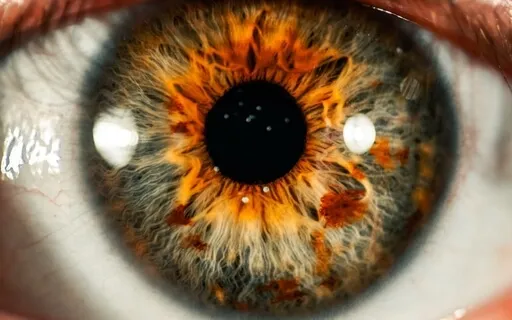
I was grateful for my eyes,
This wondrous organ that evolved over millennia to detect light.
The pupils contract when exposed to light and dilate to capture light and darkness.
The eye can zoom in or zoom out at the speed of thought.
With this gift,
I could notice and itemize those things I could appreciate with sight.
Colors and textures,
Shadows,
Depth of field,
The empty space between objects,
The filtered light that fell on the trees at dawn,
The waxing crescent moon in a starry night sky,
The stamens in a flower.
I listed the activities which sight enabled me to enjoy,
Like reading.
The sight was one of the wonderful gifts I was fortunate to receive at birth.
Then there was inner seeing.
The sense organs recorded sight and sound,
But the mind filtered and interpreted the data.
There was perception,
And then there was the thought behind thought that processed the raw data.
The mind creates stories about what it was seeing,
Co-creating reality or submitting to the reality created by others,
Investing in the illusion of others.
And the sight allowed me to peek behind the veil of thought forms to the mystery beyond thought from which thought emerged.
This was a different kind of seeing.
I felt gratitude for my ears and received its gifts with deep appreciation.
Sound waves travel through the medium of air.
These vibrations create differences in air pressure.
The outer ear,
With its sinuous shape,
Amplifies these waves.
As they enter the ear canal,
They strike the tympanic membrane,
Causing it to vibrate.
The ossicles behind the eardrums move.
As the ossicles move,
The stapes press into a thin membrane known as the oval window.
As the stapes press into the oval window,
The fluid inside the cochlea begins to move.
As the fluid in the cochlea begins to move,
Hair cells are stimulated.
These auditory receptor cells generate neural impulses that travel along the auditory nerve to the brain.
Auditory information is shuttled to different parts of the brain.
And finally to the auditory cortex and the temporal lobe for processing.
And all this is happening right now as you listen,
All of this complexity unfolding now.
Yet so simple,
Simply listening.
But I receive with an open heart the gifts hearing allows me to enjoy.
A podcast.
Music.
The pitch and timbre of my children's voices.
The trill of a wood thrush.
The roar of the surf.
The rustling of leaves.
The laughter of friends.
Even the cacophony of thoughts and the inner chatter has its own rhythm and cadence and structure.
Every thought has a beginning and an end.
A color.
A valence.
An emotion.
And our behaviors are reactions to the inner monologues we attend to.
I was grateful for my hands and found myself celebrating the simple things.
Brushing my teeth.
The toothbrush twirling between nimble fingers and thumb.
Getting dressed.
The fingers clasping and positioning the buttons through the buttonholes.
I could slip on my shoes and marvel at the complexity of tying shoelaces.
I can gesture to catch someone's attention.
Signal directions.
Speak with palms open.
I play piano,
Each finger working the keys.
Or I'm cutting open a loaf of bread,
Clapping to a song.
Cressing my daughter's cheek.
And like this,
Throughout the day I remain mindful of all I can express and create with my hands,
Receiving its many gifts with gratitude.
With gratitude,
I also recognize that everything I see was created with someone else's hands.
Every home.
Every door and glass pane and door frame and roof.
Every car.
Every windshield and door handle and engine and rim.
Every airplane gliding across the sky.
Every utility pole.
All the roads.
Every fence and garden was worked by hand.
Even the robots that automate manufacturing were once created by hands.
As my practice deepened,
So too did my contentment.
I found I needed very little to be happy.
Indeed,
I felt as if I had more than enough.
Facundo Cabral,
An Argentinian singer and songwriter,
Told the story of a meeting between God and a poor cobbler.
God takes the form of a wanderer and descends to a small village.
He knocks on the door of a cobbler.
Brother,
I have no money on me.
These are my only sandals.
They need repair.
Would you do me the kindness?
The cobbler says,
I'm tired of people coming to me asking for handouts and giving me nothing in return.
I can give you whatever it is you need,
The wanderer says.
The cobbler,
Puzzled,
Looks at the wanderer skeptically.
Do you have the million dollars I need to be happy?
I can give you ten times that in exchange for something.
In exchange for what,
Asks the cobbler?
In exchange for your legs.
What good is a million dollars if I can't walk,
Replies the cobbler.
Very well,
The wanderer says.
I can give you a hundred million in exchange for your arms.
But what good is a hundred million if I can't eat on my own or build with my hands or play my guitar?
Okay,
Says the wanderer.
I'll give you a billion in exchange for your sight.
The cobbler pauses to think then replies,
What good is that if I can't enjoy the sunset with my wife or see my children or my friends?
The wanderer finally replies,
My brother,
How rich you are and you don't even realize it.
Stanford neuroscientist Andrew Huberman suggests these five tips.
The first one is getting thanks.
Neuroimaging EEG and psychology studies show that the positive effects of a gratitude practice primarily occur when we receive,
Not when we give gratitude.
Of course,
For that to happen,
Someone has to give gratitude.
And that can start with you.
You can give it.
And hopefully someone in your life,
Perhaps many people,
Will genuinely thank you,
Too.
The second tip is to make it genuine.
In the Science of Gratitude podcast,
He discusses a study showing that the genuine intention of the gratitude giver has a direct impact on the degree of positive affect felt by the person receiving the gratitude.
So giving thanks,
But with authenticity does matter.
The third tip is to observe or recall others giving and receiving genuine thanks.
Neuroimaging studies from one lab show that observing or hearing the stories of others receiving help or thanks activates pro-social networks that improve our mood and other health metrics.
We're wired for social interaction and are wired to gauge the emotional state of others.
This explains why so many Instagram,
YouTube and Twitter videos showing people helping one another,
Animals helping one another and so on are so popular.
As a neuroscientist,
Dr.
Lisa Feldman Barrett says,
We regulate one another's nervous systems.
Fourth reason is that we have brains that drive a social hunger or an appetite for finding and reinforcing social bonds.
And the release of the neurochemical dopamine from the dorsal raphe nucleus is involved in that drive.
Studies on introverts and extroverts suggest that introverts like social interaction but are socially satisfied faster than extroverts.
A fifth tip is synchronicity.
Some studies done earlier this year show that when people hear a story,
Their hearts begin to beat in a similar way,
Even if they're not in the same room as one another.
It's pretty remarkable and holds up even for people with very different backgrounds and lives.
Oxytocin,
A hormone,
Appears to be involved in this.
These narratives drive common physiological responses which are powerful glues for relationship building.
So you can build social bonds by hearing,
Watching or sharing positive stories that promote gratitude.
My hope is that you can cultivate gratitude,
This beautiful quality of mind,
And use it to offset any negativity biases that may arise.
Practice can be intentional.
First thing in the morning,
Just before bed,
In the Christian tradition there's a verse that enjoins us to pray without ceasing,
And everything give thanks.
So thank you for listening.
I hope you find some value in this talk.
Wishing you peace and contentment.