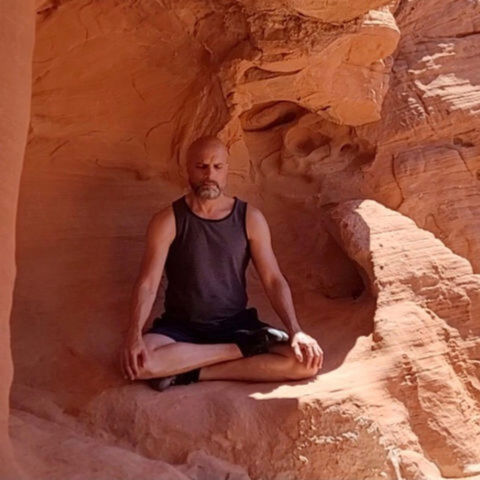
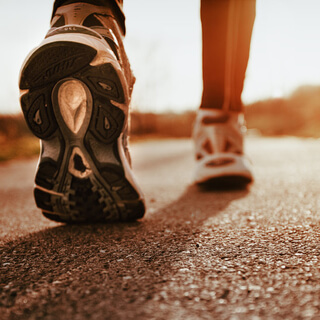
Meditation is to the brain what exercise is to the body.
Researchers Lutz and Davidson defined meditation as a family of complex emotional and attentional regulatory strategies developed for various ends.
Just as exercise can be classified as aerobic or anaerobic,
Meditation techniques can be grouped by type.
There's focused attention,
Open monitoring,
Body scanning,
Generative,
Analytical,
And arousal based,
Among other styles.
These meditations have different effects.
Just as different exercises contribute to overall health and challenge the body in different ways,
The type of meditation technique one chooses drives different cognitive control states.
Going further,
As a trained athlete can target specific outcomes,
For example,
30 to 45 minutes of intense exercise while sustaining a targeted heart rate.
A skilled meditator can strengthen the neural substrates underlying perception,
Perceptual decoupling,
Attention,
Interoceptive awareness,
Or affect by choosing the right technique,
Intensity,
And or time intervals.
Training is targeted and specific,
Just as in athletics.
For best results,
Practice is intentional and deliberate.
They don't need a degree in physiology or biomechanics to begin an exercise regimen,
Just move.
But the more you know,
The stronger you become,
The faster your recovery time,
The less prone you are to injury,
The better your form.
Similarly,
You don't need to study the science of meditation,
But the more you know,
The more targeted your practice can be,
The better the results,
The more integrated the mind,
The less prone you are to frustration or setbacks.
When people take up an exercise,
They often begin with a goal or simply with what feels right.
For one,
It might be to lose weight,
For another to explore their limits.
The motivation for a third might be to keep up with the grandchildren and for another to prevent the onset of a degenerative disease.
And meditations like this,
We often begin with some compelling end in mind to reduce stress or anxiety,
For self-discovery,
Pain management,
To cultivate more empathy,
To improve focus and concentration,
To enhance creativity,
To optimize performance,
To be more present,
To manage strong emotions,
For mental health,
To delay or prevent age-related cognitive decline,
Or simply to enhance one's sense of well-being.
Just as exercise is generally recommended for all,
Age,
Experience,
Temperament,
Physical and mental health,
Conditioning,
These are all factors that affect and limit what one can do,
At least initially.
An 18 and 81 year old will not train alike.
Many of these same factors affect what a meditation practitioner can do.
For example,
Someone suffering post-traumatic stress disorder might benefit from a body scan,
While one seeking to improve their concentration might choose a focused meditation practice.
The exercise regimen of a professional powerlifter is not the same as that of a swimmer or a serious runner.
Nor is a runner's regimen the same as that of another runner's.
A soccer midfielder will not train the same way as a running back,
Will not train the same way as a marathoner,
Who will not train the same way as an ultra athlete running the backcountry.
Not only does training differ,
Their physiques look different as a result of their training.
Similarly,
When one practices only focused meditation,
He or she will not have the same effective and cognitive outcomes as one who only practices open monitoring or generative styles of meditation.
Structurally,
Their brains look different under scans.
The science of meditation in the West is still evolving and relatively new.
While there are many studies on the benefits of meditation,
Researchers assess different techniques under this general heading of meditation.
Generalizing in this way confounds exploration of the effects and potential benefits of specific techniques.
The few studies that do differentiate between techniques,
Some of which I'll share here,
Show that they work the mind in different ways.
Within classical contemplative traditions like Buddhism and traditional yogic practices,
Meditation is as broad a term as exercise is here in the West.
There are distinct practices,
Japa for example or mantras,
Tapa or tumo,
Techniques where practitioners regulate autonomic functions like bodily temperature,
Dharana or focused meditation,
Dhyana,
Concentration on an object either physical or visual,
Samadhi,
Absorption,
Non dualism,
This loss of self,
Vipassana,
A type of body scan,
Yoganidra,
A type of body scan with visualization,
Shuña,
Non-doing or emptying,
Shamatha,
Peaceful abiding,
Shambhavi,
Breath work,
Plus open monitoring meditation,
There's metta,
Loving kindness,
Tantric practices and more.
Most practices have variations.
There are many ways to focus attention for example.
Each country moreover where meditation has taken root and flourished has its own nuance,
Its own focus.
Meditation practice shapes to culture and similar mutations are occurring here in the West.
I'm categorizing meditation in seven categories and researchers will differ and this may change the more we learn about how the brain works.
But there's focused attention,
Open monitoring,
These hybrids,
There's body scans,
Generative styles of meditation,
Analytical styles and arousal based styles of meditation.
So I'll start with focused attention which is the style most often associated with meditation itself.
In focused attention meditation practices,
The practitioner focuses on a particular object like the breath or sensation or an external object like a candle flame.
Anything else that attracts attention is actively ignored.
Attention is constantly redirected back to the object of focus,
Mental repetition of a word or phrase,
Breath focus,
Shambhala where you focus on the exhalation,
Or zazen in the Japanese Zen tradition where the focus is on sitting and posture are some examples of focused attention techniques.
Most focused meditation techniques work the mind in the same way.
Practitioners cycle through five intervals which involve neural networks that connect different nodes or parts of the brain.
First is sustained attention.
The executive network is very active.
Attention is single pointedly focused on an object.
The active nodes are the right parietal cortex,
The right frontal cortex,
The thalamus among other parts.
Then you have mind wandering which is a default mode network phenomena.
For beginners mind wandering is very common.
It's the default state.
Intermediate and experienced meditators may also experience mind wandering.
Depending on their level of training they can quickly detect and reorient their focus.
Adepts maintain high levels of concentration without interruption and with little effort.
They demonstrate decreased default mode network activity and connectivity.
The active nodes here are the posterior cingulate cortex,
The posterior lateral parietal and temporal cortices,
The cingulate cortex,
And the parahippocampal gyrus.
The third interval in the attention cycle is awareness of mind wandering called the salience network.
This is the moment a practitioner realizes their attention is wandered.
It's called the aha moment and I think it's one of the most important of the five intervals.
The active nodes here are the cingulate cortex and the anterior insula.
The fourth interval in the attention cycle is letting go.
It's an executive function.
It's also a critical choice point.
Here the experienced practitioner lets go of the distraction.
The active nodes are the basal ganglia,
The lateral ventral cortex,
And the anterior cingulate cortex.
The fifth interval in the attention cycle is reorienting.
It's another executive function.
The practitioner redirects their attention to the object of focus.
The active nodes are the superior colliculus and frontal eye fields,
The temporal parietal junction,
And the superior parietal cortex.
As a serious bodybuilder trains specific muscles during a workout in a very targeted way,
Working the anterior,
Medial,
And posterior heads of the deltoid or the shoulder,
For example.
They know the nomenclature.
So can a meditator approach their training during a focused meditation session with the same intentionality,
With the same focus,
With the same interest in neuroscience as a bodybuilder has in physiology?
So understanding these intervals of attention allow us to train properly.
When we become aware that the mind has wandered,
For example,
We know this is just an interval.
We cut mental elaborations and reorient attention.
Beginners,
By contrast,
Return to default.
They question,
They judge,
They doubt,
They evaluate their performance.
Rather than reducing cortical noise,
They agitate their minds with more thoughts.
Instead of simply cutting and letting go as per instructions,
They cling to mental elaborations and become entangled in them,
Blending with them,
Identifying with them.
And here I want to stress the importance of coaching,
Both in athletics and in meditation.
It's helpful.
Experienced bodybuilders understand biomechanics and physiology.
They even go so far as knowing about muscle insertion,
The direction of fibers,
Range,
Hypertrophy.
And they use this knowledge to sculpt a more aesthetic physique.
I think in a few decades,
The Western meditator will be able to approach their practice with the same depth of understanding and sculpt the mental landscape.
For thousands of years without aid of technology,
Skilled meditators developed experiential and exploratory methodologies to understand their minds,
And this was passed on through tradition.
Now,
Adoption by the West is going to further the science of meditation.
And for now,
We have sufficient models to inform our practice,
And those are going to change.
And it's a pretty exciting field of study.
When attention is focused and sustained on the breath,
I know by inference that those regions associated with executive control are active.
I can't see the posterior cingulate cortex lighting up when my mind wanders any more than I can see the anaerobic breakdown of glucose in my body after an intense run.
But I can feel the effects.
In meditation,
When the mind is easily distracted and attention is flighty,
I can infer that the posterior cingulate cortex is active,
As this node is associated with mind wandering.
I'm not unnerved by it any more than I would be if I felt breathless after sprinting.
The understanding is there.
As with exercise,
Form is key.
The squat is a great exercise for building core,
Quad,
And leg strength.
Performed improperly,
Though,
The exercise can lead to injury.
Focused meditation is kind of like this.
Practiced properly,
The technique is great for stabilizing the mind,
As squats are excellent for stabilizing the core.
How we deal with mind wandering and how well we tend to form depends on technique.
Cutting ruthlessly,
Acknowledging,
Touching lightly with non-judgmental awareness and labeling are some strategies to correct a vagrant mind.
But performed improperly,
A beginner can fall deeper into rumination,
Self-criticism,
And self-doubt.
Just as a bodybuilder pushes muscles to failure,
A meditator can experience a vigilance decrement or attentional fatigue.
As a runner trains to improve endurance,
A meditator can improve their concentration as well as the length and quality of the hold.
Second style is open monitoring.
In open monitoring,
A practitioner observes whatever thought,
Emotion,
Sensation,
Or phenomenon that arises as it arises without attachment,
Without focusing or fixating on it,
Without trying to change it in any way.
Attention is flexible and unrestricted.
Non-directive meditation,
Some labeling techniques,
Achim and zogchen are examples of this type of meditation.
Open monitoring meditation techniques are practiced with a relaxed but broad focus of awareness that allows spontaneously occurring thoughts,
Images,
Sensations,
Memories,
Or emotions to arise and pass away freely without any expectation that mind wandering should abate.
Even though effortful selection or grasping of an object as a primary focus is gradually replaced by effortless sustaining of awareness without explicit selection,
The core activity of the practice is to sustain attention with the shifting flow of experiences,
Sometimes detecting emotional tone as a background feature.
More simply,
It's often likened to sitting on a bank and watching a river pass or river flowing by or sitting on a hill and watching the clouds float by.
So another type is sort of a hybrid between focused and open meditation.
And just as there are aerobic and anaerobic exercises like high intensity interval training or tabata,
There are focused meditation and open monitoring hybrids.
Transcendental meditation and conscious mental rest are examples of these hybrids.
And CMR,
Or conscious mental rest,
Focuses on the position of the eyes in their resting state.
The frontal eye fields are active during the reorienting phase of the attentionate cycle.
And I suspect this is one of the reasons a focus on eye placement is emphasized in this and many other techniques.
In transcendental meditation,
A relaxed focus of attention is established by effortless mental repetition of a short sequence of syllables or non-semantic meditation sounds.
Like da or vo that you might see in semantic experiencing.
In both CMR and transcendental meditation,
Whenever the meditator becomes aware that the focus of attention is wandered,
Attention is gently redirected to the repetition of the meditation sound or the placement of the eyes in their resting state.
There's no judgment,
Nor is there vigilance as in focused attention techniques as this implies effort.
Attention is not directed toward observing the spontaneous flow of experiences like in open monitoring meditation.
Consequently,
Techniques such as transcendental meditation or conscious mental rest comprise a distinct style of meditation.
As mind-wandering is permitted,
Brain patterns and activity register differently in EEG tests.
Transcendental meditation is characterized by theta and alpha activation.
The default mode network is active.
Focus attention by contrast is characterized by gamma or alpha EEG and default mode network deactivation.
So there are implications to this.
For me,
If my mind is too busy or too dull to sustain focus attention,
Which requires effortful attention,
Something like transcendental meditation or conscious mental rest or similar technique might be the better practice for that session.
There are additional benefits to this class of hybrid meditation and transcendental meditation specifically.
In one study,
Significant increases in a metabolite,
Which I can't pronounce,
Were detected in the urine of practitioners.
The name of this metabolites,
Again,
I can't pronounce it,
But it's abbreviated as 5-HIAA.
And this 5-HIAA is the byproduct when the body metabolizes the feel-good neuromodulator serotonin.
Elevated levels of 5-HIAA suggest the systemic presence of serotonin in the body,
Which translates as calm rest relaxation.
There's also a decrease in catecholamines or the stress hormones,
Which scientists have also found.
So focus attention,
Open monitoring the hybrids.
Next to body scanning,
Fourth type.
Yoga Nidra,
Vipassana or Insight and Somatic Experiencing are some examples of body scans.
Some variations on this technique,
Which are excellent for developing equanimity and resilience for cultivating interoception or the awareness of the mind-body connection and for reducing cognitive and emotional reactivity.
These techniques are useful for those struggling with addictions,
For those managing strong emotions,
For pain management,
Or simply as a technique for improving equanimity and for dealing with the vicissitudes of life.
In one study,
An fMRI was used to assess the thickness of the brains of 20 Westerners who had experience with Vipassana meditation.
It was found that their brains were thicker in those regions involved with somatosensory,
Auditory,
Visual and interoceptive processing.
Brown University researchers proposed that practitioners gained enhanced control over sensory cortical alpharithms that helped them regulate how the brain processed and filtered sensations,
Including pain,
And memories such as depressive cognitions.
In another study,
Meditators learned not only to control what specific body sensations they paid attention to,
But also how to regulate attention so that it did not become biased toward negative physical sensations such as chronic pain.
The findings suggest that these techniques evoke a brain state of enhanced perceptual clarity and decreased automated reactivity,
Which can be useful for those struggling with addictions,
Or those in the throes of a strong emotion,
Or those suffering from chronic pain.
The next style of meditation is called generative.
Generative styles of meditation include metta,
Loving-kindness,
Training on compassion,
Empathy,
Perspective-taking,
Visualizations,
And other contemplative-like practices.
Practitioners seek to cultivate desirable qualities like compassion,
Forgiveness,
Kindness,
And they do this through imagery,
Visualization,
And imagination.
Through these practices,
We change how we relate to ourselves and others.
These techniques often use imagination to evoke certain affective responses,
Which we can then apply to real-world situations.
It's important to note here that the brain is very predictive.
So if we're practicing compassion,
We might visualize ourselves helping others.
We cultivate the feeling associated with it.
We create simulations for this predictive brain so that when we see someone in distress,
The response of the trained meditator will bend toward empathy,
Toward compassion,
Or altruism.
Not because they're nice people,
But because they've trained themselves to respond with humanity to the suffering of others.
Again,
Our brains are predictive.
In these techniques,
We've simulated how we would respond to suffering instead of shying away from it,
As people often do.
They get very uncomfortable around the suffering of other humans.
So when the situation arises,
We can summon empathy,
Compassion,
Or altruism to help relieve the suffering of others.
And I'm separating these,
Empathy,
Compassion,
Or altruism.
Empathy is often defined as sort of a resonance with the affective state of another person.
I can feel their sorrow,
Feel their anger.
Compassion is empathy plus the desire to alleviate that person of their suffering.
And they actually work different parts of the brain.
Altruism is the desire to alleviate someone of their pain,
But possibly at a cost to my own,
To myself.
And here I think of a firefighter rushing into a burning building.
That's a very altruistic behavior.
They have a desire to help save someone.
And also they're doing this at the risk of themselves to their own well-being.
So this generosity of spirit and goodwill is often rewarded with oxytocin,
Serotonin,
And dopamine.
And here I'm talking about these techniques and what comes of these techniques,
The behaviors,
The more compassionate behaviors.
We feel good when we help others.
Next style is analytical.
Analytical techniques are of two types.
The first,
Recruit reason to uproot unwholesome thoughts.
Reflecting on the harmful effects of anger is an example of this practice.
The second type of practice overwhelms the logical or thinking mind by giving it a puzzle or self paradoxical rhythm that taxes and overloads it.
The zen kon is an example.
When both hands are clapped,
A sound is produced.
What's the sound of one hand clapping?
That's an example.
And Gary McGee writes that the point of the kon is to exhaust the analytical and egoic mind in order to reveal the more intuitive no mind.
They're not about arriving at an answer,
But to see for ourselves that our intellections can never provide us with a completely satisfying answer.
Some might even claim that kons are anti-intellectual,
But they're neither anti-intellectual nor intellectual.
They simply point out that reality itself cannot be grasped or caught.
Self inquiry is another variant of the analytical style.
The mind is given the task of self inquiry.
Who am I?
Is the query used to investigate the nature of the mind.
As the thinking mind derives its light from that which cannot be conceptualized,
The imagined self comes undone.
Awareness beyond thought remains.
The last category of meditation techniques are called arousal based meditations.
These involve the state of parasympathetic nervous system withdrawal and alertness.
In a sense,
You're using arousal by stressing your nervous system in a deliberate way.
Examples are tantric mahamudra and tummo.
So most mindfulness based practices,
The ones I describe like focused attention,
Open monitoring,
They elicit the so-called relaxation response.
Which is defined as a state of parasympathetic nervous system dominance.
It's also characterized by alertness or vigilance.
Arousal based meditations are neurophysiologically different from focused attention or open monitoring style practices.
These meditations excite the autonomic nervous system.
The techniques are linked to the locus coeruleus nor epinephrine system and are modulated by arousal.
So for example,
You might start with hyperventilation.
This excites,
It's almost a stressor on the body.
This excites the autonomic nervous system.
Breath holes also another technique that can arouse the nervous system.
From here the practitioner can go on to maybe a visualization,
Maybe imagining heat in the body,
Circulating that heat throughout the body and actually changing body temperature and there are other techniques.
So those are some of the main categories.
Open monitoring,
Focused attention,
Generative styles,
Analytical styles,
Body scans and these arousal based meditations and the hybrids.
So as far as my regimen,
I meditate the way I work out.
I began working out at 15 and I started meditating at 17.
And I've been exercising the body and mind for over 30 years.
My approach is very similar.
I study,
I experiment,
I apply what I've learned,
I set my intentions,
I adjust my routines when I plateau,
I challenge myself,
I have fun and I remain consistent.
I vary my routines and adjust depending on conditions.
I practice most of the meditation types and techniques shared here.
Oftentimes it depends on the intention I set for the day.
I have midterm goals as well.
When I was younger,
A goal might be like a physical goal might be a 400 pound squat,
100 push-ups an hour for 10 hours,
A sub 6 minute mile,
A 3000 mile bike ride across the United States.
This is humble bragging.
Meditation goal might be sustained attention on the breath for a minute,
Then 10 minutes,
Then incrementally up to an hour,
Correcting for subtle dullness,
Maybe a booting an undesirable habit like bragging or cultivating a desirable quality like humility.
So as we are advised to listen to the body during exercise,
I listen to the body,
The mind,
The heart when I'm meditating.
And this helps me determine the best meditation technique to use depending on my state of alertness,
The time of day,
The emotional state I'm in.
When conditions are optimized and attention is strong,
I might do a focused meditation.
Whatever I choose,
I know I'm doing the body and mind good.
Now,
As an athlete,
When I was training for a competition or event,
My day was organized around the sport.
Meditation is itself like a sport,
And I organize my life around that.
It determines what and when I eat,
What time I rest and go to bed,
And helps me organize my other activities.
I practice focused meditation in the morning when the mind is most alert.
I practice open monitoring throughout the day.
Midday,
I usually carve out 30 minutes to an hour for a body scan or yoga nidra.
At night,
I might practice a generative style of meditation.
I don't practice restorative or cognitively demanding meditation styles before bed,
Like an arousal based meditation style,
As I might cycle the brain down too far and end the session feeling restored.
So if I'm experiencing strong emotions and I have enough presence to sit,
I usually practice counting.
This activates the anterior cingulate cortex,
The executive seat of the brain.
I might do a body scan to sit with the sensations associated with the emotion,
Focusing on non-reactivity.
I might do repetition,
Using a word or phrase to condition the mind,
To calm the mind,
Or an analytical style of meditation.
For example,
If I detect cognitive distortions,
Or fallacies in logic,
Or habitual patterns of thinking,
Like heuristics,
I can examine those when the mind is a little more stable.
I get to root causes here.
So usually,
As with exercise,
I train in circuits.
I use interval training.
I include a focused meditation,
Body scan,
Generative meditation practice in many sessions.
Just like if I'm working out,
I may have stretch before or warm up or cool down.
I meditate in the same way.
Sometimes I'll isolate and work only on concentration or only on relaxation or body scanning.
With exercise,
I build muscle tone,
But with meditation,
I may be building parasympathetic and vagal tone or even sympathetic tone.
So with exercise,
I build muscle.
With meditation,
I may be building equanimity or non-reactivity resilience.
Duration makes demands on body and mind.
Meditating for 10 minutes and meditating for 10 hours is sort of like running a 5k versus running a 50 mile ultra race.
If I have 10 minutes and the mind is alert,
And it's morning time,
I might practice focus meditation.
If the mind is agitated,
I might practice counting technique.
If I have 20 minutes,
I might do open monitoring or intervals of focus training.
If I have 45 minutes or more,
I might do a body scan.
With exercise,
After 90 minutes,
Glycogen stores are depleted and athletes hit a wall.
It's sort of the same with meditation.
After 45 minutes,
Physical discomfort and vigilance decrement set in.
That's when we can practice equanimity or sitting with the discomfort or some other generative technique or body scan,
Which causes attention to shift.
So if I'm meditating for one to four hours,
I may train in intervals.
First hour might be focused meditation,
Second hour a body scan,
Third hour open monitoring or some hybrid.
The fourth hour generative technique.
My formal training or my formal sitting time really extends beyond this,
But I practice mindfulness the day long.
I usually end all sessions with a generative practice like loving kindness or compassion or prayer.
As with exercise,
I focus on nutrition,
Which affects your body and mind,
Sleep,
Rest and other conditions that enhance concentration,
That promote calm and point me to peace.
If I'm rested,
For example,
My focus is better.
Acetylcholine,
A neuromodulator,
Is secreted when a practitioner pays attention to something specific,
Like the flow of the out breath or the touch of the in breath at the ring of the nostrils.
Attention acts as a spotlight.
With heightened alertness,
Cognitive processes become more flexible and efficient.
When the brain is more flexible and efficient,
We can rewire implicit memory,
We can improve neuro patterning,
We can change our biochemistry,
Or as a therapist might say,
We can overcome traumas,
Phobias,
Cognitive distortions or other hindrances.
When we meditate properly,
We improve our ability to control our internal reward schedules.
A few good neuromodulators like dopamine,
Serotonin and oxytocin enhance or suppress brain activity,
Energy and motivation.
And if a mind,
If a meditator is skillful,
They can improve their sense of well being by adjusting these reward schedules.
Dopamine plays a role in how we experience pleasure.
When we set goals,
The dopamine system is primed to look for milestones.
Dopamine is not only released as a reward,
But also in anticipation of rewards.
When we take small actionable steps toward a goal,
Dopamine is released.
Epinephrine is often released with dopamine,
And if both are present,
We feel excitement.
If dopamine is absent,
We may feel agitation and stress.
And when this happens,
The body secretes more adrenaline,
More cortisol.
Now with skill,
We can learn to cycle the brain up or down to improve concentration and focus.
Researchers call this cross frequency coupling.
It's like if you're in a race car and you shift the brain down from fourth to fifth gear to first,
Second or third to take a corner,
Then you shift back up to fourth or fifth gear on the straightaway.
First gear or the slowest brain frequency is delta.
Second gear is theta.
Third gear is alpha.
Fourth gear would be beta.
That's the state I'm in now.
I'm thinking it's the state where most of the day when the brain is active.
And fifth gear would be gamma.
Again,
We can learn to dial up or dial down this brain activity.
As a meditator,
I set goals.
My goals aren't lofty.
I don't seek enlightenment or even calm.
I seek consistency.
And I try isolating these goals.
Committing to 10 to 20 minutes of daily practice from 5 to 5.
30 or 5 to 6,
For example,
Is specific.
It's measurable.
It's attainable.
It's realistic.
And it's time-based.
But achieving nirvana is not.
Training the Salience Network,
Those aha moments by keeping the mind focused on the exhalation for 5 sets at 2 minute intervals is specific,
Measurable,
Achievable,
Realistic and time-based.
But saying I'm going to get rid of fear is not.
So each time I sit to meditate,
I cue the reward system.
I'm working toward a specific goal,
A measurable goal.
I'm affirming my resolve.
And I'm amplifying the positive effects.
If,
However,
I have the expectation that I should be calm,
That my mind should be empty or focused,
That my thoughts should be still,
And I don't achieve this,
I get a prediction error response from the brain.
And the brain signals a pea-sized structure called the habenula to down-regulate dopamine.
So I'm not getting that little reward and I feel disappointment.
I feel frustration.
Oftentimes,
Experienced meditators may talk about not having goals or this being effortless.
And I think that at some point when you get to that stage of it being effortless,
Wonderful.
But for most people,
You do have to apply,
Initially,
You do have to apply some effort to learn these skills.
You have to learn your scales and chords,
For example,
In music before you can get to playing effortlessly and with emotion and without really thinking about it.
And I think meditation is sort of the same as far as a discipline.
The serotonin system is recruited in meditation.
It's sometimes referred to as the here and now reward system.
It promotes quiescence and calm.
And when serotonin is secreted,
We feel soothed,
Content,
Grateful.
When I evoke the relaxation response or practice gratitude or some other generative style of meditation,
Pulses of serotonin,
I imagine,
Are being released.
When I practice compassion or loving kindness meditation,
Oxytocin is released.
Oxytocin supports bonding.
So for best results,
In my case,
I train the body and mind daily.
And I let results take care of themselves.
I approach meditation with a spirit of Kaizen,
A word of Japanese origin that connotes continuous improvement.
And while this concept is associated with business,
I've modified it and applied it to the business of training the body and mind.
So I hope this information here that I presented here is of benefit to you.