Before we begin this meditation,
I want to define some terms and explain the science behind the practice.
Right now the body is performing millions of vital functions,
Without input from the seeming self or ego.
Without you thinking about it,
The heart beats,
Food is digested,
Cells replicate,
Proteins are synthesized,
Toxins are released,
Bones grow,
Muscles are repaired,
Electrolytes are balanced,
And you're breathed.
Most of these processes take place below conscious awareness.
You're not aware of the feedback between the brain and the body that helps regulate your blood pressure,
For example.
But many sensations are available to the conscious mind,
Such as tension in your muscles,
The clenching of your stomach,
Coolness in the fingertips,
Or the beating of your heart.
There are other subtler sensations which can express as tingling,
Throbbing,
Heat,
Coldness,
Pulsing,
Swelling,
Tickling,
Perspiration,
Contraction,
Expansion,
Numbness,
Pain,
And so on.
The ability to perceive these bodily sensations is called interoception.
There's a constant dialogue between the brain and the body,
The internal organs,
The skin,
Your cardiovascular system,
Your lungs,
Your gut,
Your bladder,
Your kidneys.
In today's practice,
We're just listening in.
The ability to consciously monitor and feel certain physiological states,
Such as thirst or hunger,
Detect potential tissue damage or pain,
Is an adaptation essential for survival.
You can check in now.
Are you hungry or full?
Tense or relaxed?
Tired or energetic?
This is interoceptive awareness.
Interoceptive awareness is like vision.
Some have good interoceptive awareness,
Like good vision,
And others have poor interoceptive awareness,
Like poor vision.
Interoceptive awareness can be trained.
Different meditation techniques have different attentional profiles.
Skilled meditators can investigate complex interoceptive signals in different ways.
And how we train modulates the brain in different ways.
Meditation promotes anatomical and functional brain changes.
As muscles grow unchallenged,
The brain changes structurally with training.
Interoceptive training is linked with increased cortical thickness in areas of the brain,
Like the insula involved in this process.
Interoceptive awareness changes the way signals flow.
Interoceptive awareness deepens self-knowledge,
Appreciating the complexity that unfolds moment by moment inspires curiosity.
Curiosity awakens awe.
Awe fosters respect.
With practice we learn experientially that there are sensations,
And there are stories we tell ourselves about these sensations.
A signal from somewhere in the body travels through the brain.
The raw data is one thing.
Perception is another.
Our appraisals,
Attitudes,
Beliefs,
Past experiences,
Expectations,
Sense of control,
And context color our perceptions.
A part of the brain called the insula interprets and gives meaning to these changes in bodily sensations.
The insula is the primary hub for interoception.
The insula and surrounding neural circuits are believed to be responsible for other functions beyond interoception,
Including attention,
Awareness,
And the interpretation of these subjective experiences.
So you can think of interoception as the interplay between perceptual bodily states,
Like tingling,
Butterflies in the stomach tension,
And cognitive appraisal of those bodily states.
It's good or bad,
Welcomed or unwelcomed,
Pleasant or unpleasant.
Where I place my attention,
How I interpret sensations,
And how I react to these narratives matters,
And it's a skill that we can train.
The tendency of the mind is to react with craving towards the pleasant and pleasurable,
And react with aversion towards those sensations perceived as unpleasant or disagreeable.
And our inner lies are organized around the stories we tell ourselves as sensations arise and influence our physical and psychological well-being.
Interestingly,
Major depressive disorder and the somatic symptoms and bodily aches that often accompany depression are associated with abnormal interoceptive representation within the insula.
For example,
If I'm suffering from depression and I feel a throbbing sensation in my back,
I might catastrophize this and amplify my suffering.
Researchers call this secondary pain.
On the other hand,
If I'm sitting in meditation and feel throbbing is throbbing and leave it at that,
Without storylines,
Without catastrophizing,
Without evaluation,
Without reacting with aversion,
I can observe,
Let go,
And stay relaxed and open with whatever arises as it arises.
Caveat is in order.
High-end awareness of bodily sensations can serve as a marker for a variety of mental disorders,
Including anxiety,
Panic disorder,
Depression,
Eating disorders,
And somatization.
Now adaptive forms of interoceptive awareness are characterized by hypervigilance and catastrophizing.
So if you've been diagnosed with any of these conditions,
Please exercise care and judgment when practicing body scan techniques.
If you find increased awareness to bodily sensations distressing,
It might be wise to put this practice aside or work with a specialist.
That said,
Much of the research on interoceptive awareness has found a positive relationship between the degree of awareness and emotional regulation,
Decision making,
Empathy,
And behavioral regulation.
In this meditation,
We will concentrate on body temperature.
Your body maintains a constant temperature within 1 or 2 degrees of 37 degrees Celsius or 98.
6 degrees Fahrenheit.
Yet there is no furnace,
No thermostat,
There is no HVAC system to keep you cool in summer or warm in winter.
A pea-sized structure in the brain called the hypothalamus helps the body maintain homeostasis.
Homeostasis means balance.
When the body is in balance,
It maintains stability through changes and functions optimally whether at rest or in motion.
The hypothalamus regulates your body's temperature like a thermostat,
But unlike a thermostat,
Which simply turns the heat or air conditioning on or off,
The hypothalamus regulates a complex set of temperature control processes.
It balances body fluids,
Maintains salt concentrations,
And controls the release of chemicals and hormones that regulate temperature.
The hypothalamus works with other parts of the body's temperature regulating system,
The skin,
Sweat glands,
And blood vessels,
Which act as the vents,
Condensers,
And heat ducts of your body's heating and cooling system.
We're going to explore this in this meditation.
As they burn up energy,
Every cell in the body produces heat.
Breathing,
Sweating,
And blood flow are the three primary mechanisms the body uses to circulate and regulate this heat.
Your temperature doesn't stay the same all day and will vary throughout your lifetime.
Some things that cause your temperature to vary during the day include the time of day,
Your age,
Your gender,
Activity levels,
Health,
What you've eaten or had to drink,
Where you are in your menstrual cycle if you're female,
Your emotional state.
Our emotional state can induce changes in body temperature.
Anger,
For example,
Leads to vasoconstriction.
The blood vessels narrow.
If while you're sitting,
Anger arises,
This may cause the body to heat up quickly.
Interestingly,
Clusters of neurons within the hypothalamus control aggression,
Rage,
And mating behavior.
If while I'm sitting,
I experience fear,
I may get goosebumps,
Which may cool the body.
Hyperventilation or rapid,
Shallow breathing can also lead to body cooling.
If a stressful thought arises,
I may feel peripheral vasoconstriction.
The body will begin to shift the blood flow from the extremities,
The hands,
The feet,
The arms,
And legs,
And outer skin to the core,
The chest,
And abdomen,
Causing a rapid,
Short-term drop in skin temperature.
This influx of peripheral blood,
Along with stress-induced thermogenesis or heating,
Simultaneously increases core temperature.
Let's begin.
Sit comfortably and with eyes closed,
Or if open,
Maintain a soft gaze.
Adjust your clothes or position so that you can sit without moving.
Check in.
Feel the body.
The whole body.
Feel the aliveness coursing through you right now.
No imagination.
The body is performing countless tasks now,
In this moment.
In performing these tasks,
It burns up energy,
Which generates heat.
Moment by moment,
New sensations arise and pass away.
The brain is processing these signals below conscious awareness.
Some of these processes are available to consciousness,
And in this exercise,
We'll keep it simple,
Focusing only on temperature.
Feel the whole body.
Create a map of the body and the mind's eye.
You have a north and south,
An east and west,
Front and back,
An inside and an outside,
Surface layers and the internal organs.
Each region has its own climate.
Be aware of the whole body,
The borders of the body.
Then visit every part,
Like a meteorologist,
And simply observe and report what you experience as it is,
Not as you would like it to be.
If the right big toe is cold,
It's cold.
No need to try to change it.
If you notice the index finger of the left hand is warmer than the index finger of the right hand,
You're simply aware.
Like a scientist,
You're merely reporting what you experience without evaluating it as good or bad,
Desirable or undesirable.
You're simply observing.
If you feel heat in a certain region,
For example,
Go deeper.
How far does it extend?
How deep does it go?
What's its quality?
What's its profile as it radiates out?
Is there movement?
Is there flow?
Is it deep or shallow?
Approach this exercise with openness and curiosity,
Expecting nothing,
Analyzing nothing,
Just notice.
Start from the top of the head,
Scan down to the tips of the toes.
From the top of the head,
You're scanning down slowly.
Scalp and forehead,
Noticing temperature.
And bring awareness inside to the skull,
Beneath the skull,
The brain,
Noticing temperature.
You're not imagining anything,
So whatever you feel,
Simply notice it.
Bring attention down to the eyebrows.
Surface of the skin,
The eyelids.
The eyeballs in their sockets.
Is it warm or cool?
You're just noticing.
Scanning the outer surface of the skin around the cheeks,
The jaw,
The lips.
Feeling the touch sensation of the atmosphere on the skin.
Cold,
Cool,
Warm,
Hot,
Just noticing.
Bring the attention slowly from the surface of the skin around the mouth,
Inside the mouth.
Notice the temperature.
Is it hot,
Dry,
Moist,
Cool?
Simply noticing.
As you bring your awareness from outer to inner,
From the surface of the skin,
The outside of the mouth,
Inside,
See where,
If you notice any temperature differences outside and inside,
See if you can notice where that begins to change as you move attention from the surface to inside the mouth.
Then survey the entire head.
As you're breathing in and out,
Do you notice any difference in temperature?
Where do you notice the difference in temperature as you breathe in or as you breathe out?
Moving down to the throat,
See if you can notice any subtle sensations as you breathe in or as you breathe out.
Bring your attention down to the neck.
If you're wearing a shirt or some type of clothing,
See if you notice any difference in temperature as you move attention down from the surface of the skin that is exposed to the atmosphere and those parts that are covered.
Notice any temperature variations,
Any differences in temperature.
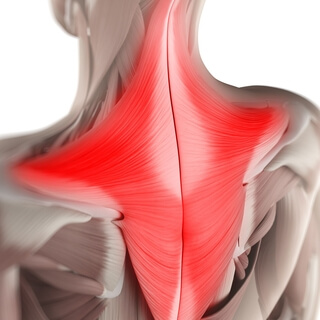
Scanning down the trapezius muscle to the shoulders,
The shoulders down slowly.
Again,
Noticing.
Is the part of the arm that's closer to the body warmer or cooler than the part that is further away from the body?
As you move down the armpits,
For example,
Is it cool,
Warm,
Hot?
Continue scanning down both arms.
Again,
You're like a meteorologist and you're just reporting what you observe as you move down the peninsula.
Down the arms,
Elbows,
Forearms,
Wrists.
As you get to the hands,
You may notice many different,
Almost microclimates.
You have a lot of nerve endings at the tips of your fingertips.
And depending on how your hands are positioned,
If they're resting on your knees,
For example,
Or in your lap,
Or folded one atop the other,
You may notice different sensations.
The top of the hand may feel different than the bottom of the hand.
The palm of the left hand may feel different than the palm of the right hand,
And you're just noticing.
Moving to the thumbs.
Left hand,
Right hand.
You can compare the two.
The index finger of the left and right hand,
Noticing temperature.
Serving the entire index finger.
A three-dimensional scan.
Top and bottom,
Front,
Back,
Left,
Right,
Inside,
Outside,
All the joints to the fingertips.
Do the same for the middle fingers of both hands.
Noticing temperature,
Variation,
Change,
Movements,
Intensity.
Go to the ring finger,
Same process.
The little finger.
You can move back up from the tips of the fingertips of both hands up to the wrists,
Forearms,
Elbows,
Upper arms,
Shoulders,
Back up the neck.
And now down,
The trunk.
Scanning down,
Noticing temperature in the heart area.
The lungs.
Surface of the skin.
Down to the diaphragm.
The lower thorax.
The organs.
Genitals.
The southernmost tip of the upper body.
The perineum.
Again scanning the body from the head,
The arms,
The trunk.
Be aware of temperature differences in the back.
The upper back.
The mid-back.
The lower back.
The spinal column.
From the head down the spinal column to the perineum.
Continue scanning.
The glutes,
Hips.
Into the bones,
Into the pelvis,
The pelvic region.
Noticing any temperature.
Not imagining anything,
Just feeling what you feel.
Continue scanning down to the thighs.
The knees,
Calves and shin.
The ankles.
The feet.
Note any differences in temperature.
Top of the feet.
Bottom of the feet.
Big toes.
Second toes.
Third toes.
Fourth toes.
Fifth toes.
All five toes together.
Left foot.
The right foot.
You can compare the two.
Independently scan up again from the tips of the toes.
Very slowly noticing any temperature differences,
Changes,
Quality of the climate within these different regions.
As you move up the body.
From the tips of the toes,
All the way up to the top of the head.
Very good.
Keep noticing.
As this practice comes to a close,
I would like to invite you to continue checking in throughout the day.
Notice,
Observe,
Go deeper with your learning.
Here's some extensions you might want to try.
If the environment is hot,
The hypothalamus sends messages to the blood vessels telling them to dilate.
It sends warm blood,
Fluids and salts to the skin.
Setting off the process of evaporation.
If you're in a hot place,
You may begin to feel perspiration forming.
Stay with that.
Feel these subtle changes.
Stay with the body and keep your attention on the skin.
Feel this process unfold and remain aware even as the first beads of sweat begin to form.
Glide slowly across the contours of the body.
If it's cold,
Blood vessels under your skin become narrower.
This decreases blood flow to your skin.
Retaining heat in the core.
Your thyroid gland will release hormones to increase your metabolism.
This increases the energy your body creates and the amount of heat it produces.
You won't feel that,
Because your muscles may produce heat by shivering.
Keeping body temperature within optimum range.
This you can feel.
If you take ice baths or cold showers as I do,
You can feel this process unfold.
And feel how the body creates a thermal layer to keep you warm.
You can go much deeper with this practice.
A 1982 study published in Nature magazine found there were monks with capacity to increase the temperature of their fingers and toes by as much as 8.
3 degrees Celsius,
Or 46 degrees Fahrenheit.
In a technique known as Tummo.
The Wim Hof method is another way of gaining some control over this autonomic function.
Which you can feel radiating within you.
Now.
.