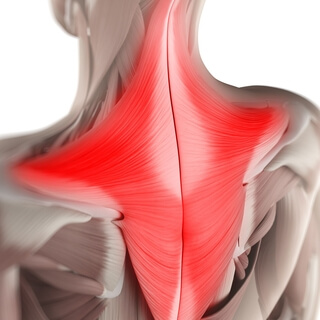
Some of the key symptoms of anger include tight tense muscles,
Shallow rapid breathing,
Tingling,
Heart palpitations,
Tightening of the chest,
Increased blood pressure,
Headaches,
Pressure in the head or sinus cavities,
Fatigue.
This meditation you will hack into the body and reframe your experience to reduce anger,
Dialing up the relaxation response.
If your anger is fierce,
Your power of presence must be stronger and dominant to discipline this powerful emotion.
May these techniques be helpful to you and to those who love you and wish the best for you.
First,
Let go of the storylines and go into the body.
The thoughts may be insistent,
But focus on breathing.
Deep diaphragmatic breathing is key to lessening the symptoms of anger.
We're not telling ourselves to be calm or to relax.
This will only inflame the anger.
We're simply taking deeper than usual breaths.
Holding.
Exhaling long and slow.
Expelling all the air in the lungs.
Intentionally relaxing all the muscles in the body with each exhalation to the degree you can.
Simply breathing.
No narratives.
Ignoring the torrent of thoughts for now.
We will attend to them shortly.
For now,
Simply breathing deep.
Holding.
Exhaling slowly.
As you inhale,
Focus on slowing the breath down to a frequency of 6 per minute.
Exhale fully,
Releasing all the air in the lungs.
Breathing in.
Holding.
Breathing out.
Let the exhalation be twice as long as the inhalation.
On the inhalation,
Breathe into the abdomen.
Feel your belly rise.
Continue breathing into your ribs and your chest.
Hold.
Exhale out from the chest,
The rib cage,
The abdomen.
Breathe into the abdomen.
Feel the rib cage expand and the chest rise.
Hold.
Exhale out fully from the chest,
The rib cage,
The abdomen.
Inhale.
Abdomen.
Ribs.
Chest.
Exhale.
Chest.
Ribs.
Abdomen.
Inhale.
Abdomen.
Ribs.
Chest.
Holding.
Exhale.
Chest.
Ribs.
Abdomen.
Like training a powerful animal,
Be firm with your mind.
If it wants to pull you deeper into the anger,
Bring your attention back to the breathing.
Continue to breathe deeply and slowly.
Now that you are breathing diaphragmatically,
Realize that your only job right now is to keep yourself as centered as possible while this feeling passes.
When fighting against anger only makes it stronger.
So step two,
Accept that you are feeling anger.
Bring awareness to it.
Do not judge or repress the emotion.
It has arisen like a storm in the mindscape,
And just as with all phenomena,
It too will pass away.
Continue breathing deeply and rhythmically as we approach it with reason and fearlessness.
As you become angry,
Your body's muscles tense up.
Inside your brain,
Neurotransmitter chemicals known as catecholamines are released,
Causing you to experience a burst of energy lasting up to several minutes.
At the same time,
Your heart rate accelerates,
Your blood pressure rises,
And your rate of breathing increases.
Your face may flush as increased blood flow enters your limbs and extremities in preparation for physical action.
Now you are breathing slowly,
Rhythmically.
You are intentionally countering the reaction.
Psychologically,
Your attention narrows and becomes locked onto the target of your anger.
Soon you can pay attention to nothing else.
Right now we are paying attention to the breathing,
Diverting attention.
Deep diaphragmatic breaths on the inhalation.
Slow controlled exhalations.
When we are angry,
Additional brain neurotransmitters and hormones,
Among them adrenaline or adrenaline,
Are released,
Which trigger a lasting state of agitation.
The adrenaline caused arousal that occurs during anger lasts a very long time.
Many hours,
Sometimes days,
And lowers our angered threshold,
Making it easier for us to get angry again later on.
This is called the refractory period.
Though we do calm down,
It takes a very long time for us to return to our resting state.
During the slow cool down period,
You are more likely to step back into anger in response to minor irritations that normally would not bother you.
So it is important to attend to the anger.
Dial it down as quickly as possible.
With deep breathing and the power of reason to reign in anger,
We can transform the energy.
Knowing this,
You can take good care of your emotions.
But it may take several minutes of deep breathing to give the body a chance for the catecholamines and adrenaline to dissolve back into the body.
Over time and with practice and effort,
The refractory period becomes shorter and you can more easily return to a state of equilibrium.
For now,
Continue breathing deeply,
Diaphragmatically.
From this more centered place,
We can recognize the toll anger has taken.
The tendency to anger places men and women at significantly higher risk for coronary heart disease.
The same lingering arousal that keeps us primed for more anger can interfere with our ability to clearly remember details of our angry outburst.
High levels of arousal,
Such as to present when we are angry,
Significantly decrease our ability to concentrate.
Anger can also take a toll on our relationships with others.
So it is important that we take good care of our anger.
At this point in the meditation,
If you find the anger growing stronger,
You may want to pause this exercise and discharge the energy with a walk,
High intensity exercise,
Or other physical activity that causes no harm to you or to others.
Returning to this meditation when the anger has lessened.
Let's review what we've covered so far.
Step 1.
Continue breathing diaphragmatically for several minutes.
Step 2.
Bring awareness to the emotion.
Do not judge or repress it.
Tend to the self.
Step 3.
Use reason to dial down the anger.
When we are angry,
The emotional or limbic system can decouple from the prefrontal cortex or executive center of the brain.
With logical matter-of-factness,
We can return the mind to reason.
As you continue breathing deeply and diaphragmatically,
Allow these messages to ground you.
Breathing in,
I know that anger is here.
Breathing out,
I know that the strength to transform that anger is also here.
Breathing in,
I know that anger is here.
Breathing out,
I know that the strength to transform it is also here.
Breathing in,
I know that anger is unpleasant.
Breathing out,
I know this feeling will pass.
Breathing in,
I know that anger is unpleasant.
Breathing out,
I know this feeling will pass.
You may be experiencing the truth of this statement.
Breathing in,
I know that anger is unpleasant.
I may be feeling annoyed.
My muscles may be tense.
My mind may be agitated and restless.
I know no peace.
Breathing out,
I know this feeling will pass.
Breathing in,
I am confident.
Breathing out,
I am strong enough to take care of this anger.
As strong as the anger is,
Your presence of mind is stronger.
You are listening to this recording.
You're attending to your anger with skill and wisdom.
We will now switch from a body scan to an analytical style of meditation.
Move to step four,
From understanding to compassion.
After the anger has passed,
We take the next step.
Taking time to be mindful of the anger transforms it.
This interval might be an hour long,
A day,
Or even a week if the anger was intense.
When we are calm enough to look directly at the anger,
We may begin to see its root causes.
We can see anger as a signal pointing to a need that hasn't been met.
It may be a need for acceptance,
Appreciation,
Cooperation,
Communication,
Understanding,
Respect,
Fairness,
Safety,
Support,
Trust,
Physical well-being,
Honesty,
Peace,
Integrity,
Independence,
Competence,
Contribution,
Autonomy,
Expression,
Or some other valid need.
We identify our feeling,
Looking into it deeply,
Give it a valence.
Is the anger mild or intense?
On a scale from least to most intense,
We have annoyance,
Irritation,
Frustration,
Exasperation,
Bitterness,
Vengefulness,
And fury or rage.
How are you feeling right now?
Name it.
Feel it.
Turn your attention into the experience,
Not into the story,
As you feel it in the body.
Where is it expressing itself?
What sensations are you feeling?
It could be constriction,
Burning,
Tension,
Heat,
Shaking,
Or some other sensation.
When you're calm,
Perhaps an hour from now or a day from now,
You might examine your thoughts with detachment.
What views,
Opinions,
Convictions,
Or beliefs are you holding onto?
Our beliefs,
Our convictions,
Our certainties lock in emotions.
You might ask yourself these questions offered by Byron Katie.
Is what I'm telling myself true?
How do I know it is true?
How do I react when I believe that thought?
Where would I be without the thought?
You can practice letting go.
When our ideals do not match up with the present moment,
Can we accept this and let go?
Can we move toward our aspirations without suffering or causing others to suffer?
Can we accept the unpleasantness of the emotion in this moment without the expectation that this ought not be happening or that something other than what is should be happening?
The final step is to assume radical responsibility for our emotions.
We assume responsibility for that which we can control,
For that which is within our circle of influence.
Working within our circle of influence is one of the seven habits of effective people as identified by author Stephen Covey.
Within the circle of influence are those things we can do something about,
Our own thoughts,
Actions,
Words,
Behaviors,
Pandemics,
Market fluctuations,
Foreign conflicts,
Natural disasters,
And the feelings or actions of other people fall outside of our circle.
Many berate themselves for conditions that are beyond their control to influence which may express as anger.
Underneath the anger they may feel shame,
Guilt,
Or powerlessness for events they could not control,
Influence,
Or change,
Such as the outsourcing of a job,
A partner's choice to divorce or separate,
The addiction of a loved one,
Macroeconomic factors that limit opportunity,
The betrayal of a friend who abuses one's trust.
The root word of responsibility is response.
Responsibility refers to one's capacity to respond.
I'm not responsible for what another thinks,
Says,
Or does,
But I am responsible for what I think,
Say,
Do,
Or don't do.
So in this step we own our response.
The author Rachel Macy Stafford writes,
My responses represent who I am,
Who I want to be,
And how I will someday be remembered.
I am my response.
I am my response to my child's mismatched outfit and the crumpled report card at the bottom of her backpack.
I am my response to my spouse who returned from the store without toilet paper but remembered the tailgate snacks.
I am my response to my anxious parent who repeats the same worries and insists on giving me coupons I do not need.
I am my response to my coworker with sad eyes and frequent absences.
I am my response to my neighbor with heart-heavy problems and little family support.
I am my response to the irate driver who cut me off and made an obscene gesture in front of my children.
I am my response to the waitress who got my order wrong.
I am my response to myself when I forgot the one thing I most needed to do today.
I am my response to spilled coffee,
Rain-soaked shoes,
And middle-of-the-night throw-ups.
My responses are not perfect.
They are not always ideal.
I'm human after all.
But if I strive to offer responses underlined with grace,
Understanding,
Kindness,
Empathy,
And care,
That is something.
As this practice comes to a close,
We can celebrate that we chose a compassionate way to respond to our anger.
Where we know true peace,
True strength.