Hi there,
Jessie here.
Welcome back to these reflections on mindfulness for concussion.
Wherever you are,
Maybe you're in Adelaide or Alexandria,
Addis Ababa or Austin,
You're welcome here as a fellow survivor,
A fellow brain injury survivor.
So just starting out with this simple question,
What is mindfulness?
And sometimes I find it easier to start with what it's not.
When we're not mindful,
We tend to be lost in thought.
We tend to be having regrets about the past,
Worries about the future,
Both of which are quite common with a brain injury.
But with mindfulness,
We practice bringing our attention into the present moment.
That's it.
It sometimes feels so complicated and it's amazing to me how even after nine years,
I still come back to some of the basic teachings,
You know.
It's really just bringing our attention to the present,
Letting our attention rest here.
Over and over again.
And there's sort of three things happening.
Oftentimes people think of mindfulness as only the moments when our attention is in the present.
In fact,
There's the act of bringing our attention to the present,
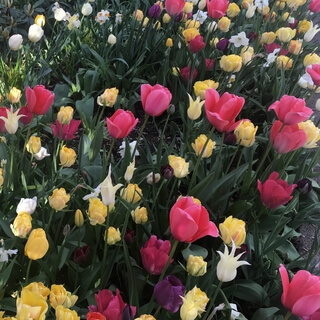
Letting it land on an anchor like a bee buzzing about,
Settling on a flower.
And like the bee,
Our attention will whip off back to the past into the future.
It's completely normal.
And we do it all over again.
With mindfulness,
We can bring our attention to the present moment by paying attention to the five senses.
We can come to our senses because the body is always in the present moment.
Really,
We are actually always in the present.
It's just that our mind is a thing that wanders away.
So we can bring our attention to literally our five senses,
The sight,
Sound,
Smell,
Touch and taste,
The smorgasbord of experience that's around us,
Which is so lovely.
It's a lot nicer than rumination.
Over and over again,
The little movies in our mind.
So,
Shall we give it a try?
And first of all,
I want to remind you that at any time in these reflections with me,
You're always in choice with me.
And not just with me,
But this is a huge lesson for me in my practice,
Was to listen to my body and what works for me.
And so if ever I offer you a suggestion,
A practice that I'm offering doesn't feel quite right,
You can always modify in ways that feel more settling to you.
To start off with,
I always like to start my practice with just a gentle unclenching.
So I invite you now,
Whether you're sitting or lying,
Standing or walking,
To just notice if there's any tension and see if you can just gently let it go.
This isn't like a forceful,
I'm gonna relax now,
More like a gentle encouraging the body to release any tension.
Perhaps with a kind of a feeling of,
Ah.
.
.
Seeing if you can notice any tension in the eyes,
Anywhere in the face,
The jaw,
Mouth,
Letting it go.
Noticing if the mind is held in constriction and letting that go as well.
Gently,
Not worrying how much is possible even if it's just 5%.
Noticing any tension in the jaw and neck,
Shoulders,
And inviting it to loosen up.
To unclench.
Down the arms and in the hands,
In the chest and heart space.
Feeling an opening up as much as feels comfortable for you at this time.
Noticing perhaps any clenching in the stomach,
In any of the organs,
Letting them go.
Into the legs and down right into the feet.
So just now we did a more extensive letting go,
But it can also be just in an instant like.
.
.
Relax,
Let it all go.
You can do that many times a day,
Just takes a second.
And now I'd like to invite you to begin to explore those five senses.
You can do this with your eyes open or closed,
Downcast,
Do anything you want with your eyes.
And this is kind of that beginning of the experiment I mentioned in the introductory session about your body being the beaker.
And you're the only one that knows your body.
Sometimes you might prefer to practice eyes open,
Closed,
See what feels right today.
But let's start,
Now that I've said you can shut your eyes,
Let's start with the eyes open.
And just take a moment to look around the room that you're in,
The space that you're in.
Move the neck around as you do that,
Not just the eyes,
But gently,
Gently moving the neck.
This is kind of a loose exploration,
Not a grasping,
Just a gentle exploring the colors,
The textures,
The shapes around you.
It may be surprising,
Like a feeling like a,
Oh,
Popping into presence,
It could be,
You know,
A room you spend a lot of time in,
But you rarely actually look around.
And as you do that,
See a sense into if there's any object that is kind of attractive to you,
Like sort of grabbing your attention and allowing the gaze to land there.
And just like that be allowing the attention to land on this object and exploring it,
The color,
The shape,
Size,
Perhaps inviting in a sense of enjoying it.
If it's attracted to you,
Maybe somehow it's pretty or beautiful or just enjoyable.
And as you appreciate this object,
It's okay if you notice the mind wandering,
Wandering perhaps if you're doing it correctly or thinking about something else altogether.
And that's a moment of celebration.
Woohoo!
I noticed I got lost and now I come back.
Remembering to breathe.
And now letting go of this object and seeing if you can allow the eyes again to wander with that gentle neck movement orientating to the space you're in and seeing if there's another object that calls to you.
Noticing the color,
Enjoying the color perhaps,
The shape of it.
Perhaps enjoying a memory that comes up related to it.
Maybe just inviting in the tiniest little quarter smile to this object in your space that is calling to you.
Inviting in that sense of unclenching if something's become clenched again.
And in a moment when you're ready,
Letting go of this practice of paying attention to sight and taking a moment just to sense into how that felt.
Was that like a,
Hmm,
Yeah,
I like that,
I want to try that again,
Or no,
That's not really for me today,
Or neutral feeling about it.
Whatever is here is no right or wrong answer to that.
And I hope that you will enjoy me,
Sorry,
Enjoy me,
Another time to explore the other four senses.
And until then,
I offer you this gentle unclenching,
Relaxing,
And checking out the senses practice.
And I hope that you can do it anytime.
And part of a beautiful way of concussion care is to begin to include these short practices within our day in moments that are natural pauses.
So if you're waiting for the elevator,
Or you're in a lineup,
Or you're waiting for the light to turn,
Or any moment like that where you might be tempted to pick up your phone,
Please not in the car.
What is a moment like,
Oh,
Wonderful,
I have a moment to come to the present,
To come to my senses and enjoy what is here.
Even if things can be challenging with the brain injury at the same time,
Oh,
I have a headache,
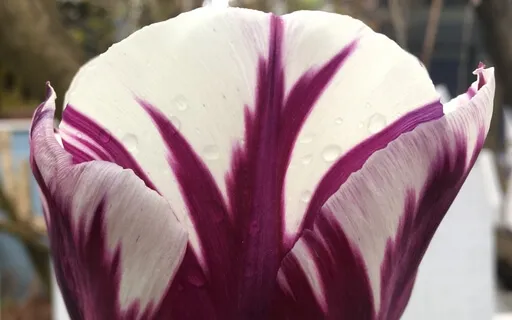
And look at that flower,
It's so beautiful.